RSS

Beyond the Home Inspection: Tests and Investigations a Buyer May Need

A home inspection can tell you a great deal about a property.

But it doesn't answer every question.

Some parts of a home require specialized knowledge, equipment, laboratory testing or access that falls outside the scope of a standard home inspection. Other concerns may only become apparent after the inspector identifies something that deserves a closer look.

This is particularly relevant in Nova Scotia, where a property may have a private well, septic system, wood heat, an oil tank or other features requiring their own investigation.

The goal isn't to order every test available.

It's to figure out which investigations make sense for the particular property you're considering buying.


Start With the Home Inspection—Then Follow the Evidence

For many buyers, the general home inspection is the starting point.

A home inspector looks at the visible and accessible components of the property and may identify areas that deserve additional investigation.

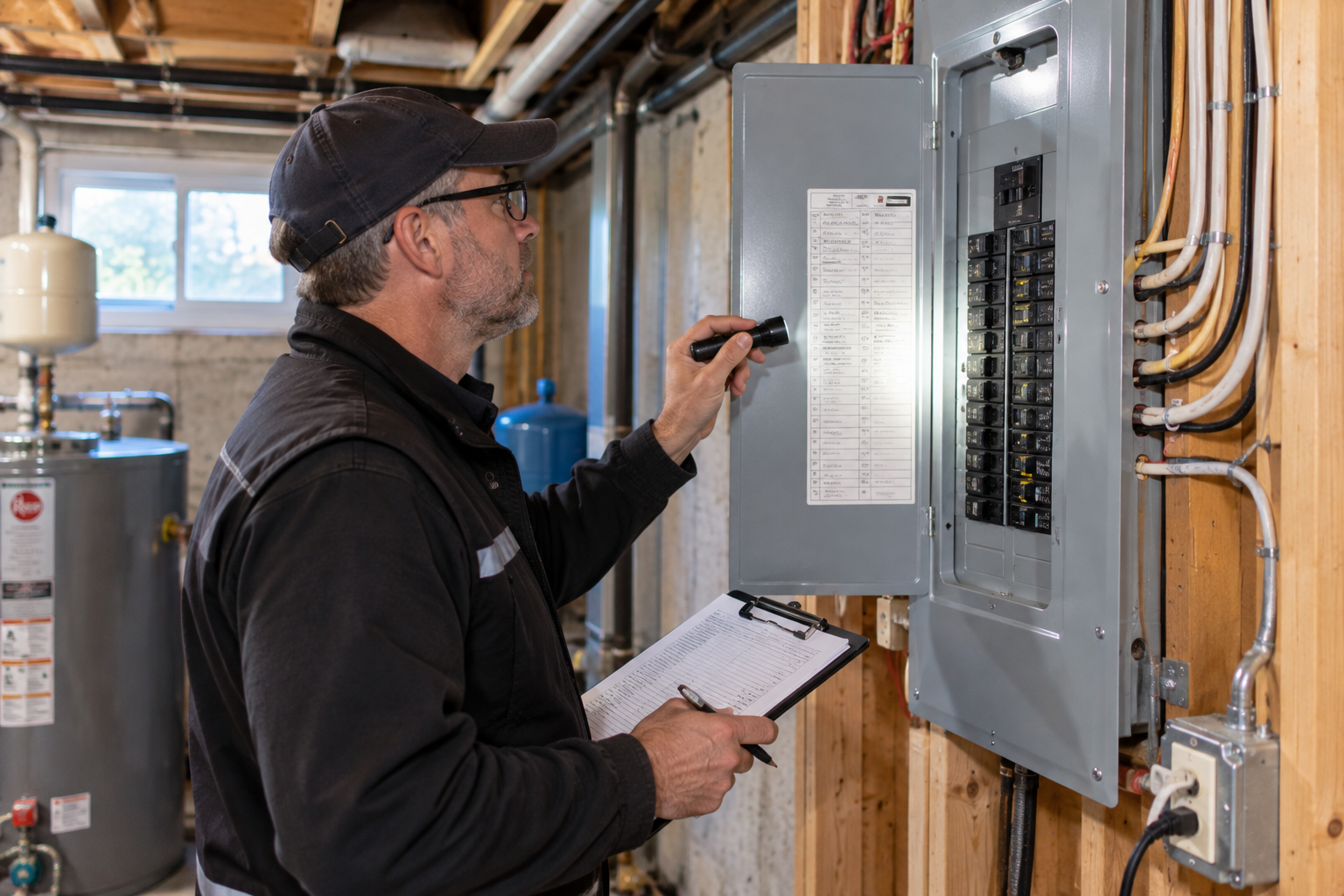
That could mean an electrician examining a concern at the electrical panel.

It could mean a heating technician evaluating a boiler.

It could mean a structural engineer looking at unusual foundation movement.

Or the property itself may have features—such as a private well or septic system—that you planned to investigate separately from the beginning.

Think of due diligence as a process.

The first investigation may answer some questions while showing you which questions still need answers.


Not Every Property Needs the Same Due Diligence

A newer subdivision home on municipal water and sewer presents a different set of questions from a 150-year-old rural property with a drilled well, septic system, wood stove and several outbuildings.

A waterfront cottage presents different questions again.

So does vacant land.

So does a house that has undergone extensive renovations.

This is why a checklist can only take you so far.

Your due diligence should respond to the property, its systems, its history and what you intend to do with it.


Private Well Water Should Be Tested

If the property has a private well, don't assume clear, odourless water means the water is safe.

Nova Scotia says more than 40% of households obtain their drinking water from private wells and recommends regular testing for both bacteria and chemical contaminants. The province specifically notes that you can't determine whether well water is safe based on its appearance, smell or taste. Government of Nova Scotia

For ongoing ownership, Nova Scotia recommends testing well water at least annually for bacteria and every five years for chemical contaminants. Government of Nova Scotia

During a real estate purchase, water testing can help you understand the water supply before you take ownership.

Depending on the circumstances, testing may include:

  • Total coliform and E. coli

  • General chemistry

  • Metals

  • Arsenic

  • Uranium

  • Manganese

  • Other parameters appropriate to the property

Specific additional testing may make sense when there is a reason to suspect another source of contamination.

Nova Scotia identifies potential sources including petroleum products, septic systems, agricultural activity, road salt and other environmental influences. Government of Nova Scotia

Well water sample being collected for testing in a Nova Scotia home

Water Quality and Water Quantity Are Different Questions

A laboratory test tells you about water quality.

It doesn't necessarily tell you whether the well can consistently provide enough water for the household.

That's a different question.

If there are concerns about the well's capacity, history or performance, a buyer may want additional information about the well itself.

That could include looking for the well construction record, asking about previous shortages or having an appropriate professional evaluate the well or its yield.

A property can have perfectly acceptable water chemistry and still have a quantity issue.

Likewise, a productive well can still require water treatment.

Don't confuse the two.


A Water-Treatment System Doesn't Eliminate the Need to Understand the Water

Some homes have equipment to address particular characteristics or contaminants in the water.

You might see:

  • Sediment filters

  • Water softeners

  • UV treatment

  • Iron or manganese treatment

  • Reverse-osmosis equipment

  • Other filtration or treatment systems

Find out what the equipment is intended to treat.

Ask how it has been maintained.

And consider whether the water should be sampled in a way that helps you understand both the untreated source water and how effectively the treatment system is working.

The presence of treatment equipment isn't automatically a concern.

It's information about the property that you should understand.


A Septic System Deserves Its Own Inspection

A general home inspection shouldn't automatically be treated as a substitute for a dedicated septic-system inspection.

The Nova Scotia Real Estate Commission recommends that buyers have a septic system inspected before finalizing the purchase of a property with an on-site system. NSREC notes that an inspection may involve pumping the tank and examining the disposal field and that septic inspections may be conducted by appropriately qualified professionals such as licensed septic installers, licensed sewage haulers or professional engineers. Nova Scotia Real Estate Commission

A septic investigation may help answer questions such as:

  • Where is the tank?

  • Where is the disposal field?

  • What type of system is installed?

  • Is the system functioning as expected?

  • Are there visible signs of a problem?

  • When was the tank last pumped?

  • Is there available information about the system's installation or maintenance?

The appropriate scope depends on the property and the professional conducting the inspection.
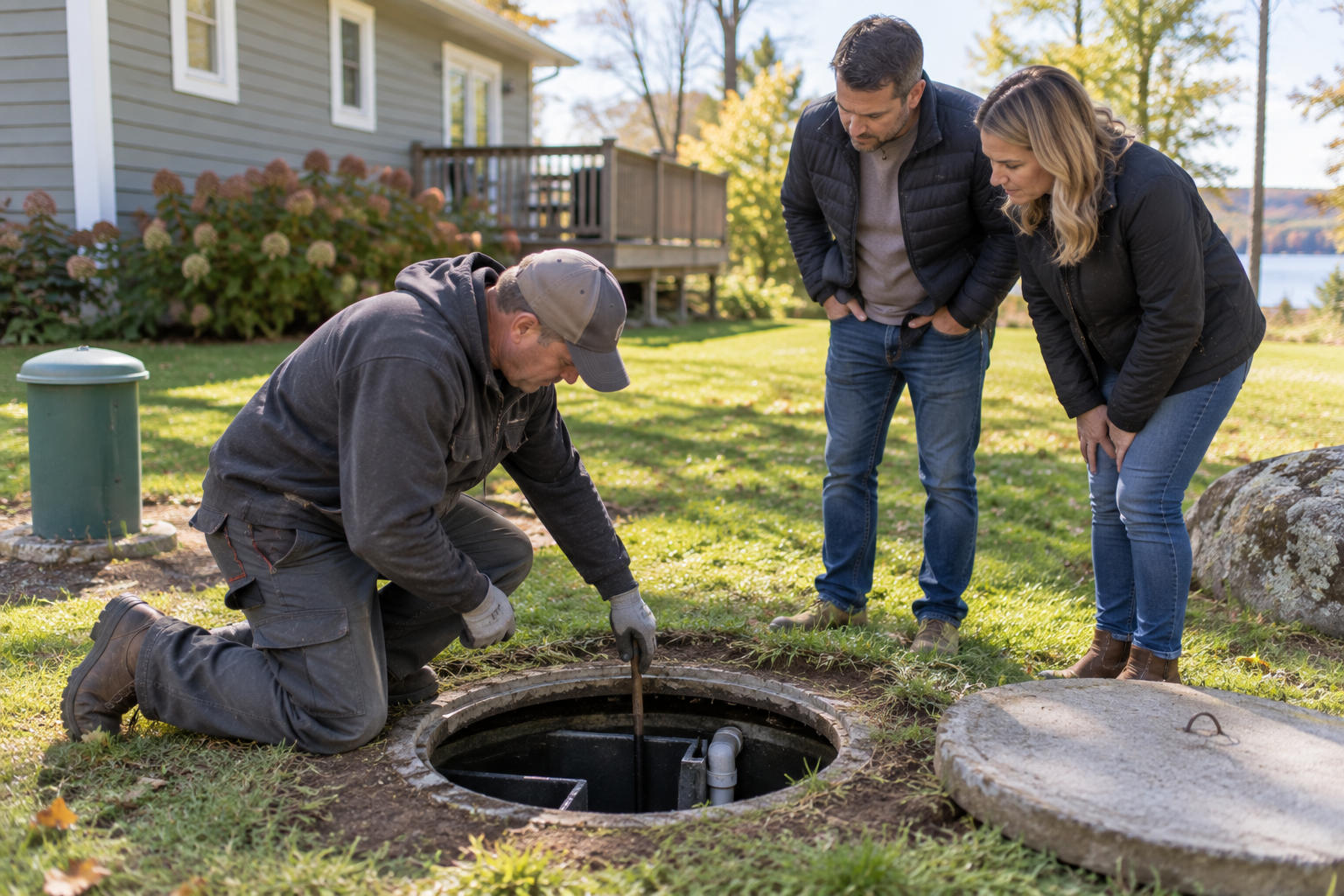
Septic system being inspected at a Nova Scotia property

Don't Assume a Working Toilet Means the Septic System Is Fine

A septic problem isn't always obvious during a showing.

The sinks may drain.

The toilets may flush.

There may be no noticeable odour.

That doesn't provide the same information as an appropriate investigation of the septic system.

This is especially important because the system is largely underground.

A buyer should understand that what happens inside the house is only one part of the wastewater system.


Radon Requires Testing

Radon is another issue you can't evaluate simply by looking at the house.

Nova Scotia advises that testing is the only way to know the radon level in an individual home. Long-term testing is the preferred approach, with Health Canada recommending a testing period of at least three months. Nova Scotia Real Estate Commission

That creates an obvious challenge during many real estate transactions: the condition period may be much shorter than the recommended long-term testing period.

That doesn't mean radon should be ignored.

It means buyers should understand what can realistically be determined before closing and what may need to become part of their ownership plan.

Radon isn't simply an “old house” issue, either.

Testing is what determines the level in a particular home.


Wood Stoves and Fireplaces May Need a Specialized Inspection

Wood heat is common enough in Nova Scotia that buyers will regularly encounter wood stoves, fireplaces and other solid-fuel-burning systems.

A general home inspector may observe the system, but an inspection by a WETT-certified professional may be requested or appropriate—particularly for insurance or when evaluating the installation itself.

WETT says solid-fuel systems are inspected for reasons including real estate transactions, insurance requirements and concerns about system performance. It also uses different SITE inspection levels depending on accessibility and the depth of investigation required. Wettinc

There's an important terminology distinction here:

The stove itself isn't “WETT certified.”

WETT certifies individuals. A WETT-certified professional can inspect the wood-burning system and issue an inspection report. Wett Inc.

If you're buying a property with wood heat, it's also worth discussing the system with your insurance provider early in the process.
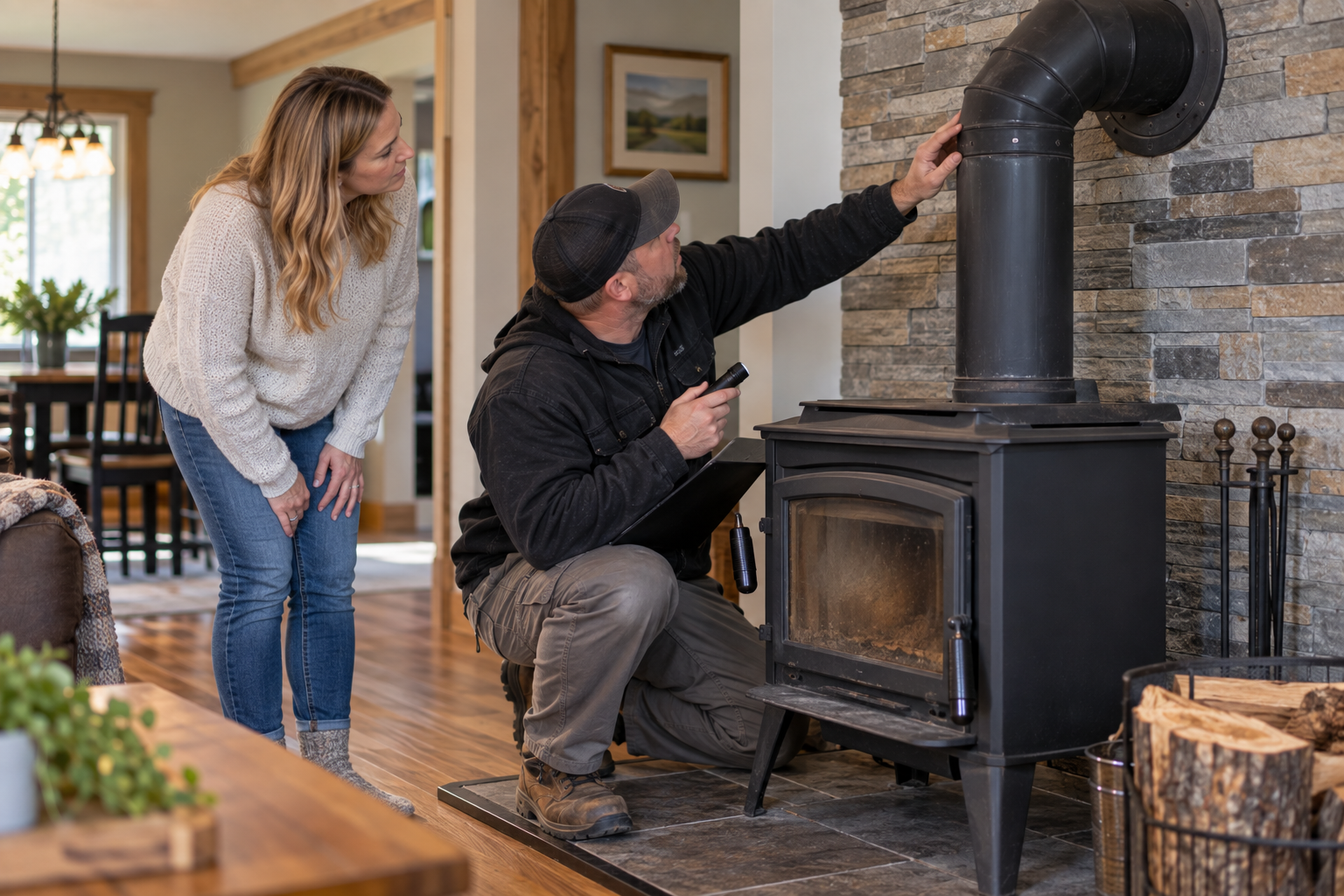
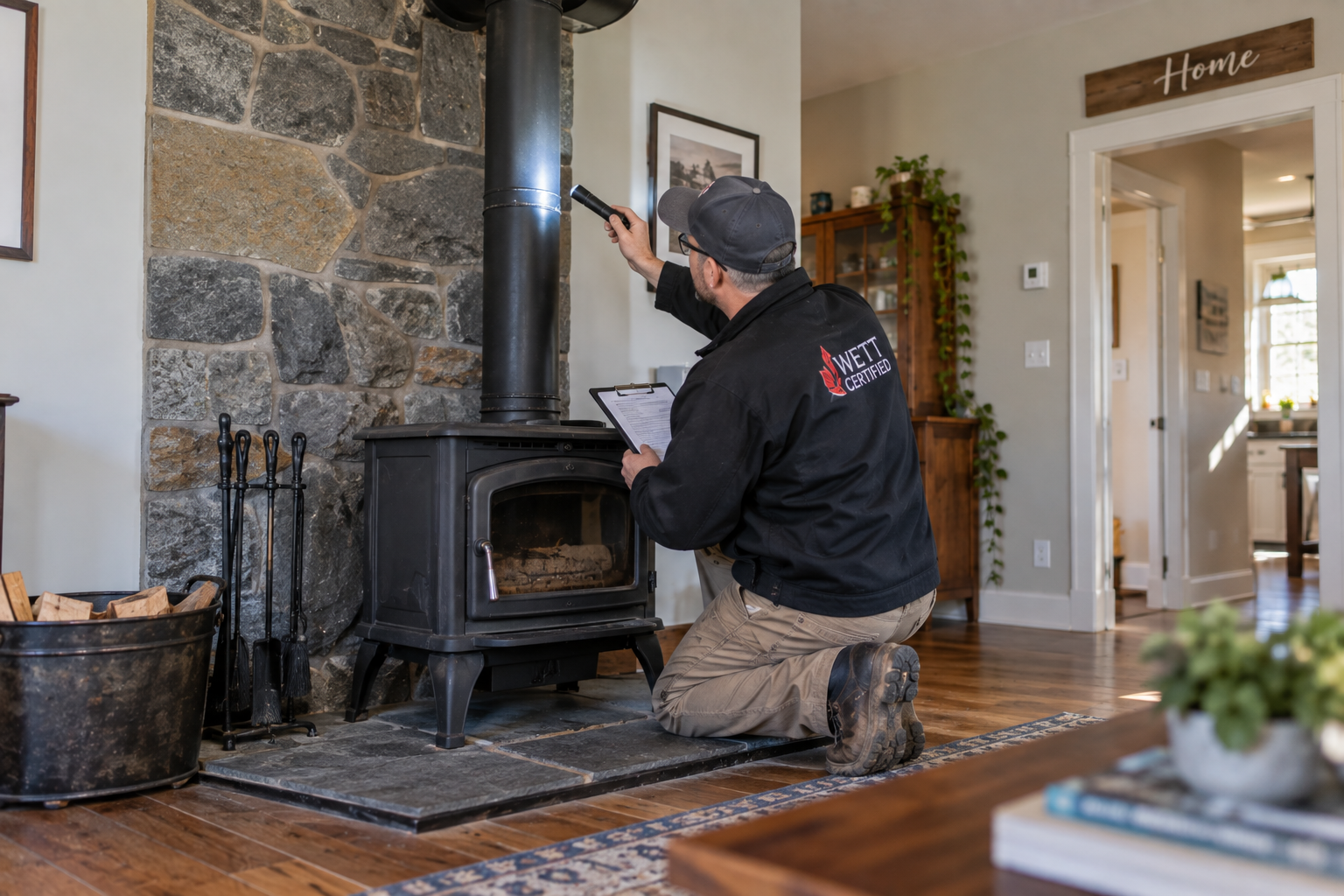
Wood-burning system being inspected in a Nova Scotia home

An Oil Tank May Need More Than a Quick Look

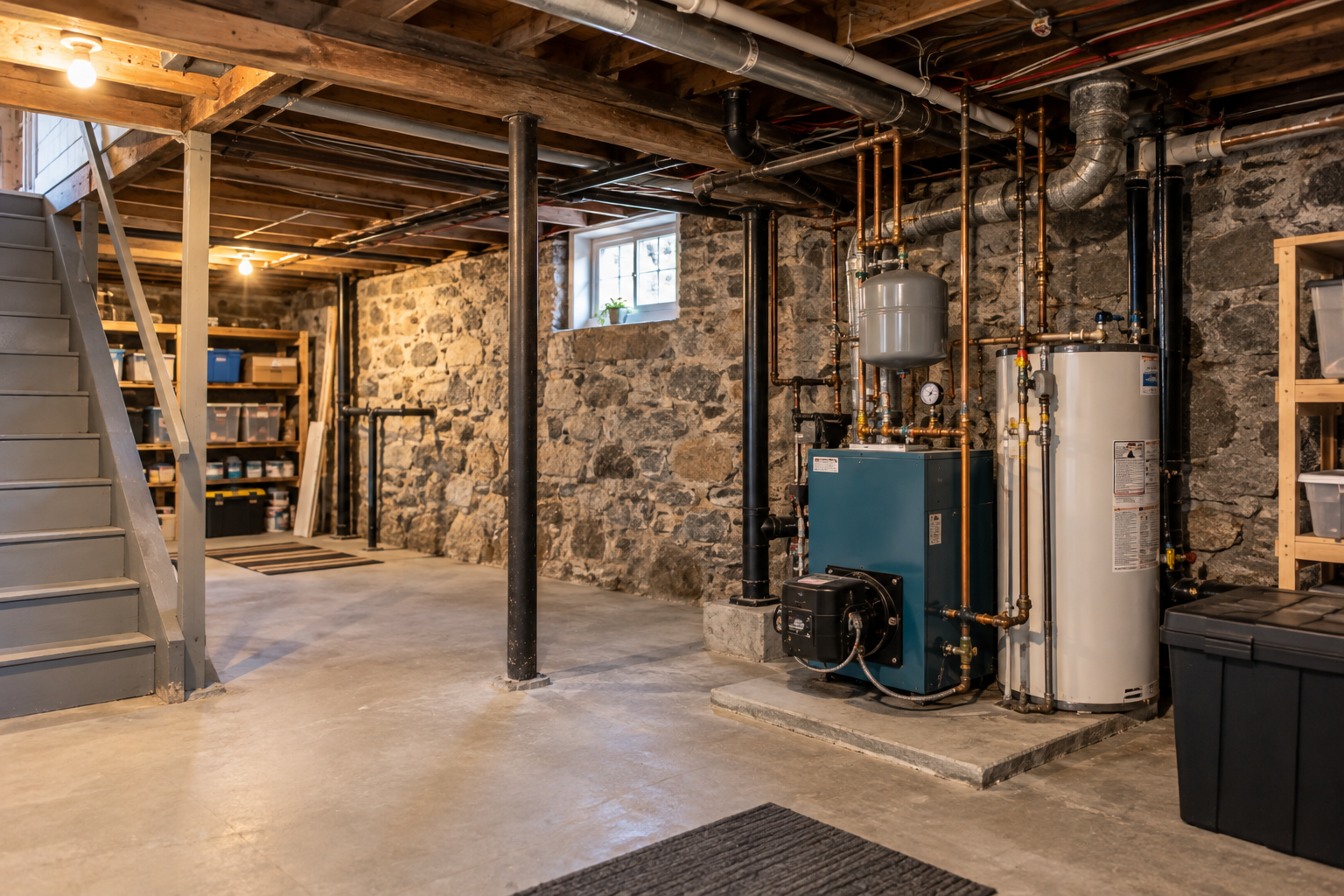
A home inspector may note the location, apparent condition and visible characteristics of a heating-oil tank.

But sometimes further investigation is appropriate.

An oil-heating system includes more than the tank itself. Tank condition, installation, fuel lines, corrosion, evidence of leakage and other factors can all matter.

Nova Scotia's guidance on domestic heating-oil tanks recommends having a heating-service professional conduct a more detailed examination when an evaluation raises concerns about the system. Government of Nova Scotia

Insurance can matter here as well.

If you're buying a property heated by oil, provide the relevant information to your insurer rather than assuming the system will automatically meet its underwriting requirements.
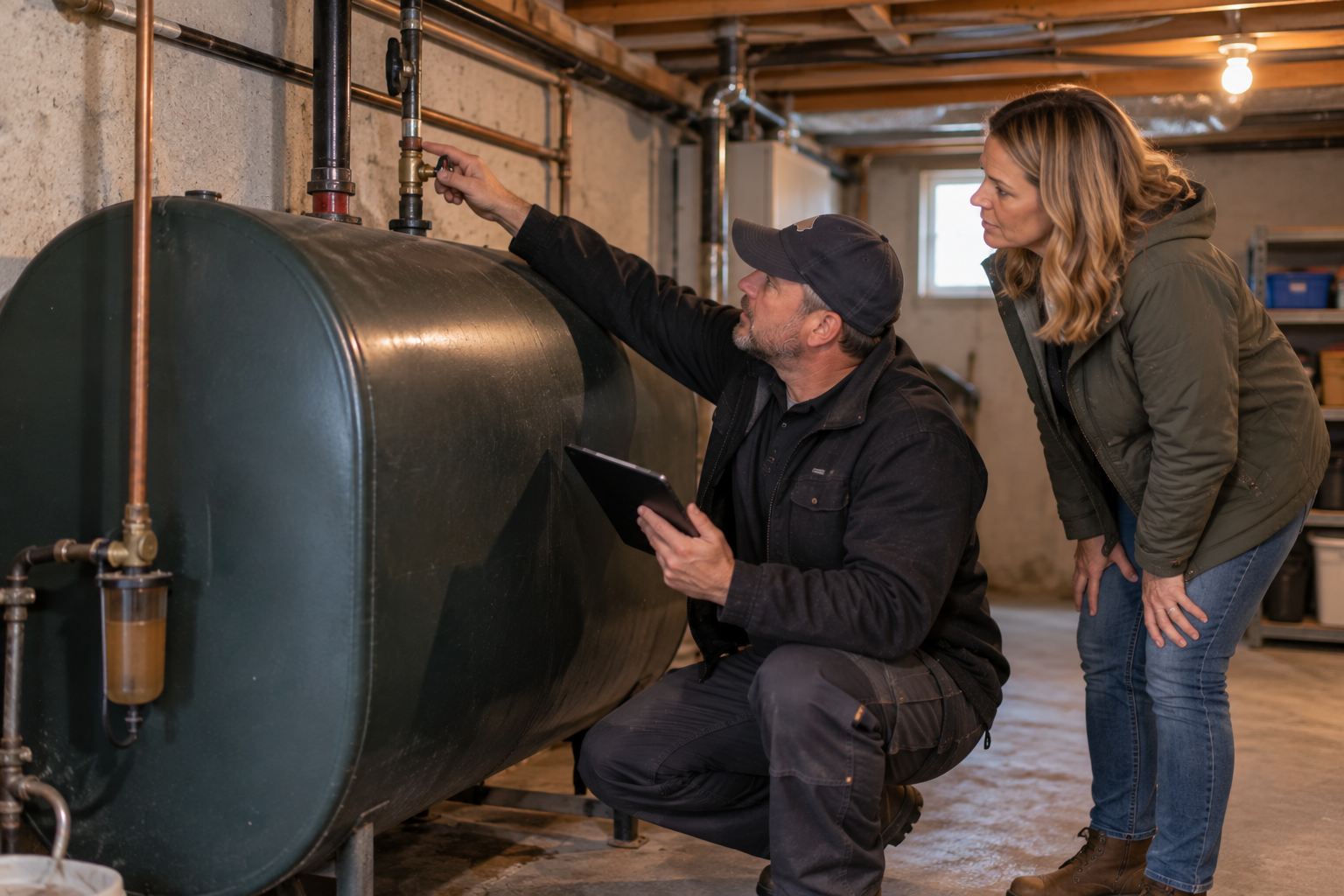
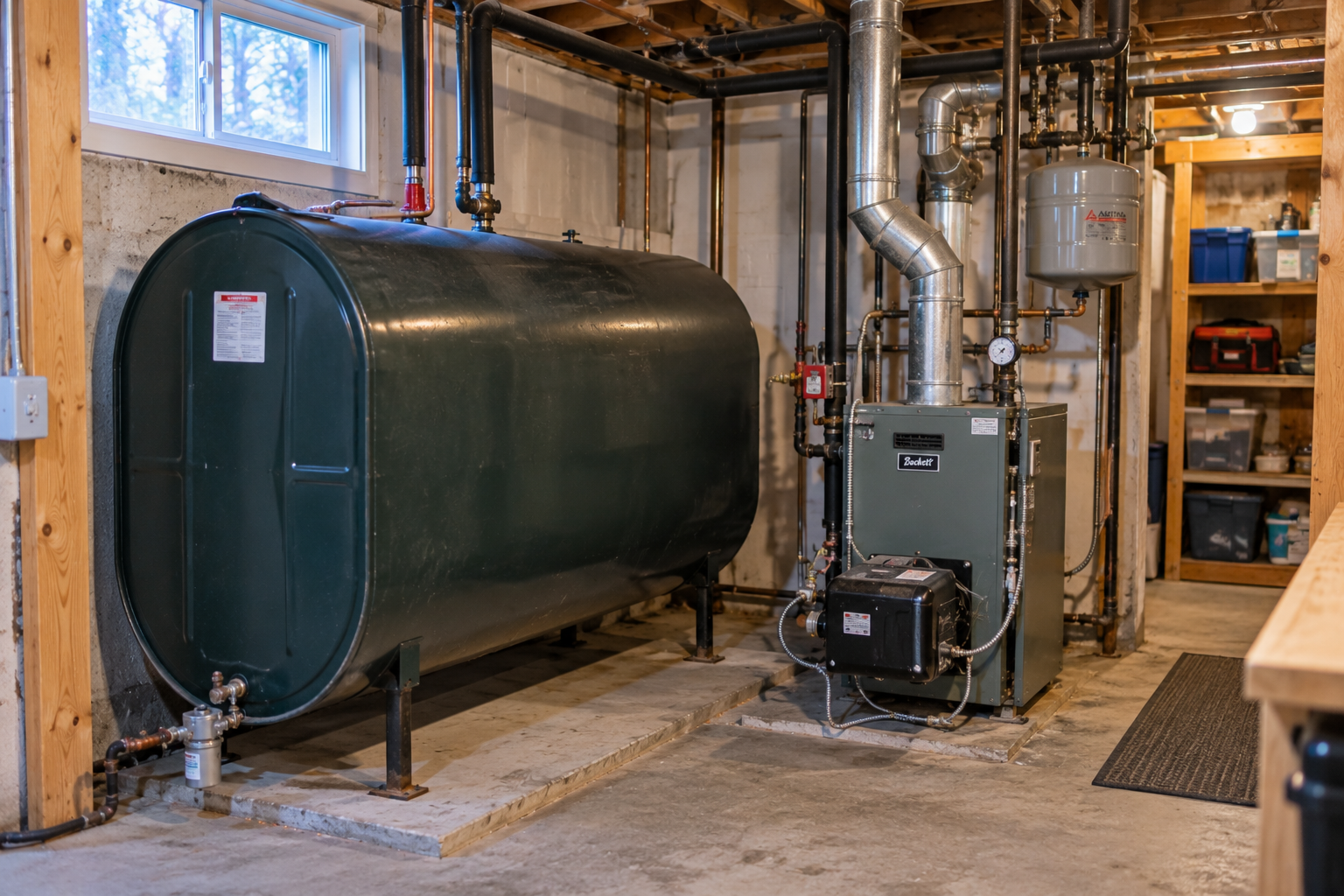
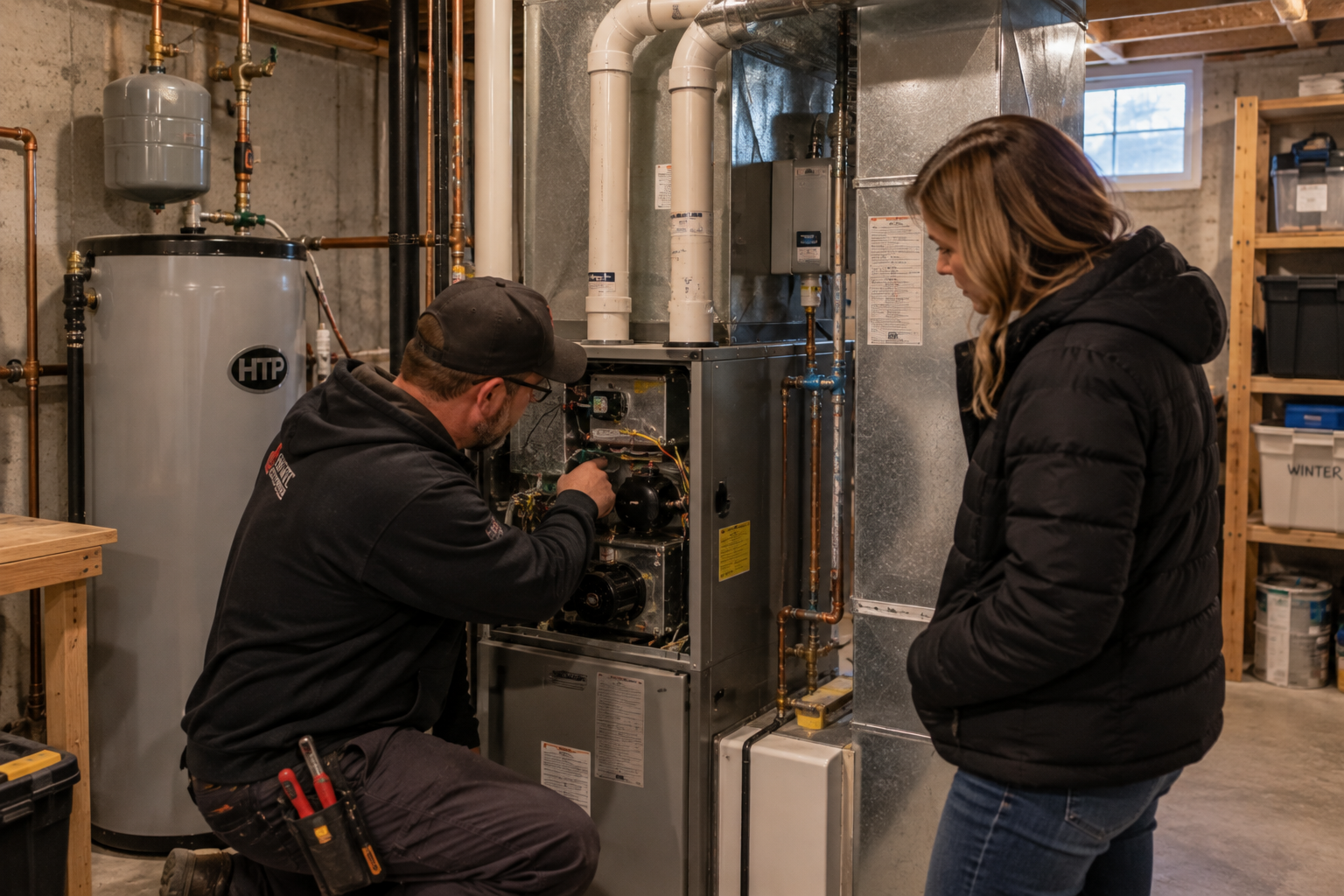
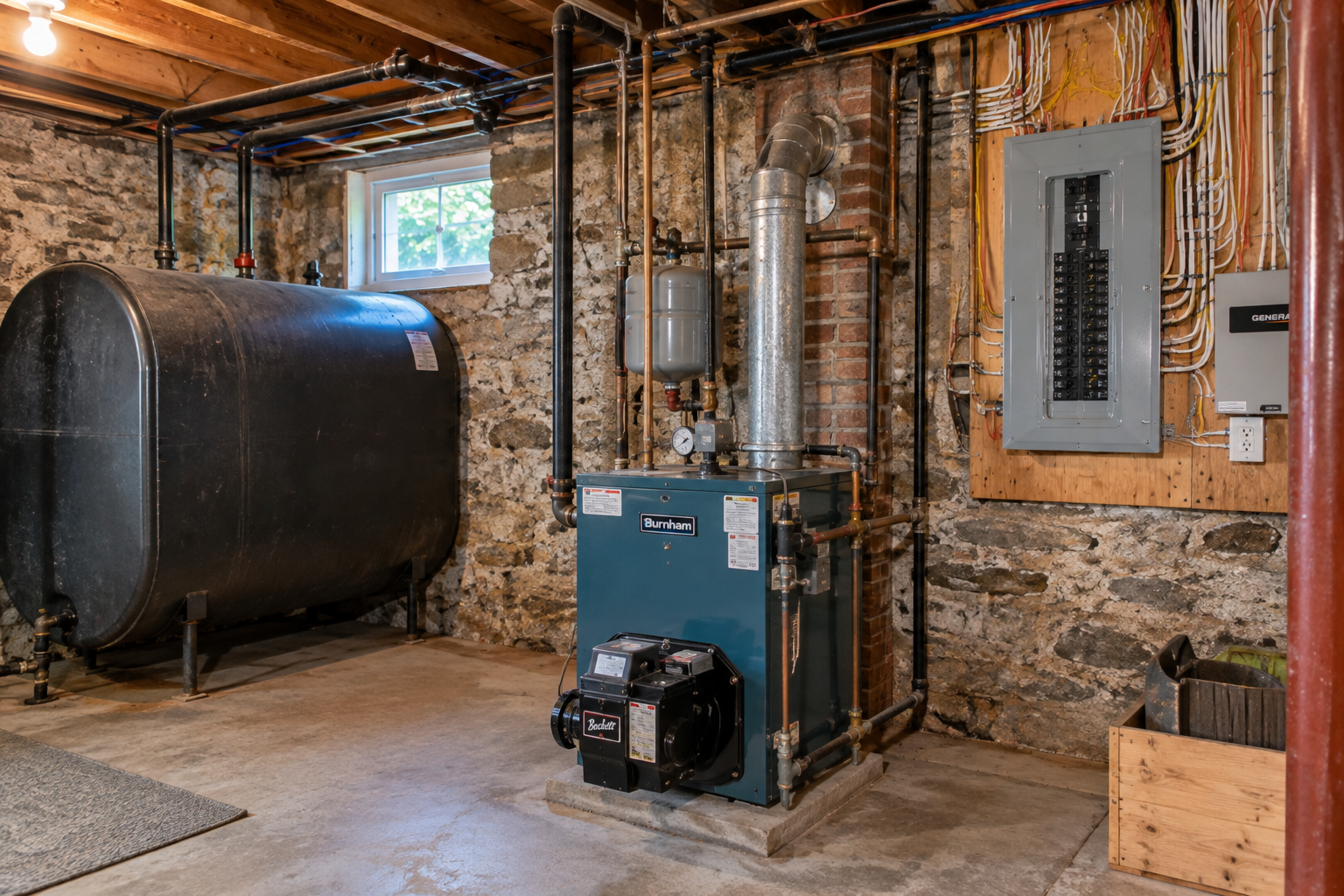
Heating oil tank being evaluated in a residential basement

Electrical Concerns May Need an Electrician

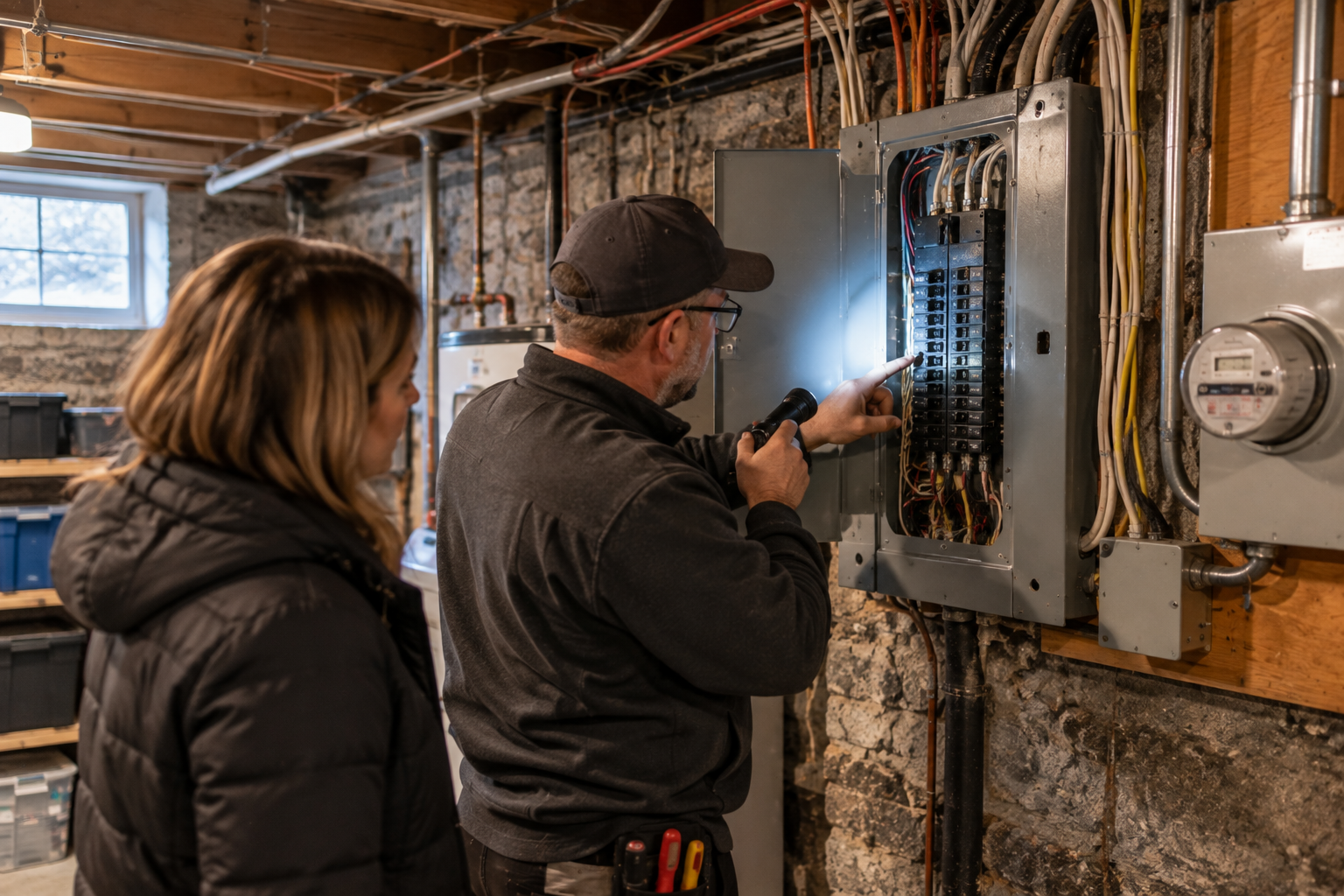
A home inspector may identify electrical concerns during the general inspection.

Sometimes the observation is straightforward.

Other times, it raises a question that should be answered by a licensed electrician.

That might happen when there are concerns about:

  • An electrical panel

  • Older wiring

  • Improper alterations

  • Unusual connections

  • Renovated areas

  • Insufficient electrical capacity for planned improvements

  • Other visible conditions identified during the inspection

The distinction is important.

The home inspector helps identify a potential concern.

The electrician can investigate the electrical issue in greater depth and advise on what work, if any, is appropriate.


Heating Equipment May Need a Heating Professional

The same principle applies to heating and cooling equipment.

A general inspection may identify the approximate age, visible condition or operation of a furnace, boiler, heat pump or other equipment.

But if the equipment isn't operating properly—or if its condition is important to your purchasing decision—you may want an HVAC or heating professional to evaluate it.

This can be particularly useful when the system is older, appears poorly maintained or shows signs of leakage, unusual operation or previous repair.

It can also help when you're trying to understand whether an existing system can reasonably support renovations or changes you intend to make.


Structural Concerns May Require an Engineer

Cracks aren't all the same.

Neither are sloping floors.

Neither are sagging roofs, altered framing or foundation movement.

A home inspector may identify something that appears unusual without being able to determine the underlying cause or its structural significance.

That's where further investigation can become valuable.

Depending on the concern, a structural engineer or other appropriately qualified professional may be able to evaluate the condition and help determine whether it represents ordinary movement, a previous repair, an active problem or something requiring corrective work.

The objective isn't to panic every time a crack appears.

It's to get the right expertise when the answer matters.
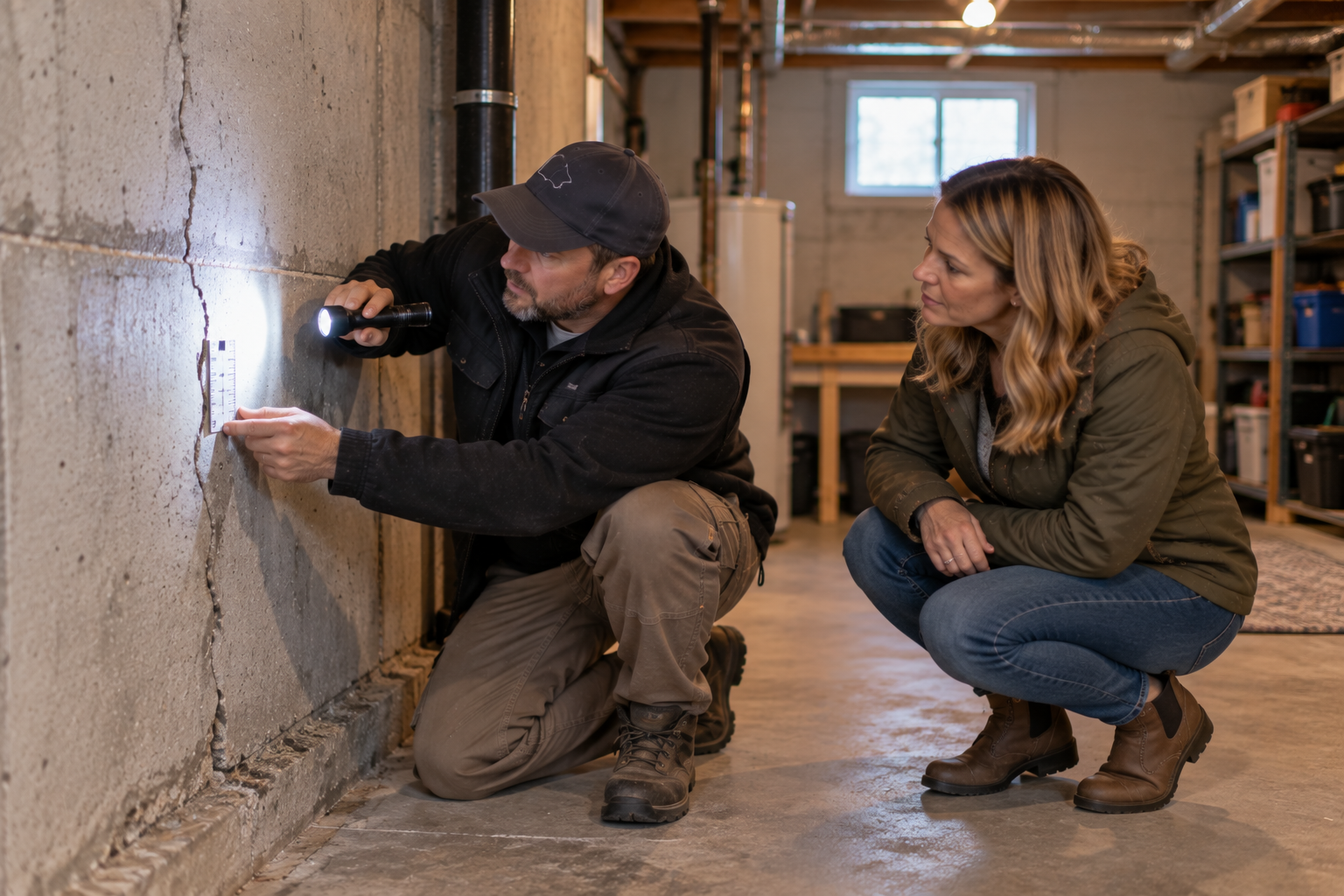
Foundation concern being evaluated by a building professional

Moisture Problems Sometimes Need More Investigation

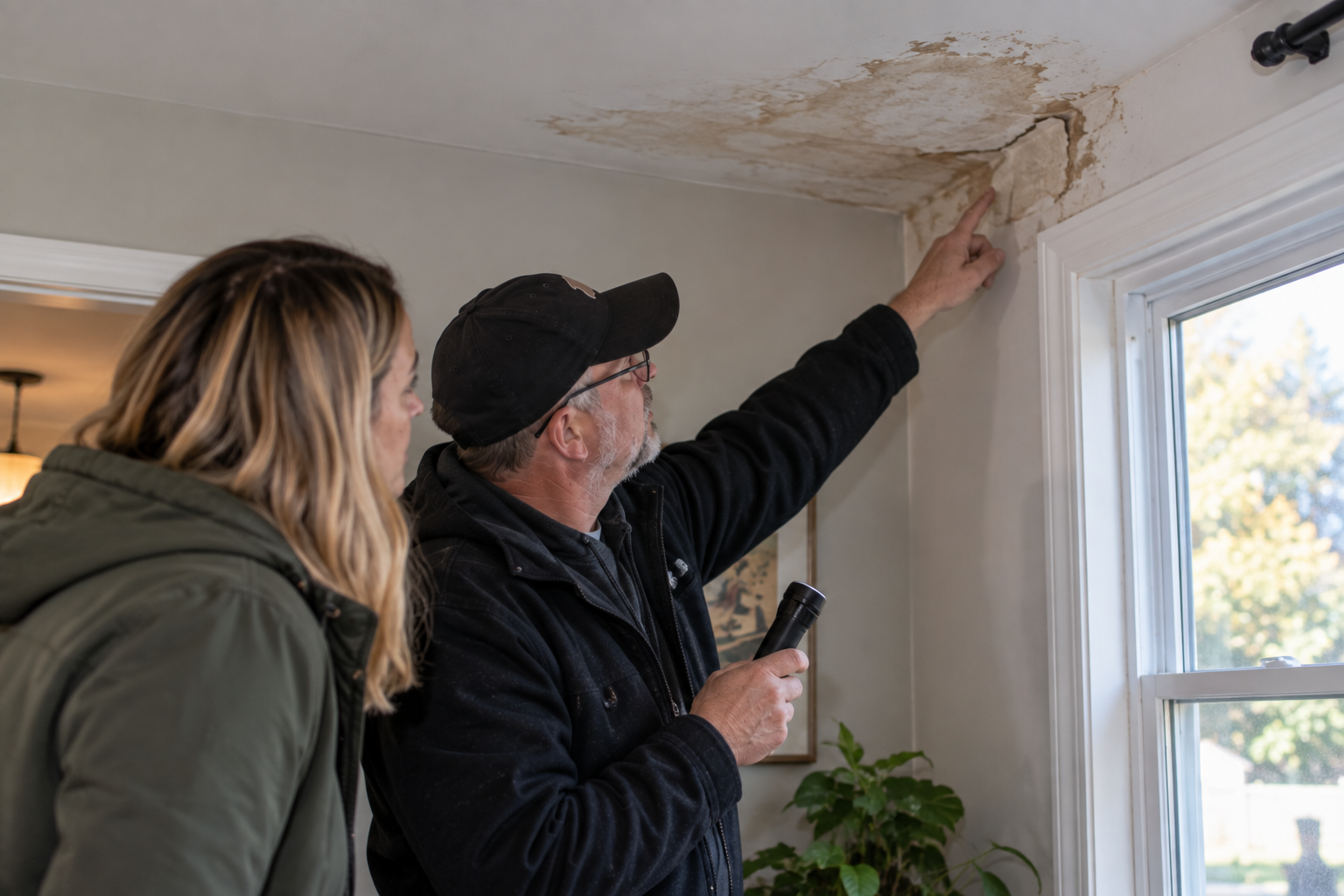
Water staining tells you that water has been there.

It doesn't always tell you:

  • Where the water came from

  • Whether the source has been repaired

  • Whether the problem is still active

  • What may be concealed behind the finished surface

  • How extensive any resulting damage may be

An inspector may use visible evidence and moisture readings to help evaluate the situation within the scope of the inspection.

But significant or unexplained moisture can justify additional investigation.

That might involve a roofer, plumber, foundation contractor, building professional or another specialist depending on the suspected source.

The right specialist depends on the problem.


A Sewer Line Can Be a Separate Question

On a property connected to municipal sewer, the plumbing inside the house isn't necessarily the end of the investigation.

The lateral connecting the home to the municipal system can be another consideration.

A sewer camera inspection may sometimes be worth considering—particularly where there are signs of drainage problems, a history of backups, older buried piping, mature trees near the route or another reason to question the condition of the line.

This isn't something every buyer needs to order.

It's another example of property-specific due diligence: investigate further when the property gives you a reason to ask the question.


Renovations Can Raise Questions Beyond Physical Condition

A beautifully renovated kitchen can look excellent during an inspection.

But a home inspection doesn't necessarily establish the permit or approval history of the work.

If a property has undergone significant alterations, buyers may want to understand what was changed and what documentation is available.

This can be particularly relevant for work involving:

  • Additions

  • Structural changes

  • Finished basements

  • New bedrooms or living spaces

  • Electrical work

  • Plumbing changes

  • Decks

  • Secondary suites

  • Major renovations

The appropriate municipal requirements depend on the property, location and work involved.

If the status of renovations matters to your purchase, investigate it rather than assuming that attractive finished work tells you everything about how it was completed.


Property Boundaries Aren't Determined by the Lawn

A fence isn't necessarily on the boundary.

A driveway isn't necessarily entirely within the property.

A shed that appears to belong to the house isn't proof of where the legal property line runs.

And a row of trees isn't a survey.

If boundaries matter to your purchase, additional investigation may be appropriate.

This becomes especially important when you're buying because of a particular feature:

  • A large yard

  • Waterfront access

  • A driveway

  • Space for a future garage

  • A detached building

  • Room for an addition

  • Access to another part of the property

Your lawyer and REALTOR® can help identify what information is available and when a surveyor or other professional may be appropriate.
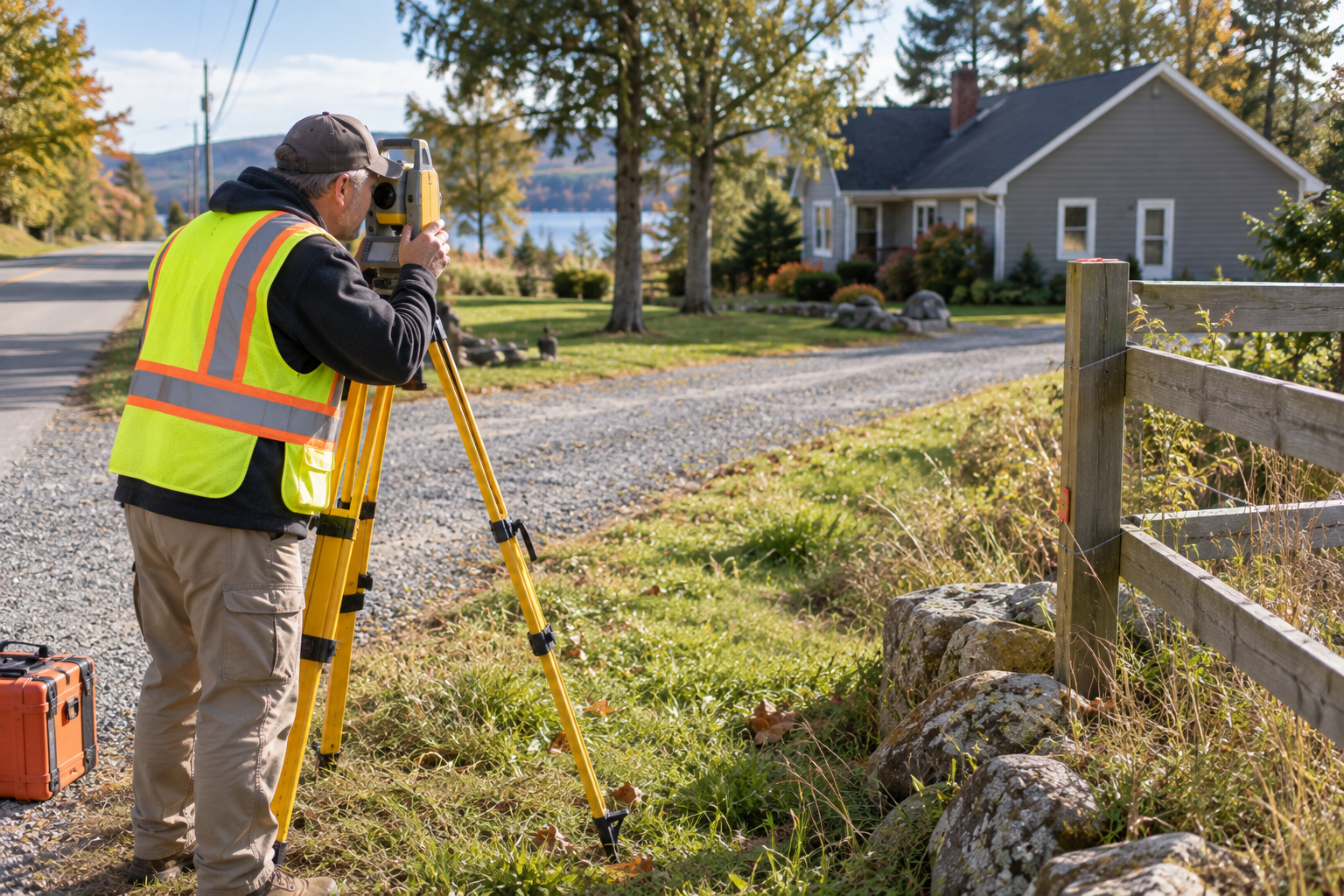
Property boundary being investigated before a home purchase

Access Can Matter Just as Much as Boundaries

Some Nova Scotia properties aren't accessed from a straightforward municipal road frontage.

You may encounter:

  • Shared driveways

  • Rights-of-way

  • Private roads

  • Easements

  • Shared maintenance arrangements

  • Access crossing another parcel

Being able to physically drive to a property doesn't, by itself, explain the legal rights and obligations associated with that access.

Questions about title, easements and legal access belong with your lawyer.

Questions about road condition, maintenance and practical use may require additional investigation as well.

This can be particularly important if year-round access, snow clearing or future financing depends on the arrangement.


Waterfront Property Creates Additional Questions

A waterfront home can require due diligence beyond the building itself.

Where exactly is the boundary?

Is the shoreline changing?

Are there erosion concerns?

How is the property accessed?

Where are the well and septic system in relation to the water?

What restrictions could affect future work near the shoreline?

Are docks, retaining structures or other waterfront improvements relevant to the purchase?

The view may be what first attracts you to the property.

Your investigation should focus on what owning that particular waterfront property actually involves.


Outbuildings Shouldn't Automatically Be Ignored

Garages, barns, workshops and other outbuildings can be a major part of a property's value to a buyer.

But the scope of a standard home inspection may not necessarily include every structure on the property in the same way as the house.

If an outbuilding matters to your decision, establish whether it is included in the inspection and what the inspector will evaluate.

A large barn you're counting on for animals, a workshop you plan to use every day or a detached garage supporting your purchase decision deserves appropriate attention.

Don't discover afterward that the structure you cared about wasn't part of the inspection you ordered.


Environmental Concerns Are Property-Specific

Most residential purchases don't require an exhaustive environmental investigation.

But certain properties or observations can create reasons to ask additional questions.

Examples might include:

  • Evidence of a previous fuel leak

  • Unusual tanks or containers

  • Former commercial or industrial use

  • Suspected contaminated soil

  • Nearby activities that create a specific concern

  • Other information discovered during due diligence

The appropriate investigation depends heavily on the circumstances.

This is an area where specialist environmental advice may be necessary rather than relying on assumptions.


Your Insurance Company Is Part of the Due-Diligence Process Too

A property can be physically acceptable to you and still raise questions for an insurer.

Depending on the home, an insurance company may want information about things such as:

  • Electrical systems

  • Heating equipment

  • Oil tanks

  • Wood-burning systems

  • Roof condition

  • Plumbing

  • Property occupancy

  • Other characteristics of the home

Don't wait until the day before closing to discover that your insurer needs information you don't have.

Starting the insurance conversation early gives you more time to determine whether additional inspections, reports or upgrades are required.


Your Lender May Also Require Information

Financing and property due diligence sometimes overlap.

NSREC notes, for example, that a financial institution may request a septic-system inspection. Nova Scotia Real Estate Commission

A lender may also have questions about a property's condition, appraisal, intended use or characteristics before final mortgage approval.

That's another reason not to assume that mortgage pre-approval means every property will automatically qualify.

The borrower matters to the lender.

So does the property being financed.


Specialists Answer Different Questions

One of the easiest mistakes during due diligence is asking the wrong professional to answer a question outside their area of expertise.

A REALTOR® isn't a structural engineer.

A home inspector isn't necessarily an electrician.

An electrician isn't a surveyor.

A surveyor isn't a septic installer.

Your lawyer isn't conducting the physical home inspection.

Each professional has a different role.

Part of good due diligence is recognizing which question you're trying to answer and who is qualified to answer it.


More Testing Isn't Automatically Better

It's possible to turn due diligence into an endless search for absolute certainty.

No investigation can guarantee that a house will never develop a problem.

The objective is to make reasonable, informed decisions based on the property and the information available.

Ask yourself:

What do I already know?

What don't I know?

Does the unanswered question materially affect my decision?

Who can give me the best information about it?

That approach is much more useful than ordering every conceivable test simply because it exists.


Leave Enough Time for Follow-Up

This is one of the practical reasons to think about due diligence early.

If your home inspection identifies a concern near the end of your condition period, you may need time to arrange another professional.

A specialist may not be available the same day.

Laboratory results may take time.

A contractor may need access to the property.

Additional information may need to be obtained.

In a Nova Scotia transaction, the Agreement of Purchase and Sale establishes deadlines for the buyer's conditions. NSREC confirms that buyers must complete their due diligence and provide the required written waiver of applicable conditions by the agreed deadline if they're satisfied; otherwise the agreement is deemed terminated. Nova Scotia Real Estate Commission

Know your deadlines and plan accordingly.

Buyers reviewing property inspection and testing information

What Tests or Investigations Might a Buyer Consider?

There isn't one list that applies to every home.

Depending on the property, your investigation could involve some combination of:

  • General home inspection

  • Well-water testing

  • Well-yield or water-supply investigation

  • Septic-system inspection

  • Radon testing

  • WETT inspection of a wood-burning system

  • Heating or HVAC evaluation

  • Oil-tank or oil-heating-system evaluation

  • Electrical evaluation

  • Plumbing investigation

  • Structural evaluation

  • Roofing evaluation

  • Sewer camera inspection

  • Moisture investigation

  • Survey or boundary investigation

  • Permit or renovation-history research

  • Environmental investigation

  • Specialist evaluation of an outbuilding

  • Other property-specific investigation

That looks like a long list.

It isn't a recommendation to order all of them.

It's a reminder that “I had a home inspection” and “I completed my due diligence” aren't always exactly the same thing.


Let the Property Tell You What to Investigate

Good due diligence isn't about trying to eliminate every possible risk from home ownership.

That's impossible.

It's about identifying the questions that matter before you become responsible for the property.

A private well creates questions about water.

A septic system creates questions about wastewater.

A wood stove creates questions about the solid-fuel system.

A foundation crack may create a structural question.

A major renovation may create questions about permits or workmanship.

A shared driveway may create questions about legal access.

Follow those questions.

Use the general home inspection as an important starting point, bring in specialists where appropriate and make sure you understand the information you receive before your condition deadlines arrive.

The objective isn't to prove that the house is perfect.

It's to understand the property you're actually buying.


Part of the Buyer Resource Centre: Practical guides to help you prepare, evaluate a property and navigate the home-buying process in Nova Scotia.

Read

Home Inspections in Nova Scotia: What Buyers Should Know

A home inspection is one of the most useful opportunities a buyer has to learn about a property before completing a purchase.

It can help you understand the condition of the home's major systems, identify visible problems, learn about maintenance that may be coming and determine whether anything deserves further investigation.

But a home inspection isn't a guarantee that nothing will ever go wrong.

It also isn't a pass-or-fail test.

The real value is information.

When you're buying a home in Nova Scotia, understanding what an inspection can tell you—and what it can't—can help you use that information much more effectively.


What Is a Home Inspection?

A home inspection is a professional examination of the visible and accessible components of a property.

The Nova Scotia Real Estate Commission strongly recommends that buyers have a home inspection and identifies property inspection as one of the common conditions included in an Agreement of Purchase and Sale. Nova Scotia Real Estate Commission

Depending on the property and the inspector's scope of work, the inspection may include major components such as:

  • Roof

  • Exterior

  • Structure and foundation

  • Plumbing

  • Electrical system

  • Heating and cooling

  • Interior

  • Attic

  • Insulation and ventilation

The purpose isn't to prove that everything is perfect.

It's to give you a better understanding of the property you're considering buying.


A Home Inspection Is Primarily a Visual Inspection

This is one of the most important things for buyers to understand.

A standard home inspection generally evaluates visible and accessible components of the home.

The Canadian Association of Home & Property Inspectors (CAHPI) describes its standard as a visual building inspection covering major systems and components. Its standards also make clear that this type of inspection isn't a verification that a property complies with every building code, regulation or insurance requirement. Cahpi

An inspector generally isn't opening finished walls to see the wiring behind them, excavating around the foundation or dismantling equipment to inspect every internal component.

That means there are limits to what any inspection can reveal.

A finished basement wall can conceal what is happening behind it.

Snow can prevent parts of a roof from being fully evaluated.

Stored belongings can block access.

An attic hatch may be inaccessible.

Understanding these limitations doesn't make the inspection less valuable. It helps you understand what the inspection actually represents.

Home inspector examining visible components of a house

A Home Inspection Isn't the Same as a Building-Code Inspection

Buyers sometimes expect a home inspector to determine whether every part of a house meets current building code.

That's not generally the purpose of a standard home inspection.

Building codes also change over time.

A house built decades ago wasn't necessarily constructed to today's requirements, and the presence of an older building component doesn't automatically mean that it must be upgraded simply because newer construction would be done differently.

An inspector may identify conditions that appear unsafe, unusual or worthy of further investigation.

But don't assume a standard home inspection provides formal certification that the entire property complies with current codes.

If a specific code, permit or compliance issue matters to your purchase, it may require investigation through the appropriate municipality, authority or qualified professional.


The Inspector Isn't There to Decide Whether You Should Buy the House

A home inspector provides information.

The buying decision remains yours.

An inspection report may contain dozens of observations, ranging from small maintenance items to significant concerns.

A long report doesn't automatically mean the house is bad.

Likewise, a short report doesn't guarantee that the property will never need repairs.

CAHPI describes the inspector's role similarly: the inspector provides information to help the buyer make a decision rather than making the purchasing decision for them. Cahpi

Your job is to understand which findings matter to you.


Choose the Inspector, Not Just the Inspection Company

Not every inspector has the same experience, qualifications or approach.

In Nova Scotia, the Real Estate Commission specifically notes that home inspectors are not regulated by the Commission and recommends confirming that the inspector carries Errors and Omissions insurance. Nova Scotia Real Estate Commission

When choosing an inspector, consider asking about:

  • Training and qualifications

  • Experience

  • Professional affiliations

  • Standards of practice followed

  • Errors and Omissions insurance

  • What is included in the inspection

  • What isn't included

  • Whether you'll receive photographs

  • How the findings will be reported

  • Whether you can attend

Price can certainly be part of the decision.

But when you're using an inspection to help evaluate a purchase worth hundreds of thousands of dollars, experience, scope and communication matter too.


Attend the Inspection If You Can

An inspection report is useful.

Walking through the property with the inspector can be even more useful.

Both the Nova Scotia Real Estate Commission and CAHPI encourage buyers to consider attending so they can ask questions and become more familiar with the property. Nova Scotia Real Estate Commission

During an inspection, you may be able to see:

  • Where the main water shutoff is

  • Where the electrical panel is

  • How the heating system operates

  • Where the attic access is

  • Which maintenance items should be monitored

  • What an inspector means when describing a particular concern

Something that sounds alarming in a written report may be easier to understand when the inspector shows it to you.

Conversely, seeing a problem in person can help you appreciate why the inspector considers it significant.

Home buyer attending a professional home inspection

Don't Turn the Inspection Into a Second Showing

Attending the inspection doesn't mean you need to follow the inspector every second.

Inspectors need room to work and concentrate.

Use the opportunity to learn about the house, but allow the inspector to follow their process.

There may also be areas you shouldn't enter because of safety, access or the inspector's own procedures.

A good approach is to ask the inspector how they prefer to communicate during the inspection.

Some explain findings as they go.

Others prefer to complete portions of the inspection before reviewing observations with the buyer.


What Does the Inspector Look at Outside?

The inspection begins before anyone enters the house.

Exterior conditions can provide important clues about what's happening inside.

Depending on accessibility, an inspector may look at areas such as:

  • Roof covering

  • Flashing

  • Chimneys

  • Gutters and downspouts

  • Exterior cladding

  • Windows and doors

  • Decks and porches

  • Foundation

  • Grading

  • Drainage

  • Visible structural components

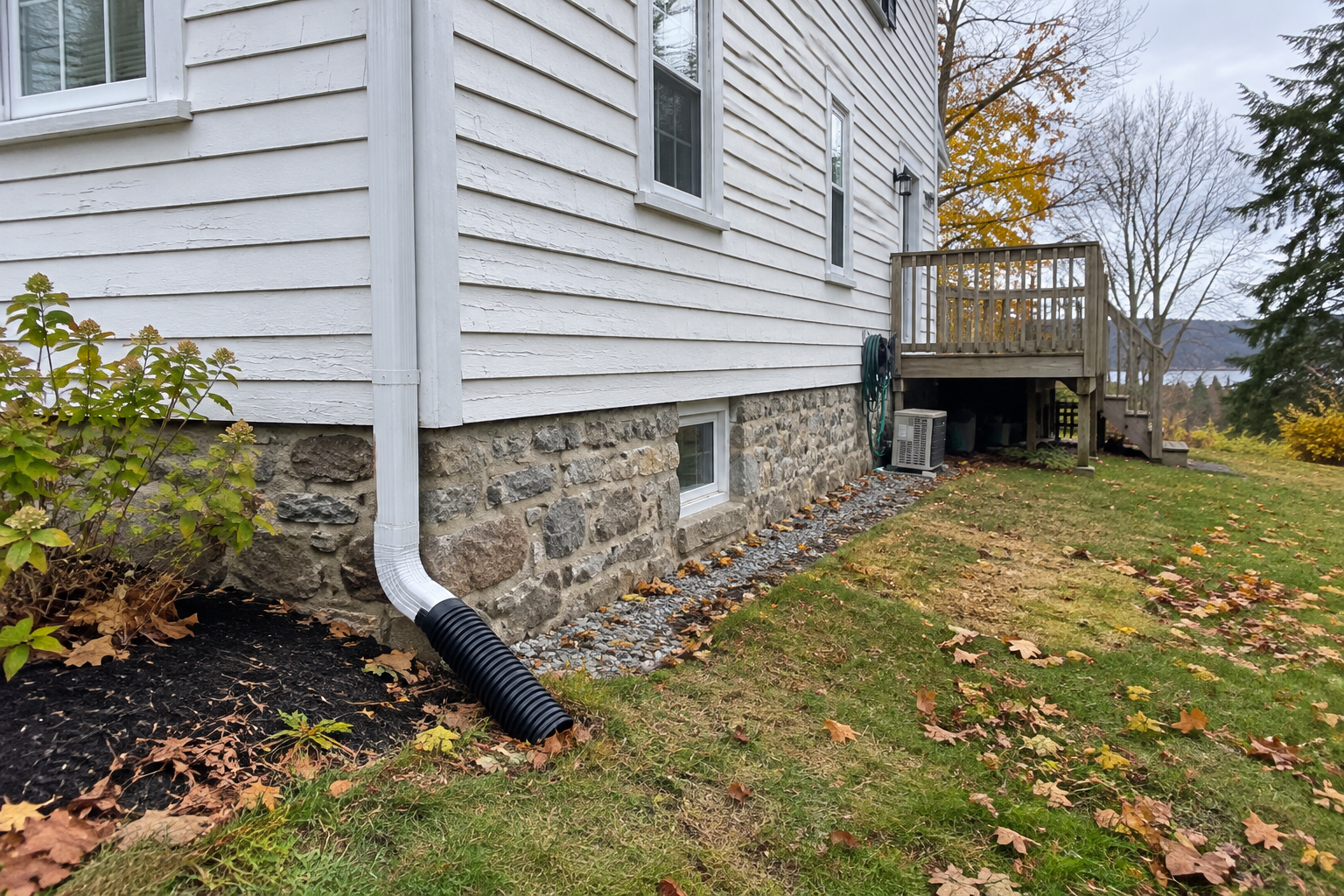
Water management deserves particular attention.

Where does roof water go?

Does the ground slope toward or away from the foundation?

Are downspouts discharging beside the house?

Are there signs of deterioration where exterior materials meet?

Many interior moisture problems begin outside.

Inspector evaluating the exterior and drainage around a home

What Happens in the Basement or Crawlspace?

Basements can reveal a great deal about a house.

An inspector may be able to evaluate visible portions of:

  • Foundation

  • Framing

  • Support posts and beams

  • Plumbing

  • Electrical wiring

  • Heating equipment

  • Moisture conditions

  • Insulation

  • Drainage systems

In an older home, the basement may also show changes made over several generations.

New plumbing may run beside older plumbing. Structural repairs may be visible. Heating systems may have been replaced. An addition may have a different foundation from the original house.

Again, the goal isn't to expect everything to look new.

It's to understand what is there and whether anything warrants further investigation.


The Attic Can Be One of the Most Informative Areas

If the attic is accessible, it can provide information that isn't visible from the finished rooms below.

An inspector may look for things such as:

  • Roof structure

  • Evidence of previous leakage

  • Insulation

  • Ventilation

  • Visible electrical wiring

  • Chimney condition

  • Moisture or staining

  • Signs of pests

  • Alterations to framing

Access matters.

CAHPI notes that when components aren't accessible, the inspector may be unable to inspect them and should identify that limitation in the report. Cahpi

If an important area can't be inspected, ask what that means and whether any follow-up investigation makes sense.

Home inspector examining insulation and roof framing in an attic

Electrical Systems Deserve More Than a Quick Look at the Panel

The electrical panel is important, but it's only one part of the electrical system.

An inspector may look at visible wiring, receptacles, grounding, panels and other accessible components.

In older or renovated homes, electrical work may have been completed at several different times.

The inspection may identify something that should be evaluated by a licensed electrician.

That's an important distinction.

A home inspector is generally evaluating the overall property as a generalist. When a specific technical concern is identified, a specialist may be better positioned to determine exactly what is happening and what, if anything, needs to be done.

Electrical panel being examined during a home inspection

Plumbing Is More Than Checking Whether the Taps Work

Running the taps can provide useful information, but an inspection can go further.

Visible plumbing may be evaluated for:

  • Leaks

  • Corrosion

  • Drainage

  • Water pressure or flow concerns

  • Fixture operation

  • Water-heating equipment

  • Visible supply and waste piping

However, the inspector can't see every pipe hidden behind walls, ceilings or floors.

And if the property uses a private well or septic system, those systems may require their own testing or specialized inspections rather than relying on the general home inspection alone.


Heating and Cooling Systems Are Part of the Picture

Nova Scotia homes can use a wide variety of heating systems.

During an inspection, visible heating and cooling equipment may be evaluated for operation and apparent condition within the inspector's scope.

That might include:

  • Furnaces

  • Boilers

  • Heat pumps

  • Electric heating

  • Distribution systems

  • Visible fuel-related components

  • Thermostats

But a home inspector isn't necessarily an HVAC technician.

If the equipment has a problem, is unusually old or raises a specific concern, further evaluation by a qualified heating professional may make sense.

The same principle applies to many components of the house:

the inspection can identify the question; a specialist may be needed to provide the detailed answer.


A Home Inspection Doesn't Replace Well and Septic Investigation

This is particularly important in Nova Scotia.

A property may look entirely conventional but still rely on a private well and on-site septic system.

The Nova Scotia Real Estate Commission recommends septic inspection before finalizing the purchase of a property with an on-site system and notes that the inspection may involve pumping the tank and examining the disposal field. It also identifies licensed septic installers, licensed sewage haulers and professional engineers as professionals who may conduct this type of inspection. Nova Scotia Real Estate Commission

Water testing, well investigation and septic inspection should therefore be considered separately from the general home inspection.

Don't assume that ordering a home inspection automatically covers all three.


A Home Inspection Doesn't Test for Everything

Another common misconception is that a home inspection is a comprehensive test for every possible problem.

It isn't.

Depending on the property, separate investigation may be appropriate for things such as:

  • Well water

  • Septic system

  • Radon

  • Wood-burning appliances

  • Sewer lines

  • Environmental concerns

  • Structural issues

  • Electrical concerns

  • Plumbing concerns

  • Oil tanks

  • Property boundaries

  • Permits or renovation history

Some inspectors may offer additional services.

Others may refer you to specialists.

What's appropriate depends on the particular property.

That's why due diligence should be designed around the house you're actually buying, rather than treating every property exactly the same way.


Radon Is a Good Example of the Inspection's Limits

You can't determine a home's radon level simply by looking at it.

Testing is required.

Nova Scotia says testing is the only way to determine whether a home has elevated radon, and Health Canada recommends a long-term test of at least three months. Government of Nova Scotia

That timeline also illustrates why not every question about a property can necessarily be answered during a typical purchase-condition period.

The important thing is to understand the limitation and decide what information you need before proceeding and what may need to be addressed after ownership.


The Property Disclosure Statement Doesn't Replace an Inspection

If the seller provides a Property Disclosure Statement, it can be a useful source of information about the property's history.

But it isn't the same thing as an inspection.

The Nova Scotia Real Estate Commission points out that the seller may not know about every defect and that the information in a Property Disclosure Statement is based on the seller's personal knowledge. Nova Scotia Real Estate Commission

A seller may genuinely be unaware of a condition hidden behind a finished wall or beneath a roof covering.

Similarly, your REALTOR® may notice visible concerns during a showing, but that isn't a substitute for a professional property inspection.

These sources of information complement one another.

They don't replace one another.


What If the Inspector Finds a Problem?

This is where buyers sometimes become overwhelmed.

Finding problems is part of the inspection process.

Homes require maintenance.

Components wear out.

Older properties may have repairs or systems approaching replacement.

The important questions are:

What was found?

How significant is it?

Does it need immediate attention?

Should a specialist investigate it?

What could it reasonably cost to address?

Does it change how you feel about purchasing the property?

A loose handrail and a significant structural concern shouldn't receive the same weight simply because both appear in the report.

Prioritize.

Buyer reviewing a concern identified during a home inspection

Don't Expect the Inspector to Price Every Repair

An inspection report may help you identify repairs, but a home inspector isn't necessarily the right person to provide a firm repair quote.

If the cost matters to your decision, obtaining information from the appropriate contractor or specialist can be much more useful.

For example, if an inspector identifies a roofing concern, a roofing contractor may be able to determine whether a localized repair is appropriate or whether more substantial work is required.

The same principle applies to electrical, plumbing, structural and heating concerns.

Get the right person answering the right question.


An Inspection Report Isn't Automatically a Renovation List for the Seller

A home inspection may identify numerous maintenance items and improvements.

That doesn't automatically mean the seller is required to repair all of them.

What happens after an inspection depends on the Agreement of Purchase and Sale, the inspection condition, the findings, the buyer's priorities and what the parties agree to do.

Possible outcomes can vary.

A buyer may decide they're satisfied and proceed.

A concern may require additional investigation.

The parties may agree to an amendment addressing an issue.

Or a buyer may determine that they're not satisfied with their condition.

The important point is that the inspection gives you information to make a decision; it doesn't automatically dictate what the seller must do.


Inspection Conditions Have Deadlines

This is particularly important in a Nova Scotia real estate transaction.

The Agreement of Purchase and Sale can make the purchase conditional on the buyer being satisfied with specified conditions, including property inspection.

Those conditions have a deadline.

Under the current Nova Scotia process, when a buyer is satisfied with the applicable buyer conditions, written notice is provided using Form 408: Buyer Waiver of Conditions on or before the agreed deadline. If the required waiver isn't provided by the deadline, the agreement is deemed terminated. Nova Scotia Real Estate Commission

That means inspection day isn't the deadline for simply receiving a report.

You need enough time to understand the findings, complete any necessary follow-up and make your decision within the timeline established in your agreement.


Sometimes the Inspection Creates More Questions

That's normal.

A general inspection may identify a concern without being able to determine its full extent.

For example:

An inspector notices unusual foundation movement.

An electrician may need to evaluate older wiring.

A roofing contractor may need to assess a leak.

A heating technician may need to examine a boiler.

A septic professional may need to investigate the on-site system.

In those situations, the inspection has done something valuable.

It has told you where to look more closely before making your decision.


What About Newer Homes?

New doesn't mean inspection-proof.

Newer houses can still have installation issues, drainage problems, incomplete work, equipment concerns or other defects.

A home doesn't need to be old before an inspection can provide useful information.

The questions may simply be different.

With an older property, you may be trying to understand decades of changes and repairs.

With a newer property, you may be looking more closely at installation, workmanship, operation and whether components are performing as expected.


What About a House Being Sold “As Is”?

“As is” doesn't necessarily make information less valuable.

In fact, understanding the property's condition may become even more important.

The seller's willingness or obligation to make repairs is a separate issue from your need to understand what you're purchasing.

An inspection can still help you estimate future work, identify concerns that require specialist investigation and decide whether the property fits your expectations and budget.

The exact effect of “as is” wording depends on the agreement, so discuss the particular terms with your REALTOR® and obtain legal advice where appropriate.


What Should You Do Before the Inspection?

Once an inspection is scheduled, think about what you already know about the property.

Review available information such as:

  • Property Disclosure Statement

  • Age of the home

  • Known renovations

  • Heating systems

  • Well and septic information

  • Previous concerns noticed during showings

  • Features you don't understand

  • Areas you specifically want the inspector to look at

Make a list of questions.

You don't need to become a home inspector before the appointment.

You simply want to make sure the inspection helps answer the questions that matter to you.


What Should You Do After the Inspection?

Don't look only at the summary page.

Review the report.

Ask questions about anything you don't understand.

Separate routine maintenance from larger concerns.

Determine whether any findings require a specialist.

If estimates or additional inspections are important to your decision, remember your condition deadline.

Then consider the property as a whole.

Every house will eventually require maintenance and repairs.

The goal of the inspection isn't to find a home that will never need work.

It's to help you understand what you're buying today and what may be ahead.

Home buyers reviewing a property inspection report

Use the Inspection to Learn About the Home

A home inspection is sometimes treated as an obstacle between an accepted offer and closing.

It can be much more useful than that.

It's an opportunity to spend time learning how the property works.

Where does the water shut off?

How old is the heating equipment?

What maintenance should you plan for?

What does the inspector think you should monitor?

Which concerns deserve immediate attention and which are longer-term ownership items?

Those are useful questions even when the inspection doesn't uncover a major problem.


Information Is the Real Value of the Inspection

A home inspection can't reveal everything.

It can't see through walls.

It can't predict exactly when an appliance will fail.

It doesn't replace every specialist, test or investigation that might be appropriate for a particular property.

And it doesn't make the buying decision for you.

What it can do is give you a much better understanding of the home before you take ownership.

Use the inspection to identify visible concerns, understand the home's systems, ask better questions and determine whether anything needs a closer look.

Then use that information—along with the rest of your due diligence—to decide whether you're comfortable moving forward.


Part of the Buyer Resource Centre: Practical guides to help you prepare, evaluate a property and navigate the home-buying process in Nova Scotia.
Read

Older Homes in Nova Scotia: What Buyers Should Look For

Older homes are part of the character of many Nova Scotia communities.

In places such as Wolfville, Annapolis Royal, Bridgetown, Digby, Chester and communities throughout the Annapolis Valley and South Shore, it's common to find houses that have been standing for many decades—and sometimes well over a century.

They can offer craftsmanship, mature neighbourhoods, established properties and architectural details that can be difficult to reproduce in a newer home.

They can also tell a complicated story.

An older house may have been renovated several times, had additions built in different decades, received new electrical or plumbing systems, had insulation added and changed heating systems more than once.

That doesn't make an older home a bad choice.

It means that when you're buying one, understanding what has changed—and what hasn't—is often more important than simply knowing when the house was built.


Age Alone Doesn't Tell You the Condition of a Home

A 120-year-old house isn't automatically in worse condition than a 30-year-old house.

Maintenance matters.

So do renovations, materials, workmanship and the way the property has been used over time.

An older home that has been consistently maintained and thoughtfully updated may have fewer immediate concerns than a much newer property where maintenance has been deferred.

That's why the age listed for the property should be the beginning of your investigation rather than the conclusion.

Instead of asking:

“Is this house too old?”

A better question is:

“What parts of this house are original, what has been updated and what may need attention next?”


An Older Home Is Usually a Collection of Different Ages

The house may have been built in 1900.

That doesn't mean everything in it is 126 years old.

The roof may be 8 years old. The electrical panel might be 15 years old. The windows may have been replaced in stages. The kitchen could have been renovated five years ago while some plumbing remains much older.

An addition may have been built decades after the original house.

Thinking about an older home this way makes it easier to evaluate.

You're not really buying a single 100-year-old system.

You're buying a collection of components, renovations and systems from different periods.

The goal is to understand as much of that history as reasonably possible.


Start With the Structure

Older houses can use construction methods and materials that are different from those found in newer homes.

When walking through one, pay attention to how the house feels.

Are floors noticeably uneven?

Do doors close properly?

Are there significant cracks?

Does part of the house appear to slope?

Has an addition been connected to the original structure?

Some movement and unevenness can occur over a home's long life and doesn't automatically indicate a serious structural problem.

What matters is determining whether what you're seeing appears to be old and stable or evidence of an active problem.

That's where a home inspector—and sometimes a structural engineer or other specialist—can become important.


Look Carefully at the Foundation and Basement

Basements in older Nova Scotia homes can look very different from modern poured-concrete basements.

Depending on the age and location of the property, you may encounter stone foundations, masonry, concrete block, poured concrete or combinations of materials from different renovations.

You may also find a basement that was originally intended more as a utility or storage space than finished living space.

Look for signs of:

  • Water entry

  • Dampness

  • Efflorescence or staining

  • Cracking

  • Deteriorating mortar

  • Previous repairs

  • Rot near sill areas

  • Improvised structural supports

  • Changes where additions meet the original house

A basement doesn't have to look new to be functional.

The important question is whether the foundation is performing properly and whether moisture is being managed.

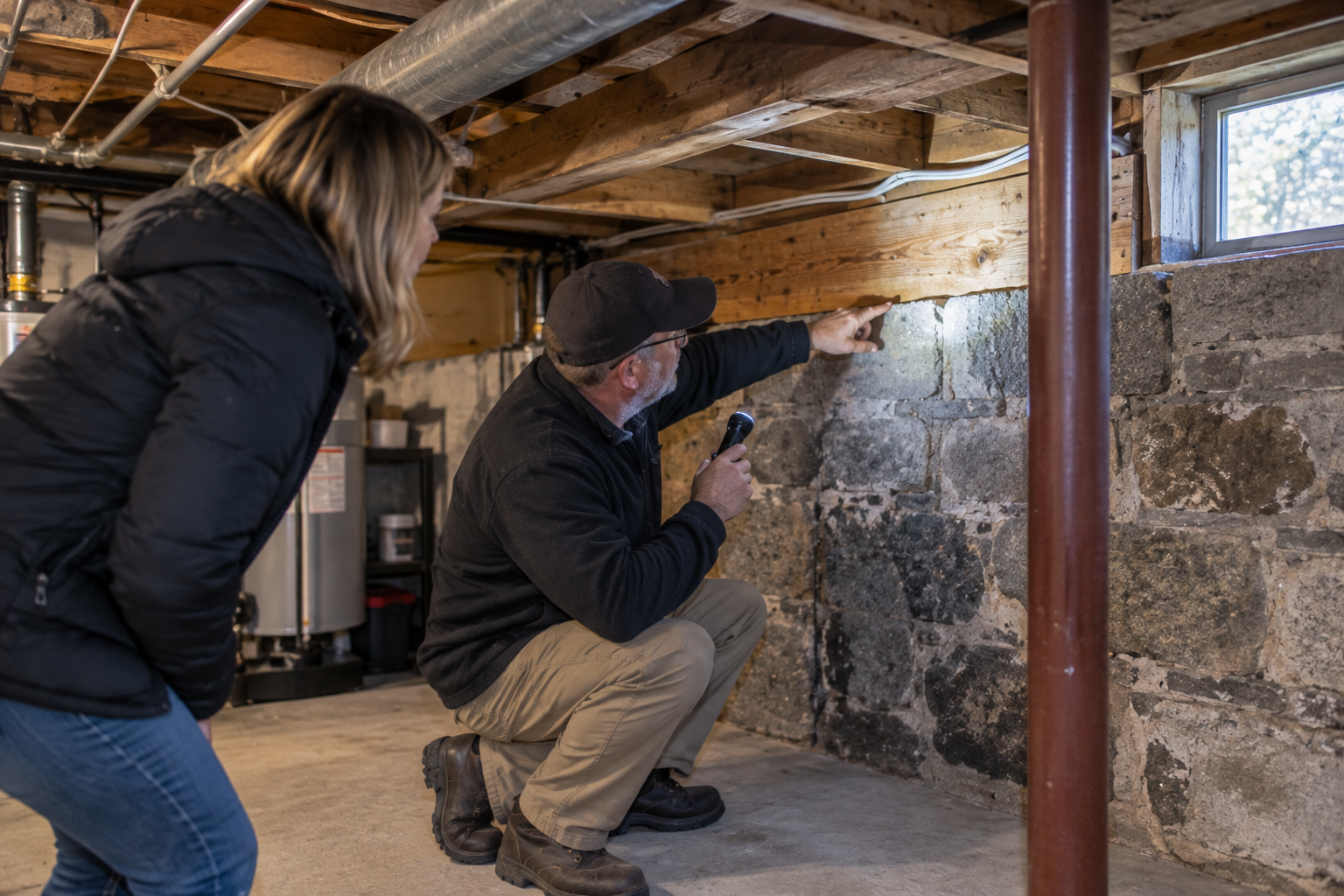
Stone foundation in the basement of an older Nova Scotia home

Water Management Matters at Any Age

Many expensive problems in houses begin with water.

Older homes are no exception.

Look beyond the basement itself and examine how water moves around the property.

Consider:

  • Roof drainage

  • Gutters and downspouts

  • Grading around the foundation

  • Low areas beside the house

  • Drainage from neighbouring land

  • Signs of previous basement water

  • Rot or deterioration around exterior wood

  • Condition around decks, porches and additions

A wet basement doesn't necessarily mean the foundation has failed.

Sometimes the cause is surprisingly simple.

But visible moisture or a history of water entry deserves investigation rather than assumption.

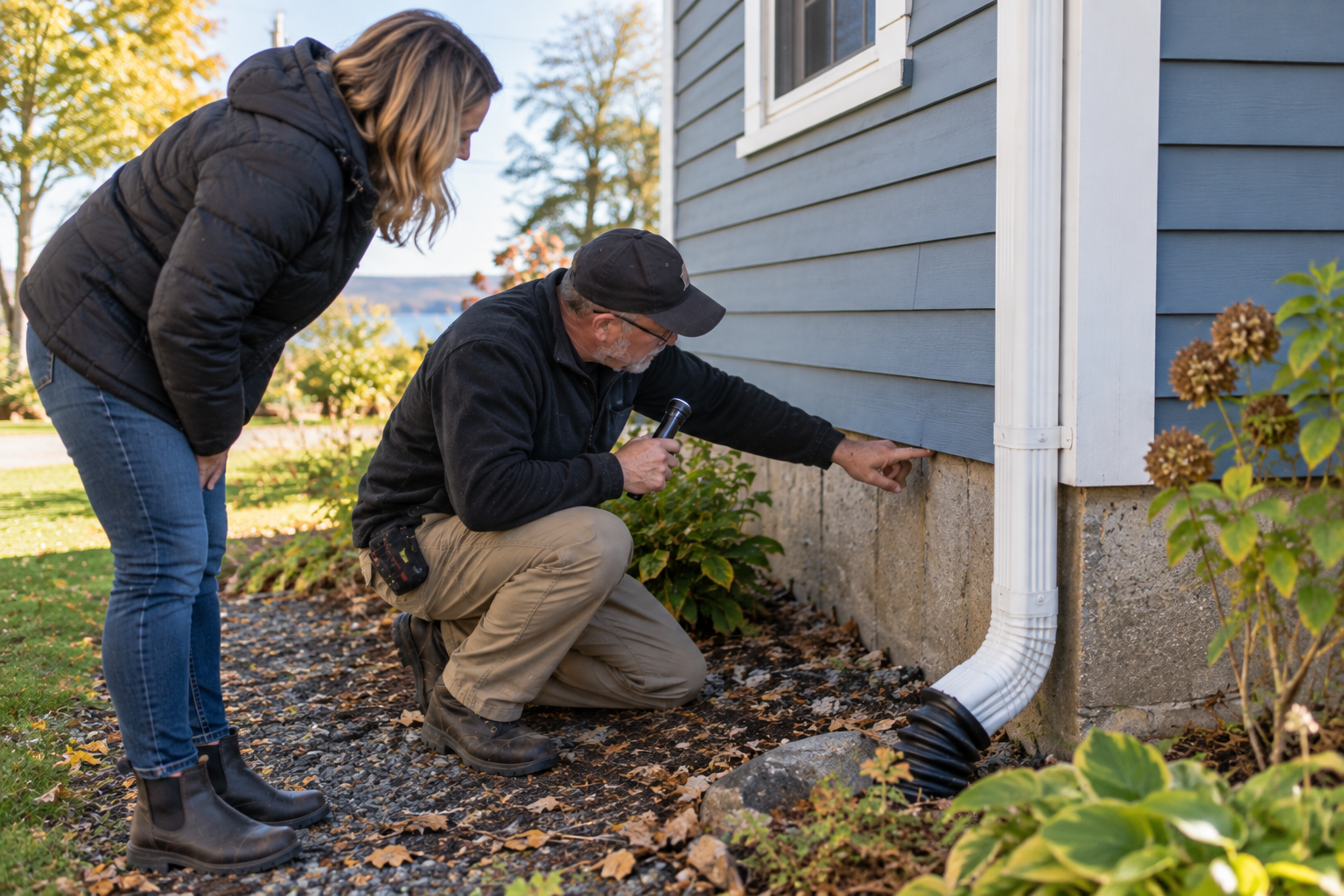
Drainage and foundation area around an older home

Electrical Systems Can Tell You a Lot About an Older Home

Electrical systems often change significantly during the life of an older house.

A home may have a modern electrical panel while some older wiring remains elsewhere.

That's why looking only at the panel isn't enough.

Depending on the age and renovation history, an inspector or electrician may identify older wiring methods, additions to circuits, outdated equipment or work completed at different times.

Buyers should also think about capacity, not just age.

Modern households can place very different demands on an electrical system than the house was originally designed to support.

Heat pumps, electric water heaters, appliances, workshops, hot tubs and electric-vehicle chargers can all increase electrical demand.

If you're planning significant changes after purchasing the home, understanding the electrical system beforehand can help you determine whether upgrades may eventually be required.

Electrical system being evaluated in an older home

Don't Assume Renovated Means Everything Was Updated

A beautifully renovated kitchen can make an older home feel new.

But new cabinets, flooring and countertops don't tell you what happened behind the walls.

The electrical system may have been updated during the renovation—or it may not have been.

The plumbing may be new in that room while older supply or drain lines remain elsewhere.

Insulation may have been improved in one addition but not in the original house.

When a property has undergone substantial renovations, useful questions include:

What work was completed?

When was it completed?

Who completed it?

Were permits required?

Are permits, invoices, warranties or other records available?

Documentation isn't always available, particularly for work completed many years ago.

Its absence doesn't automatically mean something is wrong.

It simply means you may need to rely more heavily on the physical condition of the property and appropriate professional evaluations.


Additions Deserve Their Own Look

Older houses often grow over time.

A rear kitchen, mudroom, sunroom, garage or additional living space may have been added decades after the original house was constructed.

Treat an addition almost like a small building attached to the main one.

Look at:

  • How it connects to the original structure

  • Foundation type

  • Roof connection

  • Drainage

  • Insulation

  • Heating

  • Electrical service

  • Floor levels

  • Signs of movement or water entry

Problems sometimes occur not in the original house or the addition itself, but where the two structures meet.

Older Nova Scotia home with a later addition

Plumbing May Have Been Updated in Stages

Like electrical systems, plumbing in an older home may represent several generations of materials.

A renovated bathroom may have modern supply and drain lines while older plumbing remains in the basement or elsewhere in the house.

Look for visible leaks, corrosion, staining and evidence of previous repairs.

Water pressure and drainage performance are also worth paying attention to during an inspection.

And remember that plumbing inside the house is only part of the picture.

Depending on the property, the home may also rely on a private well and septic system, which should be investigated separately.


Heating Systems Often Change During the Life of the House

An older Nova Scotia home may have been heated several different ways over its lifetime.

You might find an oil-fired boiler that replaced an earlier system, electric baseboards added to an addition, heat pumps installed more recently and a wood stove providing supplemental heat.

That's not necessarily a problem.

In fact, multiple heating systems are common enough that the important question is how they work together.

Find out:

  • What provides most of the heat?

  • Which areas does each system serve?

  • How old is the equipment?

  • What maintenance has been completed?

  • Are any older components still present but no longer used?

  • How is domestic hot water produced?

Understanding the heating configuration can also help when estimating future operating and replacement costs.


Older Doesn't Automatically Mean Energy Inefficient

It's easy to assume that an older home will automatically be expensive to heat.

That's too simple.

Some older homes have received substantial insulation, air-sealing, window and heating upgrades. Others may still perform much closer to their original construction.

Even two houses built in the same year can perform very differently.

Instead of using age as a shortcut, look at the actual home.

Consider its insulation, air leakage, windows, heating equipment, size and previous improvements.

This gives you a much better picture of how the house is likely to perform than the construction date alone.


Windows Don't Have to Be New to Be Worth Keeping

Older homes sometimes retain original wood windows.

Buyers occasionally assume these automatically need to be replaced.

Condition matters more than age alone.

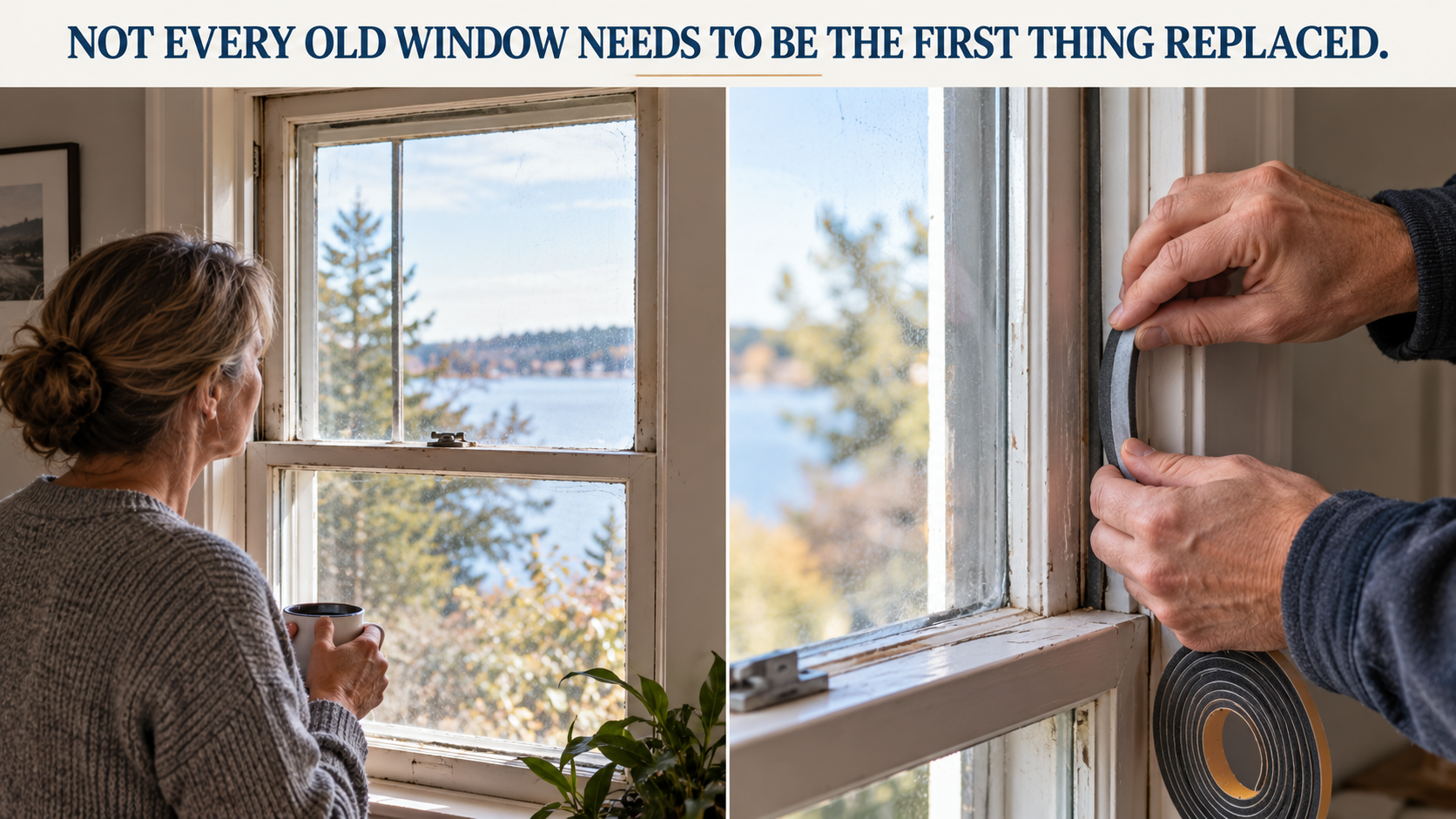
Older wood windows may require maintenance, weatherstripping, storm windows or repairs. In other situations, replacement may make sense.

If windows have already been replaced, look at the quality of the installation as well as the window itself.

Water intrusion and air leakage can occur around a poorly installed newer window just as they can around an older one.


The Roof Is More Than the Shingles

When evaluating the roof of an older house, don't focus only on the age of the shingles.

The roof structure may have been altered over time.

Dormers may have been added.

Chimneys may have been removed or abandoned.

Additions can create valleys and complicated roof intersections.

Inside the attic, an inspector may be able to identify evidence of previous leaks, ventilation issues, structural changes or older repairs.

A newer roof covering is certainly useful information, but it doesn't replace looking at the roof as a complete system.

Roof structure being inspected in the attic of an older home

Chimneys Can Outlive the Systems They Once Served

Older homes may have one or more chimneys even if the original heating equipment is long gone.

A chimney might currently serve a wood stove or heating appliance.

Another may be unused.

Some have been partially removed during renovations while portions remain elsewhere in the house.

If a chimney is still in use, its condition and suitability for the connected appliance matter.

If it isn't being used, you may still want to understand its condition and whether it has been properly capped or altered.


Attics Can Reveal a Lot About a House

If accessible, the attic can be one of the most informative places in an older home.

It may reveal:

  • Roof structure

  • Insulation levels

  • Ventilation

  • Evidence of previous leaks

  • Electrical wiring

  • Chimney condition

  • Signs of animals or pests

  • Changes made during renovations

It can also help explain why certain rooms feel colder or warmer than others.

A finished house can hide much of its construction history.

The attic often doesn't.


Watch for Signs of Past Repairs—But Don't Assume Repairs Are Bad

Repairs are normal in an older house.

In fact, a century-old home with no evidence of repair would be unusual.

The presence of new framing, patched foundations, replaced plumbing or repaired roofing isn't automatically a warning sign.

The question is why the repair was needed and whether it was completed properly.

Sometimes evidence of a repair tells you that a previous owner addressed a problem.

Other times it identifies an area that deserves a closer look.

Context matters.


Older Homes and Radon

Radon isn't specifically an “old house problem.”

Newer homes can have elevated radon too.

Radon is a naturally occurring radioactive gas that can enter buildings from the soil and rock beneath them. Nova Scotia currently recommends testing homes because elevated levels can occur throughout the province. The only way to know the radon level in an individual home is to test it. Government of Nova Scotia

That distinction is important when buying an older property.

The age of the house doesn't tell you whether it has a radon problem.

Testing does.

For long-term assessment, Health Canada recommends testing for at least three months. Government of Nova Scotia


Insurance Is Worth Investigating Early

Older homes can sometimes require additional information before an insurer is comfortable providing coverage.

The insurer may ask questions about systems such as:

  • Electrical wiring

  • Plumbing

  • Heating

  • Oil tanks

  • Wood-burning appliances

  • Roof age and condition

Requirements vary between insurance companies and between properties.

Don't assume that because the seller currently has insurance, your insurer will automatically insure the home under the same terms.

If the property has older systems or unusual features, starting the insurance conversation early can prevent surprises later in the buying process.


Heritage Registration Is Different From Simply Being an Old House

An old home isn't automatically a registered heritage property.

Nova Scotia has both provincial and municipal heritage registries, and a property can potentially appear on one or both. Registered properties receive protection under heritage legislation, while municipalities administer their own municipal registries. Cultural Heritage Hub

If you're considering a registered heritage property, find out exactly what designation applies and investigate what that means before planning renovations or exterior changes.

This is different from buying an older home that simply has historic character.

The distinction matters.


A Home Inspection Becomes Particularly Valuable

A home inspection is useful with any property, but an older house gives the inspector a longer history to interpret.

The inspector isn't there simply to produce a list of everything that isn't new.

A useful inspection helps you understand the home's major systems, identify visible concerns and determine where additional investigation may be appropriate.

Depending on what is found, that could mean consulting:

  • An electrician

  • A plumber

  • A structural engineer

  • A roofing contractor

  • A heating technician

  • A chimney or WETT-trained professional

  • A foundation or drainage specialist

  • Another qualified professional

The home inspector doesn't replace these specialists.

The inspection can help identify when bringing one in makes sense.

Home inspector evaluating an older Nova Scotia house

Don't Expect an Old House to Behave Like a New One

This is an important mindset when viewing older properties.

Original floors may not be perfectly level.

Walls may not be perfectly straight.

Doors may have been adjusted over the years.

Trim may show generations of paint.

Rooms may have dimensions that wouldn't be used in a modern floor plan.

Those characteristics aren't necessarily defects.

At the same time, “it's an old house” shouldn't be used to dismiss genuine structural, moisture, electrical or safety concerns.

The goal is to distinguish age and character from problems that require attention.


Think About the Renovations You Want to Make

Before buying an older house, consider what you hope to change.

Opening walls, moving kitchens, adding bathrooms, finishing basements or significantly changing the heating system can uncover conditions that weren't visible during the purchase.

You may also discover that a seemingly simple renovation affects electrical, plumbing, insulation or structural components.

If your plans are important to whether the property works for you, investigate their feasibility before assuming they can easily be completed.

This becomes particularly important with registered heritage properties, unusual construction and major structural alterations.

Maintained interior of an older Nova Scotia home

Budget for Ownership, Not Just the Purchase

Older homes don't necessarily require constant expensive repairs.

But they do reward owners who plan ahead.

Rather than asking whether the home will ever need work, identify the major components and consider what may need attention over the next several years.

Perhaps the roof is relatively new but the heating equipment is older.

Maybe the electrical system has been updated but some windows need maintenance.

Perhaps the house is structurally sound but would benefit from insulation and air-sealing improvements.

Understanding those priorities can help you build a more realistic ownership budget.


What Should a Buyer Investigate?

Every older home is different, but depending on the property, a buyer may want to understand:

  • Foundation and structural condition

  • Water entry and drainage

  • Roof and attic

  • Electrical system

  • Plumbing

  • Heating equipment

  • Oil tanks or wood-burning appliances

  • Insulation and air sealing

  • Windows and exterior condition

  • Chimneys

  • Additions and major renovations

  • Available permits or renovation records

  • Private well and septic systems, if applicable

  • Radon

  • Insurance requirements

  • Heritage registration, if applicable

That doesn't mean every older house needs every possible specialist.

It means the investigation should respond to what is actually present in that particular home.


Buy the House That's Actually in Front of You

An older home shouldn't be judged simply because it's old.

And it shouldn't be given a free pass because its age gives it character.

Look at the actual house.

Understand its systems.

Find out what has been updated.

Investigate what hasn't.

Pay attention to water, structure, electrical, plumbing, heating and the changes made over the home's lifetime.

Then consider how those things fit your budget, your plans and the way you want to live.

A home that's been standing for generations can still have many years ahead of it.

The important part is knowing as much as reasonably possible about the house you're taking ownership of today.


Part of the Buyer Resource Centre: Practical guides to help you prepare, evaluate a property and navigate the home-buying process in Nova Scotia.
Read

Heating a Home in Nova Scotia: Oil, Heat Pumps, Wood, Electric & More

When you're buying a home in Nova Scotia, the heating system deserves more attention than simply checking the box marked “heat.”

Two houses that look similar can feel very different through a Nova Scotia winter—and cost very different amounts to keep comfortable.

You may encounter oil furnaces, hot-water boilers, ducted and ductless heat pumps, electric baseboards, wood stoves, pellet stoves, propane systems and homes that combine several of them. In many cases, understanding the combination is more useful than identifying one “primary” heating source.

The goal isn't to find the one heating system that's automatically best.

It's to understand how the particular home is heated, how well that system suits the house, what it may cost to operate and what responsibilities you're taking on when you buy it.


Start With How the Whole House Is Heated

A listing might say a home has a heat pump.

That doesn't necessarily mean the heat pump heats every room.

It might serve the main living area while bedrooms have electric baseboards. An oil-fired boiler may provide the home's central heat while a heat pump handles much of the day-to-day heating and cooling. A wood stove might supplement another system during colder weather.

When viewing a property, start with a few basic questions:

What produces the heat?

How is that heat distributed through the house?

Does the system serve the entire home?

Is there another heating system as well?

Which system does the current owner actually use?

That gives you a much better picture than the heating label in the listing alone.


The Heating System Is Only Part of the Equation

Heating costs aren't determined by the heating equipment alone.

The same furnace or heat pump can perform very differently in two different houses.

Insulation, air leakage, windows, ceiling height, house size, layout, exposure to wind and even how warm the occupants like to keep the house can all affect energy use.

That's why a high heating bill doesn't automatically mean the heating system is inefficient—and a low bill doesn't necessarily mean another family will have the same result.

When comparing homes, think about the house and heating system together.


Oil Heat Is Still Something Nova Scotia Buyers Will Encounter

Oil heating remains common enough in Nova Scotia that buyers should understand the basics even if they've never lived with it before.

An oil-fired system may use a furnace, which heats and distributes air through ductwork, or a boiler, which heats water that circulates through radiators or baseboards.

Both can provide comfortable whole-home heat.

For a buyer, however, the heating appliance is only part of what needs attention.

There is also the oil tank.


If There's Oil Heat, Look at the Tank Too

A domestic oil tank is more than a container sitting beside the house or in the basement.

Nova Scotia requires domestic fuel-oil tank installations to comply with applicable fuel-safety standards, and the province recommends installation by a trained and licensed Oil Burner Technician. Homeowners are responsible for maintaining their tanks. Government of Nova Scotia

When you're considering an oil-heated property, useful questions include:

  • How old is the tank?

  • Is it indoors or outdoors?

  • What type of tank is it?

  • Is there an identification or certification label?

  • Who installed it?

  • Are installation records available?

  • Is there any evidence of corrosion, leakage or previous problems?

  • Has the furnace or boiler been regularly serviced?

The answers can matter for maintenance, future replacement and insurance.

An older tank doesn't automatically mean you shouldn't buy the house. It means the tank deserves the same kind of investigation you'd give other significant components of the property.

Domestic heating oil tank in a Nova Scotia home

An Oil Leak Can Be Much More Than a Heating Repair

One reason oil tanks deserve particular attention is the potential consequence of a leak.

Heating oil can contaminate soil and groundwater, and cleanup can become significantly more complicated than simply replacing the tank. Nova Scotia specifically warns of the potential environmental damage and high cleanup costs associated with oil spills. Government of Nova Scotia

For buyers, this is one of the reasons to look beyond whether the furnace turns on.

The tank, fuel lines, equipment and surrounding area are all part of understanding an oil-heated property.


Heat Pumps Have Become an Important Part of Home Heating

Heat pumps are increasingly familiar to Nova Scotia home buyers.

Unlike electric baseboards, which create heat using electrical resistance, a heat pump moves heat between indoors and outdoors. During the heating season, it extracts heat from outside air and transfers it into the home.

Most residential heat pumps can also reverse that process and provide air conditioning during warmer weather.

That combination of heating and cooling is one reason buyers often view a heat pump as an attractive feature.

But seeing a heat pump on the wall doesn't tell you everything you need to know.


A Heat Pump May Not Heat Every Part of the House Equally

A common ductless heat pump has one or more indoor heads connected to an outdoor unit.

Where those heads are located matters.

An indoor unit in an open kitchen, dining and living area may do an excellent job heating that space. That doesn't mean the heat will travel equally well through closed bedroom doors, around corners or between floors.

A ducted heat-pump system works differently because conditioned air can be distributed through ductwork.

When viewing a home with heat pumps, look at:

  • How many indoor units there are

  • Where they're located

  • Which rooms they serve

  • Whether there is another heating system

  • What happens in rooms without a heat-pump head

  • The age and apparent condition of the equipment

The important question isn't simply “Does the house have a heat pump?”

It's “How does this house actually use its heat pumps?”

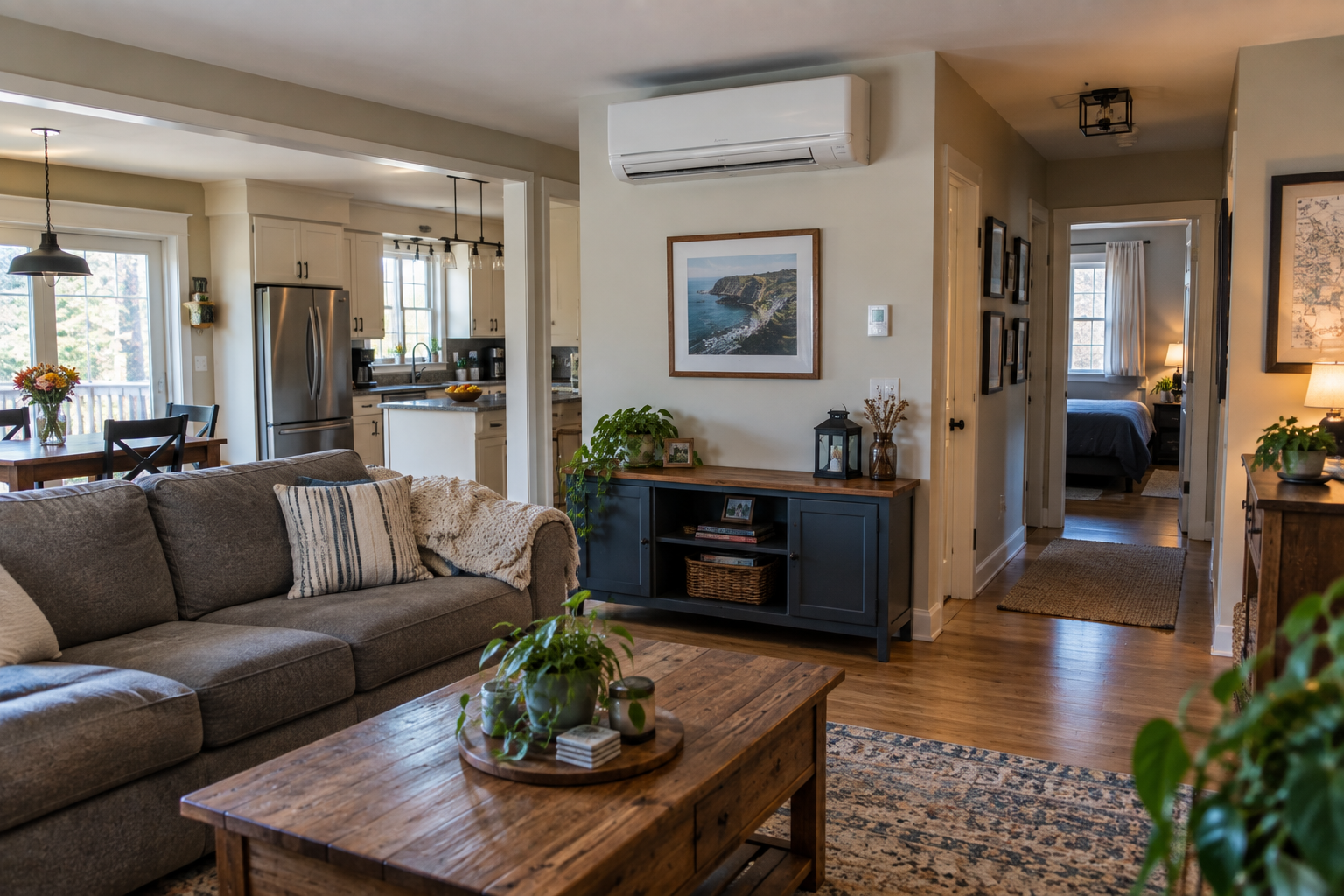
Ductless heat pump heating the main living area of a home

Don't Assume a Heat Pump Means the Other Heating System Is Obsolete

Many Nova Scotia homes have more than one way to produce heat.

A house might have heat pumps along with:

  • Electric baseboards

  • An oil furnace or boiler

  • A wood stove

  • A pellet stove

  • Another central heating system

That isn't necessarily duplication without purpose.

The systems may serve different parts of the home or give the owner flexibility in how the house is heated.

If you're buying a home with multiple heating systems, understand whether each is operational and why it's there before deciding that one can simply be removed.


Electric Baseboard Heat Is Simple—but the House Still Matters

Electric baseboard heating is straightforward.

Each heater uses electrical resistance to create heat, and individual thermostats often allow rooms to be controlled separately. There is no furnace, boiler, oil tank or central ductwork required.

That simplicity can mean fewer moving parts.

But operating cost depends heavily on how much heat the home requires.

A smaller, well-insulated and reasonably airtight house may be a very different proposition from a large, drafty home using electric resistance heat throughout.

So if you see electric baseboards, don't evaluate them in isolation.

Consider the home's size, insulation, air sealing and other energy characteristics too.


Wood Heat Brings a Different Set of Considerations

Wood stoves can provide substantial heat and are familiar features in many Nova Scotia homes.

Some owners use wood as supplemental heat. Others rely on it much more heavily.

For a buyer, there are several things to understand:

  • What appliance is installed?

  • How old is it?

  • What type of chimney or venting system does it use?

  • Is the installation appropriate?

  • When was the chimney last cleaned?

  • Is there documentation for the installation?

  • Is there a recent inspection?

  • Will your insurer accept the system?

This is one area where a specialized inspection can be particularly important.

Wood stove installed in a Nova Scotia home

What Does “WETT Certified” Actually Mean?

Buyers often hear that a wood stove needs a “WETT inspection.” One common misconception is that a wood stove itself can be “WETT certified.” It can't—WETT certifies qualified individuals, who can inspect the system and provide an inspection report.

WETT stands for Wood Energy Technology Transfer. WETT is a Canadian non-profit training and education organization that maintains a registry of professionals trained in the inspection, installation and maintenance of wood-burning systems. Wettinc

WETT itself notes that many insurance companies require inspection, installation or maintenance work involving wood-burning equipment to be completed by someone with appropriate WETT certification. Wett Inc.

For a home purchase, a WETT-trained professional can evaluate the visible components of the appliance and venting system and identify deficiencies or concerns that may require further investigation. Wett Inc.

So if a home has a wood stove, fireplace insert or another solid-fuel appliance, don't assume that its presence—or the fact that the seller uses it—means your insurer will automatically accept it.

Investigate it before you need to rely on it.

Professional inspecting a residential wood-burning system

Pellet Stoves Are Similar—but Not the Same as Wood Stoves

A pellet stove burns manufactured wood pellets rather than split firewood.

Pellets are generally fed automatically from a hopper into the combustion area, which can make operation quite different from a traditional wood stove.

But a pellet appliance still needs to be considered as a heating system.

Look at its age, condition, installation, venting, maintenance history and availability of fuel.

Also remember that many pellet stoves depend on electricity to operate their feed system and fans. That's an important distinction if you're thinking of the appliance as emergency heat during a power outage.


Propane May Heat More Than You Expect

Some Nova Scotia homes use propane for central heating, fireplaces, water heating, cooking—or a combination of those uses.

If propane is part of the property, determine exactly what it serves.

You may also want to understand the tank arrangement. Depending on the property, a propane tank may be owned by the homeowner or supplied under an arrangement with a fuel company.

That distinction can affect what transfers with the property and what arrangements you'll need after closing.

As with any fuel-burning appliance, condition, installation and servicing are more important than simply knowing that the fuel source is propane.


Don't Forget About Domestic Hot Water

Space heating gets most of the attention during a home search, but buyers should also ask:

How is the water heated?

The answer may be completely separate from the home's main heating system.

A home might have:

  • An electric water heater

  • An oil-fired water heater

  • A boiler that also provides domestic hot water

  • A propane water heater

  • A heat-pump water heater

  • Another configuration

This matters because hot water contributes to the home's overall energy use and because replacing one heating system can sometimes affect another.

For example, if a boiler heats both the house and domestic water, replacing the space-heating system may require a separate plan for hot water.


A Heating System Can Affect Home Insurance

Heating systems aren't only an energy-cost question.

They can also affect whether an insurer is willing to insure a property and under what conditions.

Oil tanks, wood-burning appliances and older or unusual heating equipment may receive additional scrutiny from an insurer.

Requirements vary between insurers, so don't assume that because the seller currently has insurance, your insurer will treat the property exactly the same way.

This is one reason insurance should be investigated during the buying process rather than left until the final days before closing.


Ask for Heating Costs—but Put Them in Context

Previous heating bills can be useful.

They can help you understand how much fuel or electricity the current occupants have been using.

But they're not a guarantee of what you'll spend.

One household may keep the house at 22°C all winter while another prefers 18°C. Someone may heat every room continuously, while another closes off unused spaces. A seller may burn several cords of wood in addition to the electricity shown on a power bill.

Occupancy can also change the numbers dramatically.

So when reviewing historical costs, ask what those numbers actually include.

For example:

Does the electricity bill include most of the home's heating?

Was oil also used?

How much wood was burned?

Was the house occupied year-round?

What temperature was normally maintained?

Historical bills are evidence of how that household used that home, not a quote for your future heating costs.

Home buyers reviewing household heating and energy costs

Think Carefully Before Comparing One Home's Heating Bill With Another

A $2,000 annual heating cost for one house and a $3,000 cost for another doesn't automatically tell you which home is more efficient.

Perhaps one house is twice the size.

Perhaps one includes domestic hot water in that number and the other doesn't.

Maybe one owner heated primarily with purchased energy while the other cut their own firewood.

Even the orientation and exposure of a house can matter.

Heating costs are most useful when considered alongside the building itself.


What About Backup Heat During a Power Outage?

Nova Scotia buyers sometimes ask whether a home's heating system will continue operating if the electricity goes out.

The answer isn't as simple as identifying the fuel.

An oil furnace, for example, still generally requires electricity to operate its burner, controls and blower. A hot-water boiler may require electricity for controls and circulation pumps. Pellet stoves generally use electricity for their feed and fan systems.

Some wood stoves can continue providing heat without household electricity.

A heat pump, of course, requires electricity.

If maintaining heat during an outage is important to you, investigate how the actual system in the home operates rather than assuming that a non-electric fuel automatically means the house can be heated without power.

Wood stove providing heat during colder Nova Scotia weather

Older Heating Equipment Isn't Automatically a Problem

Age matters, but it isn't the only thing that matters.

A well-maintained older boiler may have years of useful service remaining. A newer system that hasn't been maintained properly can have problems much sooner.

When you're evaluating heating equipment, useful information can include:

  • Approximate age

  • Service history

  • Maintenance records

  • Visible condition

  • Availability of parts

  • Any known problems

  • Whether a qualified technician recommends further evaluation

The goal isn't to reject every older component.

It's to understand what you're buying and whether you should plan for maintenance or replacement.


Replacing the Heating System Isn't Always the First Upgrade to Make

It's easy to look at an older furnace or boiler and immediately start calculating the cost of replacing it.

Sometimes that's appropriate.

But heating equipment is only one part of home performance.

If a house loses large amounts of heat through air leakage or insufficient insulation, reducing that heat loss may improve comfort and reduce energy use regardless of what produces the heat.

That doesn't mean an inefficient or failing heating system should be ignored.

It means the best improvement plan usually starts by understanding where the house needs energy and why.


A Home With Several Heating Systems Isn't Necessarily Complicated

A listing that says:

Heat pump / oil / wood

can sound confusing to someone accustomed to a single furnace.

In practice, it may simply mean the homeowner has options.

Perhaps the heat pump handles most spring and fall heating. The oil boiler serves the whole house when needed. The wood stove provides additional heat in the main living area.

The important part is determining how those systems interact.

A buyer should be able to leave the property understanding:

What heats the house most of the time?

What heats areas the primary system doesn't reach?

What is the backup?

What equipment will require maintenance?

What fuels will I need to purchase?

Once you can answer those questions, a multi-system home becomes much easier to understand.


Don't Judge the Heating System by the Thermostat

During a showing, a warm house tells you that something is producing heat.

It doesn't tell you:

  • How efficiently the house retains that heat

  • Whether every room is comfortable

  • What the system costs to operate

  • Whether equipment is approaching replacement

  • Whether an oil tank has concerns

  • Whether a wood appliance is acceptable to your insurer

  • Whether supplemental systems are needed

  • Whether the home's electrical service can support future upgrades

Those questions require a little more investigation.


What Should a Buyer Investigate?

When I'm helping a buyer look at a Nova Scotia home's heating, I'm less interested in finding a particular “best” system than in understanding how the property works.

Depending on the home, that may mean looking into:

  • The primary heating system

  • Supplemental heating systems

  • Equipment age and maintenance

  • How heat is distributed throughout the house

  • Oil-tank age and condition

  • Wood or pellet appliances and their venting

  • Heat-pump locations and coverage

  • Historical fuel and electricity use

  • Domestic hot-water heating

  • Insurance requirements

  • Potential upcoming replacement costs

  • How the home's insulation and air sealing affect heating demand

Not every property requires every investigation.

The heating system should be evaluated in the context of the particular home.

Heating system being evaluated before a home purchase

Understand How the House Keeps You Comfortable

When buying a home in Nova Scotia, heating deserves more attention than identifying whether the house uses oil, electricity, wood or a heat pump.

Look at the whole system.

Understand where the heat comes from, how it moves through the house, which equipment supports it and what responsibilities you'll inherit as the owner.

Then look one step further.

A heating system supplies the energy, but the house itself determines how much of that energy it needs to stay comfortable.

Understanding both sides of that equation can help you make a much more informed decision about the home you're buying.


Part of the Buyer Resource Centre: Practical guides to help you prepare, evaluate a property and navigate the home-buying process in Nova Scotia.
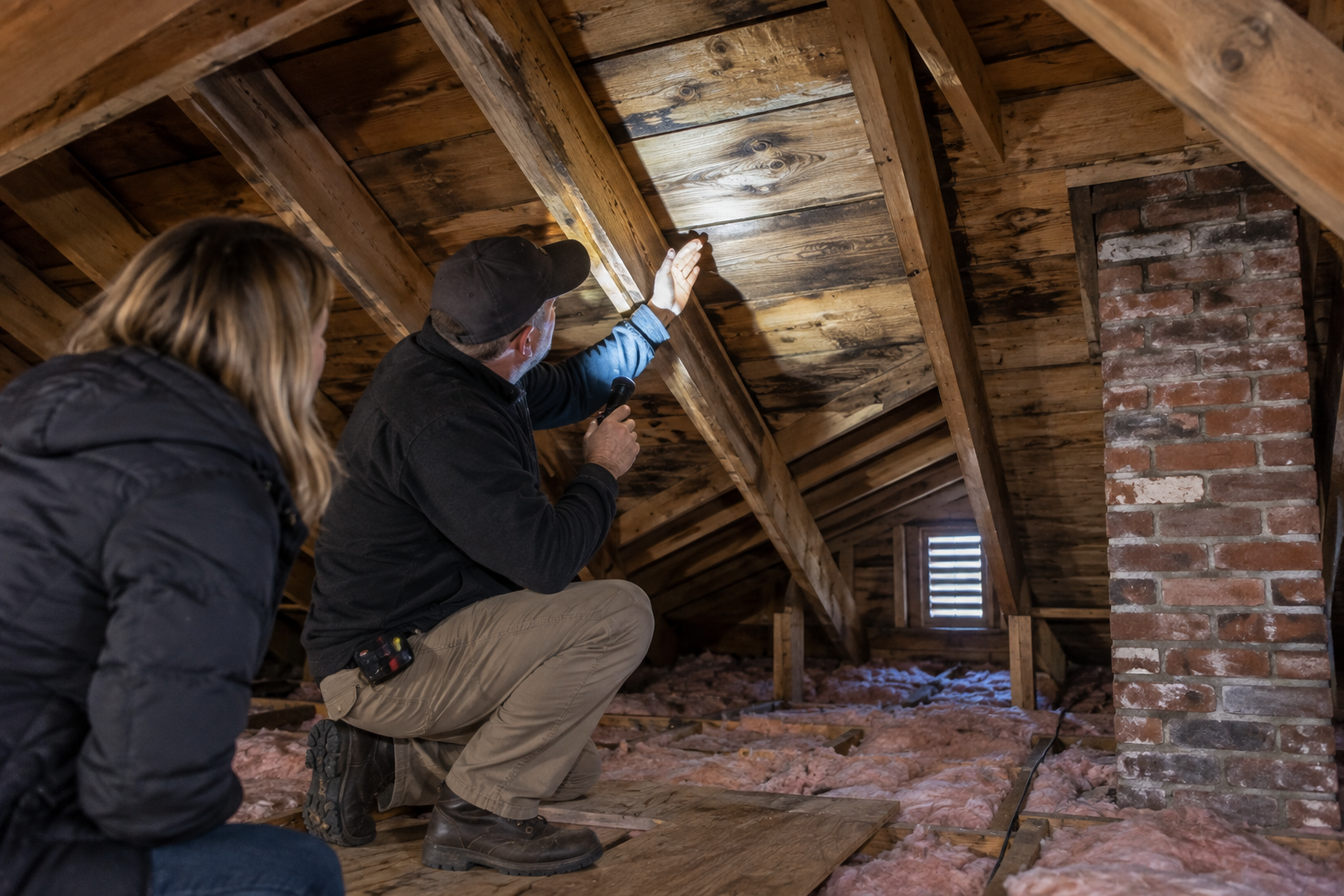
Read

Well & Septic Systems: What Nova Scotia Home Buyers Need to Know

A house can look completely ordinary from the road while two of its most important systems are almost entirely out of sight.

For many Nova Scotia properties, drinking water comes from a private well and wastewater is handled by an on-site sewage disposal system—usually called a septic system. These aren't unusual features reserved for remote country properties. Nova Scotia says about 46% of Nova Scotians rely primarily on groundwater from private wells, while approximately 45% of homes use on-site sewage disposal systems. Government of Nova Scotia

If you've always lived in a home connected to municipal water and sewer, buying a property with a well and septic system can feel like a major change.

It doesn't necessarily need to be.

The important thing is understanding what you're buying, investigating the systems appropriately and knowing what responsibilities become yours after closing.


Start by Finding Out How the Property Is Serviced

Don't assume a property has municipal water and sewer simply because it's located in a town or developed neighbourhood.

Depending on the property, you could encounter:

  • Municipal water and municipal sewer

  • A private well and septic system

  • Municipal water with a septic system

  • A private well with municipal sewer

  • A shared water supply

  • Another water source, such as a cistern

The first step is simply identifying what serves the particular property.

Once you know that, you can determine what additional questions or investigations make sense.


A Private Well Is Your Water Supply

With municipal water, you generally turn on the tap and the municipality is responsible for supplying the water.

A private well changes that relationship.

As the property owner, you become responsible for the well and for monitoring the quality of your drinking water. Nova Scotia specifically places responsibility on private well owners for maintaining their water supply and having the water tested. Government of Nova Scotia

That makes two questions especially important when you're considering a property:

Is the water safe to drink?

and

Can the well provide enough water for the household?

Those sound similar, but they're actually two different issues.

Private drilled well serving a Nova Scotia home

Water Quality and Water Quantity Aren't the Same Thing

A well can produce plenty of water and still have a water-quality problem.

It can also produce excellent-quality water but struggle to supply enough water for the way a household uses it.

That's why evaluating a private well shouldn't stop at turning on a faucet and seeing whether water comes out.

Nova Scotia's guidance for private wells in real estate transactions specifically recommends looking at both water quality and the well's ability to provide enough water for the household. Government of Nova Scotia


What Should Well Water Be Tested For?

Clear water isn't necessarily safe water.

Some contaminants have no obvious taste, smell or colour, so looking at a glass of water—or tasting it—isn't a substitute for laboratory testing. Government of Nova Scotia

Nova Scotia's current real-estate guidance calls for two bacteria tests taken at least five days apart, plus a full chemistry and metals test, with samples properly collected and analyzed by an accredited laboratory. Government of Nova Scotia

Chemical testing can identify naturally occurring substances and other characteristics of the water. Nova Scotia identifies potential well-water concerns including arsenic, uranium, manganese, fluoride, lead, nitrate/nitrite, sodium, chloride and hardness, among others. Government of Nova Scotia

The appropriate testing can depend on the property and surrounding land uses, so this is an area where qualified laboratories and water professionals can provide important guidance.

Collecting a private well water sample for testing

What If the House Has a Water-Treatment System?

Seeing a UV light, filter, softener or other treatment equipment doesn't automatically tell you whether there's a problem.

The more useful questions are:

What is the equipment treating?

Is the source water safe without treatment?

Is the treatment system actually working?

Nova Scotia's real-estate guidance recommends sampling both before and after a treatment system where one is present. That can help distinguish the quality of the untreated source water from the water being delivered after treatment. Government of Nova Scotia

It's also worth asking about the equipment's age, maintenance requirements and ongoing operating costs.

A treatment system isn't necessarily a reason to reject a property. It is simply another home system you need to understand.


Ask About the Well Itself

Water testing tells you about the water at the time it was sampled.

There is also useful information to learn about the physical well.

Nova Scotia recommends buyers ask for the well construction record, commonly called the well log, and identify whether the water source is a drilled well, dug well, surface-water source or cistern. A well log may provide information such as well depth, casing length, static water level and reported yield. Government of Nova Scotia

Not every older property will have complete records readily available.

That doesn't automatically mean there's something wrong with the well. It may simply mean additional investigation is appropriate.

Private well being evaluated at a Nova Scotia property

What Is Well Yield?

Well yield is essentially a measure of how quickly water can enter or be produced by the well.

That's different from how much water happens to be stored in the well at a particular moment.

For a buyer, the practical question is whether the combination of yield and available storage can reliably support the household's water use.

A property that has been occupied successfully for years may have an established history of adequate water supply, but if the yield is unknown, records are unclear or there are concerns about water quantity, Nova Scotia recommends considering a professional yield test by a qualified contractor. Government of Nova Scotia

This can be particularly important when you're planning a household with heavier water demands.


Wells Can Behave Differently Over Time

A single test tells you something about the well at a particular point in time.

It doesn't guarantee that conditions will never change.

Nova Scotia notes that floods, droughts, construction, seasonal weather and other events can affect private wells and recommends ongoing testing rather than treating water testing as something that happens only when a property changes hands. Government of Nova Scotia

Current provincial guidance recommends testing private well water for bacteria at least annually and chemical quality at least every five years, with additional testing when conditions warrant it. Government of Nova Scotia

So the testing you do while buying a home is really the beginning of an ongoing homeowner responsibility.


A Septic System Handles What Leaves the House

If a well deals with what comes into the house, the septic system deals with what goes out.

A typical Nova Scotia on-site sewage disposal system includes a septic tank and a subsurface disposal field, sometimes called a leach field or soil absorption area. Wastewater enters the tank, where solids settle, and the system then uses the disposal field and surrounding soil as part of the treatment process. Government of Nova Scotia

Much of that system is underground.

That means a neatly mowed lawn doesn't tell you much about what's happening beneath it.

Septic system inspection at a Nova Scotia home

Find Out Where the Septic System Is

One surprisingly basic question is:

Where are the tank and disposal field?

Knowing their location matters for more than an inspection.

You need to understand how the system relates to the house, well, driveway, property boundaries, landscaping and anything you may want to build later.

The disposal field is a functioning part of the property—not simply unused lawn.

Before imagining a garage, pool, large addition or major landscaping project in a particular area, it's worth understanding what's already beneath the ground.

Residential yard containing an on-site septic disposal field

Ask What Is Known About the Septic System

Useful information can include:

  • Approximate age of the system

  • Type of system

  • Location of the tank and disposal field

  • Available installation or design records

  • Pumping and maintenance history

  • Repairs or alterations

  • Previous problems or malfunctions

  • Number of bedrooms or intended design capacity

As with wells, records may be incomplete on an older property.

Missing paperwork isn't the same thing as a failed system, but it can affect how much you know—and therefore what additional investigation you may want before buying.


A Septic Inspection Is Different From a General Home Inspection

A general home inspection can provide valuable information about a house, but specialized systems may require specialized expertise.

A septic investigation may involve locating components, reviewing available records and examining the condition and operation of the system using methods appropriate to the property.

Nova Scotia regulates who may perform various types of on-site sewage work. Professional engineers, qualified persons, installers and septic tank cleaners have different recognized roles within the provincial system. Government of Nova Scotia

The appropriate professional and scope of investigation will depend on what you're trying to determine.

This is why “the home was inspected” shouldn't automatically be interpreted as “the septic system was fully evaluated.”


What Are Possible Signs of a Septic Problem?

Sometimes a problem is obvious.

Other times it isn't.

Things that may warrant further investigation can include:

  • Sewage odours

  • Slow drains or backups

  • Wet or unusually soft areas around the disposal field

  • Unexplained lush growth over part of the field

  • Evidence of previous repairs

  • A system that hasn't been pumped or maintained for a long time

  • Questions about whether the existing system is appropriate for the house

None of these observations alone necessarily tells you exactly what is wrong.

They tell you that it may be time to involve someone qualified to assess the system.


Septic Systems Require Ongoing Maintenance

A septic system isn't something you can simply forget about after closing.

Nova Scotia recommends that septic tanks generally be pumped every two to three years, depending on use, to prevent accumulated solids from reaching and potentially plugging the disposal field. Government of Nova Scotia

How you use the system matters too.

The volume of wastewater entering the system, what gets flushed or poured down drains and how the disposal-field area is treated can all affect its operation.

A properly designed, installed and maintained system can operate reliably for many years. A poorly designed, installed or maintained system can contaminate water supplies or nearby water bodies and can be expensive to repair. Government of Nova Scotia


The Well and Septic System Need to Be Considered Together

It's tempting to investigate the well and septic system as two completely separate items.

On a property, however, they're part of the same environment.

The location and condition of a sewage disposal system can matter to groundwater. Surface drainage can matter to a well. Nearby land uses can also affect water quality.

Nova Scotia identifies sewage disposal systems, petroleum products, road salt, animal waste, landfills, pesticides and seawater intrusion among potential sources of groundwater contamination. Government of Nova Scotia

That's why looking at the whole property matters—not just individual pieces of equipment.


Don't Forget the Neighbouring Properties

Your own property isn't the only thing that can matter.

Depending on lot size, development pattern and local conditions, neighbouring wells, septic systems, agricultural uses, fuel storage and other activities may also be relevant.

That doesn't mean a buyer should become an environmental engineer before purchasing a house.

It means that if something about the property raises a legitimate question, it's worth investigating rather than assuming.


What If a Well or Septic Test Finds a Problem?

A problem discovered during due diligence doesn't automatically mean the transaction is over.

The next step is usually to understand:

What exactly was found?

How significant is it?

Can it be corrected?

What would correction involve and cost?

For well water, Nova Scotia recommends confirming unsafe results because temporary conditions or sampling errors can sometimes affect a test. Depending on the issue, possible responses can include disinfection, well work or water-treatment equipment. Government of Nova Scotia

For a septic concern, the appropriate response depends on the nature and extent of the problem. It could range from maintenance or repair to more substantial system work.

The important thing is to get reliable information before deciding how to proceed.

Professional evaluating a septic system at a Nova Scotia home

Can You Replace or Alter a Septic System Anywhere on the Property?

Not necessarily.

Site conditions matter.

Soil, slopes, available area, setbacks and other characteristics can affect the type of on-site sewage system that can be used. Nova Scotia has technical standards governing system selection, design and installation. Systems that meet the provincial standard generally use the notification process; systems that don't meet the standard require an application for approval. Government of Nova Scotia

This can become particularly important if you're considering a property where the existing system may eventually need replacement—or if you're planning an addition that could change the property's requirements.

The fact that a septic system exists today doesn't necessarily tell you what could be installed in the future.


Think About Your Future Plans Before You Buy

Suppose you love a two-bedroom house but already know you'd like to add two more bedrooms.

Or perhaps there's a perfect spot for a future garage, secondary suite or major addition.

Those plans may interact with the property's well, septic system or both.

Before assuming an improvement is possible, investigate what would be required.

A property's current configuration and its future potential are not always the same thing.


Wells and Septic Systems Aren't Automatically a Negative

For buyers accustomed to municipal services, private systems can initially sound like extra risk.

A better way to think about them is as systems you own and are responsible for.

Municipal services usually come with municipal charges and infrastructure you don't control. A private well and septic system shift more responsibility directly to the homeowner.

Neither arrangement automatically makes one property better than another.

What matters is understanding the systems, their condition and the responsibilities that come with them.


What Should a Buyer Investigate?

When I'm helping a buyer consider a Nova Scotia property with a private well and septic system, the goal isn't simply to check two boxes on a list.

It's to build a clearer picture of the property.

That may mean understanding:

  • What type of water supply serves the home

  • What is known about the well and its construction

  • Recent accredited-laboratory water results

  • Whether water quantity is a concern

  • Any water-treatment equipment

  • Where the septic tank and disposal field are located

  • What records exist for the septic system

  • Its age and maintenance history

  • Whether a specialized septic investigation is appropriate

  • How both systems affect future plans for the property

Not every property will require exactly the same investigation.

The right questions depend on the home.


Understand the Systems You Are Taking Ownership Of

A well and septic system shouldn't be mysterious parts of a Nova Scotia property.

They should be understood in much the same way as the roof, heating system, electrical service or foundation: What is there? What condition is it in? What maintenance does it need? And is it suitable for the way you plan to use the home?

Those questions are much more useful than simply asking whether a property “has well and septic.”

Buying a home is ultimately about understanding what you're taking ownership of—not just what you can see during a showing.


Part of the Buyer Resource Centre: Practical guides to help you prepare, evaluate a property and navigate the home-buying process in Nova Scotia.
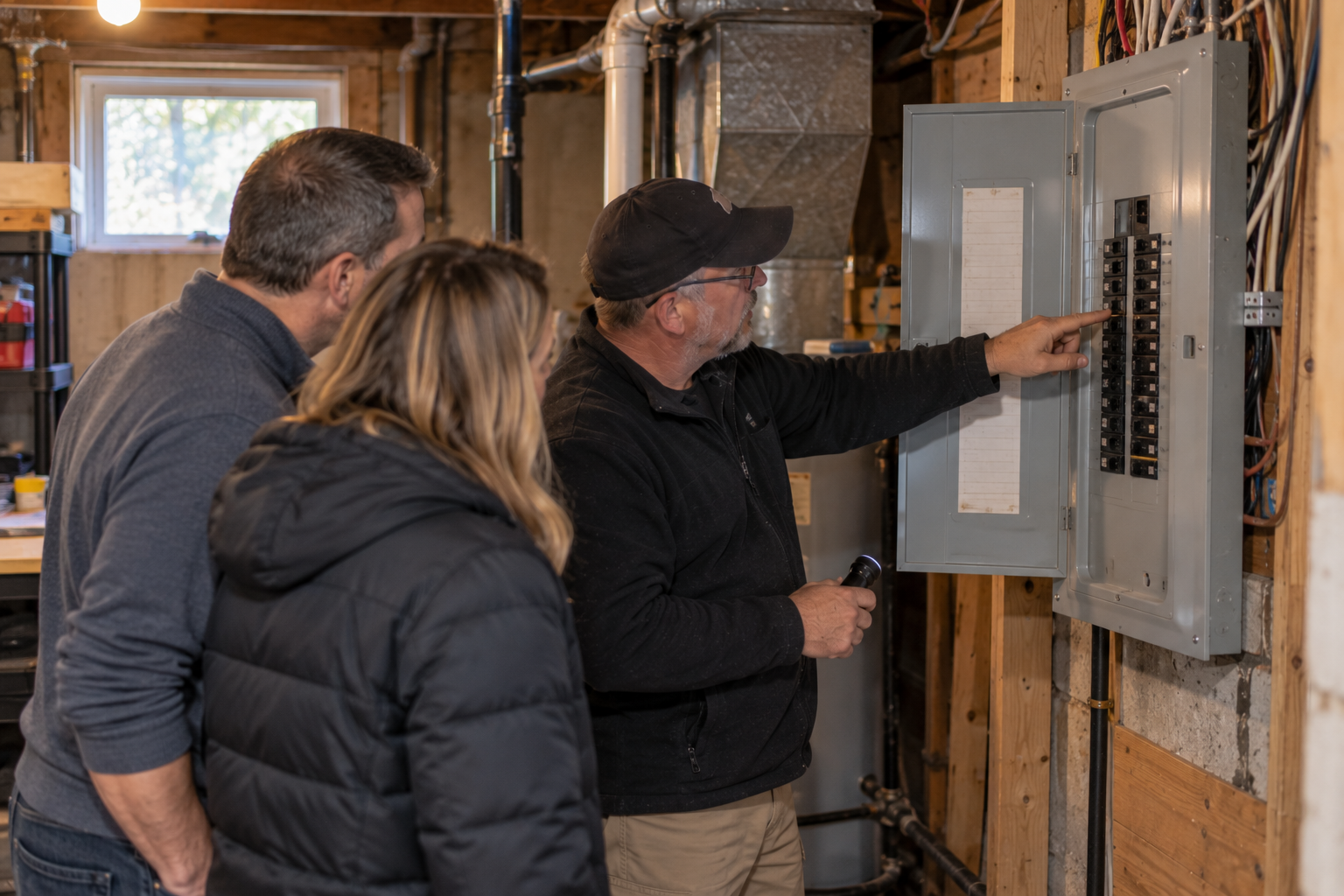
Read

What Type of Home Is Right for You?

When buyers start looking for a home, it's easy to begin with a familiar checklist.

Three bedrooms. Two bathrooms. A garage. A certain price range.

Those things matter, but they don't necessarily tell you what type of property will work best for the way you actually want to live.

In Nova Scotia, buyers can encounter everything from newer subdivisions and century homes to condominiums, mini homes, rural acreages, waterfront properties and seasonal cottages—sometimes within a relatively small geographic area.

Each can offer a very different ownership experience.

Before narrowing your search too much, it can be helpful to think beyond the house itself and ask a bigger question:

What do you want owning your home to be like?


Start With the Lifestyle, Not the House Style

It's tempting to decide that you want a bungalow, two-storey home or particular architectural style.

But some of the more important differences between properties aren't architectural at all.

Think about what you want from the property.

Do you want enough land for a large garden?

Would you rather have very little exterior maintenance?

Do you need a workshop?

Do you travel frequently and want something easier to leave unattended?

Would you enjoy maintaining several acres?

Do you want to walk to cafés and shops?

Is waterfront part of the dream?

Would you rather renovate an older home or move into something newer?

The answers can lead to very different types of properties.

Finding the right home isn't only about what you can buy. It's about what you actually want to own.


A Conventional Detached Home

For many buyers, a detached house is the starting point.

You own the home and, in most cases, the land beneath and around it. That gives you a degree of independence that appeals to many homeowners.

But detached homes themselves vary enormously.

A house in town might have municipal water and sewer, a small yard and sidewalks nearby.

Drive ten minutes away and another detached house might have a well, septic system, two acres of land, a long driveway and several outbuildings.

The buildings might look similar while the ownership responsibilities are completely different.

That's why I encourage buyers to look beyond bedrooms and square footage.

The property around the house is part of what you're buying too.

Detached home in an established Nova Scotia neighbourhood

A Condominium Changes What You Own—and What You Share

A condominium can appeal to buyers who want home ownership without taking responsibility for every part of the property themselves.

But buying a condo isn't simply buying an apartment.

You own your individual unit and have an interest in the condominium's common elements. The condominium corporation is responsible for managing and maintaining those common elements, while owners contribute through common-element fees. Government of Nova Scotia

Depending on the development, those shared responsibilities could involve things such as building exteriors, roofs, roads, landscaping, hallways, elevators or other facilities.

That can make ownership more convenient.

It also means you need to evaluate more than the unit you're standing in.

Before purchasing, Nova Scotia recommends reviewing documents including the declaration, bylaws, common-element rules, reserve fund information, estoppel certificate and financial statements. Buyers should also understand the monthly fees, what those fees cover, whether major repairs are anticipated and the financial condition of the condominium corporation. Government of Nova Scotia

Rules can matter too. Depending on the condominium, there may be restrictions involving pets, business use or other aspects of how a unit can be used. Government of Nova Scotia

So don't compare a condo and detached house on purchase price alone.

Compare the ownership experience and total responsibilities as well.

Condominium homes with shared common areas in Nova Scotia

Mini Homes and Manufactured Homes

Mini homes can provide another path to home ownership in Nova Scotia.
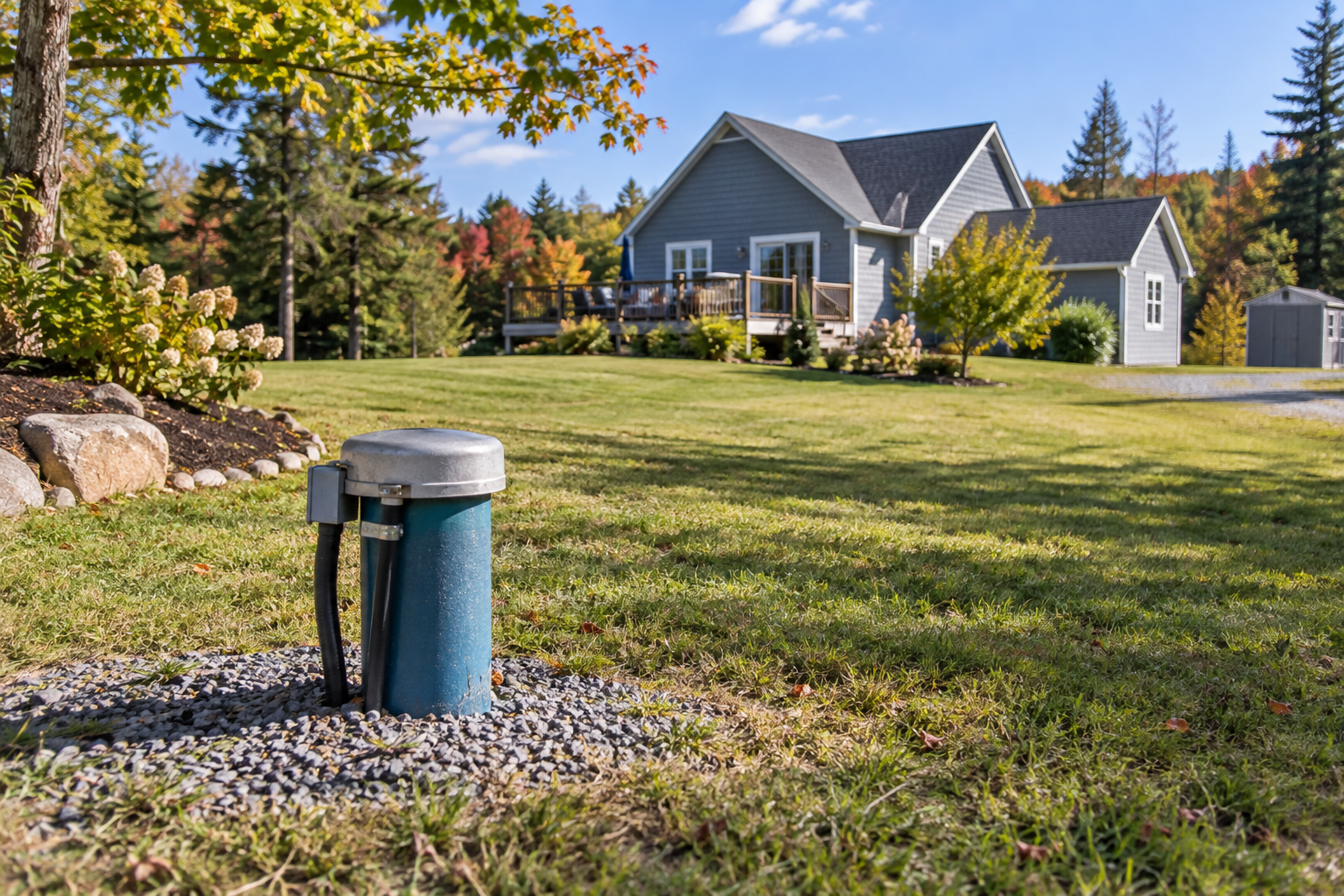
Some are located on land that is individually owned. Others are situated in communities where the homeowner owns the home but leases the site beneath it.

That distinction matters.

If the land is leased, you'll want to understand the site arrangement and associated costs in addition to evaluating the home itself.

Financing can also depend on how a manufactured home and the land are structured. For example, Nova Scotia's current Down Payment Assistance Program requires a manufactured home to be permanently attached to property the buyer owns in order to qualify under that program. Government of Nova Scotia

Manufactured homes can also involve legal considerations different from conventional real estate. Nova Scotia's Personal Property Registry, for example, specifically includes mobile/manufactured homes among the types of property against which security interests can be registered. Government of Nova Scotia

That doesn't make a mini home inherently more difficult to buy.

It means you need to understand exactly what is included in the purchase and how ownership is structured.


Modular Doesn't Mean the Same Thing as a Mini Home

These terms are sometimes used interchangeably, but they shouldn't be.

A modular home is generally constructed in sections in a controlled environment and then assembled on a permanent foundation at the property.

Once completed, it may function much like another conventionally constructed house.

The construction method itself doesn't tell you whether a home will suit you.

Instead, evaluate the finished property as you would another home: its foundation, construction, heating, insulation, services, condition, location and land.

If you're uncertain about what type of construction you're looking at, find out rather than relying on the terminology used casually in conversation.


Older Homes Can Offer Something Newer Homes Can't

Nova Scotia has a large inventory of older homes, particularly in established communities.

For some buyers, that's part of the appeal.

Older homes can offer mature neighbourhoods, established trees, distinctive layouts, original woodwork and architectural details that would be difficult or expensive to reproduce today.

They can also require a different kind of due diligence.

Electrical systems, plumbing, foundations, insulation, heating equipment, roofing, additions and previous renovations may represent several generations of work.

Age alone doesn't tell you whether a house is good or bad.

A well-maintained 120-year-old house may be in better condition than a much newer home that hasn't been cared for.

The better question is:

What has happened to this particular house during its lifetime?

We'll explore that in much greater detail in Older Homes in Nova Scotia: What Buyers Should Look For.

Older homes in an established Nova Scotia community

Old Doesn't Automatically Mean Heritage

An older house and a registered heritage property aren't necessarily the same thing.

Nova Scotia has both provincial and municipal heritage registries, and a property can appear on one or both. Registered properties are subject to the Heritage Property Act and applicable heritage protections. CCTH

If you're considering a registered heritage property, understand its status and what that means before assuming you can make particular exterior changes or alterations.

But don't assume every century home has heritage restrictions simply because it's old.

Verify the actual property.


New Construction Offers a Different Set of Decisions

For some buyers, the appeal of new construction is straightforward.

New finishes.

Modern layouts.

Current building systems.

Less history to investigate.

Potentially fewer immediate repairs.

But buying new doesn't eliminate due diligence—it changes it.

You may need to understand exactly what the purchase price includes, which finishes and appliances are part of the agreement, whether landscaping and driveways are complete, how deficiencies will be handled and when the home will actually be ready for occupancy.

If you're buying before construction is complete, you're also making decisions based partly on plans, specifications and representations rather than solely on a finished building.

There may also be programs that apply specifically to new homes. For example, Nova Scotia currently offers an eligible first-time buyer rebate of up to $3,000 on a newly built home. Government of Nova Scotia

Programs and eligibility requirements can change, so verify what's available when you're actually preparing to buy.


A Home With Acreage Is More Than a Bigger Yard

A few acres can dramatically change what a property allows you to do.

Maybe you want privacy.

A large garden.

A workshop.

Space for animals.

Woodland.

Or simply some distance between you and your neighbours.

But don't evaluate acreage based only on the number in the listing.

Five acres of open, level land is very different from five acres that are mostly wooded, wet or steep.

Consider how much of the property is actually usable for what you want?

Then consider what you'll have to maintain.

More land can mean more mowing, tree maintenance, fencing, drainage, snow clearing, driveway maintenance and outbuildings.

If you're specifically looking for substantial acreage, barns or agricultural potential, we'll go much deeper in Buying a Hobby Farm or Acreage in Nova Scotia.
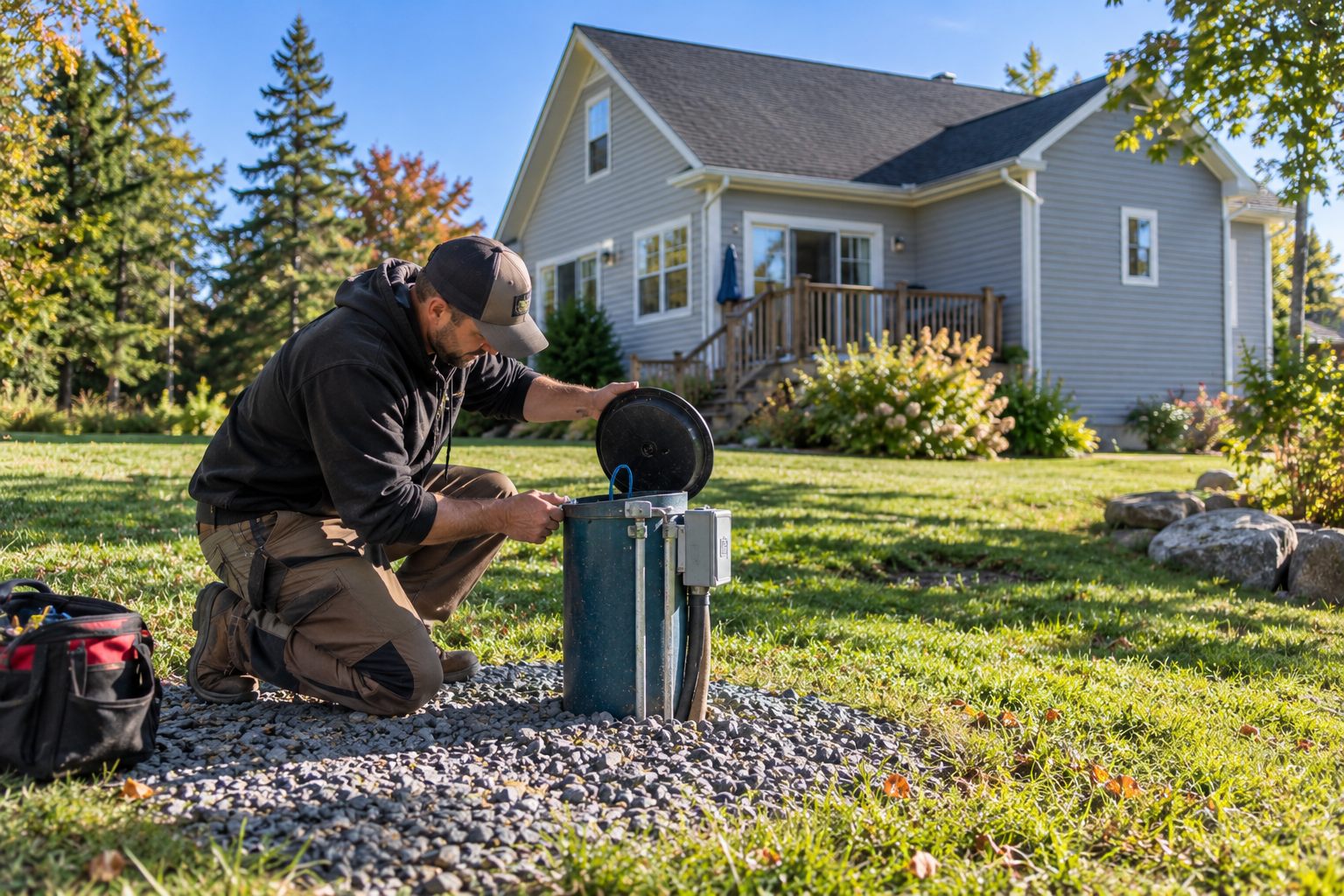
Nova Scotia country home with open acreage and woodland

Waterfront Changes the Property, Not Just the View

For many buyers moving to Nova Scotia, waterfront is high on the wish list.

And it's easy to understand why.

But waterfront should be evaluated as a property characteristic—not simply as scenery.

Different properties can have very different shorelines and access.

Consider what you're actually hoping to do.

Do you want to swim?

Launch a kayak?

Keep a boat?

Walk along the shore?

Have an unobstructed view?

Or is simply being beside the water enough?

A beautiful waterfront property may not necessarily provide the type of water access you imagined.

You'll also want to investigate boundaries, access, erosion or flooding considerations, insurance and any restrictions that could affect what you intend to do with the property.

We'll treat this as its own subject in Buying Waterfront Property in Nova Scotia: What Should You Investigate?

Nova Scotia waterfront home with direct shoreline frontage

A Cottage or Seasonal Property May Not Be a Year-Round Home

A cottage can look very much like a small house in listing photographs.

That doesn't necessarily mean it was designed or equipped for year-round living.

Some seasonal properties may have different water systems, limited insulation, seasonal road access or other services that aren't intended for twelve-month occupancy.

If you're buying a cottage to use as a cottage, those limitations may be perfectly acceptable.

If you're planning to turn it into your permanent home, they're much more important.

Don't assume that because you could stay somewhere in January, the property was designed to function as a conventional year-round residence.


A Property With Outbuildings Can Change What's Possible

A garage, barn or workshop can completely change whether a property works for you.

For someone who wants woodworking space, vehicle storage, equipment storage or room for a small business, the outbuilding might be nearly as important as the house.

But treat it that way during your evaluation.

Look at its structure.

Roof.

Foundation.

Electrical service.

Access.

Condition.

And whether your intended use is permitted.

A large old barn can be an extraordinary asset to the right buyer.

It can also be a very large building that needs a new roof.


Multi-Unit Properties Require a Different Mindset

Some buyers consider a duplex or another property with an additional unit because they want rental income, space for extended family or greater flexibility.

That changes the evaluation again.

Instead of looking only at whether the home suits you, you'll need to understand the additional unit, how it's currently used, whether it's legally established where relevant, the utilities, tenancy situation if occupied and the financial implications.

If rental income is necessary for your financing plan, discuss that with your lender early rather than assuming all potential rent will automatically be treated the way you expect.

A multi-unit property can be an excellent fit for some buyers, but it isn't simply a detached home with an extra kitchen.


The Cheapest Home Isn't Necessarily the Cheapest to Own

This is where comparing different property types gets interesting.

Imagine several properties with similar purchase prices.

One might be a condo with monthly common-element fees.

Another might have no condo fees but require you to maintain the roof, driveway and exterior yourself.

A rural home might have a well, septic system and several acres.

An older home might have inexpensive taxes but upcoming improvements.

A newer home might cost more initially but require fewer immediate projects.

A waterfront property may bring different insurance considerations.

A mini home on leased land may include ongoing site costs.

The purchase price tells you what it costs to acquire the property.

It doesn't necessarily tell you what it costs—or requires—to own it.


Think About the Home You'll Want Five Years From Now

You can't predict everything.

But it's worth looking beyond what works today.

If you're planning a family, will the property still work?

If you're approaching retirement, do you really want several acres to maintain?

If you expect to work from home, is there suitable space and connectivity?

If you love travelling, will you be comfortable leaving a rural property unattended?

If you've always wanted a workshop, will buying a property without one leave you searching again in two years?

You don't need to buy your "forever home."

But understanding where your life may be heading can prevent you from choosing a property that already conflicts with those plans.


Don't Eliminate a Property Type Too Quickly

Sometimes buyers begin with strong assumptions.

"I don't want a condo."

"I'd never buy an old house."

"I need at least five acres."

"I don't want a mini home."

"I only want waterfront."

Those preferences may ultimately be completely right for you.

But it's useful to understand why.

If you dislike condo rules and shared decision-making, that's meaningful.

If you simply assumed condos were all high-rise apartments, that's different.

If you need acreage for horses, acreage is a genuine requirement.

If you want acreage because you want privacy, there may be properties on much smaller lots that accomplish the same thing.

The goal isn't to talk yourself into a property type you don't want.

It's to make sure you're solving the right problem.


Home buyers evaluating a property in Nova Scotia

Compare Responsibilities, Not Just Features

When you're deciding what type of home is right for you, try making two lists.

The first is probably familiar:

Bedrooms.
Bathrooms.
Garage.
Location.
Price.
Lot size.

For the second, think about ownership:

How much maintenance do I want?

How much land do I genuinely want to look after?

Which responsibilities am I comfortable taking on myself?

Do I want shared amenities enough to accept shared rules and costs?

Do I want a finished home or a project?

How important are privacy, walkability, waterfront or outbuildings?

What will this property require from me after I get the keys?

That second list often tells you much more about the type of home you should be looking for.


There Isn't One "Best" Type of Home

A condo isn't inherently better or worse than a detached house.

A century home isn't automatically a money pit.

A new home isn't automatically problem-free.

A rural acreage isn't automatically more work than you want.

And a smaller property isn't automatically easier to own.

They're simply different.

The right property is the one where the home, location, responsibilities and costs fit the way you want to live.

Once you understand that, searching for a home becomes much more focused—and you're in a better position to recognize the right property when you find it.


Part of the Buying a Home in Nova Scotia Buyer Resource Centre: Practical guides to help you prepare, evaluate a property and navigate the home-buying process.

Read

Town or Country? What Changes When You Buy Outside a Nova Scotia Town

For many home buyers, one of the attractions of Nova Scotia is the ability to have more space without necessarily being hours away from a community.

Drive a few minutes outside many towns in the Annapolis Valley or along the South Shore and the landscape can change quickly. Neighbourhood streets give way to larger lots, fields, woodland, long driveways and homes with considerably more privacy.

That can be exactly what you're looking for.

But buying outside a town can also mean taking responsibility for things that might otherwise be provided as municipal services.

The difference isn't simply town versus country. Two properties only a few kilometres apart can have very different water systems, wastewater systems, road access, internet options and maintenance requirements.

Understanding those differences before you buy can help you decide whether country living actually suits the way you want to live.


Rural Doesn't Necessarily Mean Remote

When buyers hear "rural property," they sometimes picture a farmhouse on 50 acres at the end of a dirt road.

That's only one version of rural Nova Scotia.

You might find a conventional three-bedroom home on an acre just outside Middleton, a waterfront property outside Chester, a house on several acres near Annapolis Royal or a home surrounded by farmland only minutes from Wolfville.

You can therefore have a rural property without being particularly remote.

That's an important distinction.

The question isn't simply how far the house is from town. It's which services stop at the property line—and which responsibilities become yours.


Private drilled well serving a rural home in Nova Scotia

Your Water May Come From a Well

One of the most common differences outside serviced areas is the water supply.

Instead of receiving treated municipal water, a property may have its own drilled or dug well.

That means the homeowner is responsible for the water supply and its maintenance. Nova Scotia Environment also recommends testing private well water because water that looks, smells and tastes normal can still contain bacteria or other contaminants. The Province even provides a specific private-well checklist for real estate transactions. Government of Nova Scotia

As a buyer, you'll want to understand things such as:

  • What type of well serves the property?

  • Where is it located?

  • How much water can it provide?

  • What is the water quality?

  • Is there treatment equipment?

  • Are there previous water test or well records?

A private well shouldn't automatically make a property less desirable. They're common throughout Nova Scotia.

It simply means there's another important system to understand.

We'll cover this much more thoroughly in the dedicated Well & Septic Systems: What Nova Scotia Home Buyers Need to Know guide.


Wastewater May Be Your Responsibility Too

Where there's no municipal sewer, you'll commonly find an on-site septic system.

The homeowner—not a municipality—is responsible for maintaining that system and making sure it operates properly. Nova Scotia guidance specifically places responsibility for an adequate and properly functioning on-site sewage system on the landowner. Government of Nova Scotia

For a buyer, the important questions include:

Where is the septic tank?

Where is the disposal field?

What type of system is installed?

How old is it?

Has it been maintained?

Are there records?

Should it be inspected before you buy?

The location can matter too. A septic field occupies part of the property, and what you can build, plant or drive over in that area may be limited.

Again, septic systems are a normal part of owning many Nova Scotia homes. The key is understanding the system you're taking responsibility for.


Private rural road serving homes in Nova Scotia

The Road in Front of the House May Not Be Public

A paved road doesn't necessarily mean municipal or provincial maintenance, and a gravel road isn't necessarily private.

When you're looking at a property outside town, determine who owns and maintains the road.

If it's private, you'll want to understand your legal right to use it and how maintenance is handled.

That can include:

  • grading and gravel,

  • pothole repairs,

  • ditching and drainage,

  • snow removal,

  • brush cutting,

  • culvert work, and

  • sharing expenses with other property owners.

Rights-of-way and access can have legal implications as well. Nova Scotia's Private Ways legislation exists partly because access to a public street can affect services such as waste collection and utility repair. Nova Scotia News

A private road isn't necessarily a reason not to buy.

But "Who plows this road?" is a much better question to ask in July than after the first major snowfall.


Then There's Your Own Driveway

Country properties often have longer driveways.

That sounds like a minor detail until you own one.

A 150-metre driveway may need snow clearing, grading, gravel, drainage work and occasional repairs. If it's steep, shaded or exposed to drifting snow, winter maintenance can become even more important.

Look at how water moves around the driveway as well.

Poor drainage can wash gravel away, create potholes or turn sections into mud during spring thaw.

When viewing a rural property, don't treat the driveway as simply the route to the house.

It's part of the property you're buying and maintaining.


Rural Nova Scotia homes where internet and cell service can vary by address

Internet Should Be Checked at the Actual Address

Internet access across Nova Scotia has improved considerably, but buyers should still verify service at the specific property.

Don't assume that because high-speed internet is available in a community, every address has identical service.

The available provider, connection type and actual service options can vary.

This becomes particularly important if you're working remotely, running a business from home, streaming heavily or relying on internet-based telephone service.

Cell service deserves the same attention.

Reception can vary because of terrain, distance from towers and even where you stand on a particular property.

If connectivity is essential, investigate it before making the location part of your lifestyle.


Power Outages May Feel Different in the Country

A power outage affects any home, but some rural properties depend on electricity for more of their essential systems.

For example, a private well typically requires an electric pump. If the power goes out, your water supply may be affected unless you have appropriate backup arrangements.

Internet equipment also requires power, and Nova Scotia's 911 guidance notes that internet-based VoIP calling will not work if either power or internet service is interrupted. Government of Nova Scotia

That's one reason generators are common at some Nova Scotia properties.

If you're considering a home with a generator, determine what type it is, what it powers and how it's connected rather than assuming the presence of a generator means the entire house operates normally during an outage.


Heating Can Be Different Too

Country homes can expose buyers to a wider variety of heating systems.

You may encounter:

  • heat pumps,

  • oil-fired boilers or furnaces,

  • electric baseboards,

  • wood stoves,

  • pellet stoves,

  • wood furnaces,

  • propane systems, or

  • combinations of several systems.

Some older homes may have multiple generations of heating equipment still in use.

The important question isn't simply "What heats the house?"

It's also:

What does it cost to operate?

What maintenance does it require?

Is the equipment insurable?

What happens during a power outage?

Is there a backup heat source?

We'll explore these questions separately in Heating a Home in Nova Scotia: Oil, Heat Pumps, Wood, Electric & More.


Garbage Collection, Deliveries and Other Services Can Change

Moving outside town can also change some less obvious parts of daily life.

Garbage and recycling collection may operate differently.

Courier companies may treat your address differently.

Food delivery may disappear entirely.

Snowplow timing may matter more.

A contractor who can reach a property in town easily may charge additional travel time to reach a more remote location.

None of these things individually should determine where you live.

But together they can affect what everyday life feels like.


Emergency Access Is Worth Thinking About

Nova Scotia uses civic addressing to identify the location of homes and other properties. Civic addresses are important not only for 911 but also for mail, utilities, municipal permitting and other services. GeoNOVA

For rural properties, make sure the civic number is clearly visible from the road. The Province specifically recommends posting it where emergency responders can see it quickly, including at night. Government of Nova Scotia

Also look at the physical access to the house.

Could an emergency vehicle reasonably get up the driveway?

Are there low branches?

Is there enough width?

Would a steep or poorly maintained driveway become difficult during winter?

These aren't questions most buyers think about while standing in a sunny yard during a June showing, but they're worth considering.


Nova Scotia country home with acreage and land to maintain

More Land Usually Means More to Maintain

One of the attractions of moving outside town is space.

But acreage and usable land aren't necessarily the same thing.

A five-acre property could contain a large lawn, forest, wet areas, steep terrain, gardens or some combination of all of them.

Before becoming excited about the acreage number, ask yourself what you'll actually do with the land.

A large lawn means mowing.

A wooded property may involve tree maintenance.

Long boundaries can mean fences.

A large driveway needs upkeep.

Older outbuildings require maintenance even if you aren't using them.

If what you really want is privacy, you may not need ten acres to get it.

Sometimes the shape of the property, surrounding land uses and location of neighbouring homes matter more than the total acreage.


Outbuildings on a rural Nova Scotia property

Outbuildings Deserve Their Own Inspection

Country properties often come with things you won't encounter on a conventional town lot.

Garages.

Workshops.

Barns.

Sheds.

Greenhouses.

Old farm buildings.

They're easy to view as bonuses, particularly if you've always wanted a workshop or extra storage.

But an outbuilding can also have its own foundation, roof, electrical service, structural issues and maintenance costs.

If a building matters to your decision to buy the property, don't give it a five-second glance while spending an hour inspecting the house.

Understand what you're getting.


Check What You Can Actually Do With the Property

More land doesn't automatically mean fewer rules.

If you're buying acreage because you want chickens, horses, a large workshop, a home business, another dwelling or some other specific use, investigate whether that use is permitted.

Municipal zoning and land-use rules still apply outside towns.

There may also be restrictions associated with the property itself.

This becomes particularly important when buyers start looking for hobby farms and larger acreages, which we'll cover separately in Buying a Hobby Farm or Acreage in Nova Scotia.

The rule I suggest is simple:

If your reason for buying the property depends on being able to do something specific there, investigate that before you buy—not afterward.


Privacy Can Come With Different Neighbours

One of the surprises for some buyers moving from an urban or suburban area is that having fewer residential neighbours doesn't necessarily mean having fewer neighbouring activities.

A rural property could be beside:

  • agricultural land,

  • a working farm,

  • woodland,

  • commercial activity,

  • an aggregate operation,

  • seasonal properties, or

  • land that could eventually be developed.

That beautiful field behind the house may not belong to the property you're buying.

Find out what surrounds the property and, where it matters, how neighbouring land is currently used.

You don't need to dislike farming to discover that agricultural activity beside your bedroom window is different from looking at a pastoral landscape in a listing photograph.


Town Services Have Value—Even When You Don't Think About Them

It's easy to compare two houses and conclude that the country property offers more for the money.

Sometimes it does.

But part of the comparison should include the services attached to each property.

A town property might include municipal water, sewer, paved road access, sidewalks and closer proximity to everyday services.

A country property may offer more land and privacy while asking the homeowner to manage a well, septic system, driveway, private road or additional buildings.

Neither arrangement is inherently better.

You're simply paying for—and taking responsibility for—different things.


Rural Nova Scotia home offering space and privacy outside town

Country Living Can Be a Great Fit

This article isn't meant to make buying outside town sound complicated.

For many people, the additional responsibility is a very worthwhile trade for what they gain.

More privacy.

More space.

Room for a workshop.

A large garden.

A few acres for animals.

Woodland.

Waterfront.

Dark skies.

Or simply not having another house ten metres away.

The important part is understanding what comes with that choice.


Look Beyond the House

When you're comparing a town property with one farther into the countryside, don't stop at bedrooms, bathrooms and square footage.

Ask:

Where does the water come from?

Where does the wastewater go?

Who maintains the road?

Who clears the snow?

What internet and cell service are actually available?

How is the home heated?

What else on the property will I have to maintain?

Can I use the property the way I intend to?

Those answers give you a much clearer picture of what owning the property will actually be like.

And that's ultimately the point of the Buyer Resource Centre: not simply helping you find a house, but helping you understand what you're buying before you make the decision.


Part of the Buying a Home in Nova Scotia Buyer Resource Centre: Practical guides to help you prepare, evaluate a property and navigate the home-buying process.

Read

How to Choose Where to Live in Nova Scotia

When you're buying a home, it's easy to focus on the property itself.

How many bedrooms does it have? Is the kitchen big enough? How much land comes with it? What kind of heating system does it use?

But there's another decision that can have just as much impact on how much you enjoy the home:

Where do you want to live?

In Nova Scotia, moving even a relatively short distance can change your commute, access to services, internet options, property taxes, water and wastewater systems, road maintenance and the type of property available to you.

The right location isn't necessarily the most popular town or the shortest drive to Halifax. It's the place that works for the way you want to live.


Start With Your Everyday Life

Before comparing communities, think about what an ordinary week will look like after you move.

Where will you work?

How often will you need to commute?

Do you want to walk to shops and restaurants, or are you comfortable driving for almost everything?

Will you regularly need access to healthcare, recreation, schools, groceries or other services?

Do you want neighbours nearby, or would you rather have more privacy and space?

For some buyers, being able to walk downtown for coffee is important. Someone else may happily drive 20 minutes for groceries if it means having several acres and no neighbours in sight.

Neither choice is inherently better.

The important part is recognizing which compromises you'll actually be happy living with.


Don't Choose a Community From the Map Alone

Distances in Nova Scotia can be deceptive.

Two properties might appear similarly located on a map while offering very different day-to-day experiences.

The route matters.

A 25-minute drive primarily on Highway 101 is different from 25 minutes on winding secondary roads. Winter conditions, traffic patterns and the direction of your commute can also affect how a location feels once you're making the trip regularly.

If commuting matters, don't just look at the number of kilometres between the house and your destination.

Drive the route.

Ideally, drive it around the time you would normally travel.

Something that seems perfectly reasonable while browsing listings on your computer may feel very different when you're doing it twice a day.


Town, Village or Countryside?

One of the biggest decisions for many Nova Scotia buyers is how close they want to be to a town or service centre.

Living in or near communities such as Wolfville, Kentville, Berwick, Middleton, Annapolis Royal, Chester or Liverpool can put shops, restaurants, recreation and other services relatively close to home.

Move farther outside those centres and you may find larger lots, more privacy, different property types and more rural surroundings.

But there's a trade-off.

The farther you move from services, the more likely you are to depend on a vehicle for everyday life.

That can be exactly what you want. Just make sure it's a deliberate choice rather than something you discover after moving.

Residential streetscape in a Nova Scotia community

Municipal Services Can Change From One Property to the Next

Don't assume two nearby homes have the same services.

One property may have municipal water and sewer while another a short distance away relies on a private well and septic system.

Municipal infrastructure varies by community and location. Nova Scotia municipalities are responsible for a range of infrastructure and services, including water, wastewater, stormwater, roads and other community infrastructure, but what's actually available depends on the municipality and the particular property. Nova Scotia News

This affects more than convenience.

If you're comparing properties, find out:

  • Is the property on municipal water or a private well?

  • Is wastewater handled by municipal sewer or a septic system?

  • Who maintains the road?

  • Is garbage and recycling collection available?

  • Are there municipal services or charges associated with the property?

These aren't reasons to avoid a particular location.

They're simply part of understanding what you're buying.


Internet and Cell Service Deserve More Attention Than They Usually Get

This is especially important if you work from home.

Don't assume that because a property has internet service, it has the kind of internet service you need.

Availability, provider, technology and speed can vary by location. Cell coverage can also change surprisingly quickly as you travel through parts of rural Nova Scotia.

If reliable connectivity matters to your work or lifestyle, investigate the specific property rather than relying solely on general coverage maps.

Ask what service the current owner uses, check directly with providers and, when possible, verify what's actually available at the civic address.

A beautiful property can become much less appealing if your workday depends on a connection that doesn't meet your needs.

Rural Nova Scotia home where internet and cell service can be important considerations

Think About the Services You Use Regularly

It's easy to say that you don't mind living 30 minutes from town.

The better question is:

What will you be driving 30 minutes for?

Consider your regular trips:

Groceries. Pharmacy. Healthcare. Work. School. Childcare. Restaurants. Recreation. Hardware stores. Veterinary care. Airports. Family and friends.

You don't need to live beside every service you use.

But understanding where those services are located helps you decide whether the lifestyle makes sense.

Healthcare is particularly worth investigating rather than assuming every community offers the same access. Nova Scotia's healthcare system operates province-wide through provincial health authorities and programs, but facilities and individual services are distributed among communities. Government of Nova Scotia

If proximity to a particular type of healthcare is important to you, research that specifically before choosing an area.


What About Schools?

For buyers with children—or those planning for them—schools can be an important part of choosing a location.

But don't assume that the closest school is necessarily the school associated with a particular address.

School boundaries, grade configurations, transportation and programs can change.

If a particular school or program is important to your decision, confirm the current information directly with the appropriate school authority rather than relying on a real estate listing or an old online map.

The same principle applies to childcare.

Availability can matter just as much as location, so it's worth investigating early if childcare will be an important part of your move.


Your Address Doesn't Always Tell the Whole Story

Nova Scotia geography can be confusing when you're unfamiliar with the province.

A mailing address, community name and municipality aren't necessarily the same thing.

Properties described as being “near Wolfville,” for example, may actually be outside the Town of Wolfville. The same is true around many communities throughout the Annapolis Valley and South Shore.

That distinction can affect municipal services, taxation, planning rules and other aspects of the property.

Nova Scotia's Property Online system contains provincial land ownership information and property mapping, and municipal governments maintain their own planning and service information. Government of Nova Scotia

When the exact jurisdiction matters, verify the property rather than relying solely on the community name used to market it.


Property Taxes Can Be Different Between Communities

Property taxes are another reason to look beyond the purchase price.

Municipal tax rates and services vary, so two similarly priced homes in different locations don't necessarily have the same annual property tax.

There's another important Nova Scotia consideration as well: the Capped Assessment Program, commonly called the CAP.

The seller's current property tax bill may not represent what a buyer will pay after purchasing the property.

We'll cover the CAP separately in the Buyer Resource Centre because it deserves its own explanation.

For now, the important point is simple:

Don't compare locations based only on the current owner's tax bill.


The Road to the Property Matters Too

When viewing a property outside a town centre, pay attention to the road itself.

Is it publicly maintained?

Is it a private road?

Who plows it in winter?

Is there a road maintenance agreement?

What condition is it in?

How steep is the driveway?

A long country driveway can be beautiful in July and considerably more work after a January snowfall.

Private roads aren't automatically a problem, either. But buyers should understand who owns the road, who can use it and how maintenance costs and responsibilities are handled.

These questions become particularly important when looking at cottages, waterfront homes, acreages and more remote properties.

Rural road in Nova Scotia illustrating access and road maintenance considerations

Think About the Property Types Available in Each Area

Choosing a location and choosing a property type often happen together.

If you want a walkable home close to restaurants and shops, your search may naturally concentrate in established towns.

If you're looking for five or ten acres, a large workshop or room for animals, you'll probably need to look farther outside those centres.

Waterfront creates another geographic constraint entirely.

And if you're looking for a historic home, certain communities may offer far more choices than others.

Rather than choosing a location first and then trying to force your ideal property into it, consider the two decisions together:

Where can I find the kind of home I want while still having the lifestyle I want?

That question often produces a much more useful search area.

Different residential settings available to home buyers in Nova Scotia

Visit More Than Once If You Can

If you're seriously considering an unfamiliar community, try to experience it outside a scheduled home showing.

Walk around.

Get a coffee.

Visit the grocery store.

Drive through the neighbourhood in the evening.

See how long it takes to reach the places you'd actually use.

If you're relocating from outside Nova Scotia, this can be particularly valuable.

A community can look perfect in photographs and still not feel right once you're there.

Conversely, a place you barely considered on a map may immediately feel like somewhere you could live.


Don't Assume You Need to Know Exactly Where You Want to Live

This is something I encounter frequently with buyers moving to Nova Scotia.
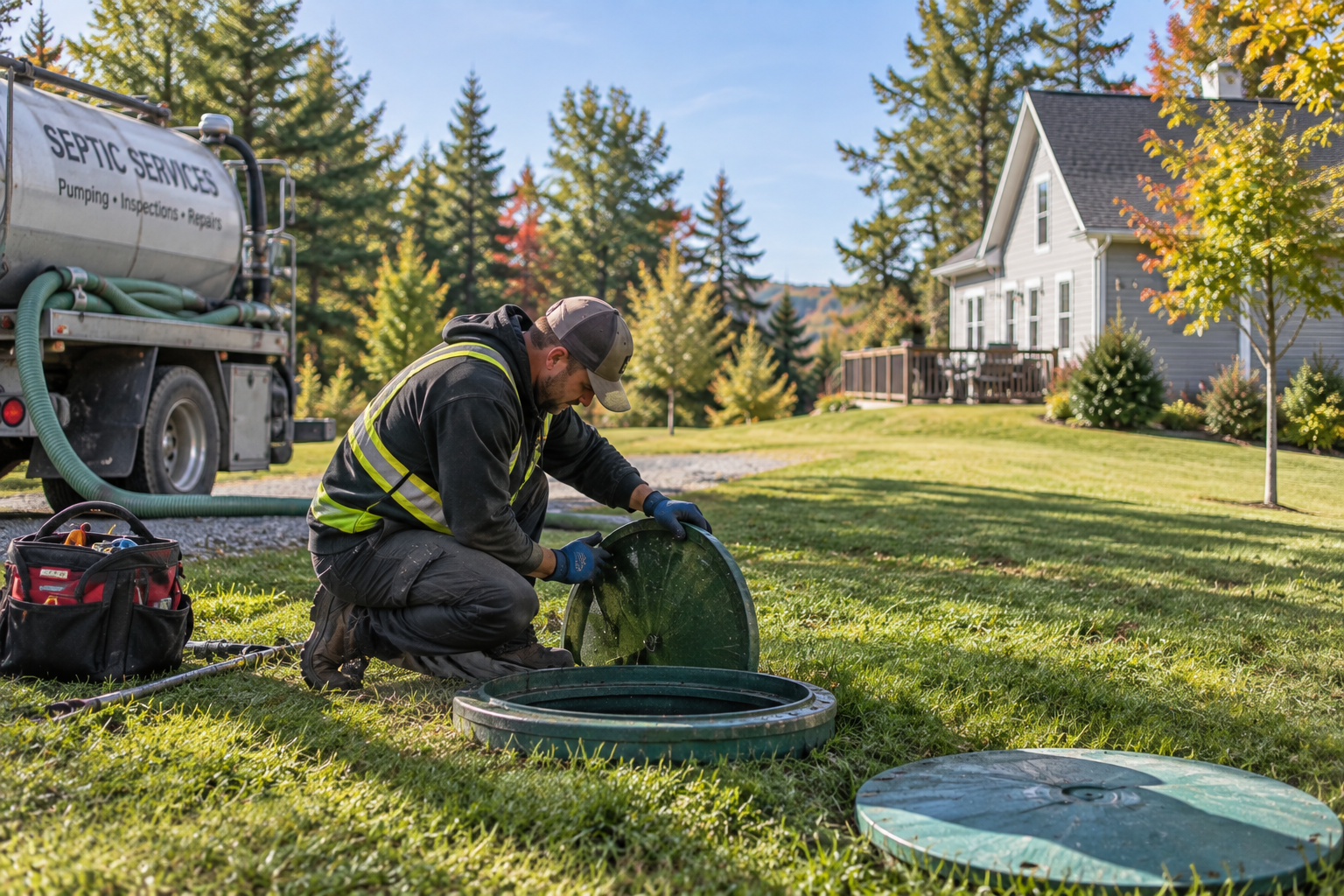
You might know you like the Annapolis Valley without knowing whether Wolfville, Berwick, Kingston, Middleton or somewhere between them makes the most sense.

Or you may know you want the South Shore without knowing whether you should concentrate around Chester, Mahone Bay, Lunenburg, Bridgewater or farther along the coast.

That's completely reasonable.

You don't need to narrow your search to one town before you start looking.

Sometimes the first few showings aren't just about evaluating houses. They're also about learning what different areas feel like and discovering which trade-offs matter to you.


Use Area Guides for the Next Level of Research

Once you've narrowed your search to a few communities, that's the point where detailed local research becomes much more useful.

Instead of trying to turn this article into a description of every Nova Scotia town, my Area Guides explore individual communities in more detail—including the character of the area, housing, services and some of the practical considerations involved in living there.

That keeps the two questions separate:

This guide helps you decide what kind of location works for you.

The Area Guides help you investigate particular places.

Everyday community life in Nova Scotia for buyers considering where to live

The Best Location Is the One That Works for Your Life

There's no single Nova Scotia community that's right for every buyer.

Someone who wants restaurants within walking distance may make a very different choice from someone who wants a workshop, ten acres and enough room that they can't see their neighbours.

The goal isn't to find the community everyone else thinks is best.

It's to understand the trade-offs well enough to choose a location that fits the way you actually intend to live.

When we begin a home search, that's one of the conversations I like to have early.

Not simply:

“Where do you want to buy?”

But:

“What do you want your life there to look like?”

The answer can lead us to places you may not have considered.


Part of the Buying a Home in Nova Scotia Buyer Resource Centre: Practical guides to help you prepare, evaluate a property and navigate the home-buying process.

Read

How Much Does It Really Cost to Buy a Home in Nova Scotia?

When you're planning to buy a home, the purchase price tends to get most of the attention.

But the price of the property isn't the only number you need to plan for.

In addition to your down payment, there can be costs for inspections, legal work, deed transfer tax, property adjustments, moving and other expenses before you ever receive the keys.

Some costs depend on the property. Others depend on where you're buying or how you're financing the purchase.

Understanding them before you start looking can help you answer a much more useful question than simply How much house can I afford?

How much money will I actually need to complete the purchase and comfortably move into the home?


Start With the Down Payment

Your down payment is the portion of the purchase price that you provide rather than finance through your mortgage.

How much you'll need depends on the purchase price, your mortgage and your individual circumstances.

For many buyers, the down payment will be the largest amount of cash required to purchase the property—but it shouldn't necessarily consume all of the money you've saved.

There are other expenses you'll need to pay along the way, and some of them can't simply be added to your mortgage.

If you're working toward a particular purchase price, your mortgage professional can help you understand the down payment requirements that apply to your financing.


Mortgage Loan Insurance May Affect the Cost of Your Mortgage

If your down payment is less than 20%, mortgage loan insurance will generally be required.

Mortgage loan insurance protects the lender, rather than the buyer, if the borrower defaults on the mortgage. The premium is based on the mortgage amount and the size of the down payment. The lender will typically pass that cost on to the borrower, and the premium can generally be paid upfront or added to the mortgage. Canada Mortgage and Housing Corporation

That means it may not always be another cheque you need to write on closing day, but it still affects the overall cost of financing the home.

Your mortgage professional can explain whether mortgage loan insurance applies to your purchase and how it affects your mortgage.


What About the Deposit With Your Offer?

The deposit and down payment aren't the same thing.

A deposit is submitted in connection with your Agreement of Purchase and Sale and demonstrates your commitment to the transaction.

If the purchase proceeds to closing, the deposit is credited toward the money required from you to complete the purchase—it isn't an additional amount on top of the purchase price.

But you still need to have the deposit funds available at the appropriate point in the transaction.

This is worth planning for before you make an offer. Having enough money saved for a down payment doesn't necessarily mean all of those funds are immediately accessible when a deposit is required.


Home inspection as part of the cost of buying a home in Nova Scotia

Budget for Inspections and Property Investigations

A home inspection is one of the more obvious costs buyers may encounter after an offer is accepted, but it isn't necessarily the only investigation worth considering.

Depending on the property, you might also need or choose to investigate things such as:

  • Well water quality or quantity

  • Septic system condition

  • Radon

  • Wood-burning appliances

  • Electrical systems

  • Oil tanks

  • Sewer lines

  • Structural concerns

  • Property boundaries

  • Environmental concerns

You won't need every test for every house.

The appropriate investigations depend on the property, its systems and anything identified during your initial review or home inspection.

These expenses are generally incurred before closing, so they should be part of the cash you've set aside for the purchase rather than something you expect to deal with after moving in.


You'll Need a Lawyer

A lawyer plays an important role in completing a real estate purchase in Nova Scotia.

Your lawyer's work may include reviewing title, preparing and registering documents, handling mortgage documentation, accounting for the money involved in the transaction and completing the legal transfer of the property.

Legal fees can vary depending on the lawyer, the transaction and the work required.

There can also be disbursements and registration-related expenses in addition to the lawyer's professional fee. For example, Nova Scotia's Land Registry currently charges fees for registering or recording documents. Government of Nova Scotia

Rather than relying on a generic online estimate, ask the lawyer you intend to use for an estimate of the legal fees and expected disbursements for your particular purchase.


Residential homes in Nova Scotia where municipal deed transfer tax may apply

Municipal Deed Transfer Tax Can Be a Significant Closing Cost

Nova Scotia municipalities can charge a Municipal Deed Transfer Tax when property changes ownership.

The important thing for buyers to understand is that there isn't one single province-wide municipal rate.

The rate is set by the municipality where the property is located and is calculated based on the sale price. Government of Nova Scotia

For example, the Province's April 2026 rate schedule lists a 1.5% Municipal Deed Transfer Tax for the Municipality of the County of Annapolis, the Town of Annapolis Royal and the Town of Middleton. Rates elsewhere in Nova Scotia can differ. Government of Nova Scotia

On a $350,000 purchase, a 1.5% municipal deed transfer tax would be:

$5,250

That's a substantial amount to discover late in the process.

When you're considering a property, confirm the applicable rate for that municipality rather than assuming it will be the same as somewhere else in Nova Scotia.
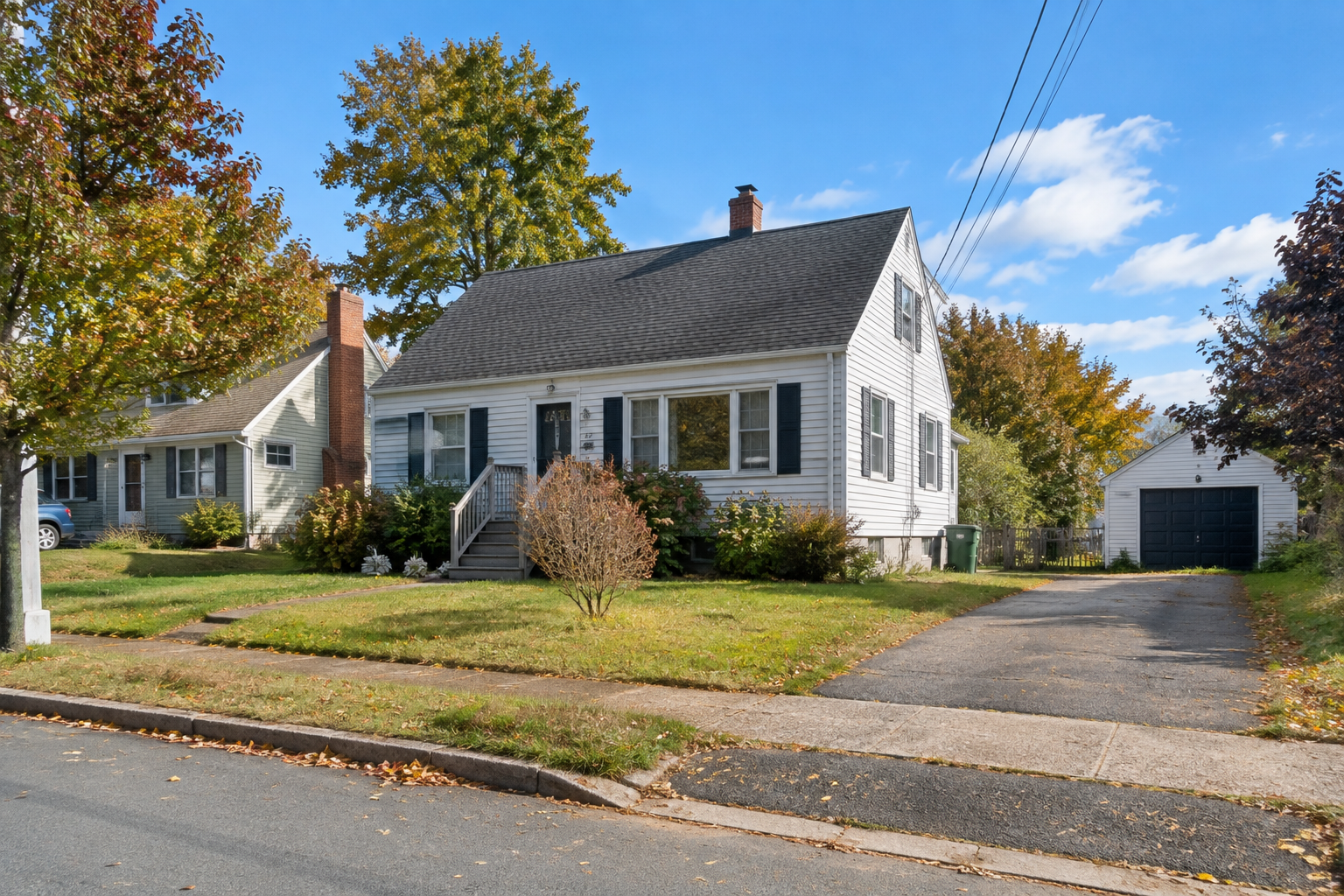

Moving to Nova Scotia? There May Be Another Deed Transfer Tax to Consider

This is especially important for buyers coming from outside Nova Scotia.

Nova Scotia also has a Non-resident Provincial Deed Transfer Tax that can apply when non-residents acquire qualifying residential property.

As of September 2026, the rate is 10%, generally calculated using the purchase price or assessed value, whichever is higher, and according to the ownership interest being transferred to non-residents. Government of Nova Scotia

There are exemptions, including provisions for people who intend to move to Nova Scotia and establish residency. The Province announced changes in August 2026 intended to give qualifying buyers more flexibility around proving that residency. Nova Scotia News

Because a 10% tax could represent a very large amount of money, don't make assumptions about whether you qualify for an exemption.

If you're moving to Nova Scotia, discuss your circumstances with your lawyer before closing so you understand how the rules apply to you.


What Are Closing Adjustments?

Some expenses associated with the property may have already been paid by the seller for a period extending beyond the closing date.

Others may need to be divided between buyer and seller.

These amounts can be accounted for through adjustments on closing.

Property taxes are a common example.

If the seller has already paid property taxes covering a period during which you'll own the home, an adjustment may be made so that each party ultimately pays their appropriate share.

Other adjustments can depend on the property and the terms of the transaction.

These aren't necessarily huge expenses individually, but they affect the final amount of money your lawyer will require from you to complete the purchase.


Home features that may affect insurance when buying a property in Nova Scotia

Don't Forget Home Insurance

You'll generally need to arrange home insurance before closing when you're financing the purchase.

The cost can vary considerably depending on the home and the coverage.

Factors such as the age and condition of the property, heating system, electrical system, roof, oil tank, wood-burning appliances and other characteristics can affect whether an insurer will cover a property and what that coverage costs.

This is one reason I recommend buyers investigate insurance before their conditions are satisfied, particularly when purchasing an older or unusual home.

The important question isn't simply:

“How much will insurance cost?”

It's also:

“Can I obtain acceptable insurance on this particular property?”

We'll explore that issue much more deeply in the Buyer Resource Centre's dedicated guide to home insurance.

Moving into a new home after completing a Nova Scotia home purchase

Moving Day Has Costs Too

Closing the transaction isn't the end of the expenses.

Depending on your move, you may need to budget for:

  • Professional movers or a rental truck

  • Travel

  • Temporary accommodation

  • Storage

  • Utility or service setup

  • Changing locks

  • Appliances or furnishings

  • Immediate maintenance

  • Snow removal or lawn equipment

  • Fuel or heating costs

  • Supplies for your first few days in the home

Someone relocating across Canada will obviously have a very different moving budget from someone buying a home ten minutes away.

The important thing is simply to include the move itself in your planning.


Leave Room for the House to Surprise You

Even a carefully inspected home can have expenses after closing.

You may discover that you need a tool you never owned before, want to replace a lock, need to service a heating system or suddenly realize how much it costs to equip a larger property.

An inspection can help you understand the condition of the home, but it doesn't make future maintenance disappear.

This is why using every available dollar for the down payment and closing costs can leave a new homeowner in an uncomfortable position.

If possible, plan to have some money remaining after the transaction is complete.

Owning the home is much easier when the first unexpected repair doesn't immediately become a financial emergency.


Purchase Costs and Ownership Costs Are Different

It's useful to separate your budget into two categories.

Costs to buy the home can include your down payment, inspections, legal expenses, deed transfer tax, closing adjustments and moving expenses.

Costs to own the home can include your mortgage payment, property taxes, insurance, heating, electricity, water and wastewater, maintenance and other recurring expenses.

CMHC recommends planning for both closing costs and the ongoing expenses of homeownership. Its current guidance notes that closing costs can amount to roughly 1.5% to 4% of the purchase price, although the actual amount depends on the transaction and location. Canada Mortgage and Housing Corporation

For a Nova Scotia buyer, that percentage should be treated as a planning guideline rather than a quote. Municipal deed transfer tax varies, property investigations differ, legal costs aren't identical and the non-resident provincial tax can dramatically change the calculation when it applies.


So, How Much Money Should You Have Available?

There isn't one percentage that works for every Nova Scotia home purchase.

A more useful approach is to build the budget from the actual pieces:

Down payment

  • Deposit timing

  • Inspection and testing costs

  • Legal fees and disbursements

  • Applicable deed transfer taxes

  • Closing adjustments

  • Moving costs

  • A reserve for the unexpected

Your mortgage professional can help you understand the financing and down-payment side.

Your lawyer can provide guidance on legal costs, taxes and closing requirements.

Your REALTOR® can help identify property-specific investigations and expenses that may need to be considered as you evaluate a home.

Together, those conversations can give you a much more realistic picture than simply estimating a percentage of the listing price.


Nova Scotia home representing the costs and responsibilities of homeownership

Prepare for the Purchase, Not Just the Mortgage

Saving enough for a down payment is an important milestone.

But being financially prepared to buy a home means looking beyond the down payment.

When you account for the costs that happen before, during and immediately after closing, you can begin your home search with a much clearer idea of what you can comfortably purchase.

And when the right property comes along, you're less likely to discover that the expenses surrounding the transaction have stretched your budget further than you expected.


Part of the Buying a Home in Nova Scotia Buyer Resource Centre: Practical guides to help you prepare, evaluate a property and navigate the home-buying process.

Read

Getting Pre-Approved for a Mortgage: What Buyers Should Know

For many home buyers, getting pre-approved for a mortgage is one of the first practical steps in the buying process.

It can help you understand the price range you may be able to consider, give you an idea of what your mortgage payments could look like and make your home search more focused.

But there's an important distinction that buyers sometimes miss:

A mortgage pre-approval is not a guarantee that your mortgage will ultimately be approved.

Understanding what a pre-approval does—and what still has to happen after you find a home—can help you approach your search with more realistic expectations.


What Is a Mortgage Pre-Approval?

A mortgage pre-approval is an assessment completed by a lender or mortgage broker before you've chosen the property you want to buy.

As part of the process, you'll generally provide information about your income, employment, debts, assets and the money you expect to use toward your purchase. A lender will also likely check your credit. Canada

Based on that information, the process may give you an indication of the maximum mortgage amount you could qualify for and an estimate of your payments. Depending on the lender, it may also include an interest-rate hold for a specified period. Canada

That's useful information to have before you begin seriously looking at properties.

But the amount you're pre-approved for should be treated as a financing limit, not necessarily your home-buying budget.


How Much Should You Actually Spend?

Being told you may qualify for a particular mortgage doesn't mean you have to spend that much.

A lender's calculation is primarily concerned with whether you meet its lending requirements. Your personal budget has to account for everything else competing for your income.

That can include:

  • Property taxes

  • Home insurance

  • Heating and electricity

  • Water and wastewater costs

  • Maintenance and repairs

  • Transportation and commuting

  • Other debts and monthly obligations

  • Savings and retirement goals

  • The lifestyle you want to maintain

You may decide that buying below your maximum qualification gives you more financial flexibility.

This is particularly worth considering when comparing Nova Scotia properties because two homes at similar prices can have considerably different operating and maintenance costs.


What Will a Mortgage Professional Need From You?

The exact requirements vary by lender and by your financial circumstances, but you should expect to provide documentation supporting the information in your application.

That may include:

  • Identification

  • Proof of employment and income

  • Information about your bank accounts and other assets

  • Details about loans, credit cards and other debts

  • Information about your down payment

  • Evidence showing where your down payment is coming from

  • Documentation showing you have funds available for closing costs

Self-employed buyers or buyers with income that doesn't fit a conventional employment arrangement may be asked for additional documentation.

Providing complete information at the beginning can help avoid unnecessary delays. CMHC notes that missing or incomplete information is a common reason mortgage applications take longer to process. Canada Mortgage and Housing Corporation


Your Down Payment Is Part of the Conversation

Your mortgage professional will want to know not only how much money you have available for your down payment, but also where it came from.

Depending on your situation, those funds might come from savings, investments, proceeds from selling another property or an eligible gift.

Documentation requirements can vary depending on the source of the money, so it's worth discussing this early rather than assuming you can simply move the funds when they're needed.

You'll also want to remember that your down payment isn't the only cash you'll require.

Legal fees, inspections, applicable deed transfer tax, adjustments at closing, moving expenses and other purchasing costs may all require funds outside the amount you're putting toward the property.


Pre-Approved Doesn't Mean Final Approval

This is probably the most important thing to understand about mortgage pre-approval.

Your lender hasn't approved the house yet because you haven't chosen it.

Once you have an accepted offer, the lender can assess the actual transaction and property.

The final mortgage amount can depend on factors including the purchase price, the property and its value. A lender may require an appraisal or other information before providing final approval. CMHC specifically notes that even a buyer with a pre-approved mortgage still needs final mortgage approval during the conditional-offer period. Canada Mortgage and Housing Corporation

This is one reason a financing condition can be important when preparing an offer.

A strong pre-approval puts an important piece of the financing puzzle in place—but it doesn't eliminate the remaining pieces.


Why Can the Property Affect Your Financing?

When you're buying a home, the lender isn't evaluating only you.

It's also lending money against the property.

Certain characteristics may cause a lender to ask additional questions or require more information. The exact requirements depend on the lender and the property.

This can become particularly relevant when considering properties that are unusual, require substantial work or don't fit neatly into conventional residential lending.

CMHC notes that lenders verify that a property meets their standards before approving a mortgage and that those standards can vary between lenders. Canada

If you're considering a property that's significantly different from a conventional home, involving your mortgage professional early can help identify potential financing questions before they become time-sensitive.


What Is a Mortgage Appraisal?

An appraisal may be one of the steps a lender uses to assess the property.

The purpose isn't the same as a home inspection.

A home inspection is intended to help you better understand the physical condition of the property. An appraisal is concerned primarily with establishing the property's value for lending purposes.

The lender wants to know whether the property's value reasonably supports the mortgage being requested.

CMHC explains that property value is an important part of determining the mortgage amount and that a professional appraisal may be required when a more detailed valuation is needed. Canada Mortgage and Housing Corporation

If the lender's valuation doesn't support the amount required for the purchase, the buyer may need to discuss the available options with their mortgage professional and REALTOR®.


Try Not to Change Your Financial Situation Before Closing

Getting pre-approved doesn't freeze your financial circumstances.

Your lender may review or verify information again before the mortgage is finalized.

Because of that, it's worth speaking with your mortgage professional before making significant financial changes while you're in the process of buying a home.

For example, taking on new debt, financing a vehicle or making another substantial credit purchase could affect the financial picture on which your mortgage qualification was based.

The same principle applies if something significant changes with your employment or income.

If your circumstances change between pre-approval and closing, tell your mortgage professional rather than assuming it won't matter.


What Should You Ask During the Pre-Approval Process?

A pre-approval meeting isn't just about receiving a maximum mortgage number.

It's also an opportunity to understand how your financing will work.

Useful questions might include:

  • How much could I potentially qualify to borrow?

  • What might the monthly payment look like?

  • How long is the pre-approval valid?

  • Is an interest rate being held, and for how long?

  • What documentation will you need from me?

  • Are there property types that could present financing challenges?

  • How quickly can financing be reviewed once I have an accepted offer?

  • What could cause final approval to differ from the pre-approval?

  • Who should I contact if my income, debts or down payment change?

FCAC specifically recommends asking how long a pre-approved rate is guaranteed, whether a lower rate would apply if rates fall during that period and whether the pre-approval can be extended. Canada

Don't hesitate to ask your mortgage professional to explain anything you don't understand.


Your REALTOR® and Mortgage Professional Have Different Roles

Your mortgage professional and REALTOR® are both important during a purchase, but they provide different expertise.

Your mortgage professional can advise you about mortgage qualification, financing products, interest rates and lender requirements.

Your REALTOR® can help you understand the property, the market and the real estate transaction—and can make sure your mortgage professional receives the property and offer information they need when financing is being reviewed.

Neither replaces the other.

The process generally works best when the professionals involved can communicate efficiently once you've found a property you want to purchase.


Get the Financing Conversation Started Before You Find the House

It's much easier to work through questions about income, credit, down payment or documentation before you're working against the deadlines of an accepted offer.

A pre-approval can give you a clearer starting point and help focus your search on properties that make sense for your circumstances.

Just remember what it actually represents.

It tells you something about your potential financing before you've selected a property. Final approval comes later, once both you and the property have satisfied the lender's requirements.

That distinction is worth understanding before you begin your home search.


Part of the Buying a Home in Nova Scotia Buyer Resource Centre: Practical guides to help you prepare, evaluate a property and navigate the home-buying process.

Read

How to Prepare to Buy a Home in Nova Scotia

Buying a home often starts long before you book your first showing.

A little preparation can make it easier to understand what you can comfortably afford, narrow down where and what you want to buy, and recognize when the right property comes along.

You don't need to have every detail figured out before you start talking to a REALTOR® or mortgage professional. But getting some of the important pieces in place early can make the home-buying process much easier to navigate.


Start With Your Financial Picture

Before focusing on listings and asking prices, take some time to look at your overall financial situation.

The question isn't simply how much a lender may be willing to lend you. It's also how much you're comfortable spending each month while still leaving room for everything else in your life.

Consider your existing monthly expenses, debts, savings and the amount you expect to have available for a down payment. Then think about the costs that will come with owning the type of property you're considering.

Two homes with the same purchase price can have very different ongoing costs. Property taxes, insurance, heating, electricity, water and wastewater services, maintenance and commuting can all affect what a home actually costs to own.

A realistic budget should consider both what it costs to buy the property and what it will cost to live there.


Talk to a Mortgage Professional Before You Start Looking

Getting pre-approved for a mortgage can give you a better idea of the price range you may be able to consider.

A mortgage professional can review your income, debts, credit and down payment and explain the financing options that may be available to you.

This is also a good opportunity to ask questions about the documentation you'll need and whether there are factors that could affect your eventual mortgage approval.

Keep in mind that a pre-approval isn't the same as final mortgage approval.

Once you have an accepted offer, your lender may still need to approve the property itself, review the purchase price and possibly obtain an appraisal before providing final financing.

Understanding that distinction before you begin your search can help prevent surprises later.

Home buyers discussing mortgage pre-approval with a mortgage professional

Know How Much Cash You May Need

Your down payment isn't the only money you may need when buying a home.

Depending on your purchase, you may also need funds for expenses such as:

  • The deposit submitted with your offer

  • Home inspection and other property investigations

  • Legal fees

  • Deed transfer tax

  • Adjustments made at closing

  • Moving expenses

  • Immediate repairs or maintenance

  • Utility or service setup

The exact costs will depend on the property and your circumstances, but it's worth leaving some room in your budget rather than using every available dollar for the purchase itself.

Having money available after closing can also make the first few months of homeownership considerably less stressful when an unexpected repair or expense appears.


Residential community in Nova Scotia showing homes and surrounding landscape

Think About Where You Want to Live

Before setting up a search based solely on price and bedroom count, think about how location will affect your everyday life.

Nova Scotia can change considerably within a relatively short drive. A home in town may have municipal water and sewer, nearby services and a short commute, while another property twenty minutes away may have a well, septic system, private road or significantly more land.

Neither is necessarily better. They're simply different ways of living.

Consider things such as:

  • Commute and travel time

  • Access to shopping and everyday services

  • Healthcare

  • Schools, if they're important to your household

  • Internet and cellular service

  • Road maintenance and winter driving

  • Municipal versus private water and wastewater systems

  • Property size and maintenance

  • Proximity to family, recreation and community activities

If you're relocating to Nova Scotia, spending some time understanding the communities you're considering can be just as important as researching the houses themselves.


Separate Your Needs From Your Wants

Most buyers begin with an idea of their ideal home. The challenge is deciding which parts of that picture are essential and which ones are flexible.

One useful approach is to divide your priorities into three groups.

Needs

These are the things the property realistically must have for it to work for you. That could include a certain number of bedrooms, accessibility requirements, a manageable commute or space for a particular use.

Wants

These are features you'd really like to have but could compromise on for the right property. A garage, finished basement, particular kitchen layout or larger lot might fall into this category.

Deal Breakers

These are characteristics that would cause you to rule out a property regardless of its other advantages.

Making these distinctions before you start looking can help when you eventually have to compare homes that each offer something different.

Your priorities may also change once you've seen a few properties—and that's perfectly normal.


Nova Scotia home with land illustrating different property types buyers may consider

Consider the Type of Property You Want to Own

Nova Scotia offers much more than conventional subdivision homes.

Depending on where you're looking, you may encounter older homes, waterfront properties, acreages, hobby farms, cottages, mini or modular homes, vacant land and properties with private roads or unusual construction.

Different property types can bring different responsibilities and questions.

For example, owning several acres may sound appealing until you consider driveway maintenance, snow removal and the time required to maintain the land. Waterfront may be a priority, but shoreline conditions, insurance, access and exposure can become part of the decision.

The goal isn't to avoid properties that are different. It's to understand what comes with the type of property you're considering.


If You Already Own a Home, Think About How the Two Transactions Fit Together

Buying becomes more complicated when the money or timing for your next home depends on selling your current one.

Before beginning your search, it's worth understanding approximately what your existing property may sell for, how much equity you may have available and how the timing of a sale could affect your purchase.

Depending on your circumstances, you may need to consider questions such as:

  • Do you need to sell before you can buy?

  • Can you qualify to own both properties temporarily?

  • Would bridge financing be an option?

  • What happens if the closing dates don't line up?

  • Would your offer on another property need to depend on selling your current home?

Your REALTOR® and mortgage professional can help you understand how these pieces may fit together before you're trying to solve them in the middle of an offer.

Homeowners discussing buying and selling a home with their REALTOR®

Understand the Basic Buying Process

You don't need to become an expert in real estate contracts before you start looking for a home, but knowing the broad stages of the process can make everything feel much less unfamiliar.

A typical purchase may involve:

  1. Preparing your finances and getting pre-approved

  2. Identifying your priorities and beginning the property search

  3. Viewing and evaluating potential homes

  4. Preparing and negotiating an offer

  5. Completing financing, inspections and other agreed conditions

  6. Working with your lawyer, lender and other professionals toward closing

  7. Completing a final walkthrough

  8. Closing the transaction and taking possession

The details can vary from one purchase to another, particularly when you're buying a property with unusual features or circumstances.

That's why understanding the process is useful—but having the right professionals involved is equally important.

Home buyers viewing a property with their REALTOR® in Nova Scotia

When Should You Contact a REALTOR®?

You don't have to wait until you're ready to book showings.

Speaking with a REALTOR® earlier in the process can help you understand local property types, communities, current listing conditions and some of the questions that may come up during your search.

It can also be useful if you're still trying to determine whether your expectations around location, property type and budget line up with what's available.

A REALTOR® isn't a substitute for your lender, lawyer, inspector, insurance provider or other specialists. Each professional has a different role.

Part of the REALTOR®'s job is helping you navigate the real estate transaction and recognize when a question should be answered by one of those other professionals.

Nova Scotia home representing the end goal of a home buyer's search

You Don't Need to Have Everything Figured Out

Preparing to buy a home doesn't mean predicting every question you'll encounter.

It means getting enough of the important pieces in place that you can start your search with a clearer understanding of your finances, priorities and options.

Your ideas may change as you explore communities and see different properties. You may discover that something you originally considered essential isn't as important as you thought—or that a feature you hadn't considered becomes a priority.

That's part of the process.

The objective isn't to create the perfect checklist before you begin. It's to put yourself in a position to make informed decisions as the right property comes along.


Part of the Buying a Home in Nova Scotia Buyer Resource Centre: Practical guides to help you prepare, evaluate a property and navigate the home-buying process.

Read

Energy-Efficient Upgrades: Which Ones Actually Pay Off?

Part of the Smarter, Greener Homes series: Practical guides to understanding energy efficiency, home performance and green-building features.

New windows.

More insulation.

A heat pump.

Air sealing.

Solar panels.

If you're trying to make a home more energy efficient, there's no shortage of places to spend money.

But which upgrade actually gives you the best return?

I wish there were a simple answer.

Something like:

“Always replace the windows first.”

or:

“A heat pump is always the best investment.”

There isn't.

Because the value of an energy upgrade depends heavily on what's wrong with the house before you make it.

A house with an under-insulated attic has a different problem from one with excellent insulation but an aging oil furnace.

A drafty century home has different priorities from a relatively airtight 15-year-old home.

And a house with inexpensive heating but poor windows may have different goals again—especially if comfort, condensation or maintenance are part of the decision.

Natural Resources Canada recommends thinking of the home as a system, because the building envelope, heating and cooling equipment, ventilation, occupants and other components all interact. Changing one can affect the others. Natural Resources Canada

So instead of asking:

“Which energy upgrade has the best payback?”

I think the better question is:

“Which upgrade addresses the biggest problem in this particular house?”


1. First, What Does “Pay Off” Actually Mean?

When people talk about return on an energy-efficiency upgrade, they're often talking about one thing:

How long will it take the energy savings to equal what I spent?

That's simple payback.

If an upgrade costs $5,000 and somehow saves exactly $500 per year, its simple payback would be 10 years.

But real houses aren't usually that simple.

An upgrade can also provide:

  • better comfort

  • fewer drafts

  • more consistent room temperatures

  • less condensation

  • quieter operation

  • cooling in summer

  • reduced maintenance

  • replacement of something that was already failing

  • lower greenhouse-gas emissions

  • potentially greater appeal to future buyers

And some improvements need to be made whether they produce an exciting energy return or not.

If your windows are rotting, you're eventually going to deal with them.

If your furnace is at the end of its life, you're going to need another heating system.

If you're already replacing siding, that may create an opportunity to improve wall insulation at a much lower incremental cost than opening the walls solely for insulation.

So there are really two questions:

Will this upgrade reduce energy consumption?

and

Does it make financial sense to do it now?

Those aren't always the same question.


2. The Best Upgrade Usually Fixes a Weakness

Imagine a house with:

  • good windows

  • a relatively efficient heat pump

  • reasonable wall insulation

  • almost no attic insulation

Would replacing the windows again make sense?

Probably not as your first energy upgrade.

Now imagine another house:

  • well-insulated attic

  • insulated basement

  • reasonably airtight

  • 25-year-old heating equipment

  • high-cost heating fuel

Adding another layer of attic insulation may not be where I'd start either.

That's the problem with universal retrofit rankings.

The same upgrade can be extremely valuable in one house and relatively insignificant in another.

The starting point matters.

Where Does Your Heating Dollar Actually Go?


3. Air Sealing: Often Not Glamorous, but Important

Nobody invites the neighbours over to admire their new caulking.

Air sealing doesn't have the visual impact of new windows or solar panels.

But from an energy-efficiency standpoint, it can be extremely important.

NRCan calls air-leakage control the single most important retrofit activity and says it should be considered first in an upgrade strategy. Natural Resources Canada

Why?

Because every time heated indoor air escapes, outdoor air replaces it.

And in winter, your heating system has to heat that replacement air.

Potential leaks can occur around:

  • attic penetrations

  • windows and doors

  • plumbing

  • electrical fixtures

  • chimneys

  • sill plates

  • foundations

  • additions

  • exhaust penetrations

Some air-sealing work can also be relatively inexpensive compared with major equipment or window replacement.

But here's the important qualification:

You still need to know where the house is leaking.

A blower-door test can help locate and quantify leakage instead of simply applying caulking everywhere and hoping for the best.

And as a house becomes tighter, ventilation also needs to be considered. NRCan specifically cautions that changes to the building envelope and air sealing can affect ventilation. Natural Resources Canada

So air sealing can be a very good investment.

But it should still be done as part of understanding the whole house.

Your House May Be Leaking Money — Understanding Air Sealing


4. Insulation: Sometimes the Obvious Opportunity

Insulation is another upgrade where the starting point matters enormously.

Going from very little insulation to a well-insulated assembly can be a very different investment from adding even more insulation to an area that's already performing reasonably well.

That's because insulation experiences diminishing returns.

Each additional amount of insulation can still reduce heat flow, but the improvement isn't linear.

Doubling the R-value doesn't mean you'll cut your heating bill in half.

So if I were considering insulation, I'd first ask:

Where is insulation actually lacking?

The attic?

Exterior walls?

Basement?

Rim joist?

An addition?

Sometimes the opportunity is obvious.

An accessible attic with inadequate insulation can be relatively straightforward to improve.

Insulating finished exterior walls may involve considerably more labour and disruption.

And timing can completely change the economics.

If you're already replacing siding, renovating a basement or opening walls for another reason, insulation that might otherwise be expensive to access can suddenly become much more practical.

The best time to improve insulation may be when the house is already open.

Insulation: What Do R-Values Actually Mean?


5. Windows: The Upgrade Everyone Wants to Do

Windows are interesting because they're one of the first upgrades many homeowners think about.

They're visible.

They're easy to understand.

New windows look good.

And poor windows can absolutely contribute to heat loss, drafts and discomfort.

NRCan says windows, doors and skylights can account for up to 35% of total house heat loss. Natural Resources Canada

That sounds like an obvious argument for replacing every window.

Except it isn't.

The real question is:

What condition are the existing windows in?

A failed, drafty, deteriorated window is different from a reasonably good double-pane window that's properly installed and sealed.

And replacing an entire window isn't the only possible improvement.

Depending on the situation, you may be dealing with:

  • deteriorated weatherstripping

  • failed caulking

  • air leakage around the frame

  • failed insulated glass

  • poor installation

  • condensation

  • genuinely poor-performing glazing

That's why I wouldn't recommend replacing good windows solely because a newer window has a better performance rating.

The improvement may be real.

That doesn't automatically make it the best place to spend the next renovation dollar.

Triple-Pane Windows: Worth the Extra Cost?


6. Heat Pumps: A Different Kind of Upgrade

A heat pump is different from insulation or air sealing.

Insulation and air sealing primarily reduce the amount of heat the house loses.

A heat pump changes how efficiently you produce that heat.

That distinction matters.

A cold-climate air-source heat pump can offer substantial operating-cost advantages when replacing or displacing certain heating systems. NRCan's Canadian cold-climate heat-pump study found operating costs lower than electric-resistance or oil furnaces for space heating in all Canadian regions it studied. Natural Resources Canada

That's particularly relevant in Nova Scotia, where oil and electric-resistance heating remain common.

But even then, the numbers depend on:

  • what you're replacing

  • electricity prices

  • fuel prices

  • heat-pump efficiency

  • sizing

  • installation

  • outdoor temperatures

  • backup heat

  • how you operate the system

  • how much heat the house actually needs

NRCan stresses that proper selection, sizing and installation are critical to maximizing heat-pump energy savings. Natural Resources Canada

There's also another benefit that's easy to leave out of a simple payback calculation:

A heat pump provides air conditioning.

If you were going to purchase cooling anyway, part of the heat-pump cost may be providing a benefit that isn't captured by comparing winter heating bills alone.

So again:

Context matters.

Heat Pumps: Are They Really Cheaper to Run in Nova Scotia?


7. What If the House Is Leaky AND Has an Inefficient Heating System?

Now we get to the more interesting cases.

Suppose a house has:

  • substantial air leakage

  • inadequate attic insulation

  • an old oil furnace

Should you improve the envelope first?

Or install the heat pump first?

There isn't always one correct sequence.

But there's a useful principle:

Reducing the heating load can change the heating equipment the house needs.

If you're planning significant insulation and air-sealing improvements, the house may require less heat afterward.

That can affect equipment sizing.

Conversely, if the existing heating equipment is failing and needs immediate replacement, you may not have the luxury of completing the entire building envelope first.

This is why energy upgrades should be thought of as a plan, rather than a collection of unrelated purchases.


8. Solar Panels: Reduce the Bill or Reduce the Consumption?

Solar creates another important distinction.

Solar photovoltaic panels don't make the house itself require less energy.

They produce electricity.

That's different from insulation, air sealing or better windows, which can reduce the energy demand of the building.

Neither approach is inherently better.

They're solving different problems.

Imagine two identical homes using 20,000 kWh per year.

One adds solar panels that offset part of the electricity it purchases.

The other reduces its underlying energy consumption through envelope and mechanical improvements.

Both may end up purchasing less energy.

But they got there differently.

That's why before considering solar, I'd want to understand:

How much energy does the house currently use—and why?

If the house has obvious efficiency problems, it may make sense to investigate those alongside—or before—sizing a solar system.

On the other hand, a house that's already reasonably efficient may be a very different solar candidate.

Producing energy and needing less energy are two different sides of the equation.

Solar Panels vs. Passive Solar: What's the Difference?


9. Don't Forget About the Cost You Were Already Going to Spend

This can completely change the payback calculation.

Imagine your roof needs replacement.

You're going to spend money on the roof regardless.

If an energy-related improvement can be incorporated into that project, the relevant question may not be:

“What does the entire project cost?”

It may be:

“What does the energy upgrade add to a project I already have to do?”

The same applies to:

  • replacing siding

  • finishing a basement

  • replacing failed windows

  • replacing an old heating system

  • renovating an attic

  • opening walls

  • replacing a roof before solar installation

That incremental cost can sometimes be much more useful than looking at the full project price.

A $20,000 renovation that was required anyway isn't necessarily a $20,000 energy upgrade.


10. Comfort Has Value Too

This is where a strict payback calculation can miss part of the story.

Suppose an insulation and air-sealing project saves a modest amount each year.

But afterward:

The bedroom above the garage isn't freezing.

The floor isn't cold.

The drafts beside the windows disappear.

The basement becomes more comfortable.

The heating system cycles less aggressively.

How much are those things worth?

That's subjective.

But they're real.

Likewise, new windows may improve comfort, operation, condensation resistance and appearance even if their energy savings alone don't justify their entire cost.

A heat pump may provide cooling.

Solar may provide some protection against future purchased-electricity costs.

Not every benefit appears on the heating bill.


11. And Maintenance Can Change the Calculation

Suppose you're comparing keeping an old oil heating system with installing a heat pump.

The comparison isn't necessarily just:

Oil cost vs. electricity cost.

There may also be:

  • furnace or boiler maintenance

  • oil-tank replacement

  • chimney maintenance

  • equipment replacement

  • cooling equipment

  • backup heating requirements

Likewise, keeping deteriorating windows may eventually involve repair and maintenance costs.

When an existing component is approaching the end of its useful life, the economics of upgrading can change substantially.

You're no longer comparing:

Do nothing vs. spend $15,000.

You may be comparing:

Spend $10,000 replacing the old system with something similar

versus

Spend $15,000 replacing it with something more efficient.

Now the energy-efficiency decision is really about the difference between those options.


12. Rebates and Incentives Matter—But They Change

Government and utility programs can have a major effect on retrofit economics.

They can also change.

That means I wouldn't build a long-term renovation strategy around an incentive without checking that the program is still available and that the specific project qualifies.

NRCan's Greener Homes Initiative illustrates how widely homeowners' choices can vary. As of February 2026, the most common funded retrofit nationally was heat pumps, followed by windows and doors, insulation, air sealing and solar panels. Natural Resources Canada

But popularity doesn't tell us which upgrade is best for your house.

It tells us what people chose.

Those are very different things.

Before proceeding with a project, check current federal, provincial and utility programs—and eligibility requirements—rather than relying on an old article, quote or neighbour's experience.


13. What About Resale Value?

This is another area where I'd be careful about promising a universal return.

I wouldn't tell a homeowner:

“Spend $20,000 on this and your house will be worth $25,000 more.”

Real estate doesn't work that neatly.

Value depends on:

  • the property

  • location

  • market conditions

  • buyer expectations

  • quality of the work

  • age of the improvement

  • comparable properties

  • how significant the upgrade is to that particular home

But energy improvements can absolutely become part of the story a home tells.

A buyer may value documented:

  • low energy consumption

  • good insulation

  • improved airtightness

  • efficient heating

  • quality windows

  • solar generation

  • an EnerGuide evaluation

  • professional installation records

Especially when the seller can provide evidence rather than simply saying:

“It's very energy efficient.”

Documentation matters.

Buying an Energy-Efficient Home? Here's What to Look For


14. The Cheapest Upgrade Can Sometimes Beat the Most Impressive One

Imagine someone spends thousands of dollars replacing windows.

Meanwhile, a poorly sealed attic hatch and several major attic penetrations continue leaking heated air.

The windows may be better.

The house may look better.

But was that the best first investment?

Maybe.

Maybe not.

That's why I like separating upgrades into two questions:

WHAT IS THE PROBLEM?

Where is energy being wasted?

WHAT IS THE MOST PRACTICAL WAY TO FIX IT?

That might be a $500 air-sealing project.

It might be $5,000 of insulation.

It might be a new heating system.

It might be windows.

It might be solar.

It could be a combination.

The price tag doesn't tell you the priority.


15. This Is Where an EnerGuide Evaluation Can Be Valuable

If you're planning several major energy upgrades, measuring before spending can make a lot of sense.

An EnerGuide home evaluation assesses the house and provides an EnerGuide rating, Homeowner Information Sheet and Renovation Upgrade Report. NRCan describes the evaluation as a way to help homeowners determine which upgrades can save energy and improve comfort. Natural Resources Canada

Instead of starting with:

“I want new windows.”

you can start with:

“Where is this house using energy, and where are the opportunities?”

That's a much better foundation for a renovation plan.

And if you're making several improvements over a number of years, it can also help you think about the order in which they should happen.


16. So Which Upgrade Should Come First?

Rather than giving every homeowner the same answer, I'd work through something like this:

Is something failing or due for replacement anyway?

That may create an obvious opportunity.

Where is the house losing heat?

Look at insulation, airtightness, windows, doors, foundation and other parts of the envelope.

How is the house currently heated?

An expensive or inefficient heating source may create a significant opportunity.

Are there inexpensive problems that can be corrected first?

Air sealing is a good example.

Are major renovations already planned?

Take advantage of walls, roofs, siding or basements while they're accessible.

Will one upgrade affect another?

Envelope improvements can affect heating loads. Air sealing can affect ventilation needs.

What are you trying to accomplish?

Lower bills?

Better comfort?

Cooling?

Lower emissions?

Less maintenance?

Prepare for solar?

Improve the house before selling?

Different goals can produce different priorities.


Don't Start With the Product. Start With the House.

It's easy to shop for energy efficiency.

Windows have brochures.

Heat pumps have efficiency ratings.

Solar systems have production estimates.

Insulation has R-values.

But the best retrofit strategy doesn't start in a showroom.

It starts with the house.

Where is it losing energy?

What equipment is it using?

What's already working well?

What's approaching the end of its life?

What renovations are already planned?

What does the homeowner actually want to accomplish?

Only then does it make sense to start comparing solutions.

Because the question isn't:

“Which energy-efficient upgrade has the best ROI?”

It's:

“Which upgrade gives this house the most useful improvement for the money?”

And those can be very different answers.


Smarter, Greener Homes

This article is part of my Smarter, Greener Homes series, where I take a practical look at energy efficiency, green building and the features that can affect how comfortable and economical a home is to operate.

One theme has come up again and again throughout this series:

A house is a system.

Insulation affects heat loss.

Air sealing affects leakage.

Windows affect heat loss and comfort.

Heating equipment affects how efficiently we replace lost heat.

Ventilation affects how we provide fresh air.

Solar can affect how much electricity we need to purchase.

That's why I don't think energy-efficient renovations should be treated as a shopping list.

Find the weakness. Understand the house. Then choose the upgrade.

As a Canadian Certified Green Representative (CCGR), I bring that whole-house perspective into the buying and selling process, helping clients better understand the energy-efficient and green-building features they encounter in Nova Scotia homes.

Thinking about buying a home with energy upgrades—or trying to make sense of improvements you're considering in your own home?

Get in touch. I'm always here to help.

Rob Schellenberger, REALTOR®
Canadian Certified Green Representative
RE/MAX Banner Real Estate
902-300-8674
robschellenberger.ca

Read