.png)

A home inspection is one of the most useful opportunities a buyer has to learn about a property before completing a purchase.
It can help you understand the condition of the home's major systems, identify visible problems, learn about maintenance that may be coming and determine whether anything deserves further investigation.
But a home inspection isn't a guarantee that nothing will ever go wrong.
It also isn't a pass-or-fail test.
The real value is information.
When you're buying a home in Nova Scotia, understanding what an inspection can tell you—and what it can't—can help you use that information much more effectively.
What Is a Home Inspection?
A home inspection is a professional examination of the visible and accessible components of a property.
The Nova Scotia Real Estate Commission strongly recommends that buyers have a home inspection and identifies property inspection as one of the common conditions included in an Agreement of Purchase and Sale. Nova Scotia Real Estate Commission
Depending on the property and the inspector's scope of work, the inspection may include major components such as:
Roof
Exterior
Structure and foundation
Plumbing
Electrical system
Heating and cooling
Interior
Attic
Insulation and ventilation
The purpose isn't to prove that everything is perfect.
It's to give you a better understanding of the property you're considering buying.
A Home Inspection Is Primarily a Visual Inspection
This is one of the most important things for buyers to understand.
A standard home inspection generally evaluates visible and accessible components of the home.
The Canadian Association of Home & Property Inspectors (CAHPI) describes its standard as a visual building inspection covering major systems and components. Its standards also make clear that this type of inspection isn't a verification that a property complies with every building code, regulation or insurance requirement. Cahpi
An inspector generally isn't opening finished walls to see the wiring behind them, excavating around the foundation or dismantling equipment to inspect every internal component.
That means there are limits to what any inspection can reveal.
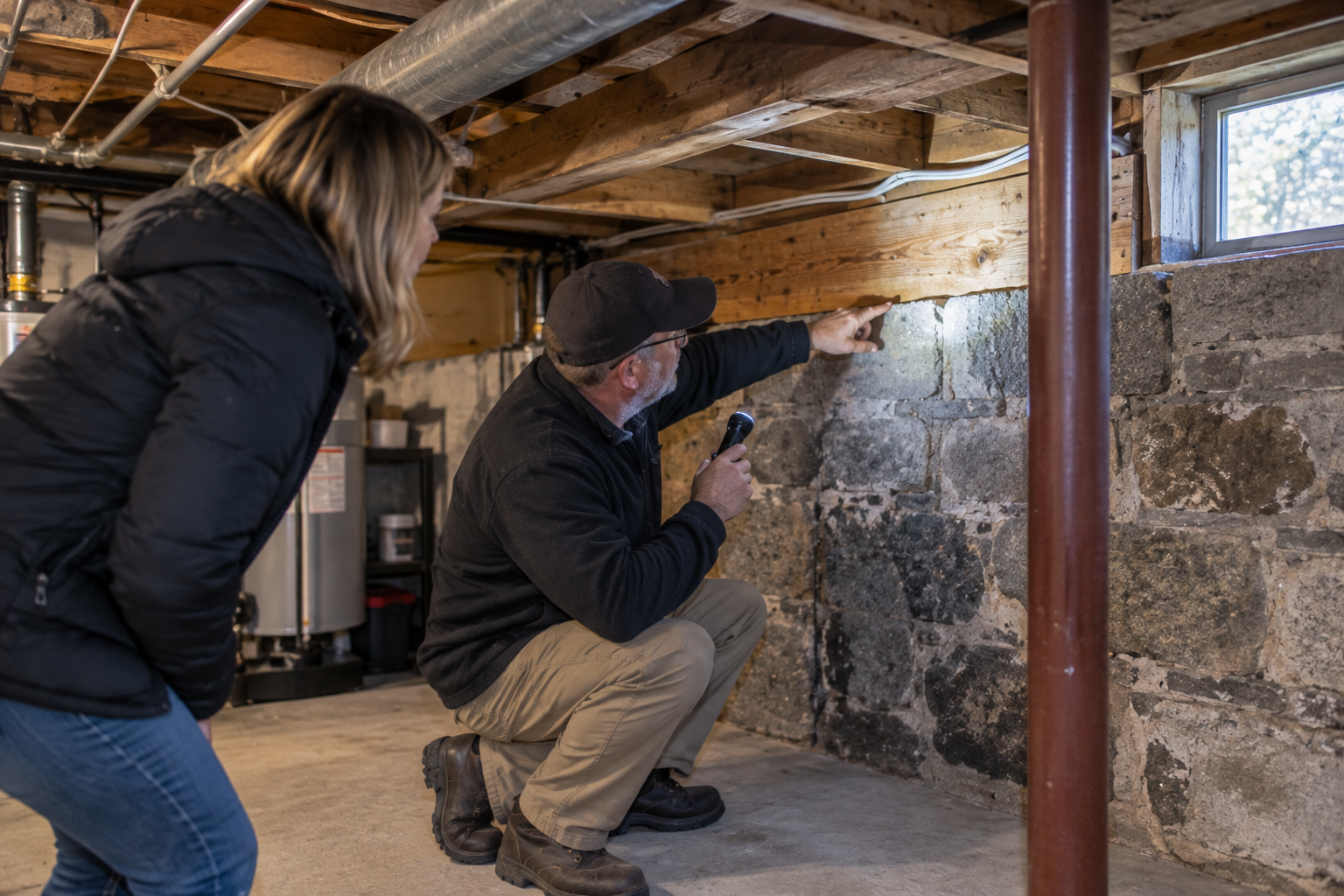
A finished basement wall can conceal what is happening behind it.
Snow can prevent parts of a roof from being fully evaluated.
Stored belongings can block access.
An attic hatch may be inaccessible.
Understanding these limitations doesn't make the inspection less valuable. It helps you understand what the inspection actually represents.
A Home Inspection Isn't the Same as a Building-Code Inspection
Buyers sometimes expect a home inspector to determine whether every part of a house meets current building code.
That's not generally the purpose of a standard home inspection.
Building codes also change over time.
A house built decades ago wasn't necessarily constructed to today's requirements, and the presence of an older building component doesn't automatically mean that it must be upgraded simply because newer construction would be done differently.
An inspector may identify conditions that appear unsafe, unusual or worthy of further investigation.
But don't assume a standard home inspection provides formal certification that the entire property complies with current codes.
If a specific code, permit or compliance issue matters to your purchase, it may require investigation through the appropriate municipality, authority or qualified professional.
The Inspector Isn't There to Decide Whether You Should Buy the House
A home inspector provides information.
The buying decision remains yours.
An inspection report may contain dozens of observations, ranging from small maintenance items to significant concerns.
A long report doesn't automatically mean the house is bad.
Likewise, a short report doesn't guarantee that the property will never need repairs.
CAHPI describes the inspector's role similarly: the inspector provides information to help the buyer make a decision rather than making the purchasing decision for them. Cahpi
Your job is to understand which findings matter to you.
Choose the Inspector, Not Just the Inspection Company
Not every inspector has the same experience, qualifications or approach.
In Nova Scotia, the Real Estate Commission specifically notes that home inspectors are not regulated by the Commission and recommends confirming that the inspector carries Errors and Omissions insurance. Nova Scotia Real Estate Commission
When choosing an inspector, consider asking about:
Training and qualifications
Experience
Professional affiliations
Standards of practice followed
Errors and Omissions insurance
What is included in the inspection
What isn't included
Whether you'll receive photographs
How the findings will be reported
Whether you can attend
Price can certainly be part of the decision.
But when you're using an inspection to help evaluate a purchase worth hundreds of thousands of dollars, experience, scope and communication matter too.
Attend the Inspection If You Can
An inspection report is useful.
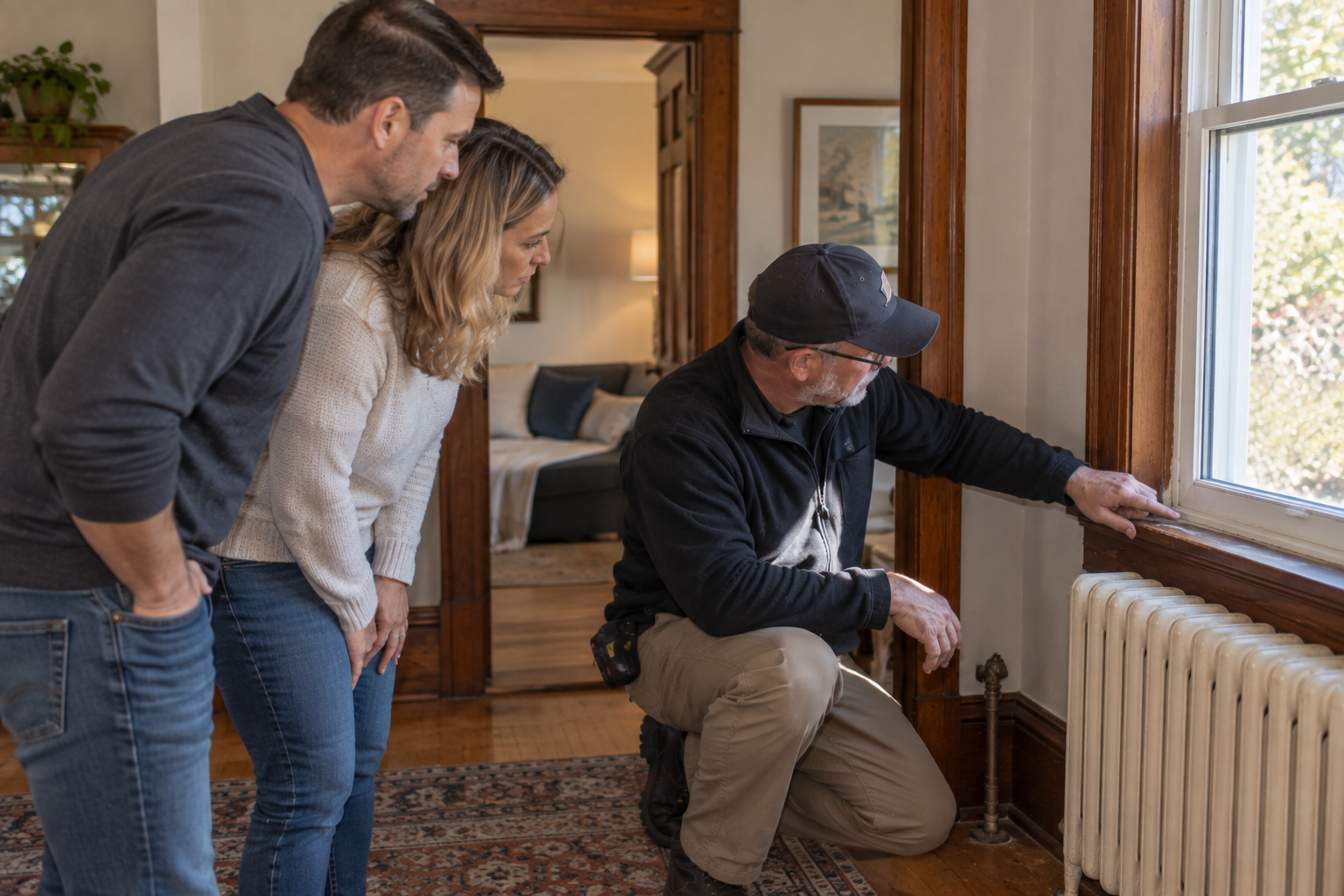
Walking through the property with the inspector can be even more useful.
Both the Nova Scotia Real Estate Commission and CAHPI encourage buyers to consider attending so they can ask questions and become more familiar with the property. Nova Scotia Real Estate Commission
During an inspection, you may be able to see:
Where the main water shutoff is
Where the electrical panel is
How the heating system operates
Where the attic access is
Which maintenance items should be monitored
What an inspector means when describing a particular concern
Something that sounds alarming in a written report may be easier to understand when the inspector shows it to you.
Conversely, seeing a problem in person can help you appreciate why the inspector considers it significant.
Don't Turn the Inspection Into a Second Showing
Attending the inspection doesn't mean you need to follow the inspector every second.
Inspectors need room to work and concentrate.
Use the opportunity to learn about the house, but allow the inspector to follow their process.
There may also be areas you shouldn't enter because of safety, access or the inspector's own procedures.
A good approach is to ask the inspector how they prefer to communicate during the inspection.
Some explain findings as they go.
Others prefer to complete portions of the inspection before reviewing observations with the buyer.
What Does the Inspector Look at Outside?
The inspection begins before anyone enters the house.
Exterior conditions can provide important clues about what's happening inside.
Depending on accessibility, an inspector may look at areas such as:
Roof covering
Flashing
Chimneys
Gutters and downspouts
Exterior cladding
Windows and doors
Decks and porches
Foundation
Grading
Drainage
Visible structural components
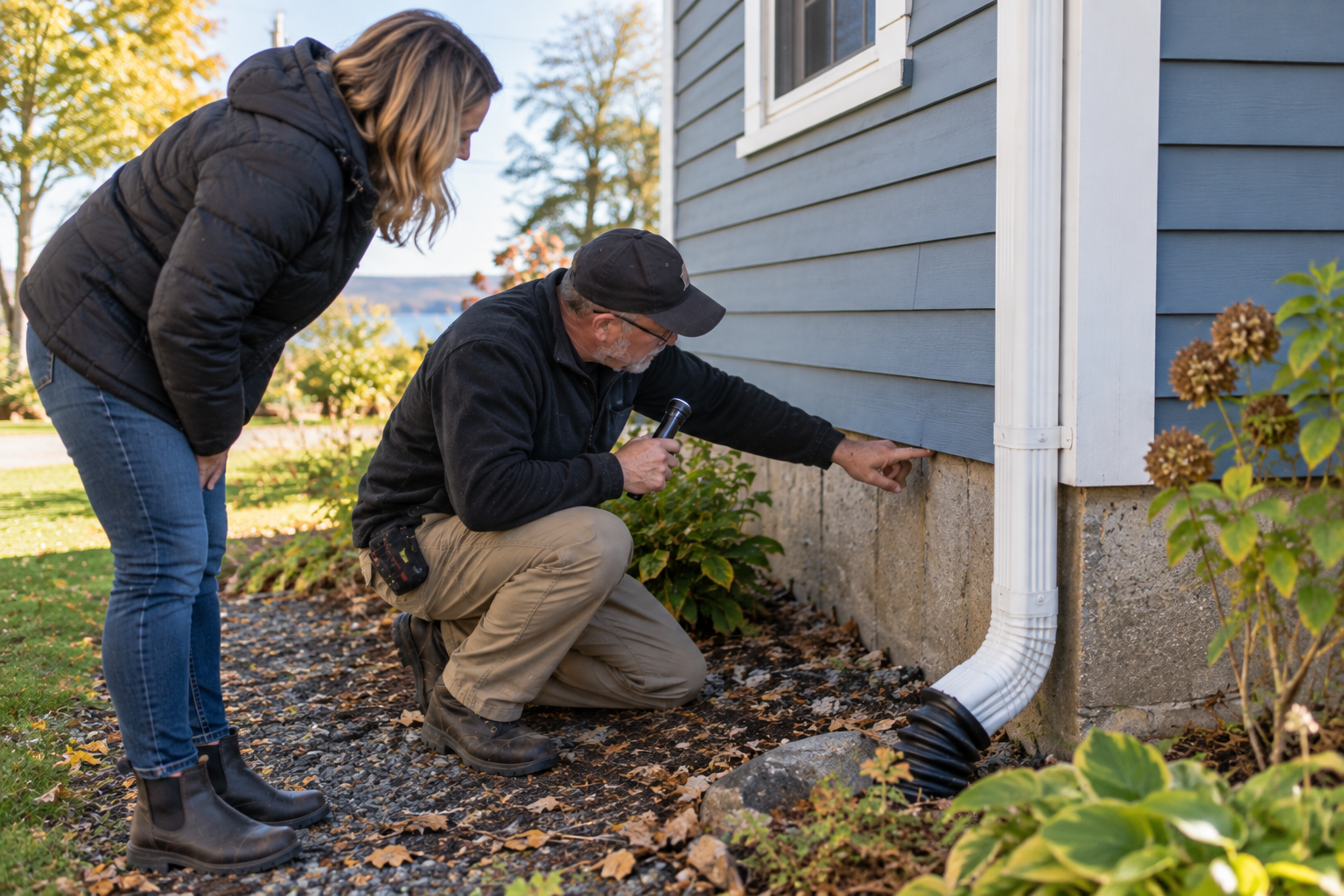
Water management deserves particular attention.
Where does roof water go?
Does the ground slope toward or away from the foundation?
Are downspouts discharging beside the house?
Are there signs of deterioration where exterior materials meet?
Many interior moisture problems begin outside.
What Happens in the Basement or Crawlspace?
Basements can reveal a great deal about a house.
An inspector may be able to evaluate visible portions of:
Foundation
Framing
Support posts and beams
Plumbing
Electrical wiring
Heating equipment
Moisture conditions
Insulation
Drainage systems
In an older home, the basement may also show changes made over several generations.
New plumbing may run beside older plumbing. Structural repairs may be visible. Heating systems may have been replaced. An addition may have a different foundation from the original house.
Again, the goal isn't to expect everything to look new.
It's to understand what is there and whether anything warrants further investigation.
The Attic Can Be One of the Most Informative Areas
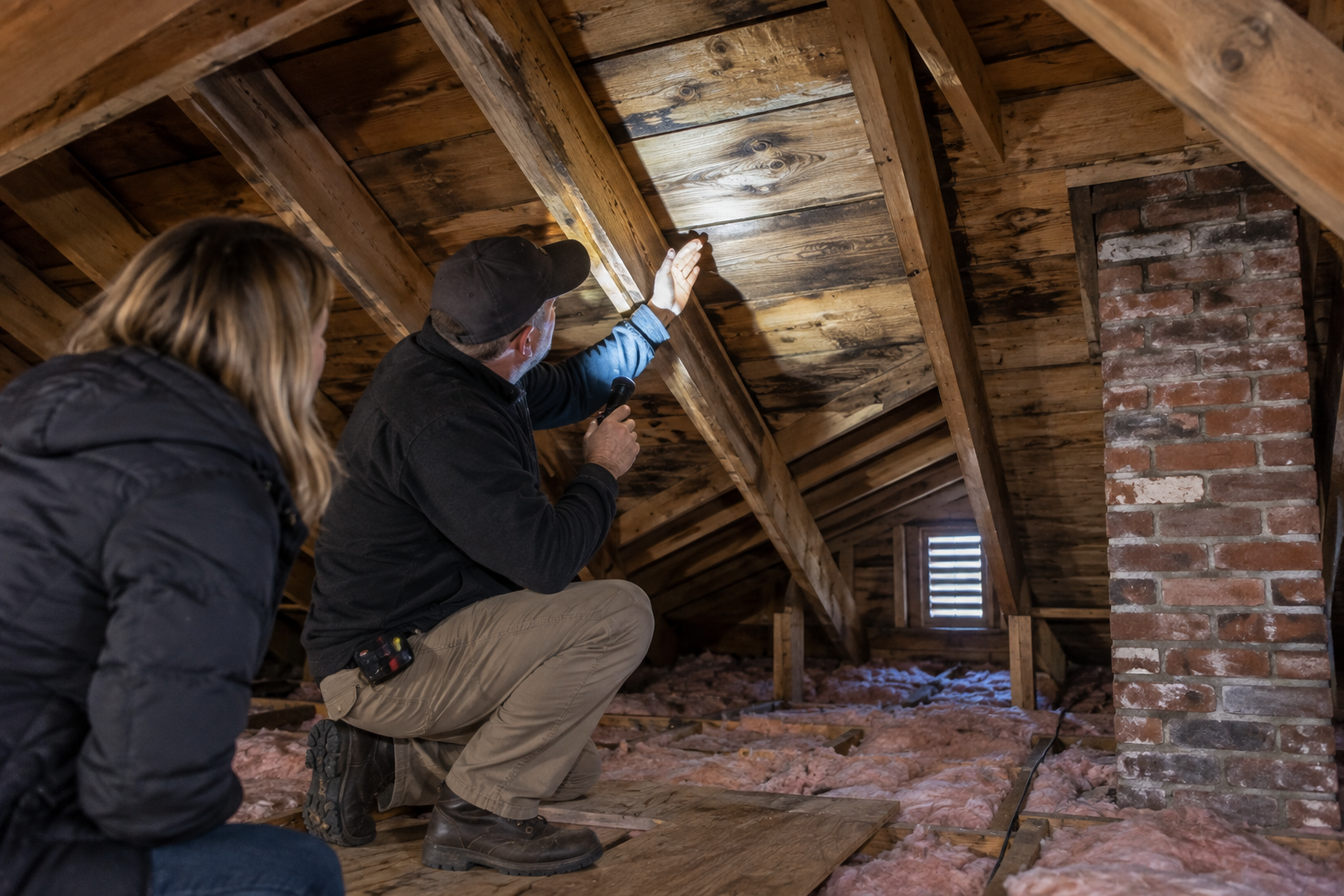
If the attic is accessible, it can provide information that isn't visible from the finished rooms below.
An inspector may look for things such as:
Roof structure
Evidence of previous leakage
Insulation
Ventilation
Visible electrical wiring
Chimney condition
Moisture or staining
Signs of pests
Alterations to framing
Access matters.
CAHPI notes that when components aren't accessible, the inspector may be unable to inspect them and should identify that limitation in the report. Cahpi
If an important area can't be inspected, ask what that means and whether any follow-up investigation makes sense.
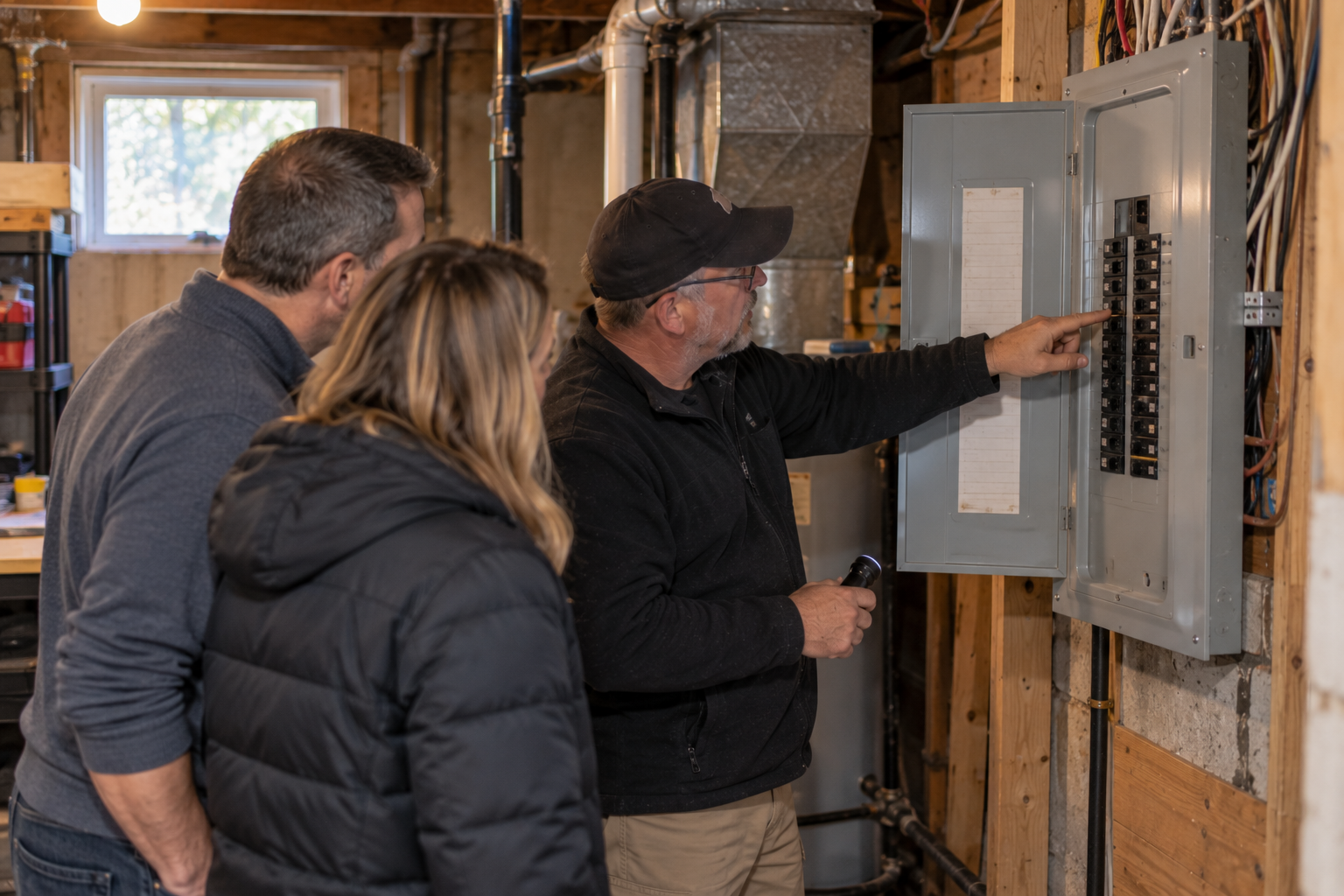
Electrical Systems Deserve More Than a Quick Look at the Panel
The electrical panel is important, but it's only one part of the electrical system.
An inspector may look at visible wiring, receptacles, grounding, panels and other accessible components.
In older or renovated homes, electrical work may have been completed at several different times.
The inspection may identify something that should be evaluated by a licensed electrician.
That's an important distinction.
A home inspector is generally evaluating the overall property as a generalist. When a specific technical concern is identified, a specialist may be better positioned to determine exactly what is happening and what, if anything, needs to be done.
Plumbing Is More Than Checking Whether the Taps Work
Running the taps can provide useful information, but an inspection can go further.
Visible plumbing may be evaluated for:
Leaks
Corrosion
Drainage
Water pressure or flow concerns
Fixture operation
Water-heating equipment
Visible supply and waste piping
However, the inspector can't see every pipe hidden behind walls, ceilings or floors.
And if the property uses a private well or septic system, those systems may require their own testing or specialized inspections rather than relying on the general home inspection alone.
Heating and Cooling Systems Are Part of the Picture
Nova Scotia homes can use a wide variety of heating systems.
During an inspection, visible heating and cooling equipment may be evaluated for operation and apparent condition within the inspector's scope.
That might include:
Furnaces
Boilers
Heat pumps
Electric heating
Distribution systems
Visible fuel-related components
Thermostats
But a home inspector isn't necessarily an HVAC technician.
If the equipment has a problem, is unusually old or raises a specific concern, further evaluation by a qualified heating professional may make sense.
The same principle applies to many components of the house:
the inspection can identify the question; a specialist may be needed to provide the detailed answer.
A Home Inspection Doesn't Replace Well and Septic Investigation
This is particularly important in Nova Scotia.
A property may look entirely conventional but still rely on a private well and on-site septic system.
The Nova Scotia Real Estate Commission recommends septic inspection before finalizing the purchase of a property with an on-site system and notes that the inspection may involve pumping the tank and examining the disposal field. It also identifies licensed septic installers, licensed sewage haulers and professional engineers as professionals who may conduct this type of inspection. Nova Scotia Real Estate Commission
Water testing, well investigation and septic inspection should therefore be considered separately from the general home inspection.
Don't assume that ordering a home inspection automatically covers all three.
A Home Inspection Doesn't Test for Everything
Another common misconception is that a home inspection is a comprehensive test for every possible problem.
It isn't.
Depending on the property, separate investigation may be appropriate for things such as:
Well water
Septic system
Radon
Wood-burning appliances
Sewer lines
Environmental concerns
Structural issues
Electrical concerns
Plumbing concerns
Oil tanks
Property boundaries
Permits or renovation history
Some inspectors may offer additional services.
Others may refer you to specialists.
What's appropriate depends on the particular property.
That's why due diligence should be designed around the house you're actually buying, rather than treating every property exactly the same way.
Radon Is a Good Example of the Inspection's Limits
You can't determine a home's radon level simply by looking at it.
Testing is required.
Nova Scotia says testing is the only way to determine whether a home has elevated radon, and Health Canada recommends a long-term test of at least three months. Government of Nova Scotia
That timeline also illustrates why not every question about a property can necessarily be answered during a typical purchase-condition period.
The important thing is to understand the limitation and decide what information you need before proceeding and what may need to be addressed after ownership.
The Property Disclosure Statement Doesn't Replace an Inspection
If the seller provides a Property Disclosure Statement, it can be a useful source of information about the property's history.
But it isn't the same thing as an inspection.
The Nova Scotia Real Estate Commission points out that the seller may not know about every defect and that the information in a Property Disclosure Statement is based on the seller's personal knowledge. Nova Scotia Real Estate Commission
A seller may genuinely be unaware of a condition hidden behind a finished wall or beneath a roof covering.
Similarly, your REALTOR® may notice visible concerns during a showing, but that isn't a substitute for a professional property inspection.
These sources of information complement one another.
They don't replace one another.
What If the Inspector Finds a Problem?
This is where buyers sometimes become overwhelmed.
Finding problems is part of the inspection process.
Homes require maintenance.
Components wear out.
Older properties may have repairs or systems approaching replacement.
The important questions are:
What was found?
How significant is it?
Does it need immediate attention?
Should a specialist investigate it?
What could it reasonably cost to address?
Does it change how you feel about purchasing the property?
A loose handrail and a significant structural concern shouldn't receive the same weight simply because both appear in the report.
Prioritize.
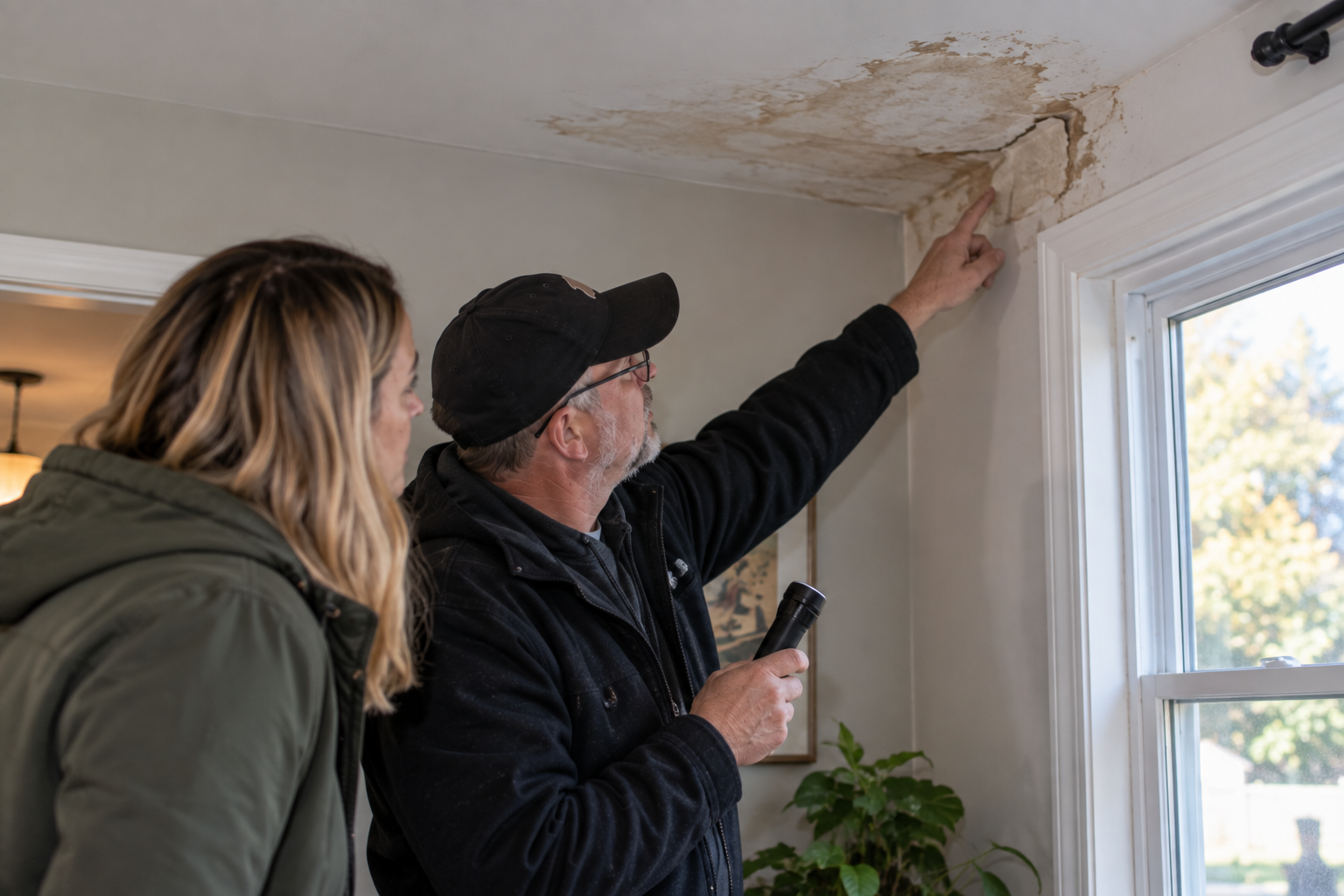
Don't Expect the Inspector to Price Every Repair
An inspection report may help you identify repairs, but a home inspector isn't necessarily the right person to provide a firm repair quote.
If the cost matters to your decision, obtaining information from the appropriate contractor or specialist can be much more useful.
For example, if an inspector identifies a roofing concern, a roofing contractor may be able to determine whether a localized repair is appropriate or whether more substantial work is required.
The same principle applies to electrical, plumbing, structural and heating concerns.
Get the right person answering the right question.
An Inspection Report Isn't Automatically a Renovation List for the Seller
A home inspection may identify numerous maintenance items and improvements.
That doesn't automatically mean the seller is required to repair all of them.
What happens after an inspection depends on the Agreement of Purchase and Sale, the inspection condition, the findings, the buyer's priorities and what the parties agree to do.
Possible outcomes can vary.
A buyer may decide they're satisfied and proceed.
A concern may require additional investigation.
The parties may agree to an amendment addressing an issue.
Or a buyer may determine that they're not satisfied with their condition.
The important point is that the inspection gives you information to make a decision; it doesn't automatically dictate what the seller must do.
Inspection Conditions Have Deadlines
This is particularly important in a Nova Scotia real estate transaction.
The Agreement of Purchase and Sale can make the purchase conditional on the buyer being satisfied with specified conditions, including property inspection.
Those conditions have a deadline.
Under the current Nova Scotia process, when a buyer is satisfied with the applicable buyer conditions, written notice is provided using Form 408: Buyer Waiver of Conditions on or before the agreed deadline. If the required waiver isn't provided by the deadline, the agreement is deemed terminated. Nova Scotia Real Estate Commission
That means inspection day isn't the deadline for simply receiving a report.
You need enough time to understand the findings, complete any necessary follow-up and make your decision within the timeline established in your agreement.
Sometimes the Inspection Creates More Questions
That's normal.
A general inspection may identify a concern without being able to determine its full extent.
For example:
An inspector notices unusual foundation movement.
An electrician may need to evaluate older wiring.
A roofing contractor may need to assess a leak.
A heating technician may need to examine a boiler.
A septic professional may need to investigate the on-site system.
In those situations, the inspection has done something valuable.
It has told you where to look more closely before making your decision.
What About Newer Homes?
New doesn't mean inspection-proof.
Newer houses can still have installation issues, drainage problems, incomplete work, equipment concerns or other defects.
A home doesn't need to be old before an inspection can provide useful information.
The questions may simply be different.
With an older property, you may be trying to understand decades of changes and repairs.
With a newer property, you may be looking more closely at installation, workmanship, operation and whether components are performing as expected.
What About a House Being Sold “As Is”?
“As is” doesn't necessarily make information less valuable.
In fact, understanding the property's condition may become even more important.
The seller's willingness or obligation to make repairs is a separate issue from your need to understand what you're purchasing.
An inspection can still help you estimate future work, identify concerns that require specialist investigation and decide whether the property fits your expectations and budget.
The exact effect of “as is” wording depends on the agreement, so discuss the particular terms with your REALTOR® and obtain legal advice where appropriate.
What Should You Do Before the Inspection?
Once an inspection is scheduled, think about what you already know about the property.
Review available information such as:
Property Disclosure Statement
Age of the home
Known renovations
Heating systems
Well and septic information
Previous concerns noticed during showings
Features you don't understand
Areas you specifically want the inspector to look at
Make a list of questions.
You don't need to become a home inspector before the appointment.
You simply want to make sure the inspection helps answer the questions that matter to you.
What Should You Do After the Inspection?
Don't look only at the summary page.
Review the report.
Ask questions about anything you don't understand.
Separate routine maintenance from larger concerns.
Determine whether any findings require a specialist.
If estimates or additional inspections are important to your decision, remember your condition deadline.
Then consider the property as a whole.
Every house will eventually require maintenance and repairs.
The goal of the inspection isn't to find a home that will never need work.
It's to help you understand what you're buying today and what may be ahead.

Use the Inspection to Learn About the Home
A home inspection is sometimes treated as an obstacle between an accepted offer and closing.
It can be much more useful than that.
It's an opportunity to spend time learning how the property works.
Where does the water shut off?
How old is the heating equipment?
What maintenance should you plan for?
What does the inspector think you should monitor?
Which concerns deserve immediate attention and which are longer-term ownership items?
Those are useful questions even when the inspection doesn't uncover a major problem.
Information Is the Real Value of the Inspection
A home inspection can't reveal everything.
It can't see through walls.
It can't predict exactly when an appliance will fail.
It doesn't replace every specialist, test or investigation that might be appropriate for a particular property.
And it doesn't make the buying decision for you.
What it can do is give you a much better understanding of the home before you take ownership.
Use the inspection to identify visible concerns, understand the home's systems, ask better questions and determine whether anything needs a closer look.
Then use that information—along with the rest of your due diligence—to decide whether you're comfortable moving forward.
Part of the Buyer Resource Centre: Practical guides to help you prepare, evaluate a property and navigate the home-buying process in Nova Scotia.
.jpg)
Comments:
Post Your Comment: