.png)

A house can look completely ordinary from the road while two of its most important systems are almost entirely out of sight.
For many Nova Scotia properties, drinking water comes from a private well and wastewater is handled by an on-site sewage disposal system—usually called a septic system. These aren't unusual features reserved for remote country properties. Nova Scotia says about 46% of Nova Scotians rely primarily on groundwater from private wells, while approximately 45% of homes use on-site sewage disposal systems. Government of Nova Scotia
If you've always lived in a home connected to municipal water and sewer, buying a property with a well and septic system can feel like a major change.
It doesn't necessarily need to be.
The important thing is understanding what you're buying, investigating the systems appropriately and knowing what responsibilities become yours after closing.
Start by Finding Out How the Property Is Serviced
Don't assume a property has municipal water and sewer simply because it's located in a town or developed neighbourhood.
Depending on the property, you could encounter:
Municipal water and municipal sewer
A private well and septic system
Municipal water with a septic system
A private well with municipal sewer
A shared water supply
Another water source, such as a cistern
The first step is simply identifying what serves the particular property.
Once you know that, you can determine what additional questions or investigations make sense.
A Private Well Is Your Water Supply
With municipal water, you generally turn on the tap and the municipality is responsible for supplying the water.
A private well changes that relationship.
As the property owner, you become responsible for the well and for monitoring the quality of your drinking water. Nova Scotia specifically places responsibility on private well owners for maintaining their water supply and having the water tested. Government of Nova Scotia
That makes two questions especially important when you're considering a property:
Is the water safe to drink?
and
Can the well provide enough water for the household?
Those sound similar, but they're actually two different issues.
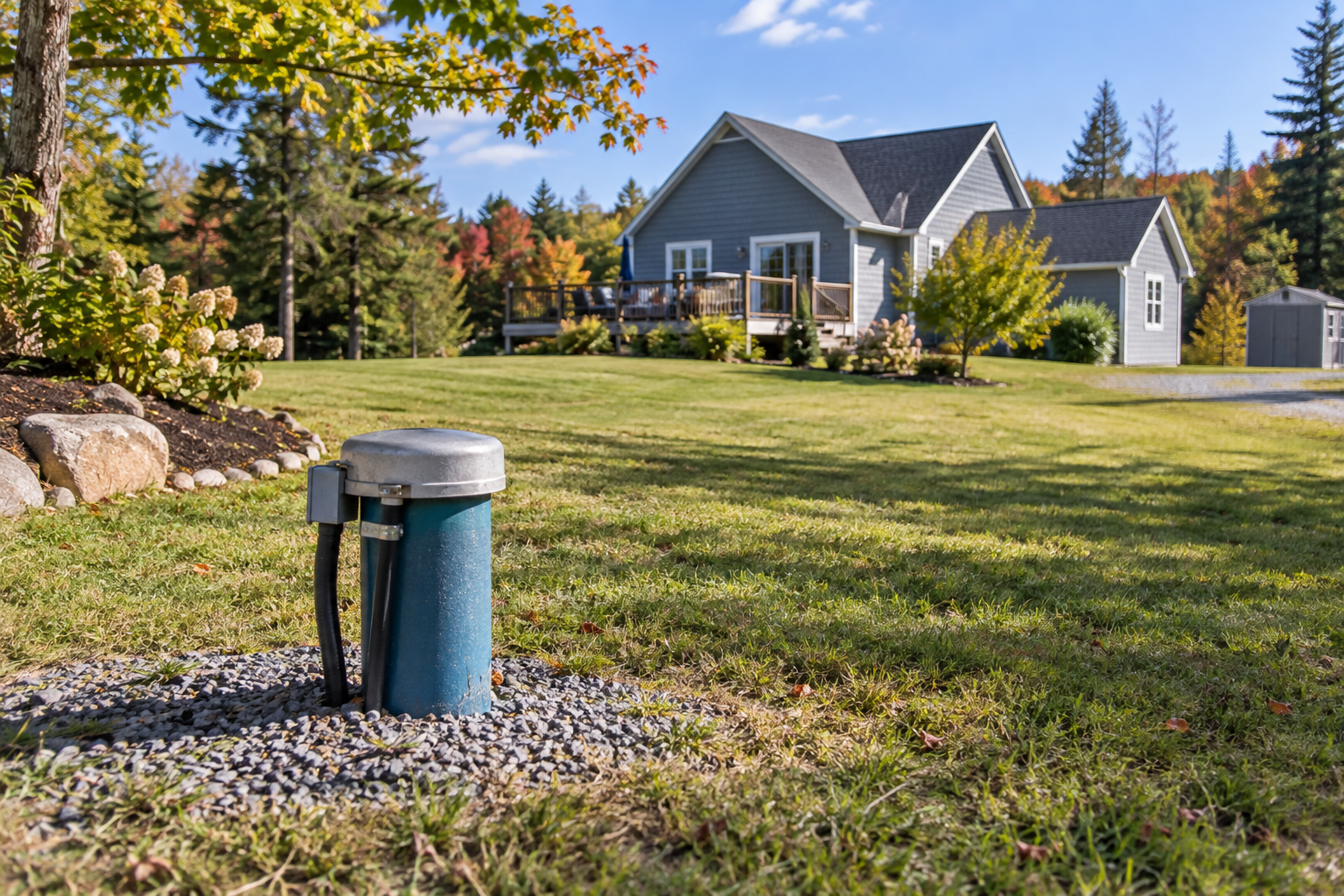
Water Quality and Water Quantity Aren't the Same Thing
A well can produce plenty of water and still have a water-quality problem.
It can also produce excellent-quality water but struggle to supply enough water for the way a household uses it.
That's why evaluating a private well shouldn't stop at turning on a faucet and seeing whether water comes out.
Nova Scotia's guidance for private wells in real estate transactions specifically recommends looking at both water quality and the well's ability to provide enough water for the household. Government of Nova Scotia
What Should Well Water Be Tested For?
Clear water isn't necessarily safe water.
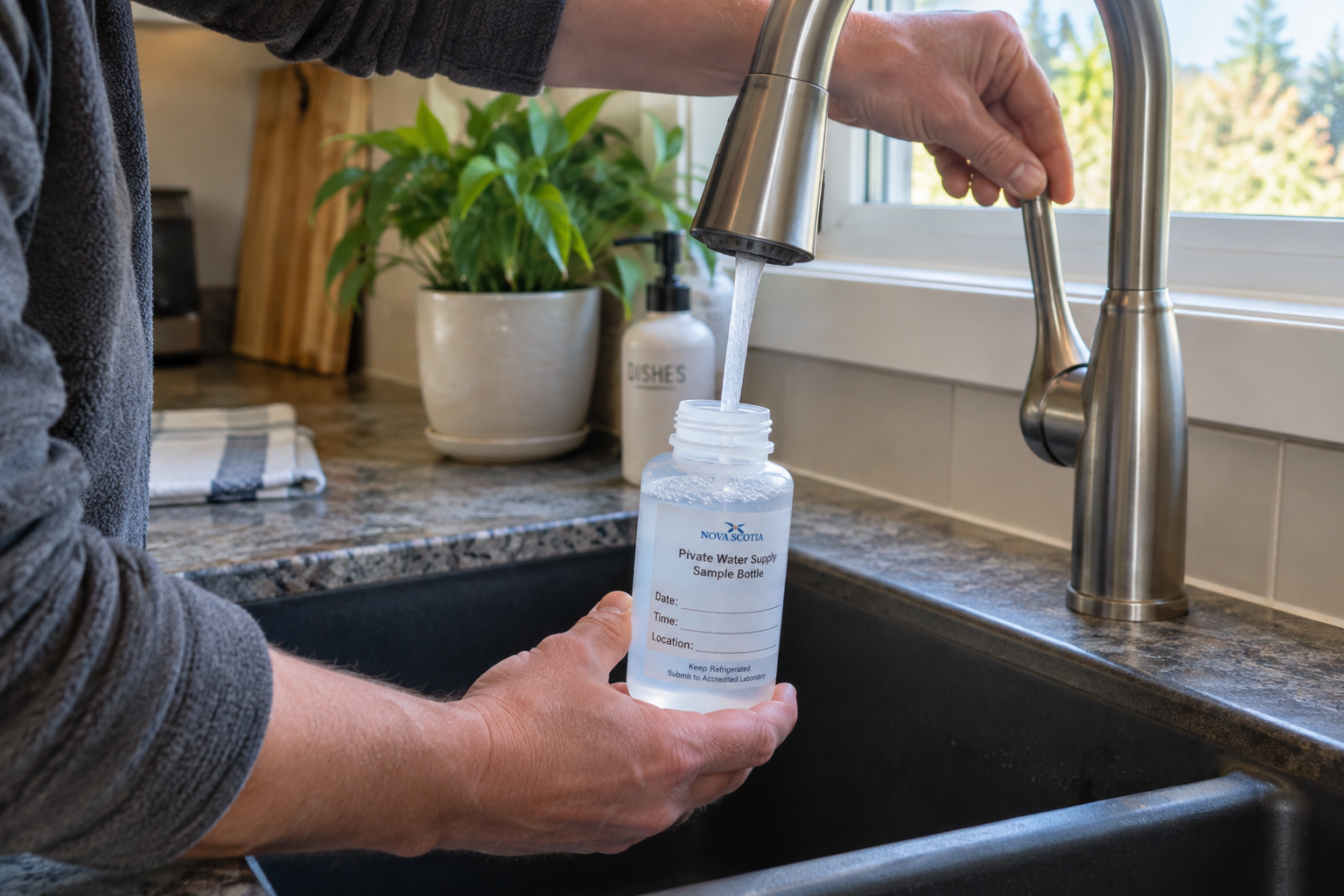
Some contaminants have no obvious taste, smell or colour, so looking at a glass of water—or tasting it—isn't a substitute for laboratory testing. Government of Nova Scotia
Nova Scotia's current real-estate guidance calls for two bacteria tests taken at least five days apart, plus a full chemistry and metals test, with samples properly collected and analyzed by an accredited laboratory. Government of Nova Scotia
Chemical testing can identify naturally occurring substances and other characteristics of the water. Nova Scotia identifies potential well-water concerns including arsenic, uranium, manganese, fluoride, lead, nitrate/nitrite, sodium, chloride and hardness, among others. Government of Nova Scotia
The appropriate testing can depend on the property and surrounding land uses, so this is an area where qualified laboratories and water professionals can provide important guidance.
What If the House Has a Water-Treatment System?
Seeing a UV light, filter, softener or other treatment equipment doesn't automatically tell you whether there's a problem.
The more useful questions are:
What is the equipment treating?
Is the source water safe without treatment?
Is the treatment system actually working?
Nova Scotia's real-estate guidance recommends sampling both before and after a treatment system where one is present. That can help distinguish the quality of the untreated source water from the water being delivered after treatment. Government of Nova Scotia
It's also worth asking about the equipment's age, maintenance requirements and ongoing operating costs.
A treatment system isn't necessarily a reason to reject a property. It is simply another home system you need to understand.
Ask About the Well Itself
Water testing tells you about the water at the time it was sampled.
There is also useful information to learn about the physical well.
Nova Scotia recommends buyers ask for the well construction record, commonly called the well log, and identify whether the water source is a drilled well, dug well, surface-water source or cistern. A well log may provide information such as well depth, casing length, static water level and reported yield. Government of Nova Scotia
Not every older property will have complete records readily available.
That doesn't automatically mean there's something wrong with the well. It may simply mean additional investigation is appropriate.
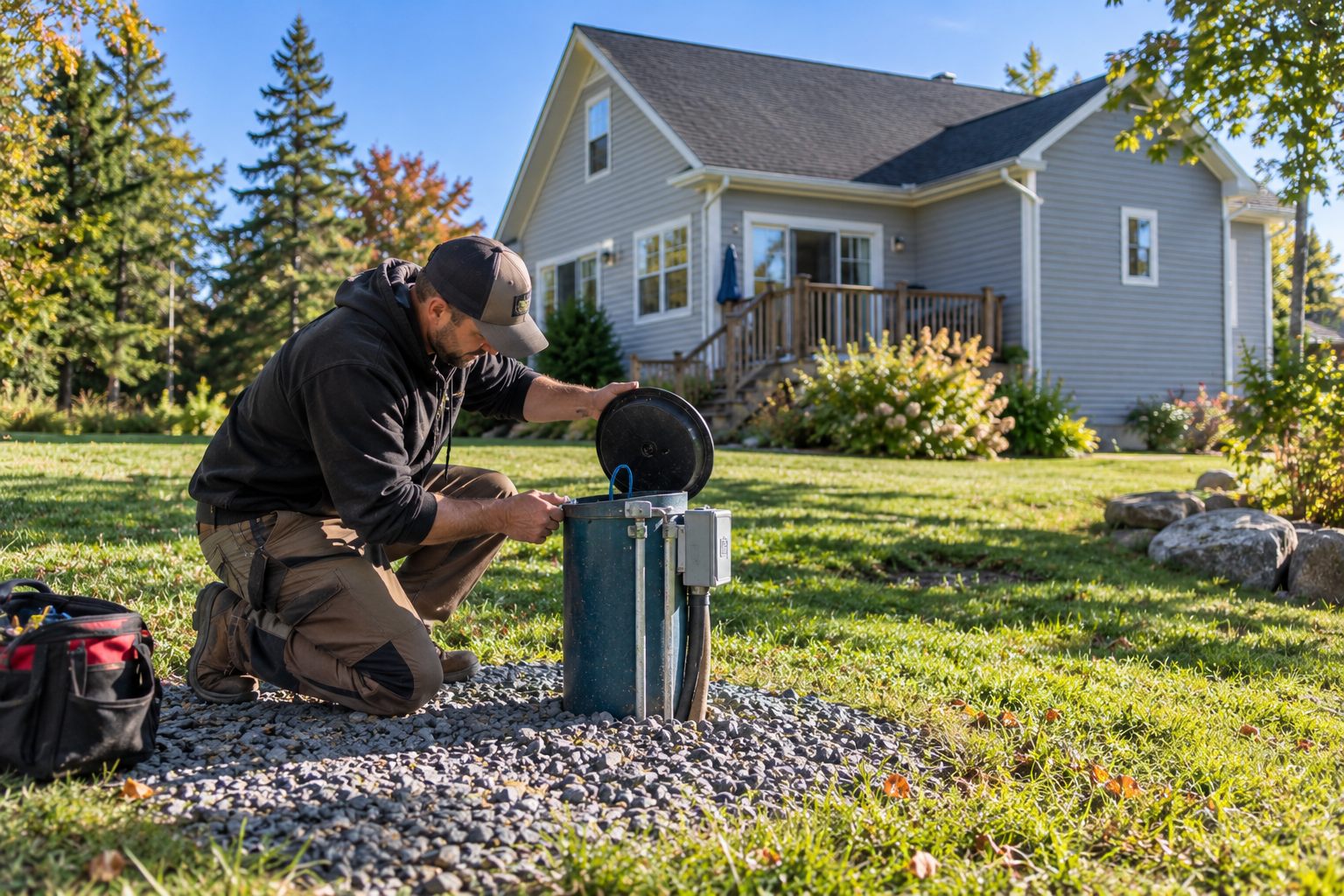
What Is Well Yield?
Well yield is essentially a measure of how quickly water can enter or be produced by the well.
That's different from how much water happens to be stored in the well at a particular moment.
For a buyer, the practical question is whether the combination of yield and available storage can reliably support the household's water use.
A property that has been occupied successfully for years may have an established history of adequate water supply, but if the yield is unknown, records are unclear or there are concerns about water quantity, Nova Scotia recommends considering a professional yield test by a qualified contractor. Government of Nova Scotia
This can be particularly important when you're planning a household with heavier water demands.
Wells Can Behave Differently Over Time
A single test tells you something about the well at a particular point in time.
It doesn't guarantee that conditions will never change.
Nova Scotia notes that floods, droughts, construction, seasonal weather and other events can affect private wells and recommends ongoing testing rather than treating water testing as something that happens only when a property changes hands. Government of Nova Scotia
Current provincial guidance recommends testing private well water for bacteria at least annually and chemical quality at least every five years, with additional testing when conditions warrant it. Government of Nova Scotia
So the testing you do while buying a home is really the beginning of an ongoing homeowner responsibility.
A Septic System Handles What Leaves the House
If a well deals with what comes into the house, the septic system deals with what goes out.
A typical Nova Scotia on-site sewage disposal system includes a septic tank and a subsurface disposal field, sometimes called a leach field or soil absorption area. Wastewater enters the tank, where solids settle, and the system then uses the disposal field and surrounding soil as part of the treatment process. Government of Nova Scotia
Much of that system is underground.
That means a neatly mowed lawn doesn't tell you much about what's happening beneath it.

Find Out Where the Septic System Is
One surprisingly basic question is:
Where are the tank and disposal field?
Knowing their location matters for more than an inspection.
You need to understand how the system relates to the house, well, driveway, property boundaries, landscaping and anything you may want to build later.
The disposal field is a functioning part of the property—not simply unused lawn.
Before imagining a garage, pool, large addition or major landscaping project in a particular area, it's worth understanding what's already beneath the ground.

Ask What Is Known About the Septic System
Useful information can include:
Approximate age of the system
Type of system
Location of the tank and disposal field
Available installation or design records
Pumping and maintenance history
Repairs or alterations
Previous problems or malfunctions
Number of bedrooms or intended design capacity
As with wells, records may be incomplete on an older property.
Missing paperwork isn't the same thing as a failed system, but it can affect how much you know—and therefore what additional investigation you may want before buying.
A Septic Inspection Is Different From a General Home Inspection
A general home inspection can provide valuable information about a house, but specialized systems may require specialized expertise.
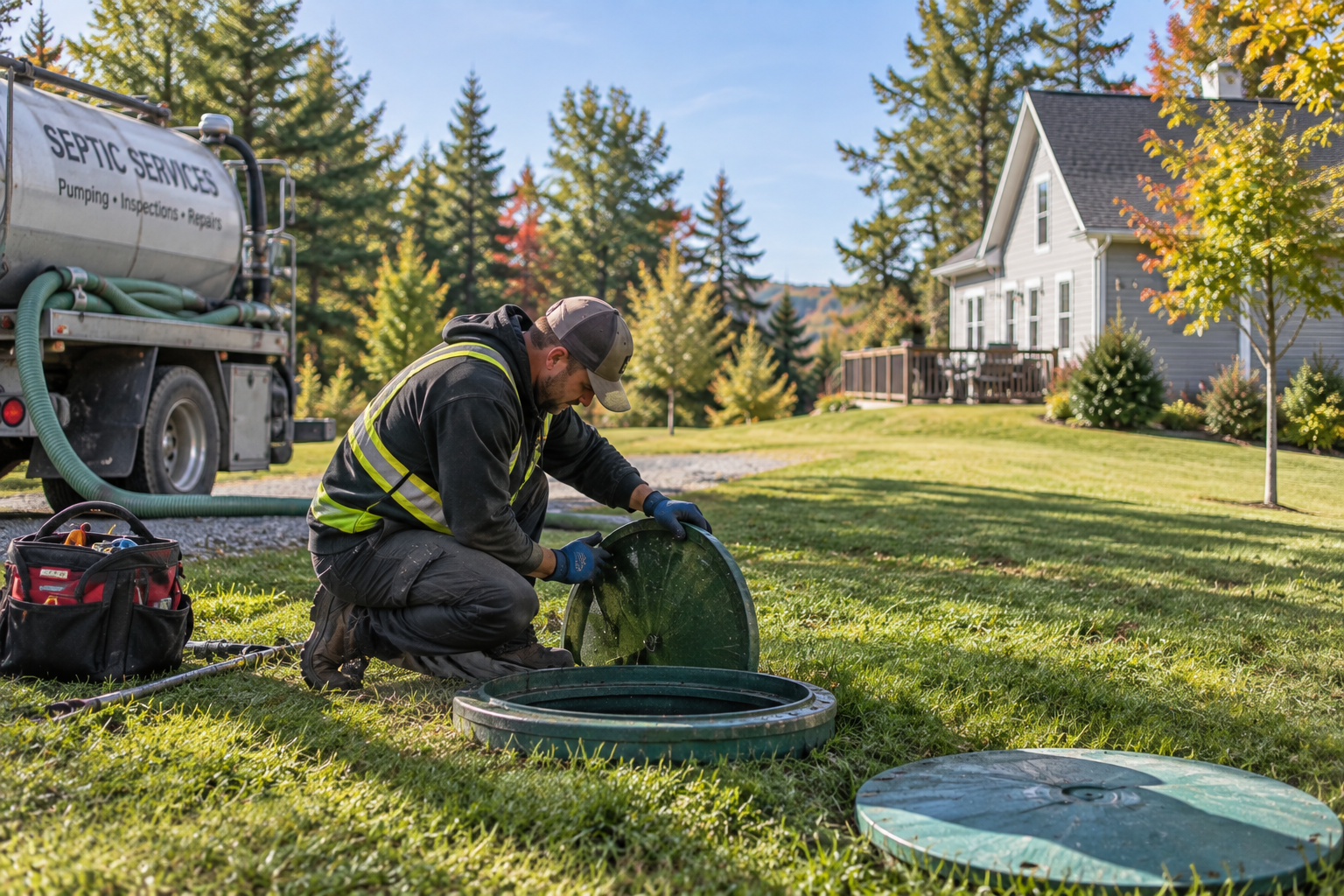
A septic investigation may involve locating components, reviewing available records and examining the condition and operation of the system using methods appropriate to the property.
Nova Scotia regulates who may perform various types of on-site sewage work. Professional engineers, qualified persons, installers and septic tank cleaners have different recognized roles within the provincial system. Government of Nova Scotia
The appropriate professional and scope of investigation will depend on what you're trying to determine.
This is why “the home was inspected” shouldn't automatically be interpreted as “the septic system was fully evaluated.”
What Are Possible Signs of a Septic Problem?
Sometimes a problem is obvious.
Other times it isn't.
Things that may warrant further investigation can include:
Sewage odours
Slow drains or backups
Wet or unusually soft areas around the disposal field
Unexplained lush growth over part of the field
Evidence of previous repairs
A system that hasn't been pumped or maintained for a long time
Questions about whether the existing system is appropriate for the house
None of these observations alone necessarily tells you exactly what is wrong.
They tell you that it may be time to involve someone qualified to assess the system.
Septic Systems Require Ongoing Maintenance
A septic system isn't something you can simply forget about after closing.
Nova Scotia recommends that septic tanks generally be pumped every two to three years, depending on use, to prevent accumulated solids from reaching and potentially plugging the disposal field. Government of Nova Scotia
How you use the system matters too.
The volume of wastewater entering the system, what gets flushed or poured down drains and how the disposal-field area is treated can all affect its operation.
A properly designed, installed and maintained system can operate reliably for many years. A poorly designed, installed or maintained system can contaminate water supplies or nearby water bodies and can be expensive to repair. Government of Nova Scotia
The Well and Septic System Need to Be Considered Together
It's tempting to investigate the well and septic system as two completely separate items.
On a property, however, they're part of the same environment.
The location and condition of a sewage disposal system can matter to groundwater. Surface drainage can matter to a well. Nearby land uses can also affect water quality.
Nova Scotia identifies sewage disposal systems, petroleum products, road salt, animal waste, landfills, pesticides and seawater intrusion among potential sources of groundwater contamination. Government of Nova Scotia
That's why looking at the whole property matters—not just individual pieces of equipment.
Don't Forget the Neighbouring Properties
Your own property isn't the only thing that can matter.
Depending on lot size, development pattern and local conditions, neighbouring wells, septic systems, agricultural uses, fuel storage and other activities may also be relevant.
That doesn't mean a buyer should become an environmental engineer before purchasing a house.
It means that if something about the property raises a legitimate question, it's worth investigating rather than assuming.
What If a Well or Septic Test Finds a Problem?
A problem discovered during due diligence doesn't automatically mean the transaction is over.
The next step is usually to understand:
What exactly was found?
How significant is it?
Can it be corrected?
What would correction involve and cost?
For well water, Nova Scotia recommends confirming unsafe results because temporary conditions or sampling errors can sometimes affect a test. Depending on the issue, possible responses can include disinfection, well work or water-treatment equipment. Government of Nova Scotia
For a septic concern, the appropriate response depends on the nature and extent of the problem. It could range from maintenance or repair to more substantial system work.
The important thing is to get reliable information before deciding how to proceed.
Can You Replace or Alter a Septic System Anywhere on the Property?
Not necessarily.
Site conditions matter.
Soil, slopes, available area, setbacks and other characteristics can affect the type of on-site sewage system that can be used. Nova Scotia has technical standards governing system selection, design and installation. Systems that meet the provincial standard generally use the notification process; systems that don't meet the standard require an application for approval. Government of Nova Scotia
This can become particularly important if you're considering a property where the existing system may eventually need replacement—or if you're planning an addition that could change the property's requirements.
The fact that a septic system exists today doesn't necessarily tell you what could be installed in the future.
Think About Your Future Plans Before You Buy
Suppose you love a two-bedroom house but already know you'd like to add two more bedrooms.
Or perhaps there's a perfect spot for a future garage, secondary suite or major addition.
Those plans may interact with the property's well, septic system or both.
Before assuming an improvement is possible, investigate what would be required.
A property's current configuration and its future potential are not always the same thing.
Wells and Septic Systems Aren't Automatically a Negative
For buyers accustomed to municipal services, private systems can initially sound like extra risk.
A better way to think about them is as systems you own and are responsible for.
Municipal services usually come with municipal charges and infrastructure you don't control. A private well and septic system shift more responsibility directly to the homeowner.
Neither arrangement automatically makes one property better than another.
What matters is understanding the systems, their condition and the responsibilities that come with them.
What Should a Buyer Investigate?
When I'm helping a buyer consider a Nova Scotia property with a private well and septic system, the goal isn't simply to check two boxes on a list.
It's to build a clearer picture of the property.
That may mean understanding:
What type of water supply serves the home
What is known about the well and its construction
Recent accredited-laboratory water results
Whether water quantity is a concern
Any water-treatment equipment
Where the septic tank and disposal field are located
What records exist for the septic system
Its age and maintenance history
Whether a specialized septic investigation is appropriate
How both systems affect future plans for the property
Not every property will require exactly the same investigation.
The right questions depend on the home.
Understand the Systems You Are Taking Ownership Of
A well and septic system shouldn't be mysterious parts of a Nova Scotia property.
They should be understood in much the same way as the roof, heating system, electrical service or foundation: What is there? What condition is it in? What maintenance does it need? And is it suitable for the way you plan to use the home?
Those questions are much more useful than simply asking whether a property “has well and septic.”
Buying a home is ultimately about understanding what you're taking ownership of—not just what you can see during a showing.
Part of the Buyer Resource Centre: Practical guides to help you prepare, evaluate a property and navigate the home-buying process in Nova Scotia.
.jpg)
Comments:
Post Your Comment: