.png)

When you're buying a home in Nova Scotia, the heating system deserves more attention than simply checking the box marked “heat.”
Two houses that look similar can feel very different through a Nova Scotia winter—and cost very different amounts to keep comfortable.
You may encounter oil furnaces, hot-water boilers, ducted and ductless heat pumps, electric baseboards, wood stoves, pellet stoves, propane systems and homes that combine several of them. In many cases, understanding the combination is more useful than identifying one “primary” heating source.
The goal isn't to find the one heating system that's automatically best.
It's to understand how the particular home is heated, how well that system suits the house, what it may cost to operate and what responsibilities you're taking on when you buy it.
Start With How the Whole House Is Heated
A listing might say a home has a heat pump.
That doesn't necessarily mean the heat pump heats every room.
It might serve the main living area while bedrooms have electric baseboards. An oil-fired boiler may provide the home's central heat while a heat pump handles much of the day-to-day heating and cooling. A wood stove might supplement another system during colder weather.
When viewing a property, start with a few basic questions:
What produces the heat?
How is that heat distributed through the house?
Does the system serve the entire home?
Is there another heating system as well?
Which system does the current owner actually use?
That gives you a much better picture than the heating label in the listing alone.
The Heating System Is Only Part of the Equation
Heating costs aren't determined by the heating equipment alone.
The same furnace or heat pump can perform very differently in two different houses.
Insulation, air leakage, windows, ceiling height, house size, layout, exposure to wind and even how warm the occupants like to keep the house can all affect energy use.
That's why a high heating bill doesn't automatically mean the heating system is inefficient—and a low bill doesn't necessarily mean another family will have the same result.
When comparing homes, think about the house and heating system together.
Oil Heat Is Still Something Nova Scotia Buyers Will Encounter
Oil heating remains common enough in Nova Scotia that buyers should understand the basics even if they've never lived with it before.
An oil-fired system may use a furnace, which heats and distributes air through ductwork, or a boiler, which heats water that circulates through radiators or baseboards.
Both can provide comfortable whole-home heat.
For a buyer, however, the heating appliance is only part of what needs attention.
There is also the oil tank.
If There's Oil Heat, Look at the Tank Too
A domestic oil tank is more than a container sitting beside the house or in the basement.
Nova Scotia requires domestic fuel-oil tank installations to comply with applicable fuel-safety standards, and the province recommends installation by a trained and licensed Oil Burner Technician. Homeowners are responsible for maintaining their tanks. Government of Nova Scotia
When you're considering an oil-heated property, useful questions include:
How old is the tank?
Is it indoors or outdoors?
What type of tank is it?
Is there an identification or certification label?
Who installed it?
Are installation records available?
Is there any evidence of corrosion, leakage or previous problems?
Has the furnace or boiler been regularly serviced?
The answers can matter for maintenance, future replacement and insurance.
An older tank doesn't automatically mean you shouldn't buy the house. It means the tank deserves the same kind of investigation you'd give other significant components of the property.
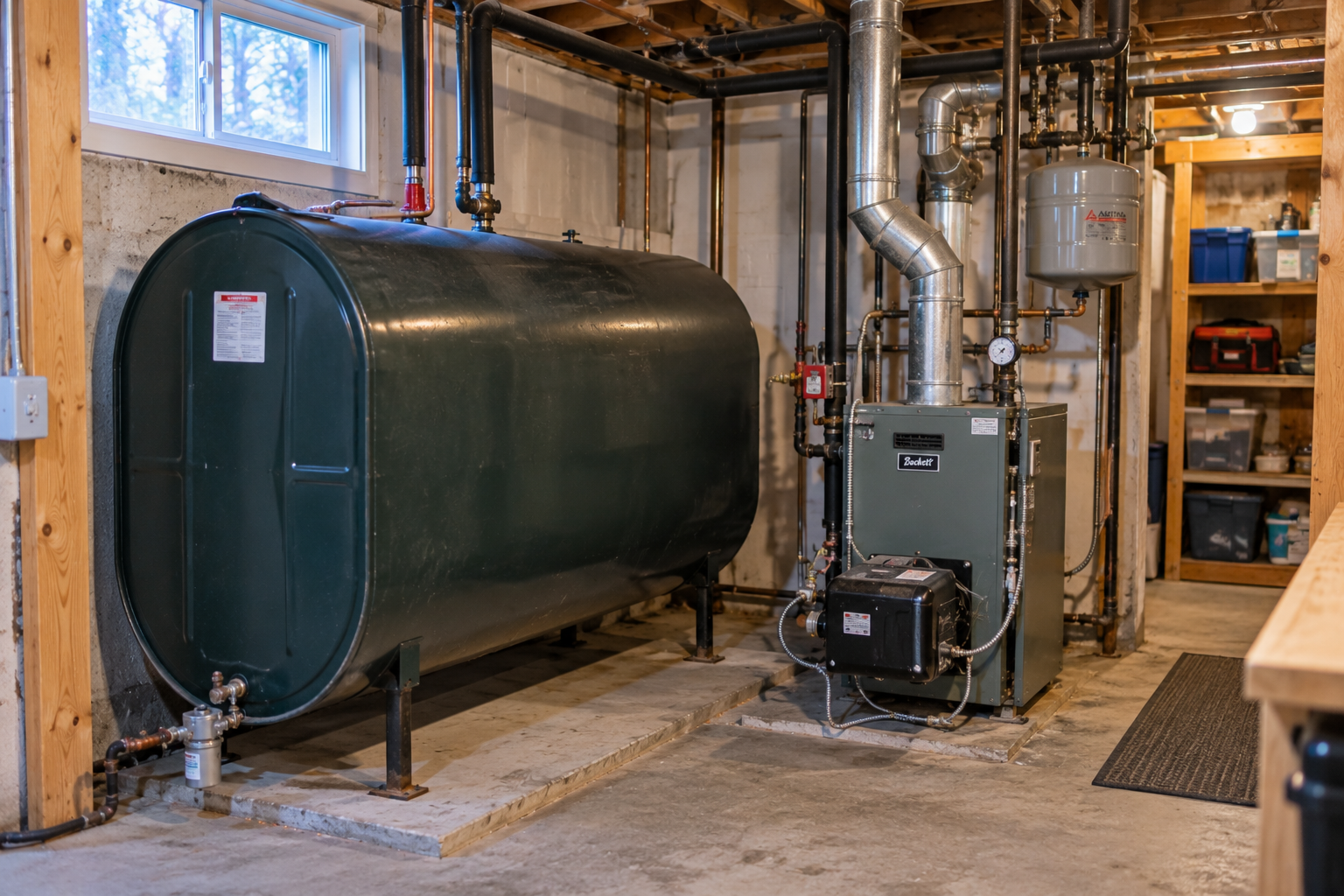
An Oil Leak Can Be Much More Than a Heating Repair
One reason oil tanks deserve particular attention is the potential consequence of a leak.
Heating oil can contaminate soil and groundwater, and cleanup can become significantly more complicated than simply replacing the tank. Nova Scotia specifically warns of the potential environmental damage and high cleanup costs associated with oil spills. Government of Nova Scotia
For buyers, this is one of the reasons to look beyond whether the furnace turns on.
The tank, fuel lines, equipment and surrounding area are all part of understanding an oil-heated property.
Heat Pumps Have Become an Important Part of Home Heating
Heat pumps are increasingly familiar to Nova Scotia home buyers.
Unlike electric baseboards, which create heat using electrical resistance, a heat pump moves heat between indoors and outdoors. During the heating season, it extracts heat from outside air and transfers it into the home.
Most residential heat pumps can also reverse that process and provide air conditioning during warmer weather.
That combination of heating and cooling is one reason buyers often view a heat pump as an attractive feature.
But seeing a heat pump on the wall doesn't tell you everything you need to know.
A Heat Pump May Not Heat Every Part of the House Equally
A common ductless heat pump has one or more indoor heads connected to an outdoor unit.
Where those heads are located matters.
An indoor unit in an open kitchen, dining and living area may do an excellent job heating that space. That doesn't mean the heat will travel equally well through closed bedroom doors, around corners or between floors.
A ducted heat-pump system works differently because conditioned air can be distributed through ductwork.
When viewing a home with heat pumps, look at:
How many indoor units there are
Where they're located
Which rooms they serve
Whether there is another heating system
What happens in rooms without a heat-pump head
The age and apparent condition of the equipment
The important question isn't simply “Does the house have a heat pump?”
It's “How does this house actually use its heat pumps?”
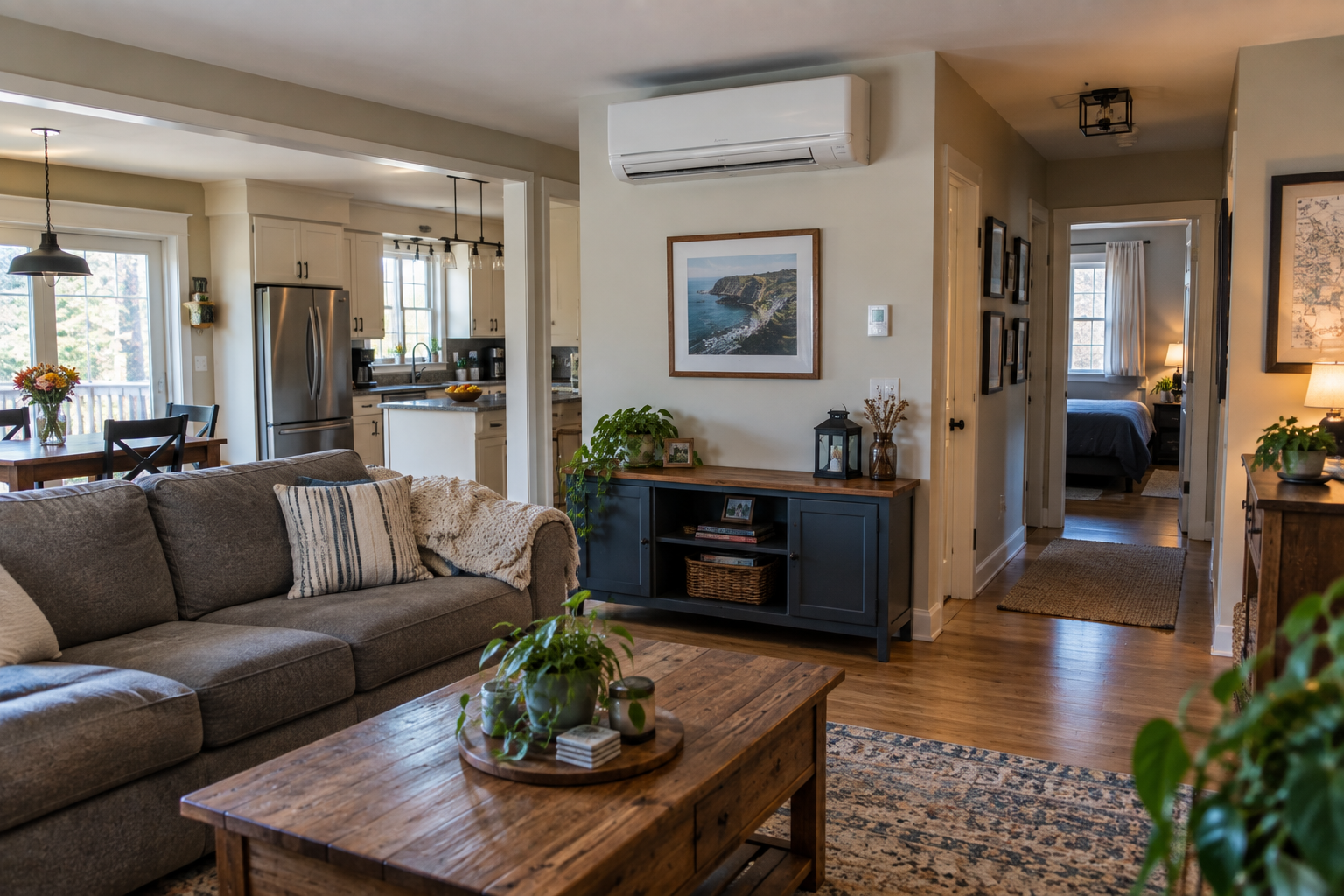
Don't Assume a Heat Pump Means the Other Heating System Is Obsolete
Many Nova Scotia homes have more than one way to produce heat.
A house might have heat pumps along with:
Electric baseboards
An oil furnace or boiler
A wood stove
A pellet stove
Another central heating system
That isn't necessarily duplication without purpose.
The systems may serve different parts of the home or give the owner flexibility in how the house is heated.
If you're buying a home with multiple heating systems, understand whether each is operational and why it's there before deciding that one can simply be removed.
Electric Baseboard Heat Is Simple—but the House Still Matters
Electric baseboard heating is straightforward.
Each heater uses electrical resistance to create heat, and individual thermostats often allow rooms to be controlled separately. There is no furnace, boiler, oil tank or central ductwork required.
That simplicity can mean fewer moving parts.
But operating cost depends heavily on how much heat the home requires.
A smaller, well-insulated and reasonably airtight house may be a very different proposition from a large, drafty home using electric resistance heat throughout.
So if you see electric baseboards, don't evaluate them in isolation.
Consider the home's size, insulation, air sealing and other energy characteristics too.
Wood Heat Brings a Different Set of Considerations
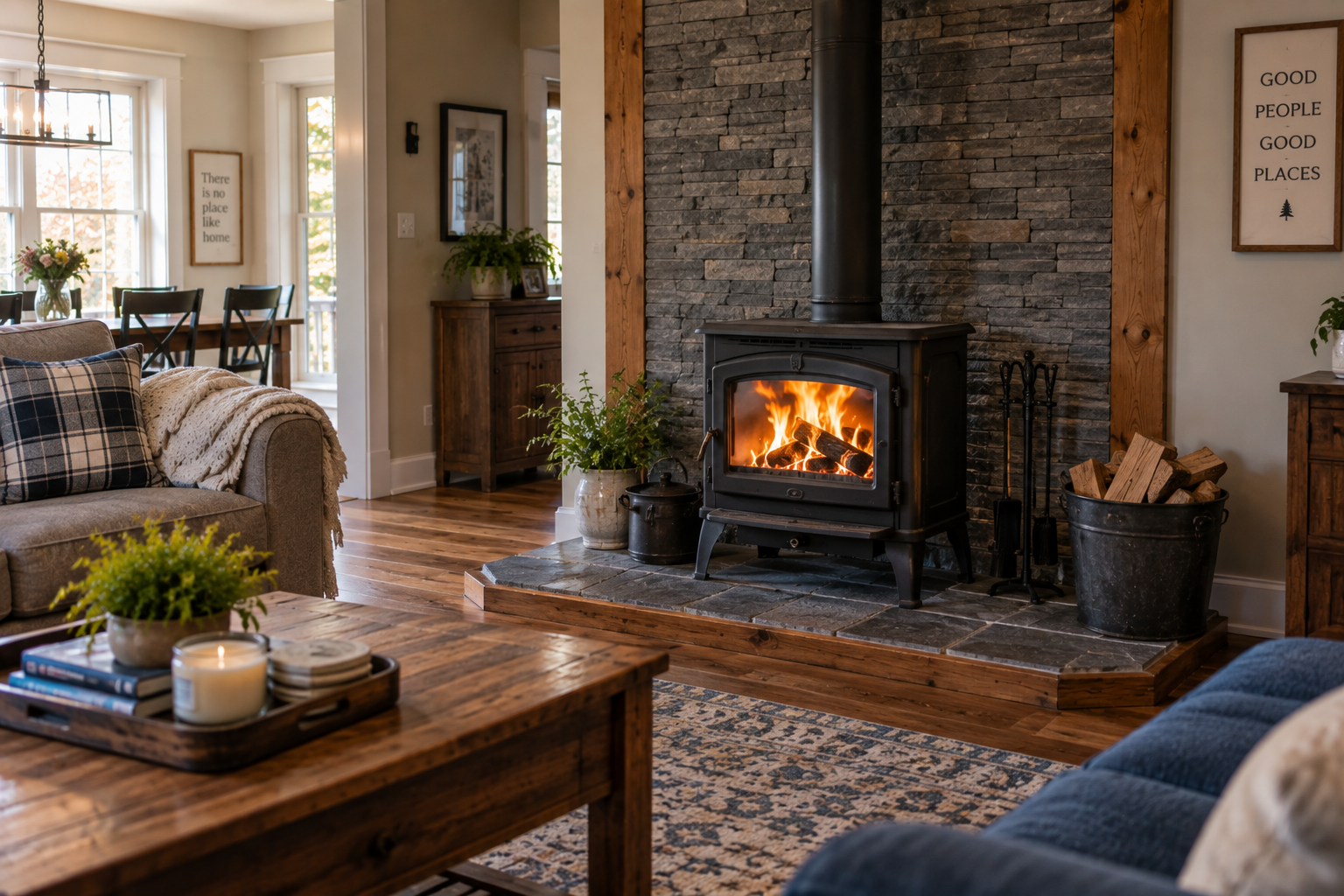
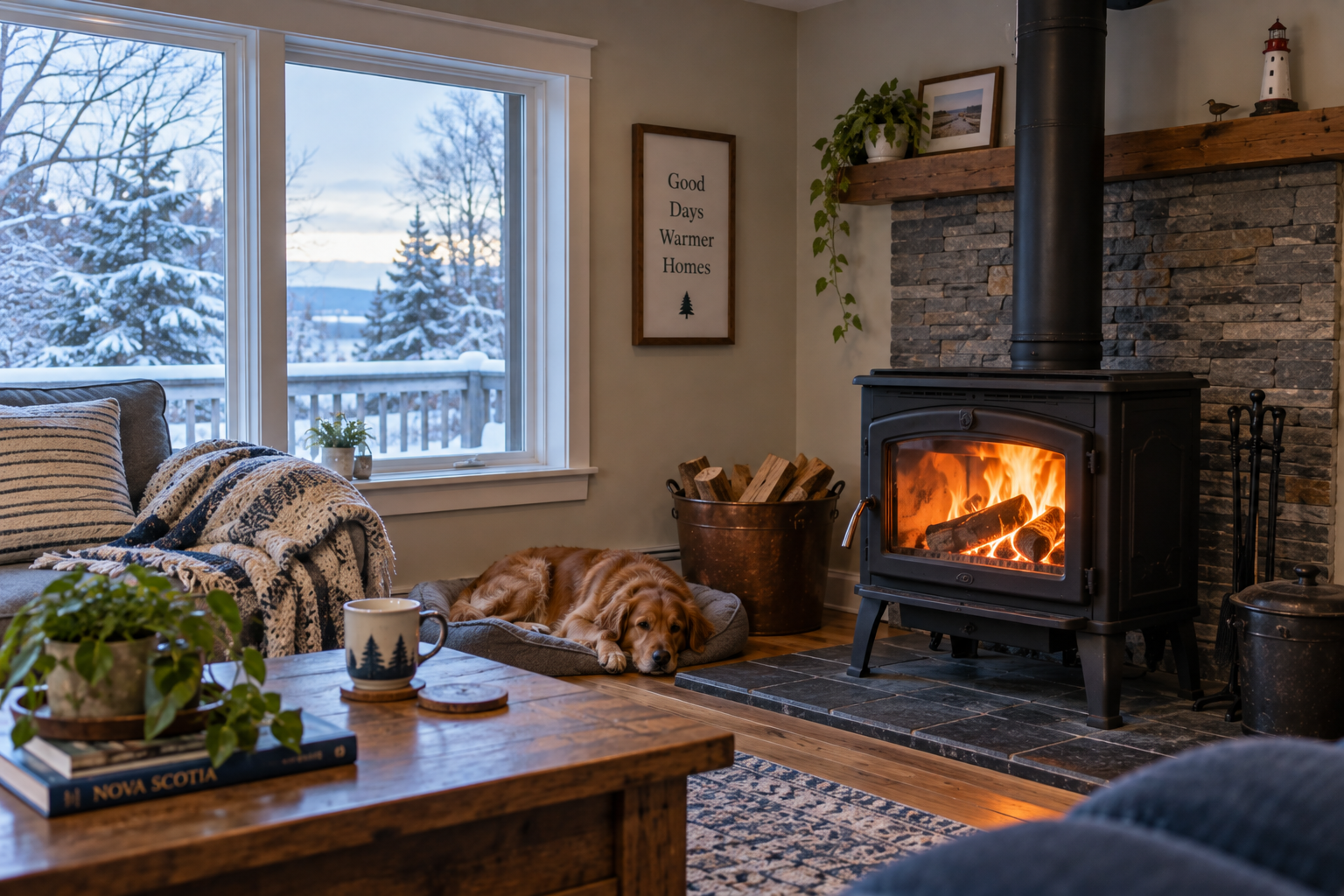
Wood stoves can provide substantial heat and are familiar features in many Nova Scotia homes.
Some owners use wood as supplemental heat. Others rely on it much more heavily.
For a buyer, there are several things to understand:
What appliance is installed?
How old is it?
What type of chimney or venting system does it use?
Is the installation appropriate?
When was the chimney last cleaned?
Is there documentation for the installation?
Is there a recent inspection?
Will your insurer accept the system?
This is one area where a specialized inspection can be particularly important.
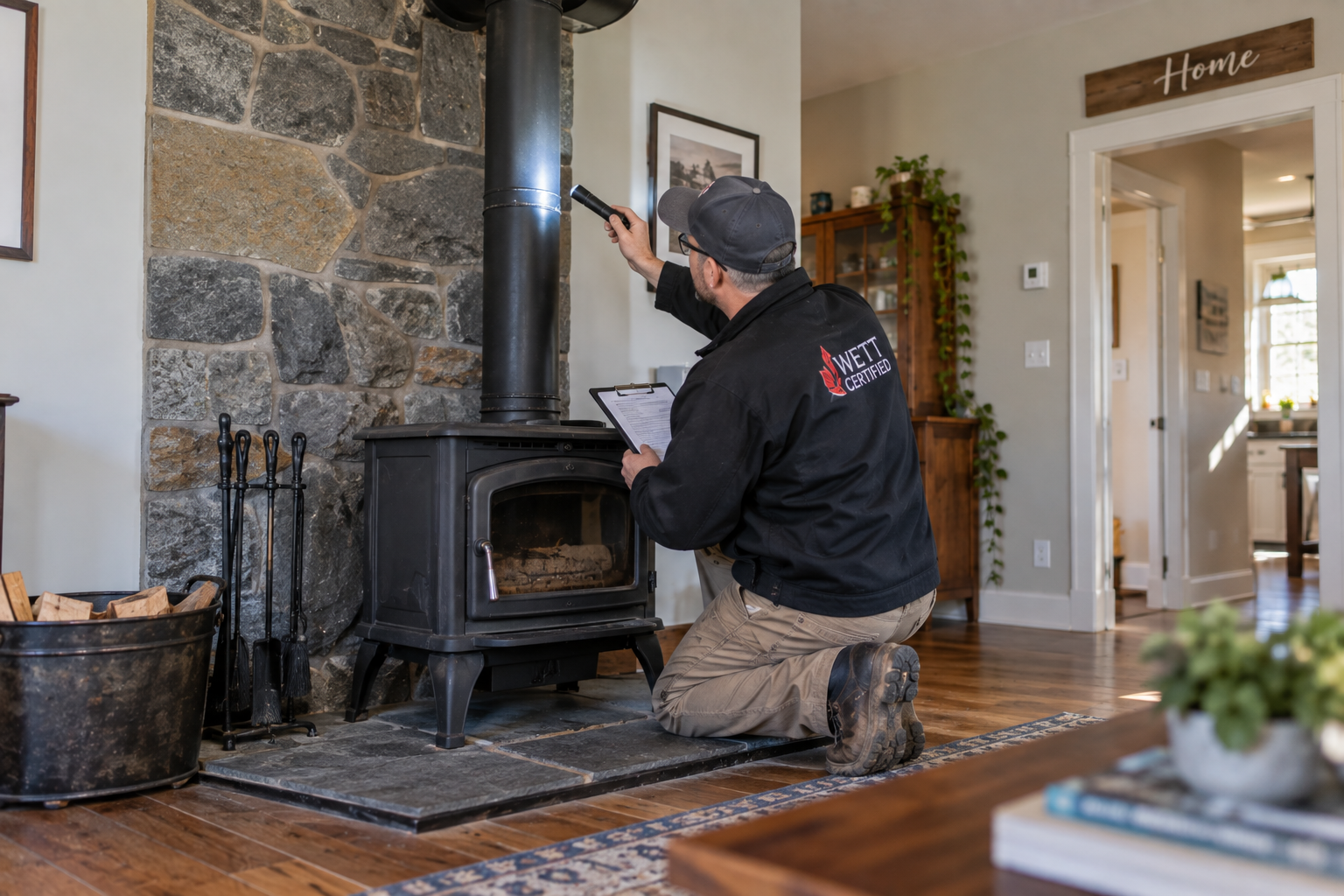
What Does “WETT Certified” Actually Mean?
Buyers often hear that a wood stove needs a “WETT inspection.” One common misconception is that a wood stove itself can be “WETT certified.” It can't—WETT certifies qualified individuals, who can inspect the system and provide an inspection report.
WETT stands for Wood Energy Technology Transfer. WETT is a Canadian non-profit training and education organization that maintains a registry of professionals trained in the inspection, installation and maintenance of wood-burning systems. Wettinc
WETT itself notes that many insurance companies require inspection, installation or maintenance work involving wood-burning equipment to be completed by someone with appropriate WETT certification. Wett Inc.
For a home purchase, a WETT-trained professional can evaluate the visible components of the appliance and venting system and identify deficiencies or concerns that may require further investigation. Wett Inc.
So if a home has a wood stove, fireplace insert or another solid-fuel appliance, don't assume that its presence—or the fact that the seller uses it—means your insurer will automatically accept it.
Investigate it before you need to rely on it.
Pellet Stoves Are Similar—but Not the Same as Wood Stoves
A pellet stove burns manufactured wood pellets rather than split firewood.
Pellets are generally fed automatically from a hopper into the combustion area, which can make operation quite different from a traditional wood stove.
But a pellet appliance still needs to be considered as a heating system.
Look at its age, condition, installation, venting, maintenance history and availability of fuel.
Also remember that many pellet stoves depend on electricity to operate their feed system and fans. That's an important distinction if you're thinking of the appliance as emergency heat during a power outage.
Propane May Heat More Than You Expect
Some Nova Scotia homes use propane for central heating, fireplaces, water heating, cooking—or a combination of those uses.
If propane is part of the property, determine exactly what it serves.
You may also want to understand the tank arrangement. Depending on the property, a propane tank may be owned by the homeowner or supplied under an arrangement with a fuel company.
That distinction can affect what transfers with the property and what arrangements you'll need after closing.
As with any fuel-burning appliance, condition, installation and servicing are more important than simply knowing that the fuel source is propane.
Don't Forget About Domestic Hot Water
Space heating gets most of the attention during a home search, but buyers should also ask:
How is the water heated?
The answer may be completely separate from the home's main heating system.
A home might have:
An electric water heater
An oil-fired water heater
A boiler that also provides domestic hot water
A propane water heater
A heat-pump water heater
Another configuration
This matters because hot water contributes to the home's overall energy use and because replacing one heating system can sometimes affect another.
For example, if a boiler heats both the house and domestic water, replacing the space-heating system may require a separate plan for hot water.
A Heating System Can Affect Home Insurance
Heating systems aren't only an energy-cost question.
They can also affect whether an insurer is willing to insure a property and under what conditions.
Oil tanks, wood-burning appliances and older or unusual heating equipment may receive additional scrutiny from an insurer.
Requirements vary between insurers, so don't assume that because the seller currently has insurance, your insurer will treat the property exactly the same way.
This is one reason insurance should be investigated during the buying process rather than left until the final days before closing.
Ask for Heating Costs—but Put Them in Context
Previous heating bills can be useful.
They can help you understand how much fuel or electricity the current occupants have been using.
But they're not a guarantee of what you'll spend.
One household may keep the house at 22°C all winter while another prefers 18°C. Someone may heat every room continuously, while another closes off unused spaces. A seller may burn several cords of wood in addition to the electricity shown on a power bill.
Occupancy can also change the numbers dramatically.
So when reviewing historical costs, ask what those numbers actually include.
For example:
Does the electricity bill include most of the home's heating?
Was oil also used?
How much wood was burned?
Was the house occupied year-round?
What temperature was normally maintained?
Historical bills are evidence of how that household used that home, not a quote for your future heating costs.

Think Carefully Before Comparing One Home's Heating Bill With Another
A $2,000 annual heating cost for one house and a $3,000 cost for another doesn't automatically tell you which home is more efficient.
Perhaps one house is twice the size.
Perhaps one includes domestic hot water in that number and the other doesn't.
Maybe one owner heated primarily with purchased energy while the other cut their own firewood.
Even the orientation and exposure of a house can matter.
Heating costs are most useful when considered alongside the building itself.
What About Backup Heat During a Power Outage?
Nova Scotia buyers sometimes ask whether a home's heating system will continue operating if the electricity goes out.
The answer isn't as simple as identifying the fuel.
An oil furnace, for example, still generally requires electricity to operate its burner, controls and blower. A hot-water boiler may require electricity for controls and circulation pumps. Pellet stoves generally use electricity for their feed and fan systems.
Some wood stoves can continue providing heat without household electricity.
A heat pump, of course, requires electricity.
If maintaining heat during an outage is important to you, investigate how the actual system in the home operates rather than assuming that a non-electric fuel automatically means the house can be heated without power.
Older Heating Equipment Isn't Automatically a Problem
Age matters, but it isn't the only thing that matters.
A well-maintained older boiler may have years of useful service remaining. A newer system that hasn't been maintained properly can have problems much sooner.
When you're evaluating heating equipment, useful information can include:
Approximate age
Service history
Maintenance records
Visible condition
Availability of parts
Any known problems
Whether a qualified technician recommends further evaluation
The goal isn't to reject every older component.
It's to understand what you're buying and whether you should plan for maintenance or replacement.
Replacing the Heating System Isn't Always the First Upgrade to Make
It's easy to look at an older furnace or boiler and immediately start calculating the cost of replacing it.
Sometimes that's appropriate.
But heating equipment is only one part of home performance.
If a house loses large amounts of heat through air leakage or insufficient insulation, reducing that heat loss may improve comfort and reduce energy use regardless of what produces the heat.
That doesn't mean an inefficient or failing heating system should be ignored.
It means the best improvement plan usually starts by understanding where the house needs energy and why.
A Home With Several Heating Systems Isn't Necessarily Complicated
A listing that says:
Heat pump / oil / wood
can sound confusing to someone accustomed to a single furnace.
In practice, it may simply mean the homeowner has options.
Perhaps the heat pump handles most spring and fall heating. The oil boiler serves the whole house when needed. The wood stove provides additional heat in the main living area.
The important part is determining how those systems interact.
A buyer should be able to leave the property understanding:
What heats the house most of the time?
What heats areas the primary system doesn't reach?
What is the backup?
What equipment will require maintenance?
What fuels will I need to purchase?
Once you can answer those questions, a multi-system home becomes much easier to understand.
Don't Judge the Heating System by the Thermostat
During a showing, a warm house tells you that something is producing heat.
It doesn't tell you:
How efficiently the house retains that heat
Whether every room is comfortable
What the system costs to operate
Whether equipment is approaching replacement
Whether an oil tank has concerns
Whether a wood appliance is acceptable to your insurer
Whether supplemental systems are needed
Whether the home's electrical service can support future upgrades
Those questions require a little more investigation.
What Should a Buyer Investigate?
When I'm helping a buyer look at a Nova Scotia home's heating, I'm less interested in finding a particular “best” system than in understanding how the property works.
Depending on the home, that may mean looking into:
The primary heating system
Supplemental heating systems
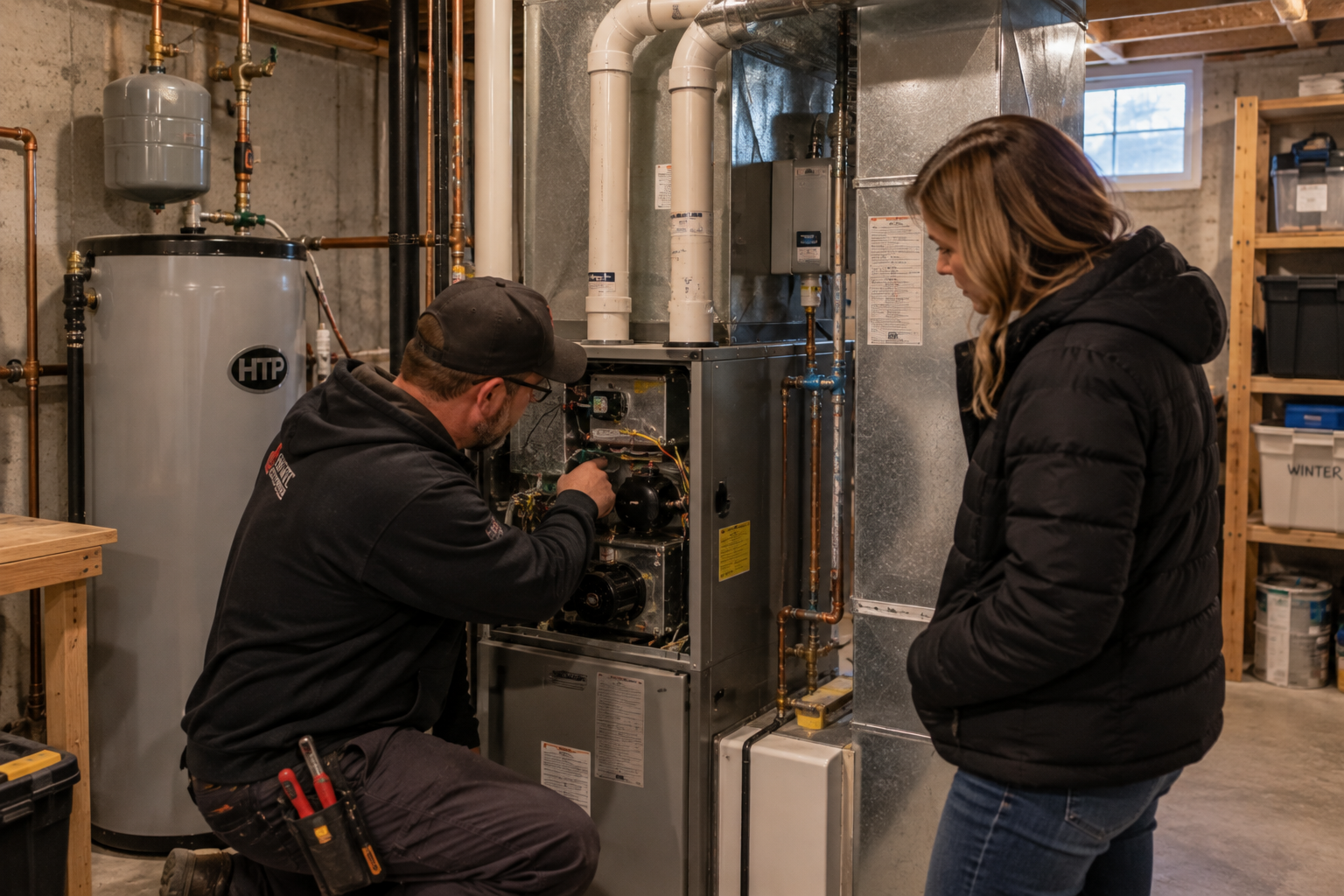
Equipment age and maintenance
How heat is distributed throughout the house
Oil-tank age and condition
Wood or pellet appliances and their venting
Heat-pump locations and coverage
Historical fuel and electricity use
Domestic hot-water heating
Insurance requirements
Potential upcoming replacement costs
How the home's insulation and air sealing affect heating demand
Not every property requires every investigation.
The heating system should be evaluated in the context of the particular home.
Understand How the House Keeps You Comfortable
When buying a home in Nova Scotia, heating deserves more attention than identifying whether the house uses oil, electricity, wood or a heat pump.
Look at the whole system.
Understand where the heat comes from, how it moves through the house, which equipment supports it and what responsibilities you'll inherit as the owner.
Then look one step further.
A heating system supplies the energy, but the house itself determines how much of that energy it needs to stay comfortable.
Understanding both sides of that equation can help you make a much more informed decision about the home you're buying.
Part of the Buyer Resource Centre: Practical guides to help you prepare, evaluate a property and navigate the home-buying process in Nova Scotia.
.jpg)
Comments:
Post Your Comment: