.png)

Part of the Smarter, Greener Homes series: Practical guides to understanding energy efficiency, home performance and green-building features.
When you're buying a home, it's perfectly reasonable to ask:
“What does it cost to heat?”
But there's another question that may tell you considerably more:
“How much energy does it actually use?”
Those sound like the same question.
They're not.
A seller might tell you they spent $3,000 on electricity last year. Another homeowner might say they used $2,400 worth of oil.
Those numbers are useful—but they're also affected by the price of electricity, oil or propane at the time.
Energy prices change.
The amount of energy the house consumed is a different piece of information.
And when I'm trying to understand how a house actually performs, I want to look at both.
1. Your Utility Bill Contains Two Different Stories
Think about a utility bill this way:
Consumption
How much energy did you use?
Cost
How much did that energy cost you?
For electricity, consumption is normally measured in kilowatt-hours (kWh).
Heating oil and propane are generally measured in litres.
Wood might be described in cords, although that's inherently less precise because the type of wood, moisture content and even how a cord is measured or stacked can affect how much usable heat it represents.
Natural Resources Canada similarly distinguishes residential energy consumption by source—electricity in kWh, heating oil and propane in litres, and wood by mass—when evaluating a home's energy use. Natural Resources Canada
The amount you paid and the amount you consumed aren't interchangeable.
That's the first thing buyers need to understand.
2. Why Dollars Alone Can Be Misleading
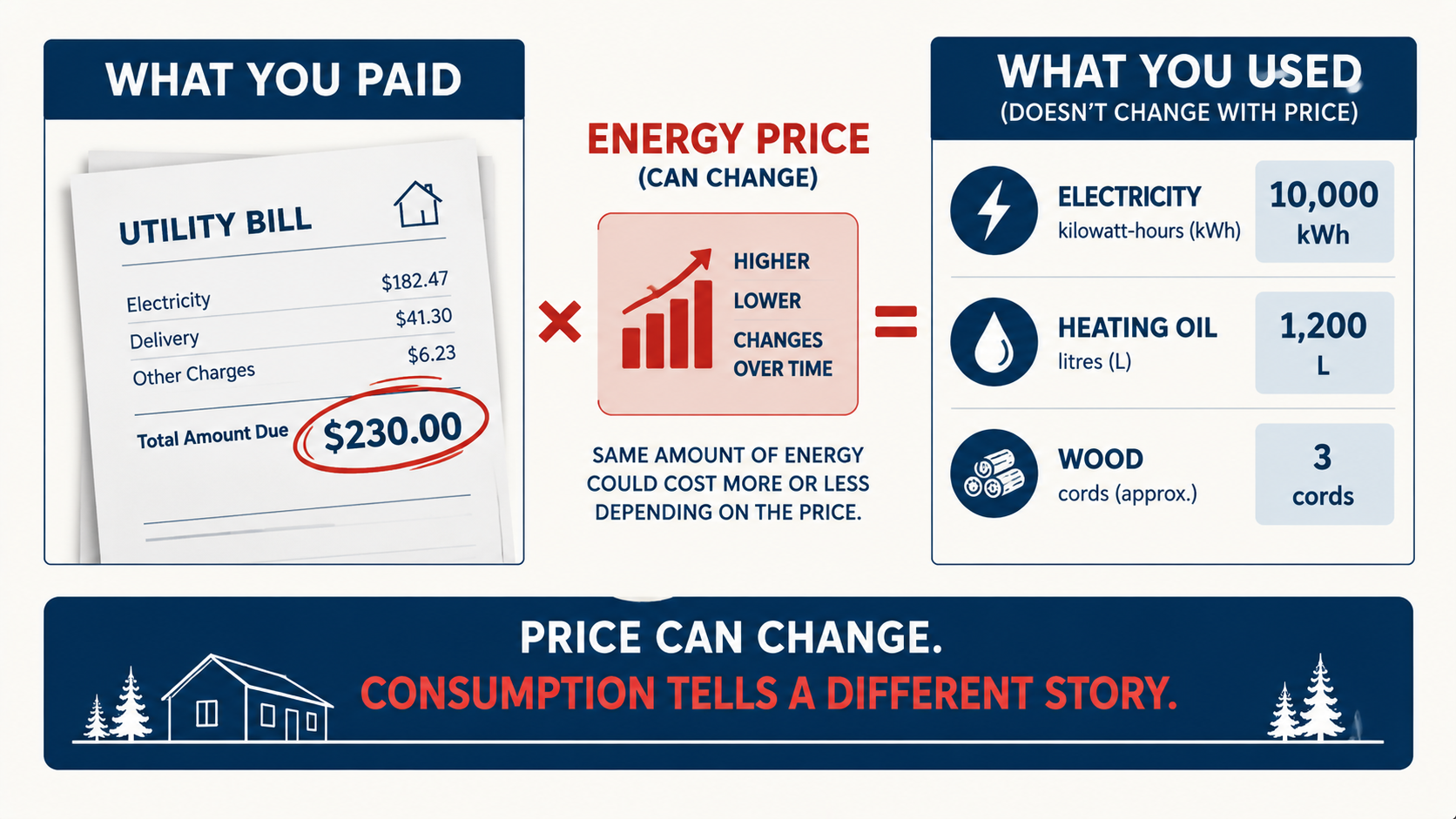
Imagine a homeowner used exactly 10,000 kWh of electricity in two different years.
The house used the same amount of electricity both years.
But if the electricity rate increased between those years, the second year's bill would be higher.
Did the house suddenly become less energy efficient?
No.
The price of the energy changed.
We have a very recent Nova Scotia example. The standard residential energy rate changed from 18.187 cents per kWh to 19.128 cents per kWh on May 1, 2026. The monthly base charge changed as well. Default
So even with identical consumption, the dollar amount on the bill can change.
Heating oil provides an even stronger example because its price can fluctuate substantially. NRCan has documented significant swings in Canadian home-heating-oil prices over relatively short periods. Natural Resources Canada
That's why, when historical records are available, I'd rather see:
2025: 12,400 kWh
than simply:
2025: $2,300
Ideally, of course, I'd like to see both.
3. Start With a Full Year Whenever Possible
One utility bill doesn't tell you very much about a house.
Neither does one month.
In Nova Scotia, a January heating bill and a July bill can obviously look very different.
That's why 12 months of consumption history is considerably more useful.
Even better?
Two or three years.
That lets you look for patterns.
Did electricity consumption remain fairly consistent?
Was one winter noticeably higher?
Did consumption drop after a heat pump was installed?
Did oil consumption decrease while electricity consumption increased?
Was there an unusually mild or severe winter?
A longer history helps put an individual bill into context.
Don't judge a home's energy use from its worst month—or its best one. Look at the pattern.
4. A House May Use More Than One Type of Energy
This is particularly important with Nova Scotia homes.
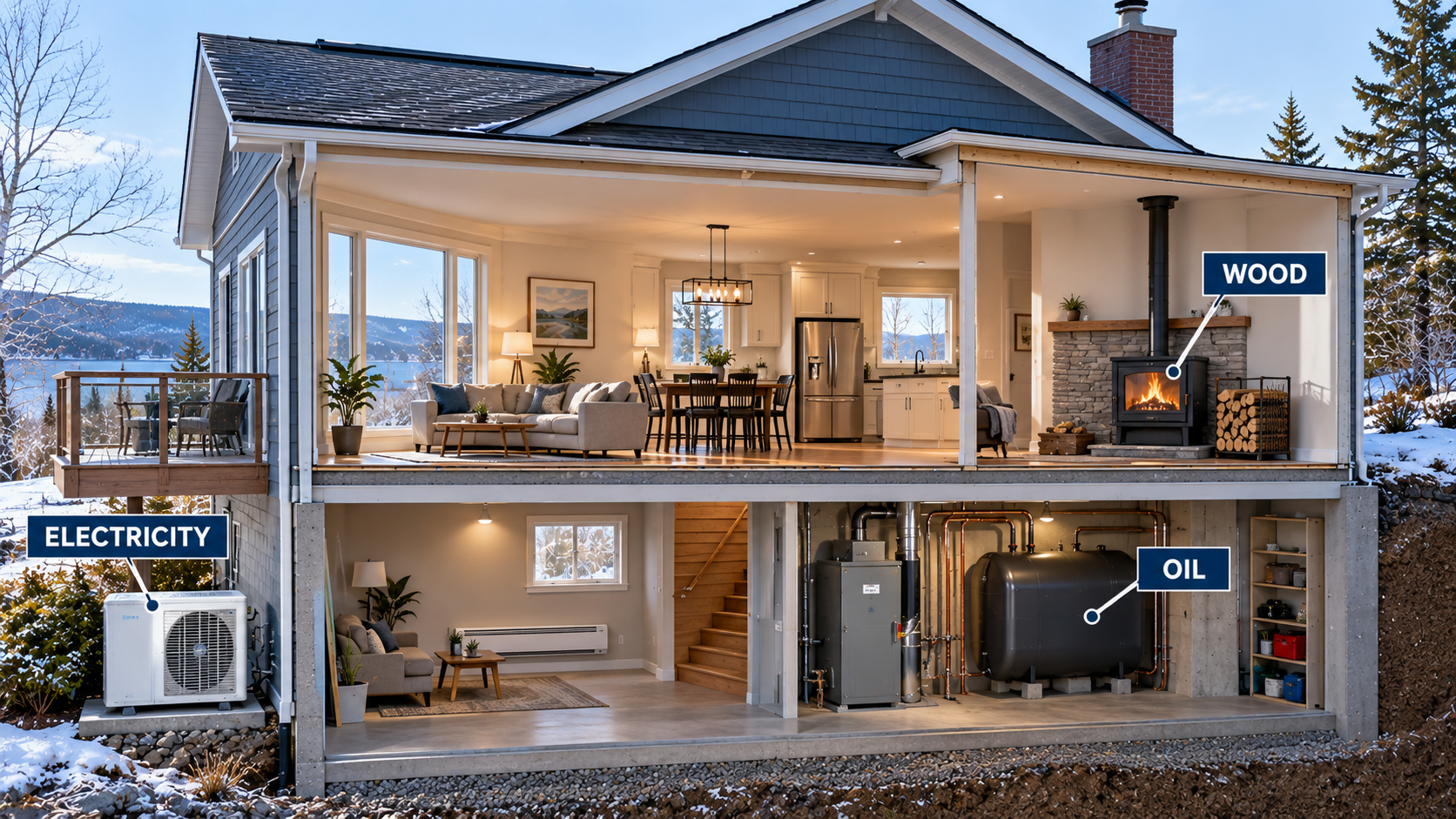
Suppose you're looking at a house with:
a ductless heat pump
an oil furnace
electric baseboards
and a wood stove
Looking only at the electricity bill doesn't tell you how much energy the house used.
Neither does looking only at the oil deliveries.
The homeowners might primarily use the heat pump during milder weather, burn wood regularly and use oil during colder periods.
To understand the whole picture, you'd ideally want to know:
Electricity: How many kWh per year?
Oil: How many litres?
Wood: Approximately how much?
And if propane is involved:
Propane: How many litres?
This is also why comparing two homes based on the power bill alone can be misleading.
A house with a $200 monthly electrical bill plus significant oil consumption isn't necessarily cheaper to operate than an all-electric house with a $300 electrical bill.
You have to account for all of the energy sources.
5. What About Oil Delivery Records?
Oil-heated homes require a slightly different approach.
Rather than simply asking:
“What's the average oil bill?”
I'd want to know:
How many litres were delivered over the year?
If records are available, look at the delivery dates and quantities.
For example:
October — 450 L
December — 600 L
February — 550 L
April — 350 L
That tells you considerably more about actual consumption than the dollar amount of those deliveries.
There is one complication.
Oil delivered isn't necessarily oil consumed during exactly the same period.
If the tank was nearly empty at the beginning of your comparison period and full at the end—or vice versa—the delivery total can distort actual consumption.
Automatic delivery schedules can complicate things further.
So oil records are useful, but they need context.
6. Propane Has the Same Basic Issue
Propane is also normally purchased by quantity, so again I'd look for litres, not just dollars.
And just like oil, deliveries and actual consumption don't always line up perfectly with a calendar year.
There's another consideration.
What is the propane being used for?
Maybe it heats the entire house.
Or perhaps it only supplies:
a fireplace
cooking
domestic hot water
a generator
or some combination of those
The same applies to electricity.
Not every kWh went toward heating.
Before comparing numbers, understand what the energy source is actually doing.
7. Wood Is Harder to Compare
Wood heat adds another layer of uncertainty.
A homeowner might say:
“We burn about three cords a year.”
That's useful information.
But it's not as precise as an electricity meter.
Different wood species contain different amounts of energy. Moisture content matters significantly. Seasoned hardwood and wet softwood won't provide the same useful heat from the same apparent volume.
NRCan's energy-reference material reflects this by expressing wood's energy content by mass, rather than simply assuming every cord represents exactly the same amount of energy. Natural Resources Canada
Then there's the appliance itself.
An older wood stove and a modern high-efficiency stove may deliver different amounts of useful heat into the house from the same fuel.
So I'd treat wood consumption as valuable context rather than a perfectly precise measurement.
“Approximately three cords per winter” still tells a buyer something important—it just shouldn't be treated as laboratory data.
8. Can We Put Different Energy Sources on the Same Scale?
Yes.
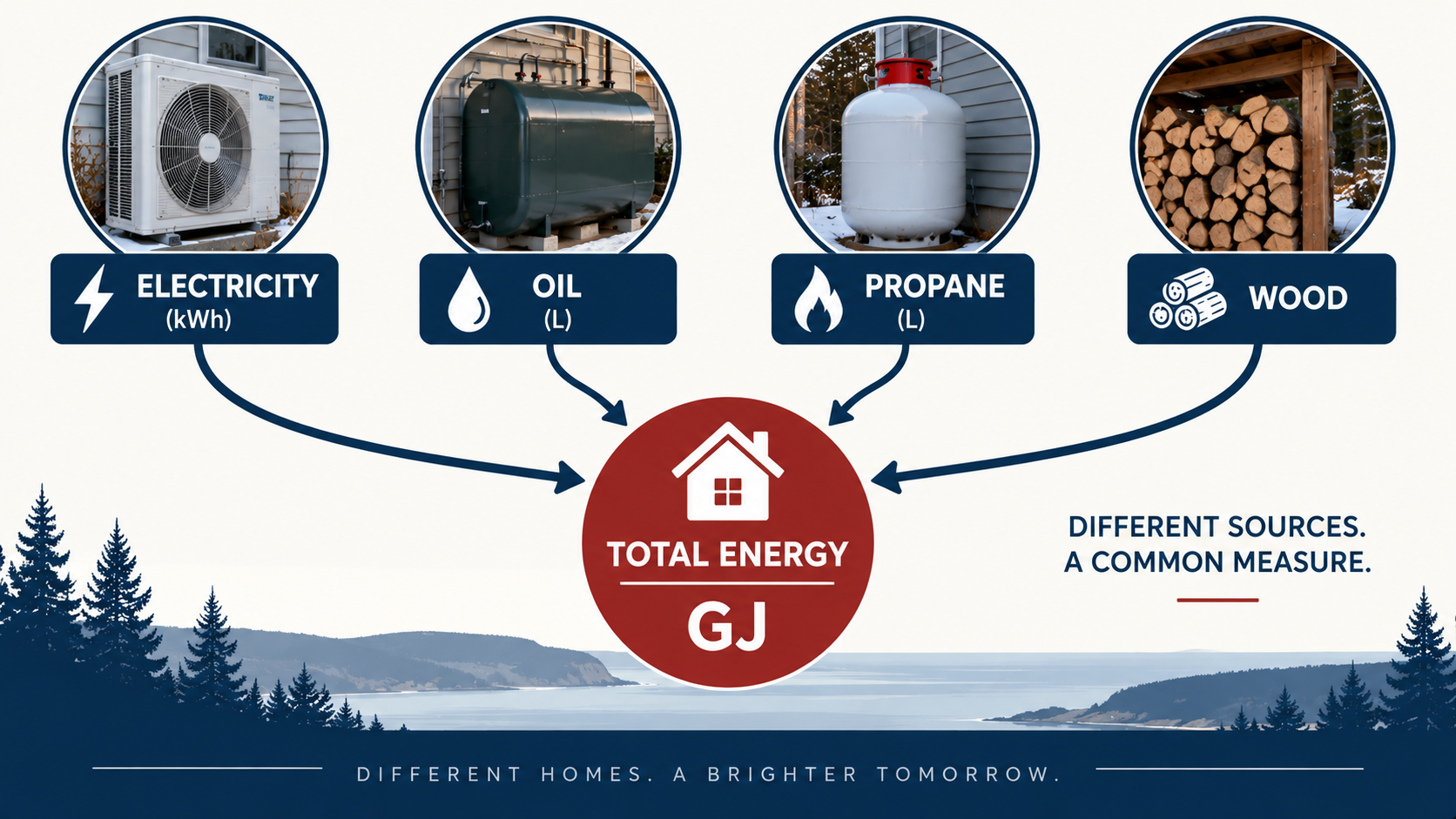
This is where a unit called the gigajoule—or GJ— becomes useful.
A gigajoule is simply a common measurement of energy.
For example, electricity can be converted into gigajoules:
1 kWh = 0.0036 GJ
or:
1 GJ ≈ 278 kWh
NRCan also publishes energy-content values for fuels such as heating oil and propane, allowing different energy sources to be expressed using a common unit. Natural Resources Canada
Why would we bother?
Imagine comparing:
House A: electricity + wood
with
House B: electricity + oil
Adding kilowatt-hours to litres obviously doesn't make sense.
But converting the energy sources to a common unit can help provide a more complete picture of total energy consumed.
This is also why Canada's EnerGuide home rating uses gigajoules per year (GJ/year). Natural Resources Canada
You certainly don't need to convert every utility bill into gigajoules when buying a house.
But understanding the concept helps explain why comparing one fuel bill with another can be surprisingly difficult.
9. Consumption Still Doesn't Tell You Everything About the House
Here's where we need another important caution.
Suppose one family uses 15,000 kWh annually and another uses 22,000 kWh.
Does that automatically mean the first house is more efficient?
No.
Because houses don't operate themselves.
People do.
One family may keep the thermostat at 19°C.
Another prefers 23°C.
One household might have two occupants.
Another has five.
Someone may work from home every day.
Another house may sit empty for much of the winter.
Then consider:
long showers
hot-water use
laundry
cooking
electronics
electric vehicles
hot tubs
workshops
dehumidifiers
air conditioning
supplemental heaters
All of these can affect actual consumption.
NRCan makes exactly this distinction with EnerGuide evaluations. Its standardized rating applies operating assumptions so houses can be compared more consistently. Actual utility bills can differ because of occupant behaviour, weather and energy loads that aren't part of the standardized calculation. Natural Resources Canada
Historical consumption tells you how the house and its previous occupants used energy together.
It doesn't perfectly predict what you will use.

10. Weather Matters Too
Even the same family living in the same house can use different amounts of energy from one year to another.
Why?
The weather changed.
A colder winter means the heating system has to replace more heat lost through the building envelope.
A milder winter generally requires less heating.
Wind can also affect infiltration and heat loss.
And a hot summer can increase air-conditioning use.
NRCan specifically cautions that changes in local weather patterns can significantly affect household consumption and utility bills. Natural Resources Canada
That's another reason I prefer several years of history when it's available.
One unusually mild winter can make a house look better than it really is.
One unusually harsh winter can make it look worse.
11. Renovations Can Break the Historical Pattern
Sometimes a sudden change in consumption is exactly what you'd expect.
Maybe the owners:
installed a heat pump
replaced an oil furnace
added attic insulation
completed significant air sealing
replaced windows
added solar panels
finished the basement
built an addition
added an electric vehicle
In that case, older utility history may no longer represent the house in its current configuration.
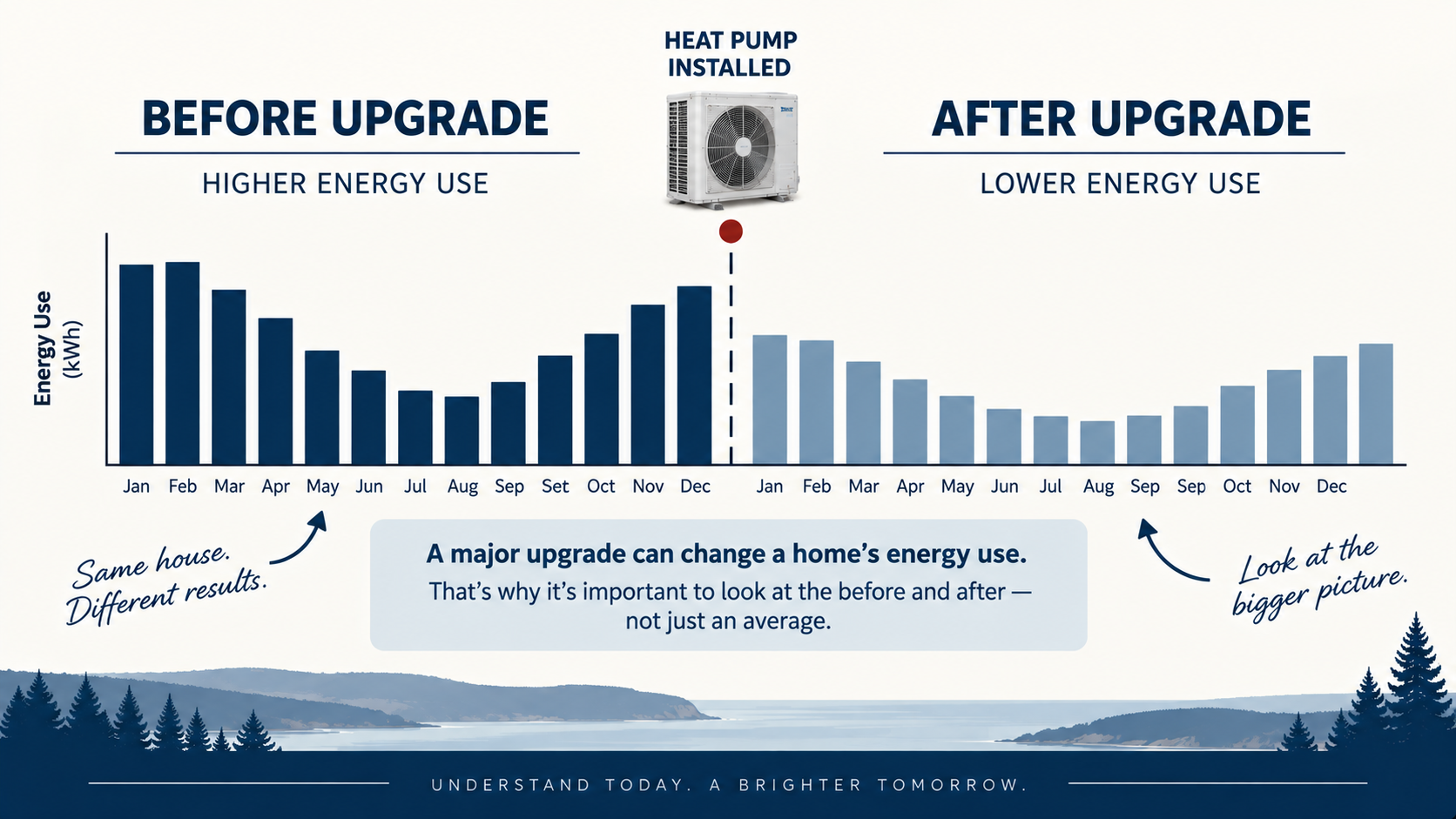
Suppose a heat pump was installed 18 months ago.
A three-year average combining the before and after periods could actually hide useful information.
I'd rather compare them separately.
What did the house use before the improvement—and what did it use after?
That can tell a much more interesting story.
12. Solar Panels Require Another Adjustment
A house with solar PV makes electricity comparisons particularly interesting.
Suppose the electricity bill is extremely low.
Great.
But how much electricity did the house actually consume?
If the solar system generated a significant amount of electricity, the amount purchased from the grid may represent only part of the home's total electricity use.
NRCan's current home-energy guidance treats renewable generation separately from the home's total energy consumption for exactly this reason. Natural Resources Canada
For a solar-equipped home, I'd therefore want to know:
annual electricity purchased from the grid
annual solar generation, if available
electricity exported to the grid, if applicable
whether batteries are involved
whether the household's consumption changed
A tiny electricity bill can be very attractive.
But it doesn't necessarily mean the house itself uses very little energy.
Low purchased energy and low energy consumption aren't necessarily the same thing.
Solar Panels vs. Passive Solar: What's the Difference?
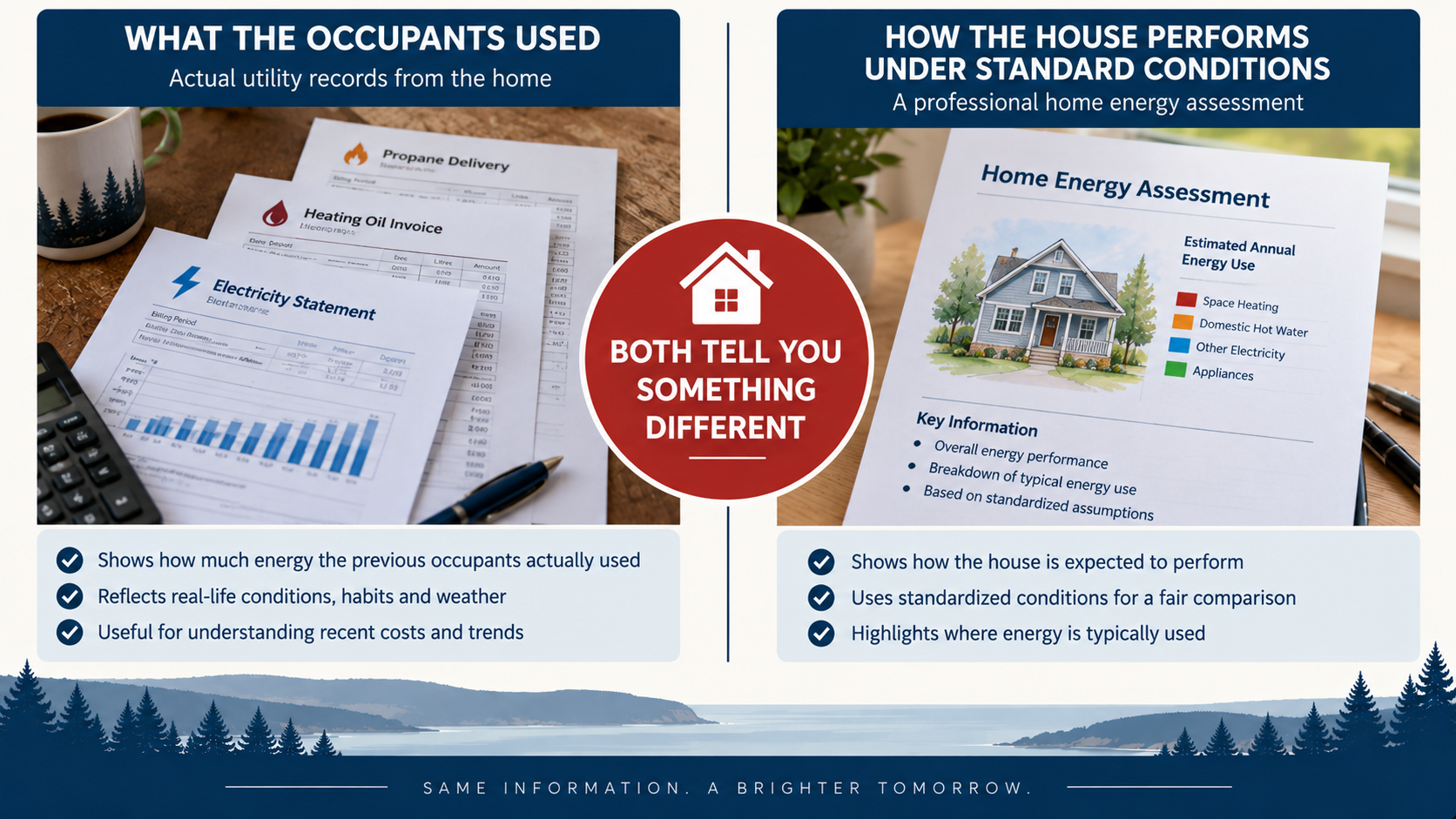
13. Historical Bills vs. an EnerGuide Rating
These two sources of information answer slightly different questions.
Historical utility records tell you:
What did the people living here actually consume?
An EnerGuide rating tells you:
How does the house itself perform under standardized operating conditions?
NRCan's current EnerGuide system expresses a home's estimated annual energy consumption in GJ/year, with a lower rating indicating better energy performance. It also provides a breakdown of where the energy is expected to be consumed. Natural Resources Canada
That standardized approach is useful because it reduces some of the differences caused by individual lifestyles.
But NRCan specifically warns homeowners not to expect their actual utility bills to exactly match the EnerGuide estimate. Natural Resources Canada
So I wouldn't necessarily choose one over the other.
If available, I'd look at both.
They provide different pieces of the puzzle.
14. What Should Buyers Ask For?
When energy costs are important to a buyer, I wouldn't stop at:
“What's the average power bill?”
I'd ask whether the seller can provide historical information such as:
12–24 months of electricity consumption in kWh
heating-oil deliveries in litres
propane deliveries in litres
approximate annual wood consumption
solar-production history, if applicable
an EnerGuide evaluation or rating, if one exists
dates of major energy upgrades
information about heating equipment
typical thermostat settings
whether parts of the home were routinely unused or kept at lower temperatures
Not every seller will have all of this information.
And historical consumption should never be presented as a guarantee of what the next owner will spend.
But when the information is available, it can help a buyer make a much more informed comparison.
15. Comparing Two Houses? Compare More Than the Bills
Imagine you're considering two homes.
House A
Annual energy cost: $3,000
House B
Annual energy cost: $3,600
At first glance, House A looks like the obvious winner.
But then you discover:
House A's records are from a period when energy prices were lower.
House B's records are more recent.
House A was occupied by one person who kept the thermostat at 19°C and regularly used a wood stove.
House B had a family of four keeping the house at 22°C.
Suddenly, that $600 difference doesn't tell you very much about the relative efficiency of the houses.
This is why I wouldn't use historical energy costs as a simple ranking system.
They're evidence, not a verdict.
Look at:
Consumption.
Fuel type.
Energy prices.
Weather.
Occupancy.
Heating equipment.
Building envelope.
Recent upgrades.
Then start putting the pieces together.

The Number I Want to See Isn't Just the Dollar Amount
When I'm looking at the energy history of a home, the question isn't simply:
“How much did the previous owner pay?”
It's:
“What did they use?”
Dollars matter because ultimately homeowners have to pay the bills.
But consumption tells us something different.
It helps separate the performance and use of the house from the price of the energy being purchased.
And that distinction becomes especially important when comparing utility records from different years—or comparing houses using completely different heating systems.
So if you're buying a home and historical energy information is available, look past the bottom line.
Find the kWh.
Find the litres.
Ask about the wood.
Look for the EnerGuide rating.
And find out whether anything about the house changed during the period you're reviewing.
Because the utility bill tells you what someone paid. The consumption history helps tell you how the house was actually used.
Smarter, Greener Homes
This article is part of my Smarter, Greener Homes series, where I take a practical look at energy efficiency, green building and the features that can affect how comfortable and economical a home is to operate.
We've looked at passive solar, heating demand, heat pumps, insulation, air sealing, high-performance windows and solar energy.
Now we've added another important part of the picture:
How to actually read the numbers.
Because understanding an energy-efficient home isn't just about recognizing the equipment.
It's about understanding how the building, its systems—and the people living in it—use energy together.
As a Canadian Certified Green Representative (CCGR), I help buyers and sellers better understand the features and information that can affect a home's energy performance, comfort, sustainability and operating costs.
Thinking about buying or selling an energy-efficient home—or just curious about what the numbers actually mean?
Get in touch. I'm always here to help.
Rob Schellenberger, REALTOR®
Canadian Certified Green Representative
RE/MAX Banner Real Estate
902-300-8674
robschellenberger.ca
.jpg)