.png)

Part of the Smarter, Greener Homes series: Practical guides to understanding energy efficiency, home performance and green-building features.
Mention a solar home and most people probably picture the same thing:
Solar panels on the roof.
But a house can make use of solar energy without having a single solar panel.
In fact, there are two very different ways a home can take advantage of energy from the sun.
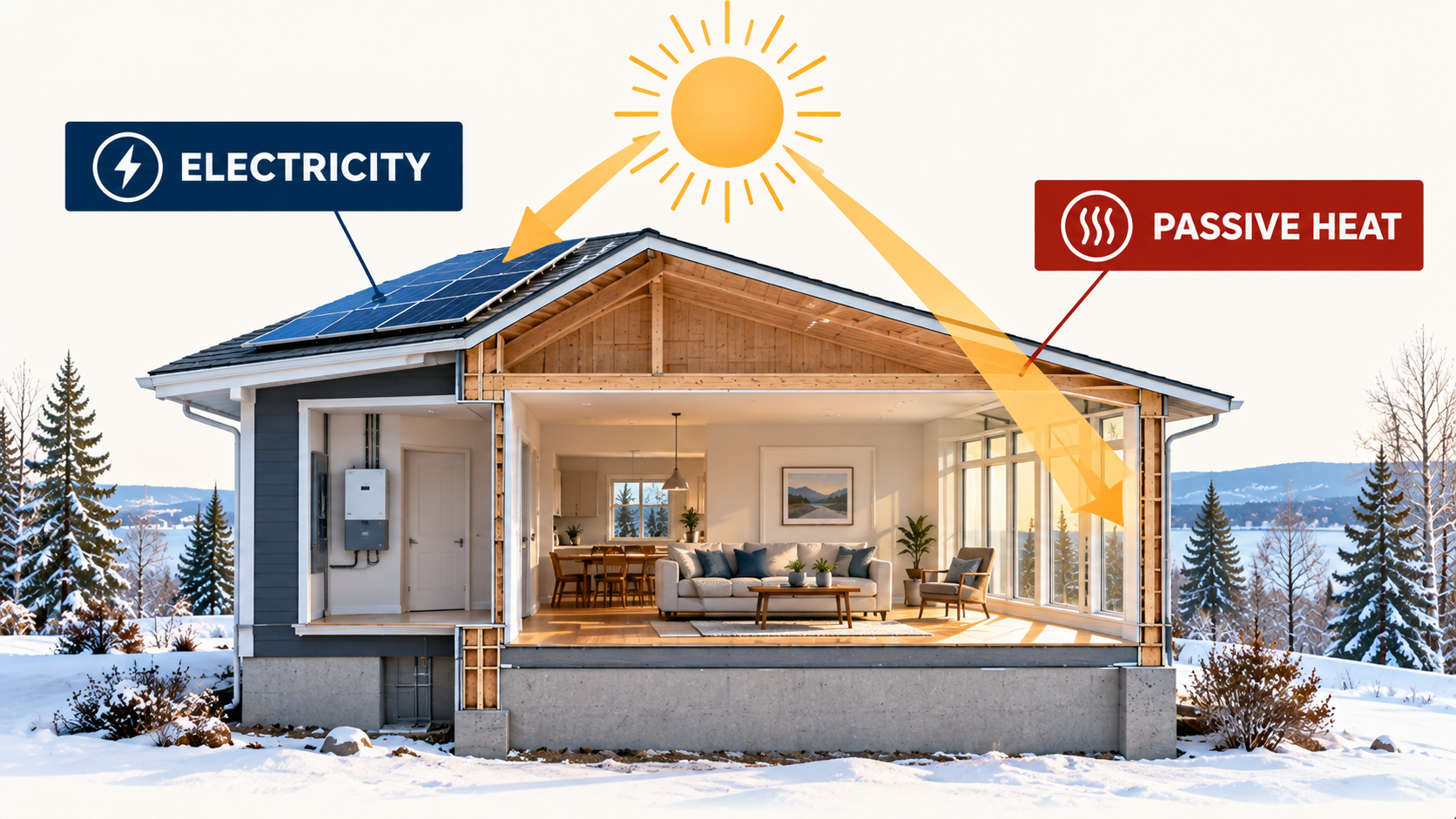
Solar photovoltaic panels use sunlight to produce electricity.
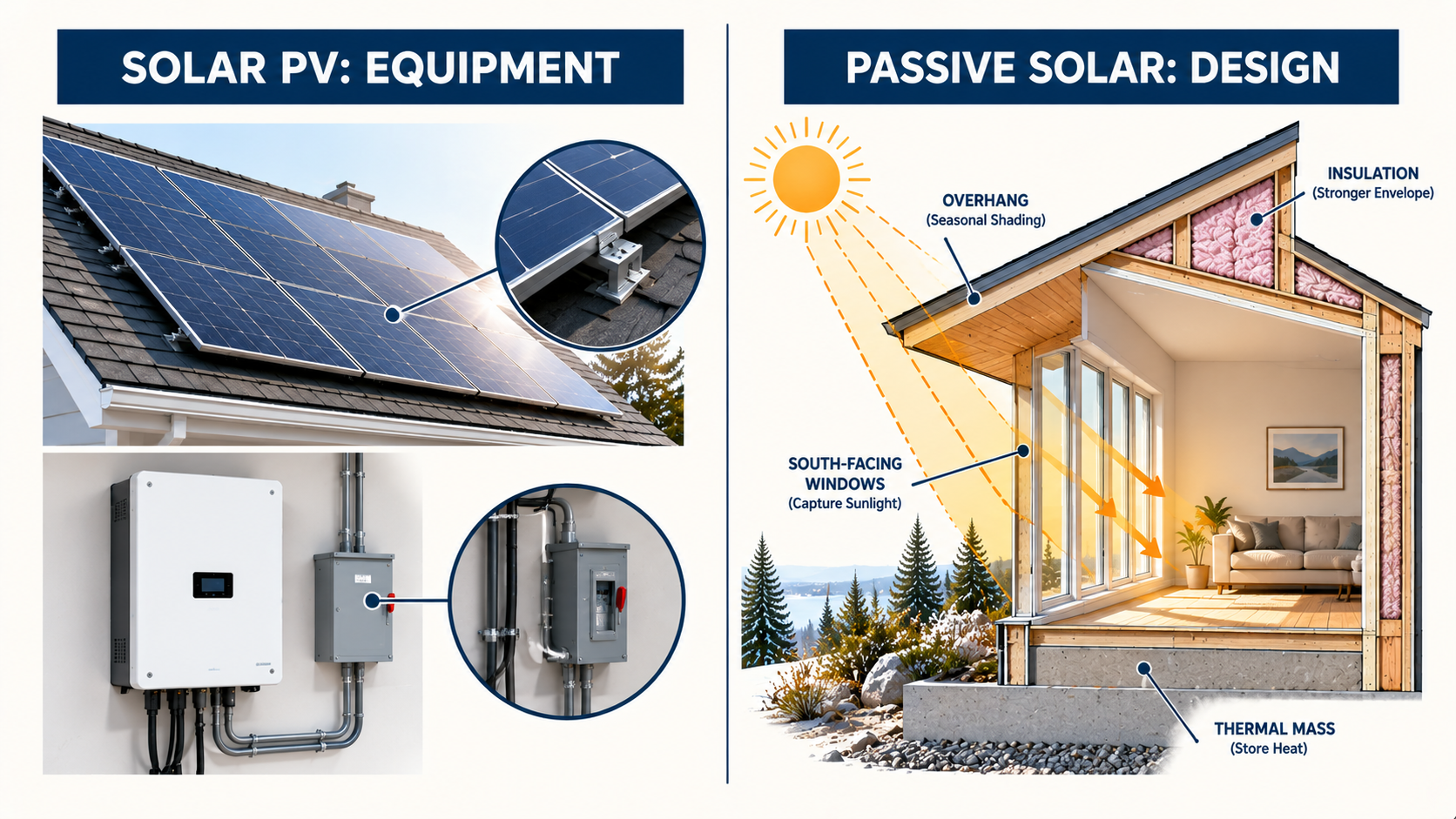
Passive solar design uses the home's orientation, windows, insulation, thermal mass and shading to reduce the amount of energy the house needs in the first place.
Both use the sun.
But they solve two very different parts of the energy equation. Natural Resources Canada distinguishes passive solar—which uses building design without electrical or mechanical equipment—from photovoltaic technology, which converts sunlight directly into electricity. Natural Resources Canada
So, what's the difference—and does one make more sense than the other?
1. Let's Start With Solar Panels
The solar panels you see on the roofs of homes are usually photovoltaic—or PV—panels.
Inside each panel are photovoltaic cells that convert sunlight into electricity.
That electricity can then be used by the home. Depending on the system and how it's connected, excess production may be exported to the electrical grid or stored in batteries for later use. Natural Resources Canada
So the basic idea is:
SUNLIGHT → SOLAR PANELS → ELECTRICITY
The important word there is electricity.
Solar PV doesn't inherently make the house itself more energy efficient.
Instead, it provides another source of electricity to help meet the home's energy needs.
2. Passive Solar Doesn't Produce Electricity at All
Passive solar takes a completely different approach.
Instead of installing equipment that converts sunlight into electricity, passive solar design considers how the house itself interacts with the sun.
Natural Resources Canada describes passive solar as using the location and design of buildings—including windows, overhangs and thermal mass—to take advantage of natural light and space heating without electrical or mechanical equipment. Natural Resources Canada
For example, a passive-solar home might incorporate:
carefully positioned south-facing windows
high levels of insulation
an airtight building envelope
materials that can absorb and release heat
roof overhangs or other shading
a floor plan that allows sunlight and heat to reach useful areas of the home
During winter, lower-angle sunlight can enter through appropriately positioned windows and contribute heat to the interior.
During summer, when the sun is higher in the sky, properly designed overhangs or shading can help reduce unwanted solar gain.
There are no solar cells involved.
No electricity is being generated.
The building itself is doing the work.
What Is a Passive Solar Home — and How Can It Reduce Energy Use?
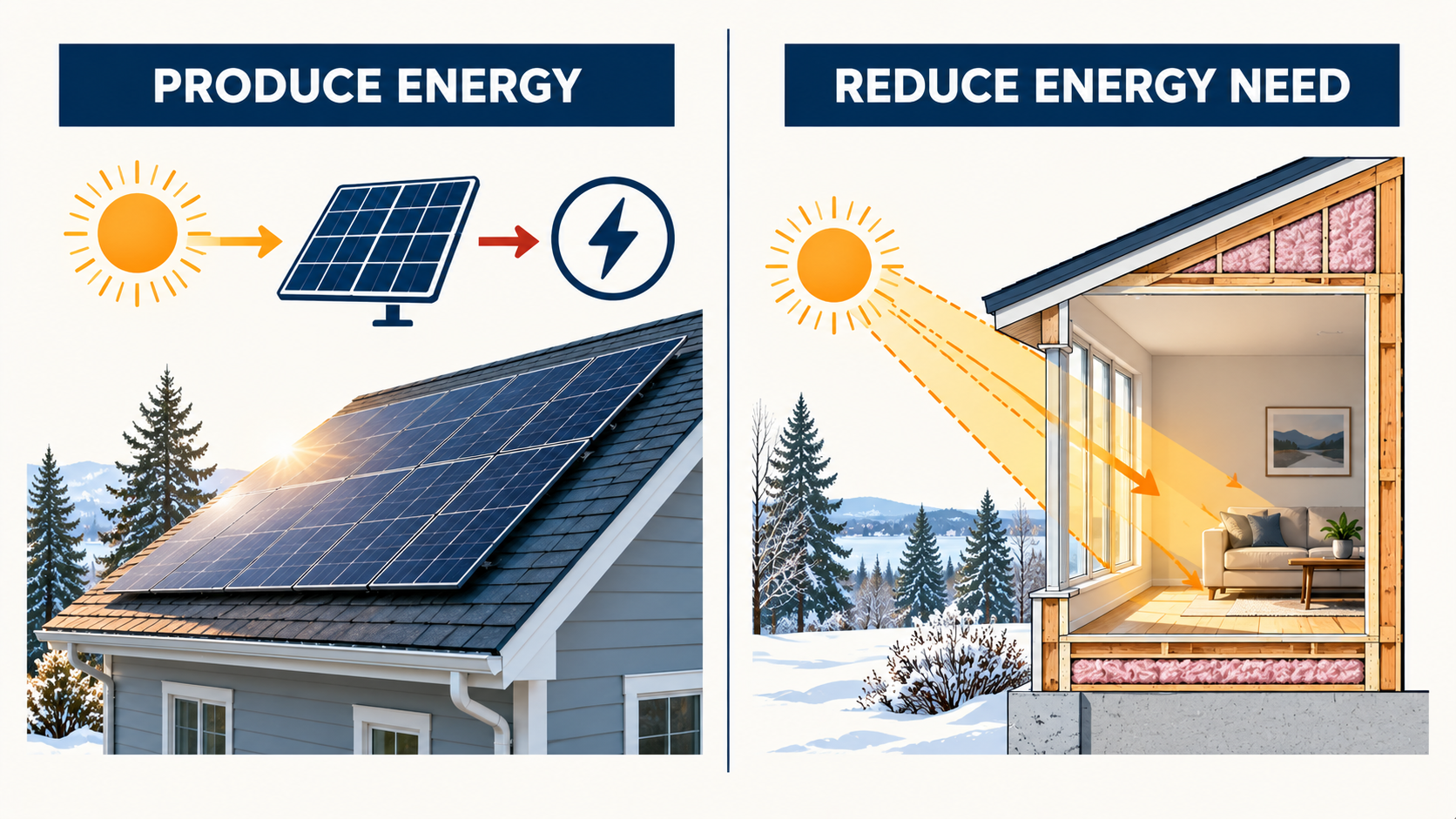
3. One Produces Energy. The Other Reduces Demand.
This is probably the easiest way to understand the difference.
Imagine two houses that each require a certain amount of energy every year.
One approach is to find a cleaner or less expensive way to produce some of that energy.
That's where solar panels come in.
The other approach is to design or improve the house so it doesn't require as much energy in the first place.
That's where passive solar and the other building-envelope strategies we've been discussing throughout this series come in.
Solar PV:
How can we produce some of the energy this house uses?
Passive solar:
How can we design the house to need less energy?
They're not competing ideas.
They're addressing different sides of the same equation.
4. Can You Add Them to an Existing House?
Here's another important difference.
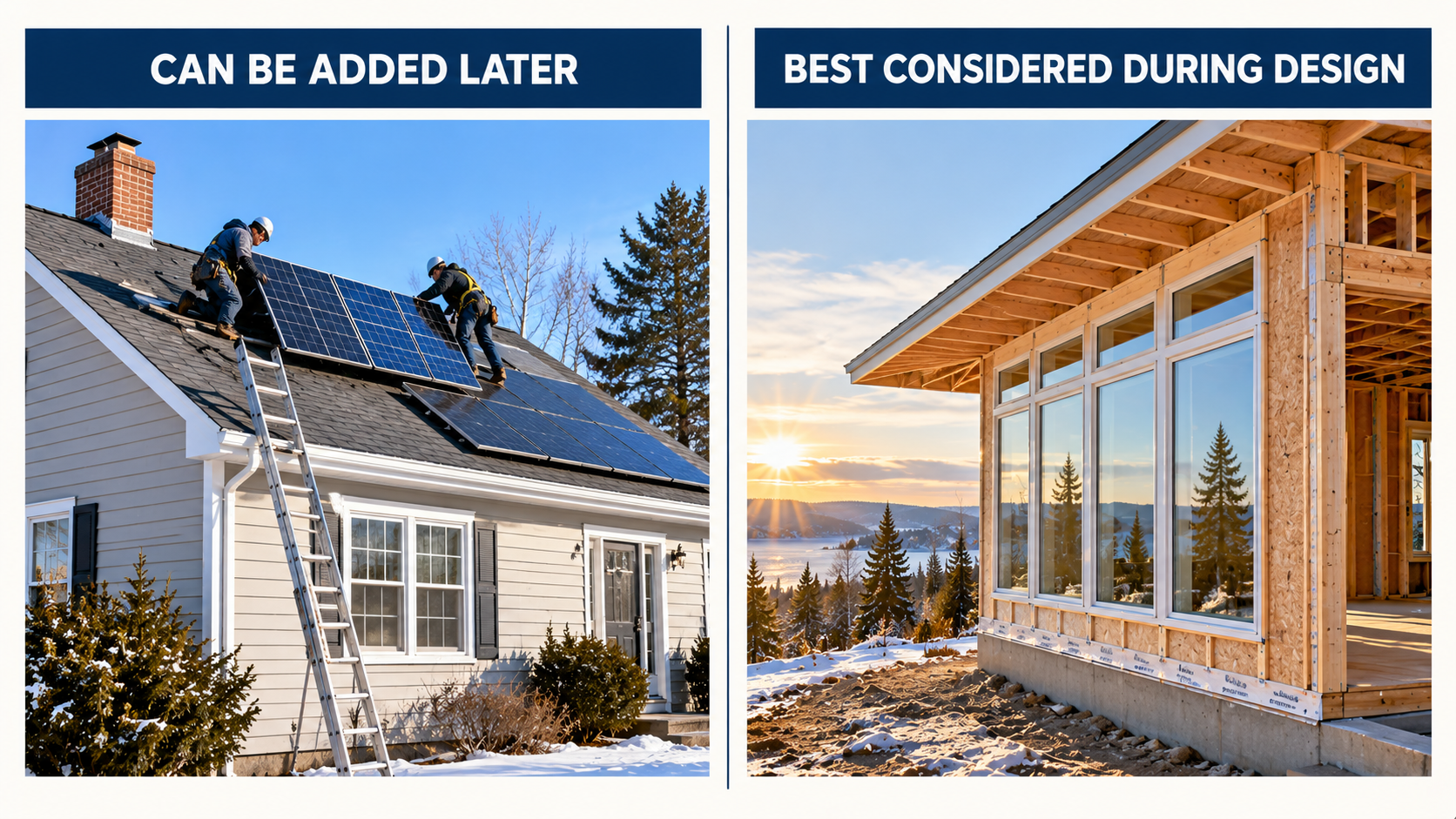
Solar panels can often be added later.
A suitable existing home may be able to have a photovoltaic system installed on its roof or elsewhere on the property.
Whether a particular house is a good candidate depends on factors such as available sunlight, shading, roof orientation, roof condition, structural considerations, electrical infrastructure and the size and design of the proposed system.
NRCan even provides Canadian solar-resource maps that estimate photovoltaic potential based on location and array orientation. Natural Resources Canada
Passive solar is much more closely tied to the original design of the house.
You can't easily rotate an existing house so its windows face the sun.
You can't simply move large areas of glazing from one side of the building to another.
And changing roof overhangs, floor plans or thermal mass can involve substantial renovations.
That doesn't mean an existing home can't benefit from passive-solar principles.
Window selection, shading, insulation, air sealing and even how interior spaces are used can all influence how a house responds to solar gain.
But true passive-solar design is easiest to accomplish when it's considered from the beginning.
5. Orientation Matters to Both—But for Different Reasons
Both technologies care about sunlight.
They just use it differently.
For a photovoltaic system, the amount of solar energy reaching the panels affects how much electricity they can produce. Orientation, tilt and shading therefore influence system output. NRCan's photovoltaic mapping tools provide estimates for different panel orientations and angles across Canada. Natural Resources Canada
For passive solar, orientation determines how sunlight interacts with the building itself.
A properly positioned window can allow useful winter sunshine into the home.
But too much poorly controlled glazing can also create overheating or glare.
That's why passive solar isn't simply:
“Put lots of windows on the south side.”
Window performance, insulation, thermal mass and seasonal shading all need to work together.
The sun is the same energy source.
What we're asking it to do is different.
6. What Happens When the Sun Isn't Shining?
This is where another misconception sometimes appears.
Neither solar panels nor passive solar means a house suddenly stops needing other energy systems.
Photovoltaic panels only produce electricity when sufficient light is available. Production changes with the available solar resource, weather, time of day, season, orientation and shading. Natural Resources Canada
A grid-connected house can still draw electricity from the grid when needed. Some solar installations may also incorporate battery storage. Natural Resources Canada
A passive-solar home still requires a heating system.
Passive solar simply allows sunlight to contribute some of the heat the building needs when conditions allow.
And this is why the rest of the building envelope matters so much.
Capturing free heat from the sun isn't particularly useful if the house loses it almost as quickly as it arrives.
That's where insulation, air sealing and high-performance windows become part of the passive-solar equation.
Insulation: What Do R-Values Actually Mean?
Your House May Be Leaking Money — Understanding Air Sealing
Triple-Pane Windows: Worth the Extra Cost?
7. What About Winter in Nova Scotia?
Snow and cold weather don't automatically make photovoltaic panels ineffective.
In fact, NRCan notes that photovoltaic cells can perform well at low temperatures. The bigger issue is whether sunlight reaches the panels; seasonal conditions, including snowfall, can affect actual monthly production. Natural Resources Canada
Passive solar also has an interesting relationship with winter.
The sun travels lower across the sky during winter than it does during summer.
A thoughtfully designed home can use that lower sun angle to allow sunlight deeper into the living space during the heating season.
Then, during summer, the higher sun angle can make it easier for an appropriately sized roof overhang to shade the same window.
It's a remarkably simple idea.
Let more sun in when you want the heat. Block more of it when you don't.
Of course, real-world performance still depends on orientation, surrounding trees and buildings, window specifications, shading and the overall design of the house.
8. Which One Saves More Energy?
This is where I wouldn't give you a universal number.
A photovoltaic system's production depends on factors including:
system size
panel orientation and angle
shading
location
weather
equipment performance
Passive-solar performance depends on an entirely different collection of factors:
building orientation
window area and performance
insulation
airtightness
thermal mass
shading
floor plan
climate
occupant behaviour
And there's another complication.
They're not necessarily saving the same thing.
Solar PV produces electricity that offsets some of the electricity required from another source.
Passive solar reduces some of the heating and lighting demand of the building.
Trying to declare one the “winner” misses the point.
9. Can a House Have Both?
Absolutely.
And this is where the two ideas become particularly interesting.
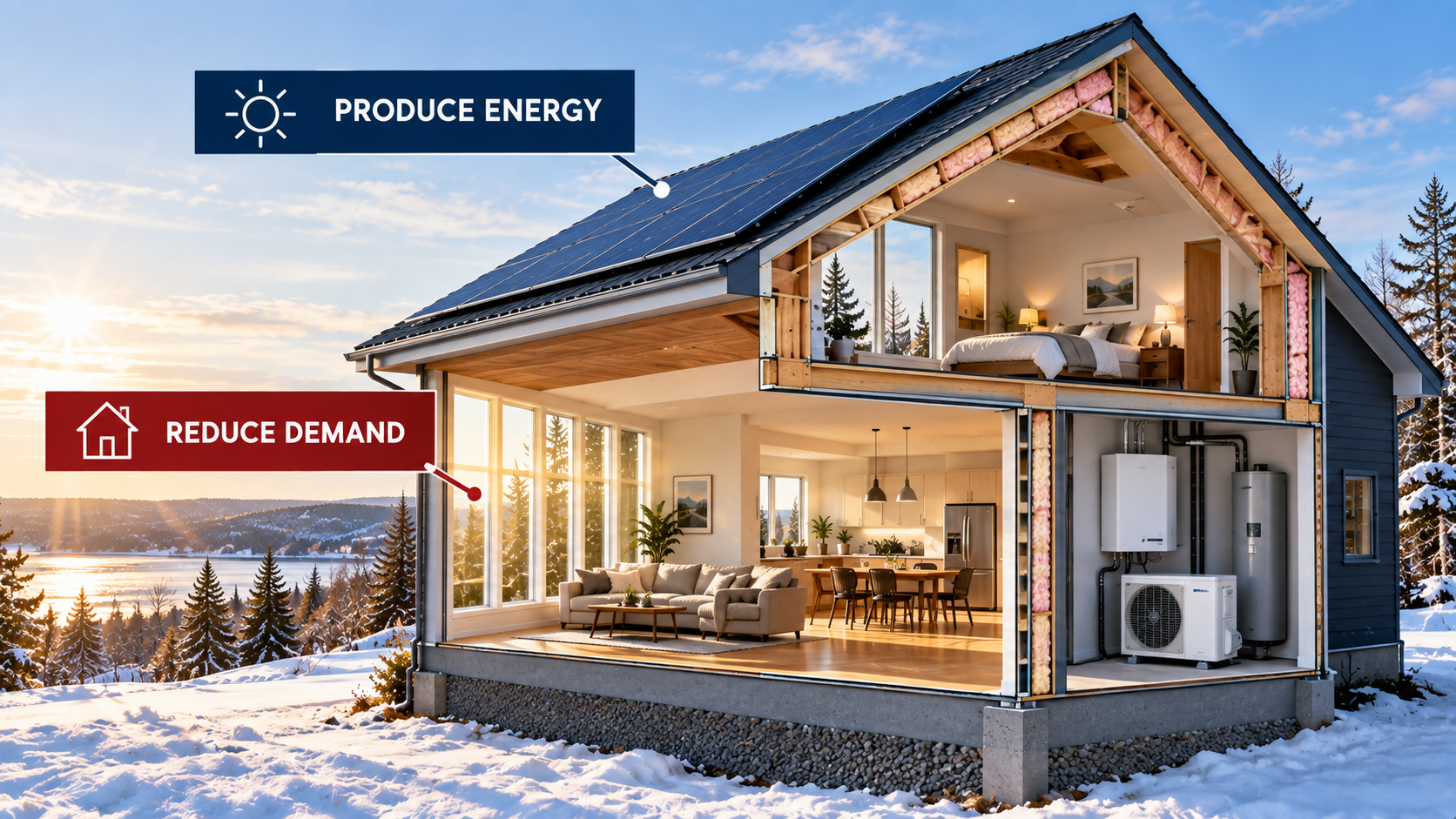
Imagine a house that has been designed to:
lose relatively little heat
capture useful winter solar gain
control unwanted summer solar gain
use efficient heating and cooling equipment
reduce unnecessary electricity consumption
That house already has a relatively low energy requirement.
Now add photovoltaic panels.
Instead of using solar panels to offset the energy consumption of an inefficient house, you're generating electricity for a house that already needs less energy.
That's a fundamentally different approach.
Reduce the demand first. Then consider how you'll supply the energy that's still required.
It also demonstrates something we've been seeing repeatedly throughout this series:
Energy-efficient homes work best as systems—not collections of individual products.
10. Does Passive Solar Cost Less?
It can—but this question needs some context.
Solar photovoltaic is an identifiable system that must be purchased and installed: panels, mounting equipment, wiring, inverter and other components. NRCan describes both rooftop building-applied PV and systems integrated directly into building components. Natural Resources Canada
Passive solar is different because many of its features are simply design decisions.
Which direction should the house face?
Where should the windows go?
How large should the overhang be?
Where should thermal mass be located?
How should the building envelope be designed?
When those decisions are made early in the design process, some passive-solar benefits can be incorporated without adding a separate piece of mechanical equipment.
But that doesn't mean passive solar is automatically free.
Higher-performance windows, additional insulation, specialized design work, thermal-mass materials and other building-envelope improvements can all affect construction costs.
The bigger distinction is this:
Solar PV is equipment added to produce energy. Passive solar is largely a strategy for designing the building to use available solar energy more effectively.
11. What Should Buyers Look For?
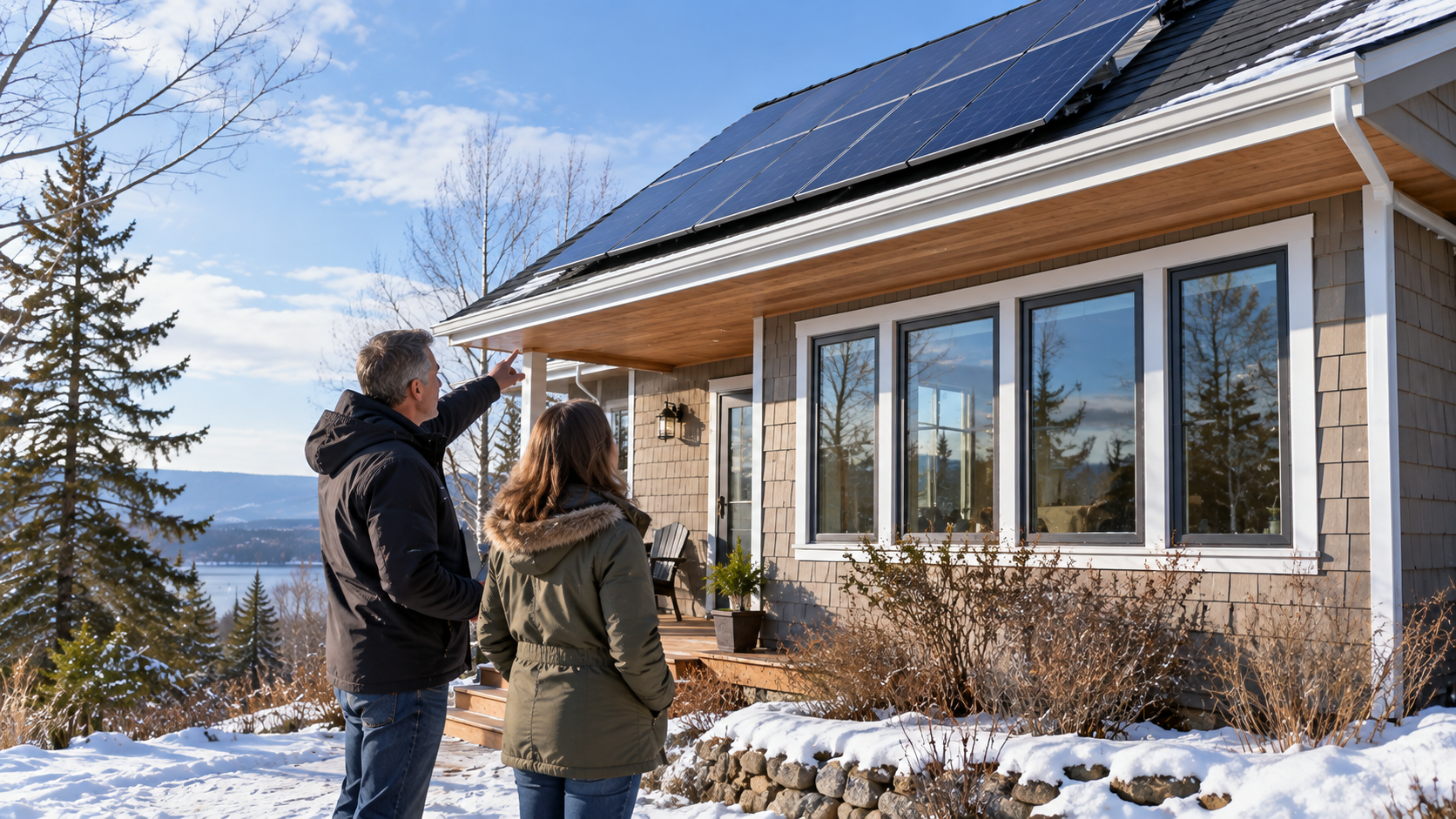
If you're looking at a house described as having solar, find out what that actually means.
For solar PV, ask:
What size is the system?
When was it installed?
Who installed it?
Is the system owned outright?
Is it grid-connected?
Is battery storage included?
Are installation and equipment records available?
Is historical production data available?
What equipment is included with the property?
What is the age and condition of the roof beneath the panels?
For a home described as passive solar, look beyond the label.
Consider:
the orientation of the house
location and size of south-facing windows
window performance
seasonal shading
insulation levels
airtightness
thermal mass
heating system
historical energy consumption, if available
whether the design actually works as an integrated system
A few large windows facing south don't automatically make a house passive solar.
And solar panels on the roof don't automatically make the house itself energy efficient.
Understand what the feature actually does before deciding what it's worth to you.
So, Solar Panels or Passive Solar?
There's really no reason to choose a winner.
They do different jobs.
Solar panels:
Capture sunlight and turn it into electricity.
Passive solar:
Uses the design of the house to capture useful heat and light while reducing the building's energy needs.
One is primarily an energy-production technology.
The other is primarily a building-design strategy.
And a home can benefit from either—or both.
If there's one idea I'd take away from the comparison, it's this:
Producing renewable energy is valuable. Needing less energy in the first place is valuable too.
The most interesting homes are often the ones that consider both sides of that equation.
Smarter, Greener Homes
This article is part of my Smarter, Greener Homes series, where I take a practical look at energy efficiency, green building and the features that can affect how comfortable and economical a home is to operate.
We've now looked at passive solar design, heating demand, heat pumps, insulation, air sealing, high-performance windows and solar energy.
And they continue to point toward the same conclusion:
A home's energy performance isn't determined by one product. It's the result of the building envelope, mechanical systems and energy sources working together.
As a Canadian Certified Green Representative (CCGR), I help buyers and sellers better understand the features that can affect a home's energy performance, comfort, sustainability and operating costs.
Thinking about buying or selling an energy-efficient home—or just curious about what features really matter?
Get in touch. I'm always here to help.
Rob Schellenberger, REALTOR®
Canadian Certified Green Representative
RE/MAX Banner Real Estate
902-300-8674
robschellenberger.ca
.jpg)