.png)

Part of the Smarter, Greener Homes series: Practical guides to understanding energy efficiency, home performance and green-building features.
You can't see most air leaks in a house.
But on a cold, windy Nova Scotia day, you can sometimes feel them.
A draft around a window. Cold air coming from an electrical outlet. A chilly spot near an exterior door. Maybe a room that never seems quite as comfortable as the rest of the house.
Individually, those little leaks may not seem particularly important.
Add them together across an entire house and they can become a significant source of heat loss.
Every bit of heated air that escapes has to be replaced—and your heating system has to heat the replacement air all over again.
That's where air sealing comes in.
And it's also why a house can have plenty of insulation and still be uncomfortable or expensive to heat.
1. What Exactly Is Air Leakage?
A house isn't one solid object.
It's made from thousands of individual pieces joined together: lumber, sheathing, drywall, windows, doors, pipes, wires, vents, foundations and roofing materials.
Everywhere those components meet is a potential opening.
When there are gaps in the building envelope, air can move through them.
During winter, warm indoor air can escape while colder outdoor air enters elsewhere to replace it. Wind, temperature differences between indoors and outdoors, exhaust fans and combustion appliances can all create pressure differences that help move air through those openings. Natural Resources Canada
This is uncontrolled air leakage.
And your house may have considerably more potential leakage points than you'd expect.
2. Where Does a House Leak?
When people think about drafts, windows and doors usually come to mind first.
They're certainly important—but they're far from the only places air can escape.
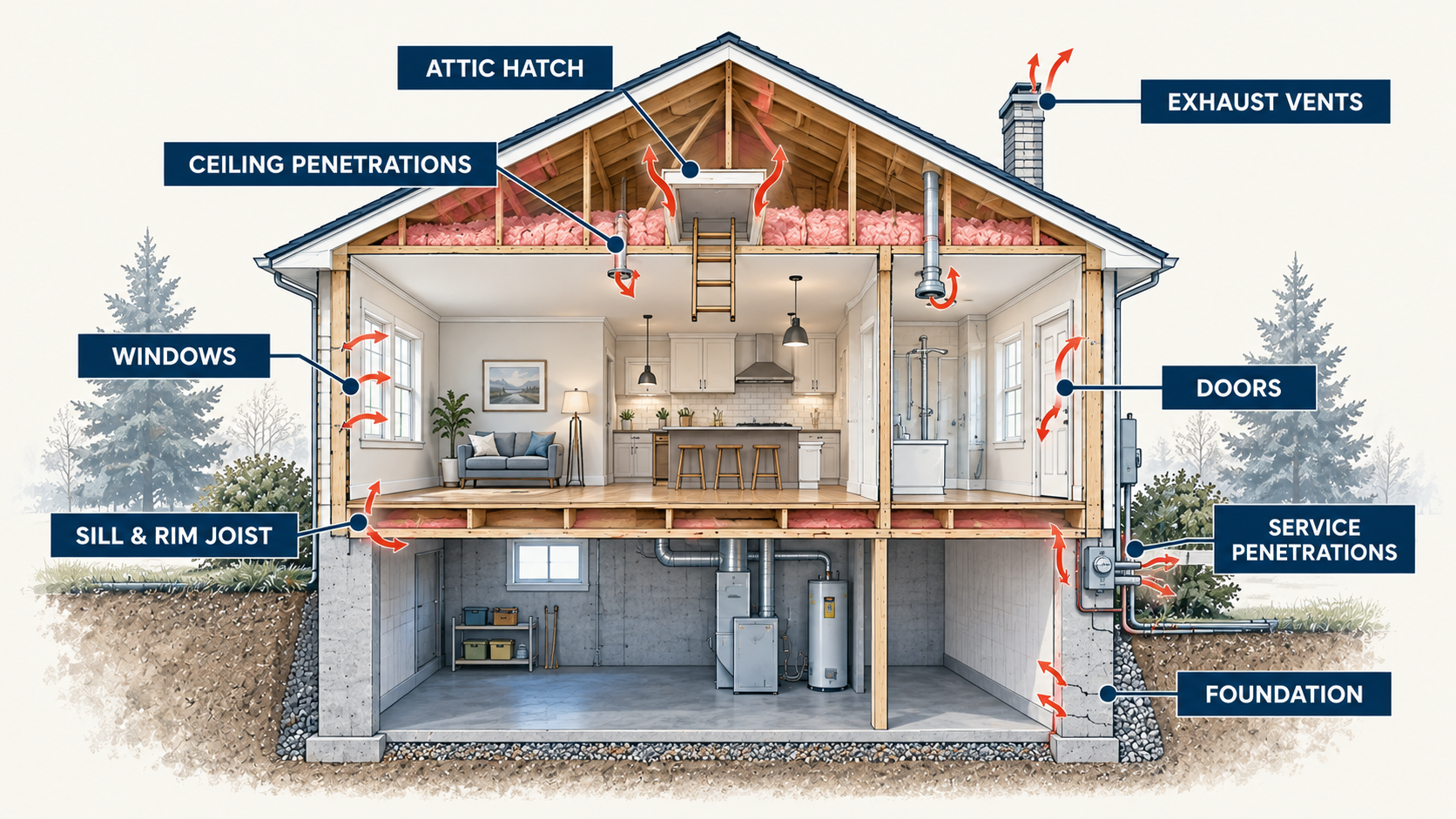
Natural Resources Canada identifies potential leakage areas throughout a house, including:
windows and exterior doors
electrical outlets and switches
ceiling light fixtures
attic hatches
exhaust fans and vents
plumbing penetrations
wiring penetrations
chimneys
joints between walls and ceilings
sill plates and rim joists
service entrances
cracks in foundations
gaps around ductwork
Even interior walls can sometimes provide a pathway for air to travel toward the exterior through connected floor, wall or attic cavities. Natural Resources Canada
The problem isn't necessarily one big hole. It can be dozens—or hundreds—of small ones.
3. Insulation and Air Sealing Do Different Jobs
This connects directly to the previous article in my Smarter, Greener Homes series.
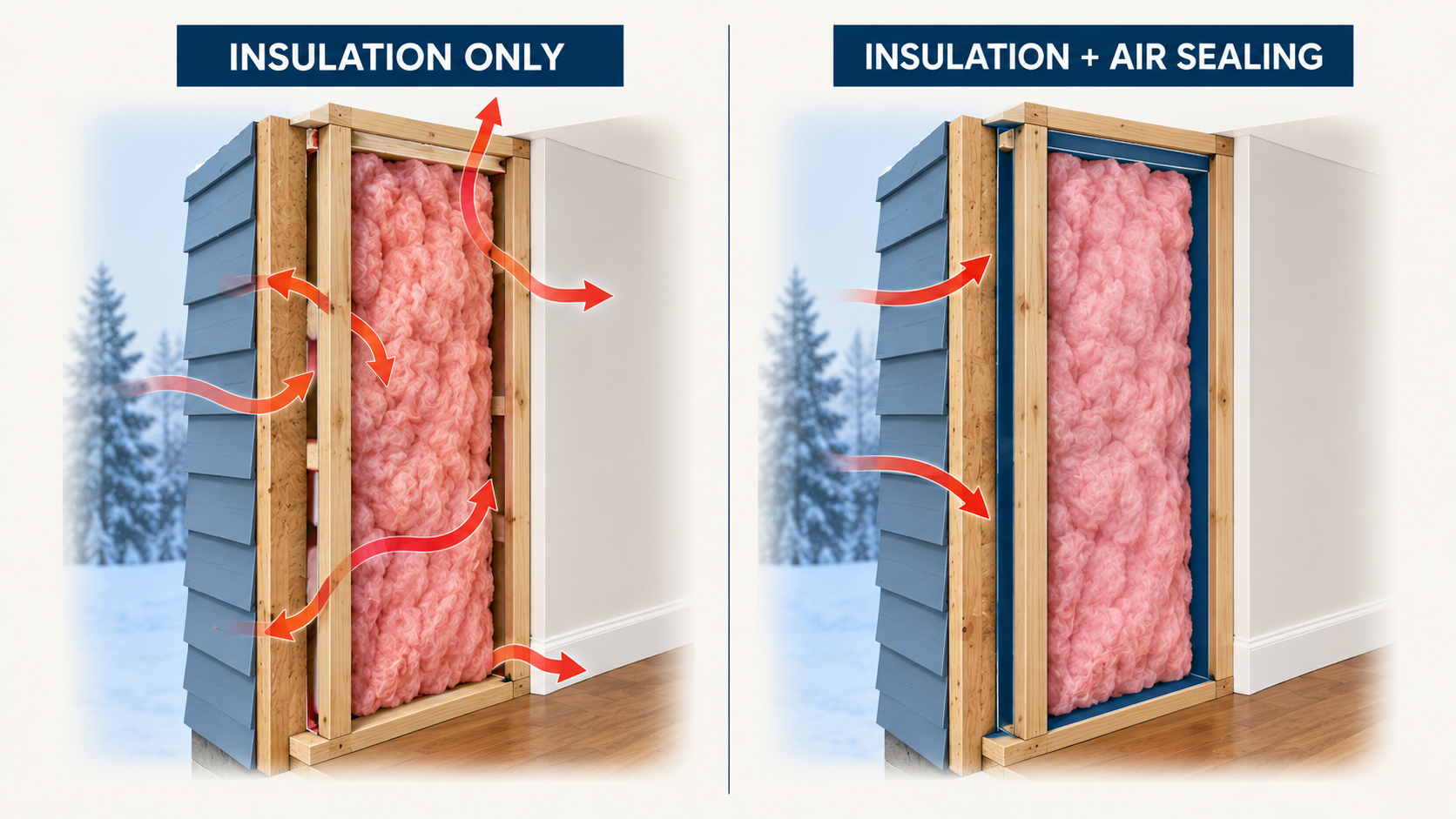
Insulation and air sealing are related, but they aren't the same thing.
Insulation slows heat moving through the building envelope.
Air sealing reduces air moving through the building envelope.
Imagine putting on a thick wool sweater on a cold, windy day.
The sweater provides insulation.
But wind can still move through it.
Add a wind-resistant jacket over the sweater and suddenly you're much more comfortable—not necessarily because you've added dramatically more insulation, but because you've reduced the movement of cold air through the layers.
Your house works on a similar principle.
NRCan notes that insulation needs to trap still air to work effectively and must be protected from both outside wind and indoor air escaping through the building envelope. Natural Resources Canada
That's why simply adding more insulation doesn't necessarily solve an air-leakage problem.
A well-insulated house can still perform poorly if it isn't well air sealed.
[LINK: Insulation: What Do R-Values Actually Mean?]
4. The Attic Can Hide a Lot of Air Leaks
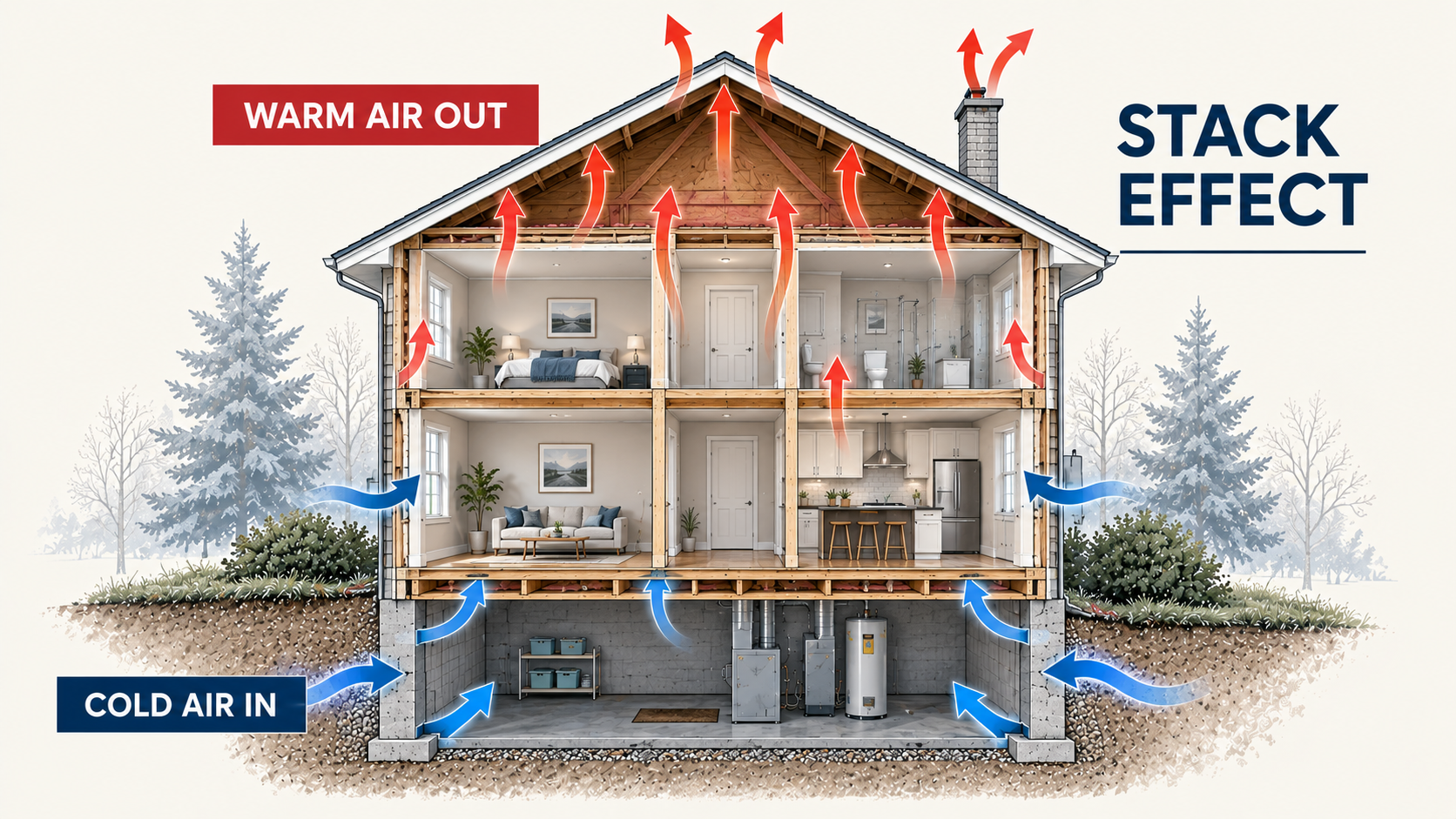
The attic is a particularly interesting place because warm air naturally tends to rise.
That doesn't mean heat simply “rises” out of a house on its own—but differences in temperature create pressure differences that can encourage warm indoor air to escape through openings near the top of the building. This is commonly called the stack effect. Natural Resources Canada
Now think about everything that can penetrate the ceiling below an attic:
electrical wiring
plumbing stacks
light fixtures
bathroom exhaust ducts
chimneys
interior wall connections
the attic hatch itself
Each penetration can potentially interrupt the home's air barrier.
NRCan specifically notes that air leaks around chimneys, vents, plumbing pipes and electrical boxes in an attic can contribute substantially to heat loss and can also create moisture-related problems. Natural Resources Canada
That's why an attic insulation upgrade shouldn't necessarily begin by simply adding another layer of insulation.
Finding and sealing air leaks first can be an important part of the job.
5. Don't Forget the Attic Hatch
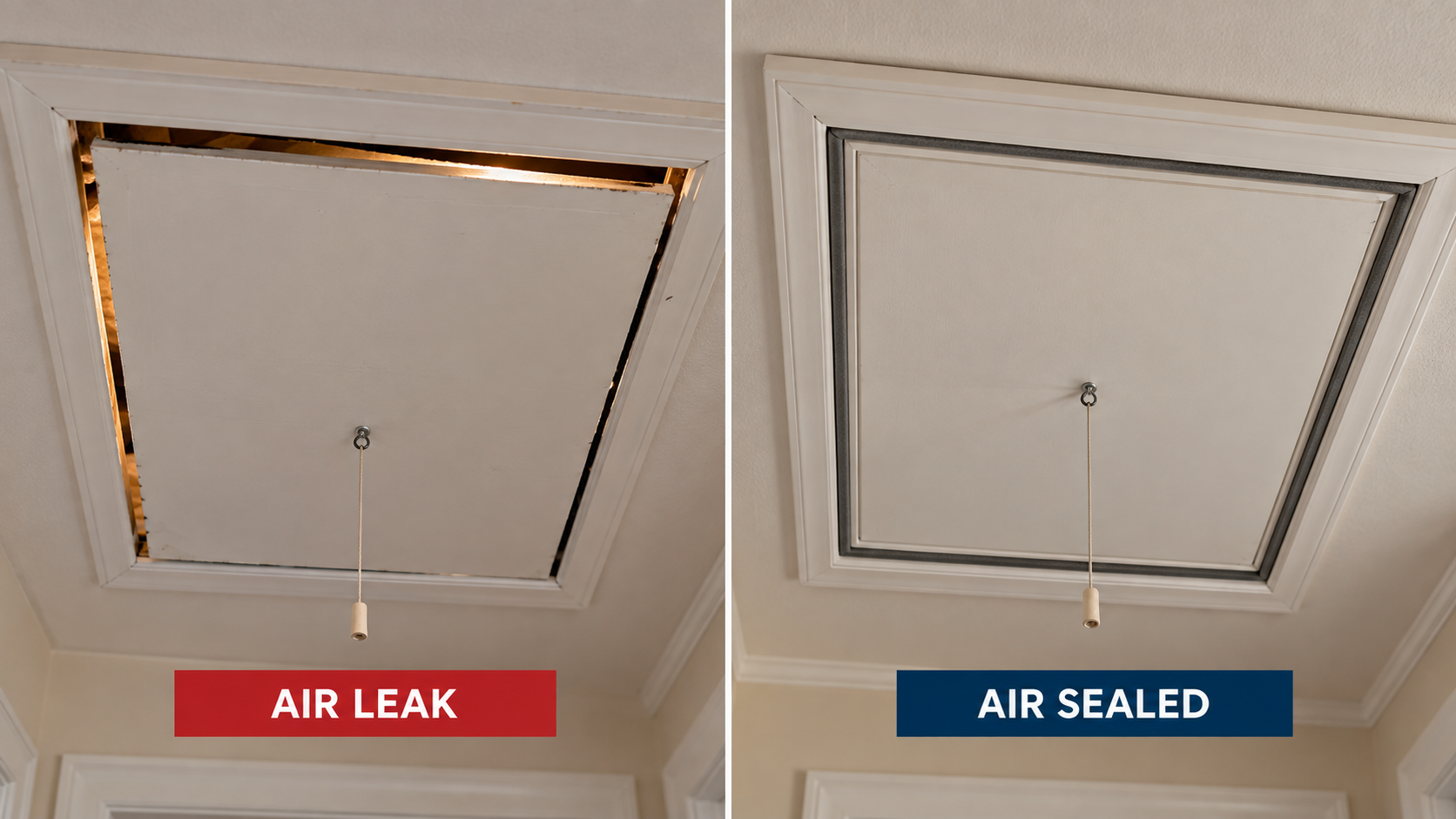
An attic hatch is essentially a small door between your heated living space and an unheated attic.
And sometimes it doesn't seal particularly well.
There may be insulation everywhere around it, but if the hatch itself is poorly insulated or has gaps around its perimeter, heated air can still escape.
NRCan recommends treating an attic hatch much like an exterior door: sealing around the frame, adding weatherstripping around the opening and ensuring the hatch closes firmly against it. The hatch itself should also be insulated. Natural Resources Canada
It's a great example of why the details matter.
You can have a deeply insulated attic and still leave a relatively easy path for air to escape through the access hatch.
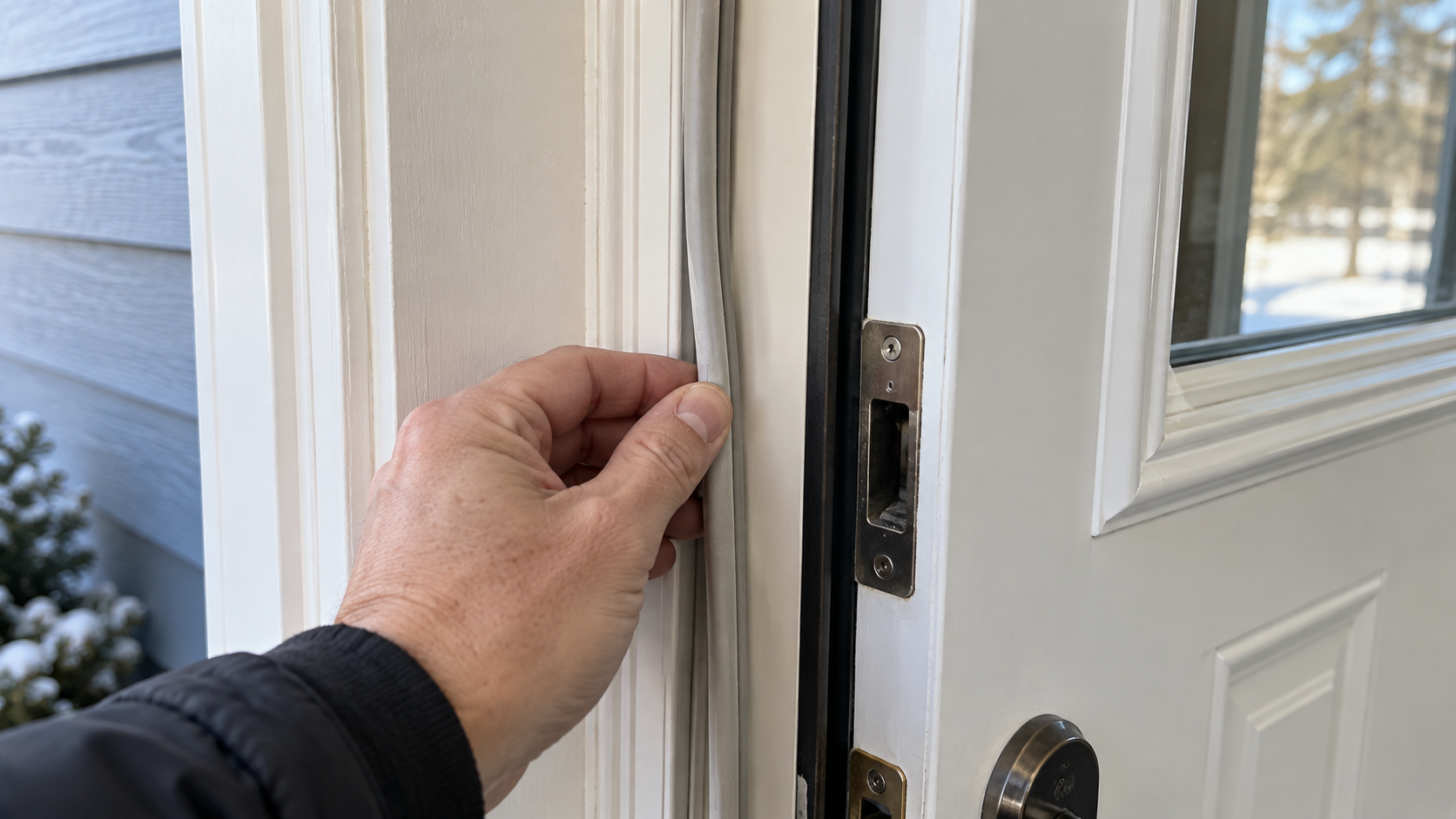
6. Windows and Doors: Caulking or Weatherstripping?
Windows and doors are different from many other parts of the building envelope because some of their joints are supposed to move.
That's why different sealing materials are used in different places.
In general:
Caulking is used to seal stationary joints and cracks.
Weatherstripping is used where components need to move—such as an operable window or exterior door.
NRCan describes caulking, tapes and gaskets as appropriate for joints that don't move, while weatherstripping is used for moving joints. Natural Resources Canada
For weatherstripping to work properly, it needs to close the gap while still allowing the window or door to operate normally.
And because we're in Nova Scotia, there's another practical consideration:
Some weatherstripping materials become harder and less effective in cold temperatures—exactly when you need them most. Natural Resources Canada
So sometimes the solution to that annoying winter draft isn't replacing the entire window.
It may simply be finding where the air is actually getting through.
7. Tiny Penetrations Can Add Up
Think about all the things that pass through the exterior surfaces of a house.
Electrical cables.
Plumbing.
Heat-pump lines.
Oil fill pipes.
Exterior faucets.
Dryer vents.
Cable and internet wiring.
Every penetration requires an opening through part of the building envelope.
Ideally, the air barrier remains continuous around those openings.
In reality—particularly in homes that have been renovated or modified repeatedly over many years—some penetrations may not have been completely sealed.
NRCan's air-sealing guidance specifically recommends checking around wiring, plumbing, ductwork and service entrances for leakage paths. Natural Resources Canada
One small opening may not seem significant.
But again, air leakage is often the cumulative effect of many small openings rather than one obvious problem.
8. How Do You Find Air Leaks You Can't See?
Sometimes it's easy.
You can feel the draft.
Other leaks are much harder to locate.
A homeowner may notice them most easily on a cold, windy day by checking around suspected areas such as windows, doors and other penetrations. NRCan specifically notes that windy conditions can make leakage easier to identify. Natural Resources Canada
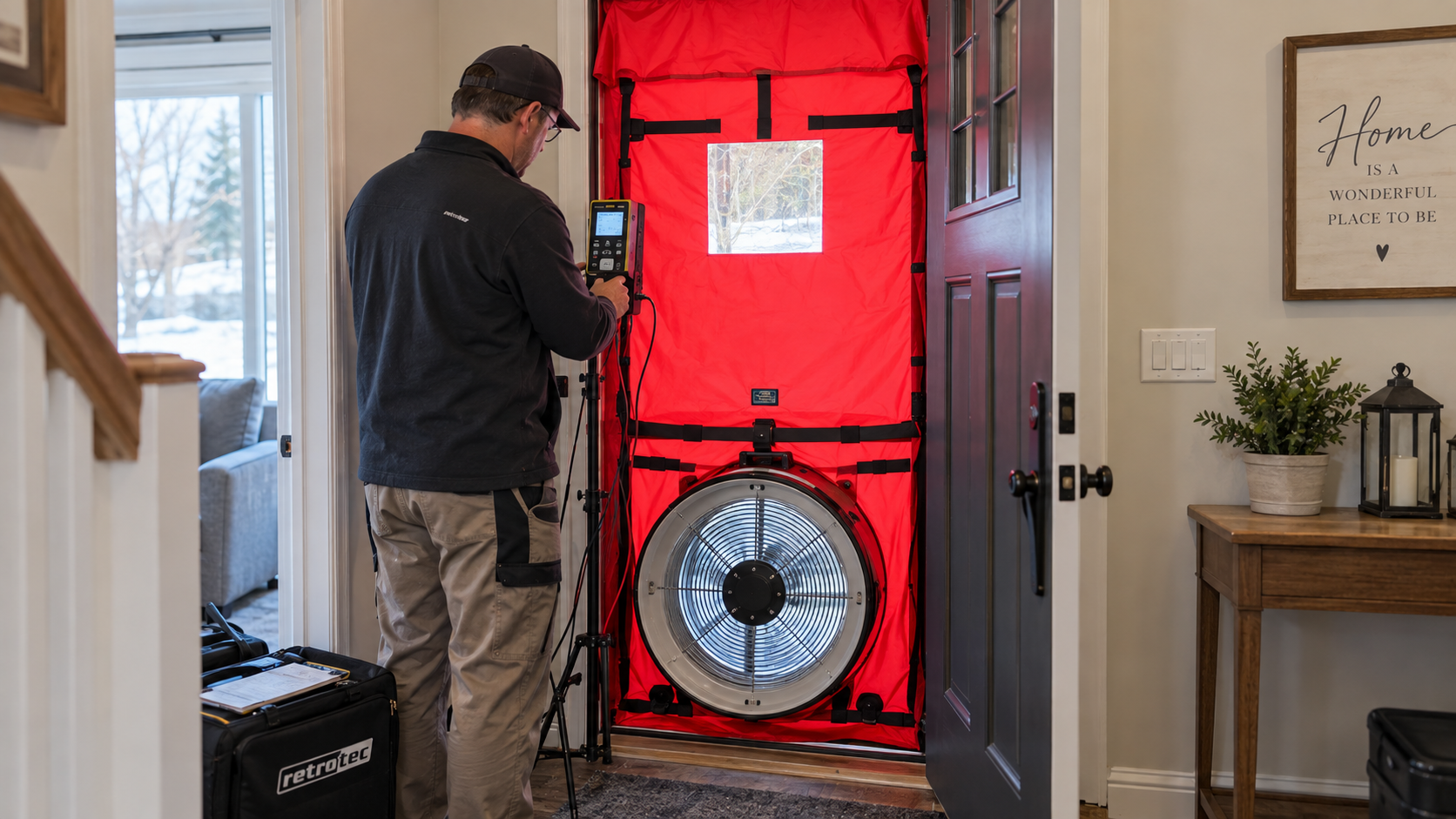
For a more comprehensive assessment, professionals can use a blower door test.
A temporary fan is installed in an exterior doorway and used to create a controlled pressure difference between the inside and outside of the house.
That makes air leakage easier to measure and locate.
Professionals may combine blower-door testing with tools such as smoke pencils or infrared imaging to help identify where air is moving or where insulation may be missing. Natural Resources Canada
Instead of guessing where the house leaks, you can begin to identify the actual weak points.
9. Air Leakage Isn't Only About Heating Costs
Stopping uncontrolled air movement can certainly reduce heat loss.
But energy use isn't the only reason air sealing matters.
It can also affect comfort.
A room with significant drafts may feel colder even when the thermostat says the temperature should be comfortable.
Air leakage can also carry moisture into walls and attics. During cold weather, warm indoor air containing water vapour can move into colder parts of the building envelope where that moisture can condense—or even freeze as frost. Over time, that can affect insulation and building materials. Natural Resources Canada
NRCan identifies controlling airflow as important for comfort and for protecting insulation and building materials from moisture damage. Natural Resources Canada
So air sealing isn't simply about saving energy.
It's also part of controlling how heat, air and moisture move through the house.
10. But Doesn't a House Need to Breathe?
You've probably heard someone say:
“A house needs to breathe.”
There's an important idea hidden inside that expression—but it can also be misleading.
A house does need fresh air.
What it doesn't need is random, uncontrolled air leakage through cracks and gaps in the building envelope.
Those are two different things.
A properly designed house manages airflow intentionally: reducing uncontrolled leakage while providing appropriate ventilation.
NRCan notes that as homes become tighter, attention needs to be given to whole-house ventilation and, where applicable, the combustion-air requirements of fuel-burning appliances. Natural Resources Canada
This becomes particularly important when substantial air-sealing work is completed on a house.
The goal isn't to eliminate fresh air. It's to control where that air comes from and where it goes.
11. What Should Buyers Look For?
Air sealing is difficult to evaluate during an ordinary home showing because most of the air barrier is hidden inside the building envelope.
But there can be clues.
Pay attention to:
noticeable drafts around windows or doors
cold areas near exterior walls
poorly fitting exterior doors
gaps around visible utility penetrations
an unsealed or poorly fitting attic hatch
renovations where new pipes, wiring or equipment penetrate exterior walls
signs of frost or moisture problems in an attic
unusually cold rooms
available energy-efficiency upgrades or evaluation reports
Historical energy consumption can provide additional context, although—as we've discussed elsewhere in this series—occupant behaviour, thermostat settings and weather can make direct comparisons difficult.
If energy performance is particularly important to you, an energy evaluation or blower-door test can provide information that simply walking through the house cannot.

Before Adding More Insulation, Look for the Holes
When people think about making an older home more energy efficient, adding insulation is often one of the first improvements that comes to mind.
And sometimes that's exactly what's needed.
But if heated air can easily travel around that insulation through gaps in the building envelope, adding more insulation alone may not address the entire problem.
Natural Resources Canada goes so far as to describe comprehensive air-leakage control as the single most important retrofit activity and recommends considering it first as part of a home's upgrade strategy. Natural Resources Canada
That makes air sealing one of those home improvements that's easy to overlook because much of the work disappears once it's finished.
There isn't necessarily anything impressive to photograph.
No shiny new appliance.
No dramatic renovation.
Sometimes it's caulking around a penetration, weatherstripping around a door or carefully sealing an attic hatch.
But collectively, those little details can make a meaningful difference.
Because before you pay to produce more heat, it makes sense to keep more of the heat you've already paid for inside the house.
Smarter, Greener Homes
This article is part of my Smarter, Greener Homes series, where I take a practical look at energy efficiency, green building and the features that can affect how comfortable and economical a home is to operate.
So far, we've looked at passive solar design, why similar houses can have very different heating requirements, heat pumps, insulation and now air sealing.
Together, they reinforce an important point:
A home's energy performance isn't determined by one feature. It's the result of the building envelope and mechanical systems working together.
As a Canadian Certified Green Representative (CCGR), I help buyers and sellers better understand the features that can affect a home's energy performance, comfort, sustainability and operating costs.
Thinking about buying or selling an energy-efficient home—or just curious about what features really matter?
Get in touch. I'm always here to help.
Rob Schellenberger, REALTOR®
Canadian Certified Green Representative
RE/MAX Banner Real Estate
902-300-8674
robschellenberger.ca
.jpg)