.png)

Part of the Smarter, Greener Homes series: Practical guides to understanding energy efficiency, home performance and green-building features.
If two windows look almost identical, but one has two panes of glass and the other has three, is that extra pane really worth paying for?
It's a reasonable question—particularly when you're replacing several windows at once and the upgrade to triple-pane starts adding up.
Triple-pane windows can reduce heat loss, improve comfort and help reduce condensation compared with lower-performing windows. But that doesn't automatically mean every homeowner should replace perfectly good double-pane windows with triple-pane ones.
As with most things we've looked at in this Smarter, Greener Homes series, the answer depends on the house.
So rather than asking whether triple-pane windows are simply “better,” let's look at where that extra performance actually matters—and when it may not make financial sense.
1. What Does the Third Pane Actually Do?
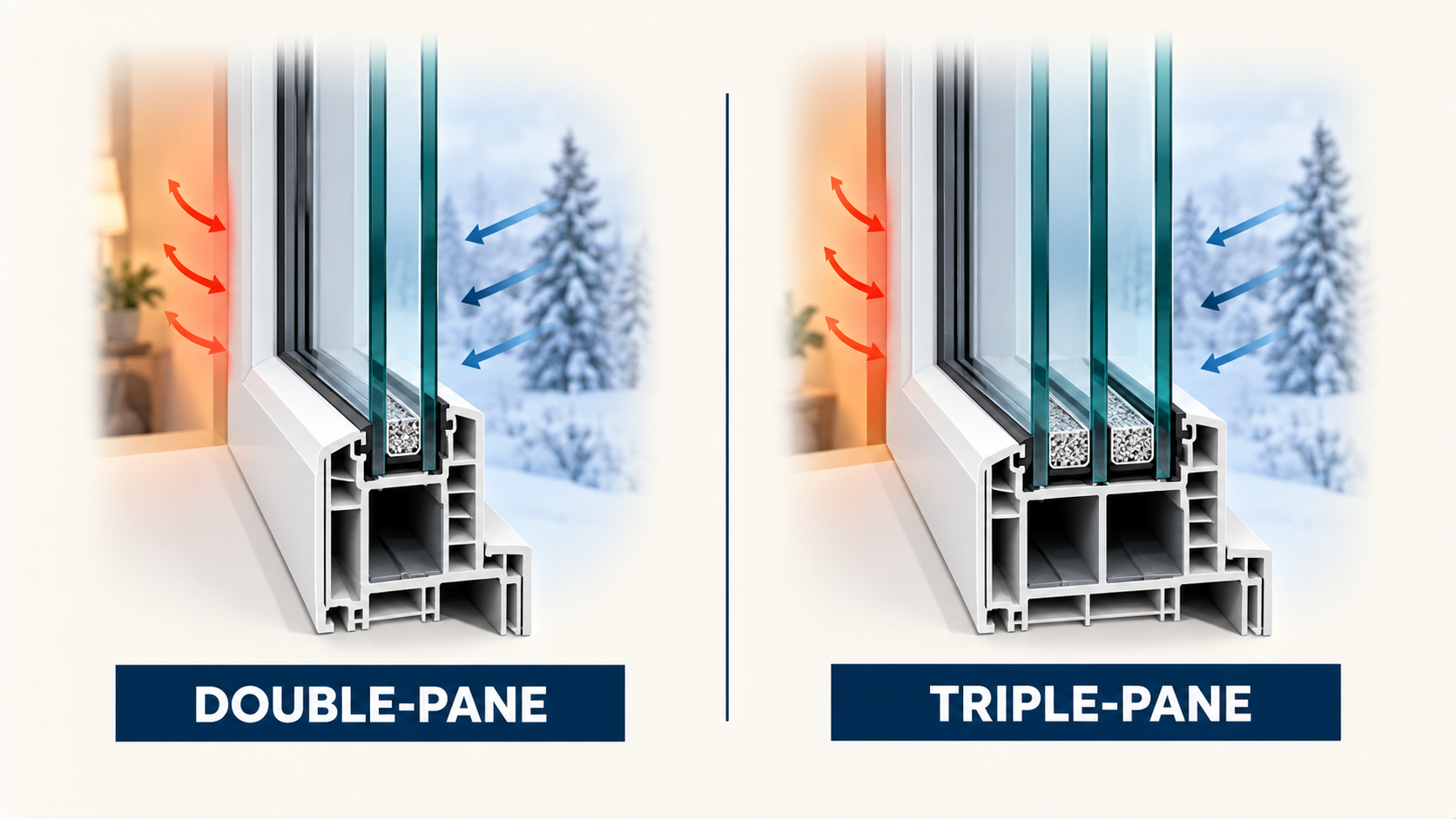
A double-pane window has two layers of glass separated by a sealed space.
A triple-pane window adds another layer of glass—and therefore another sealed space.
Those spaces are commonly filled with an inert gas such as argon or krypton, which helps reduce heat transfer through the window. Modern energy-efficient windows can also incorporate low-emissivity—or low-E—coatings, insulated frames and warm-edge spacers. Natural Resources Canada
The result is a window that makes it more difficult for heat to move from the warm side to the cold side.
In winter, that means keeping more heat inside.
But there's an important point here:
The number of panes isn't the only thing that determines how well a window performs.
The glass coatings, gas fill, spacers, frame, air leakage and installation all matter too.
That's why I wouldn't compare windows based solely on whether the brochure says double-pane or triple-pane.
2. Instead of Counting Panes, Look at the U-Factor
Remember R-values from the previous article?
With insulation, higher R-value is better because it means greater resistance to heat flow.
Windows are more commonly compared using something called a U-factor, and here the scale works in the opposite direction:
The lower the U-factor, the less readily heat moves through the complete window assembly.
Natural Resources Canada notes that better-performing double-glazed windows can have U-factors of 1.2 W/m²·K or lower, while triple-glazed products can reach approximately 0.8 W/m²·K. Natural Resources Canada
But make sure you're comparing the rating of the entire window, not simply the centre of the glass.
A centre-of-glass rating leaves out the effects of the frame and edges of the glazing and can make a product appear more efficient than the complete window actually is. Natural Resources Canada
Don't just count panes. Compare the performance of the complete window.
3. The Difference Isn't Only on Your Heating Bill
This may actually be the most noticeable advantage of a higher-performance window.
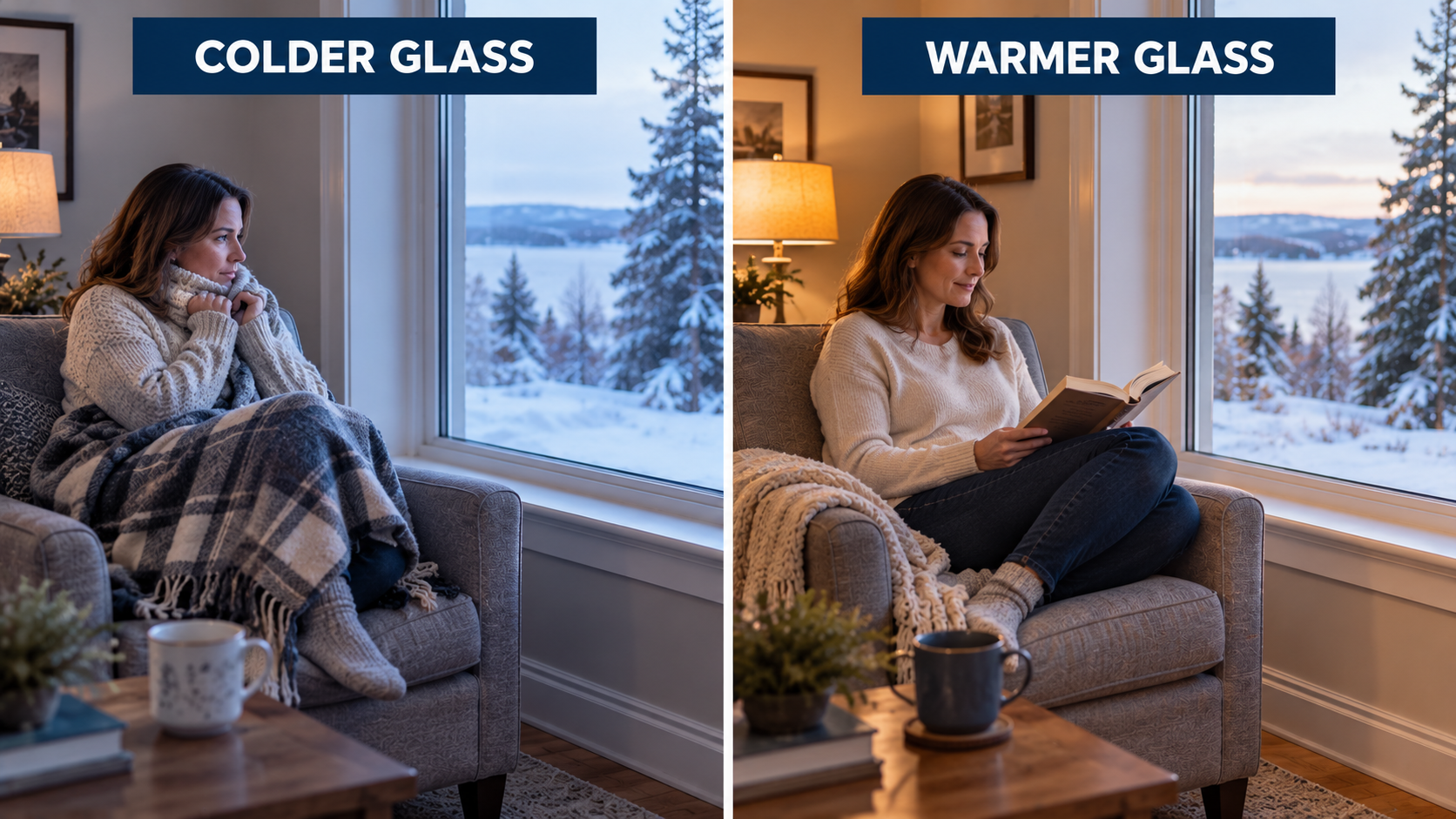
Imagine sitting beside a large window on a cold January evening.
The thermostat says the room is 21°C.
But you still feel cold.
Part of the reason may be that the inside surface of the window is considerably colder than the other surfaces around you. Your body radiates heat toward that colder surface, and cool air near the glass can also fall toward the floor.
A better-performing window keeps the interior surface of the glass warmer.
Natural Resources Canada specifically identifies increased interior glass temperature and reduced drafts as reasons energy-efficient windows can make a home more comfortable. Natural Resources Canada
That can make areas beside large windows much more pleasant during cold weather.
And that's something an annual energy-cost calculation doesn't necessarily capture very well.
Sometimes the value of a better window isn't just the energy it saves. It's how the room feels.
4. Triple-Pane Windows Can Help With Condensation
We've all seen it.
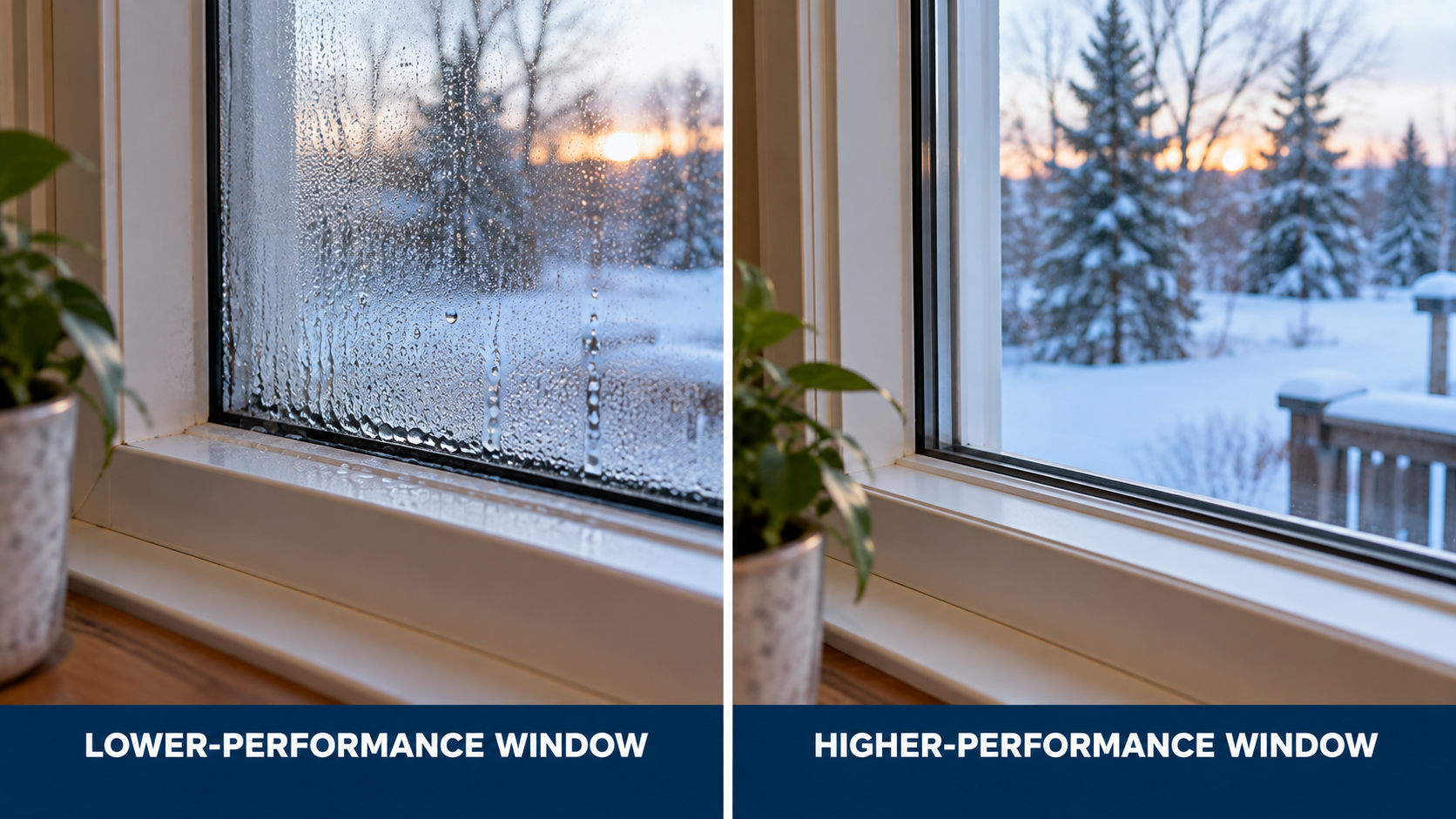
Water collecting along the bottom of a window on a cold morning—or, in more extreme conditions, frost forming on the glass.
Condensation occurs when warm, moisture-containing indoor air contacts a sufficiently cold surface. As that air cools, it can reach the point where it can no longer hold all of its moisture, and water condenses on the surface. Natural Resources Canada
A higher-performance window generally has a warmer interior surface, which makes condensation less likely.
NRCan specifically notes that triple-glazed windows can help reduce condensation and freezing around glazing in colder conditions. Natural Resources Canada
That doesn't mean triple-pane glass makes condensation impossible.
Indoor humidity still matters.
Air circulation around the window matters.
Curtains, blinds and furniture can restrict warm air from reaching the glass.
And if condensation is occurring between the panes of a sealed window, that's a different problem entirely—it usually indicates the sealed glazing unit has failed. Natural Resources Canada
So if you're seeing condensation, don't automatically assume:
“I need triple-pane windows.”
First determine why the condensation is happening.
5. More Solar Heat Isn't Always a Bad Thing
Windows don't only lose heat.
They can also gain heat from the sun.
This brings us to another window specification that's worth understanding:
Solar Heat Gain Coefficient — SHGC
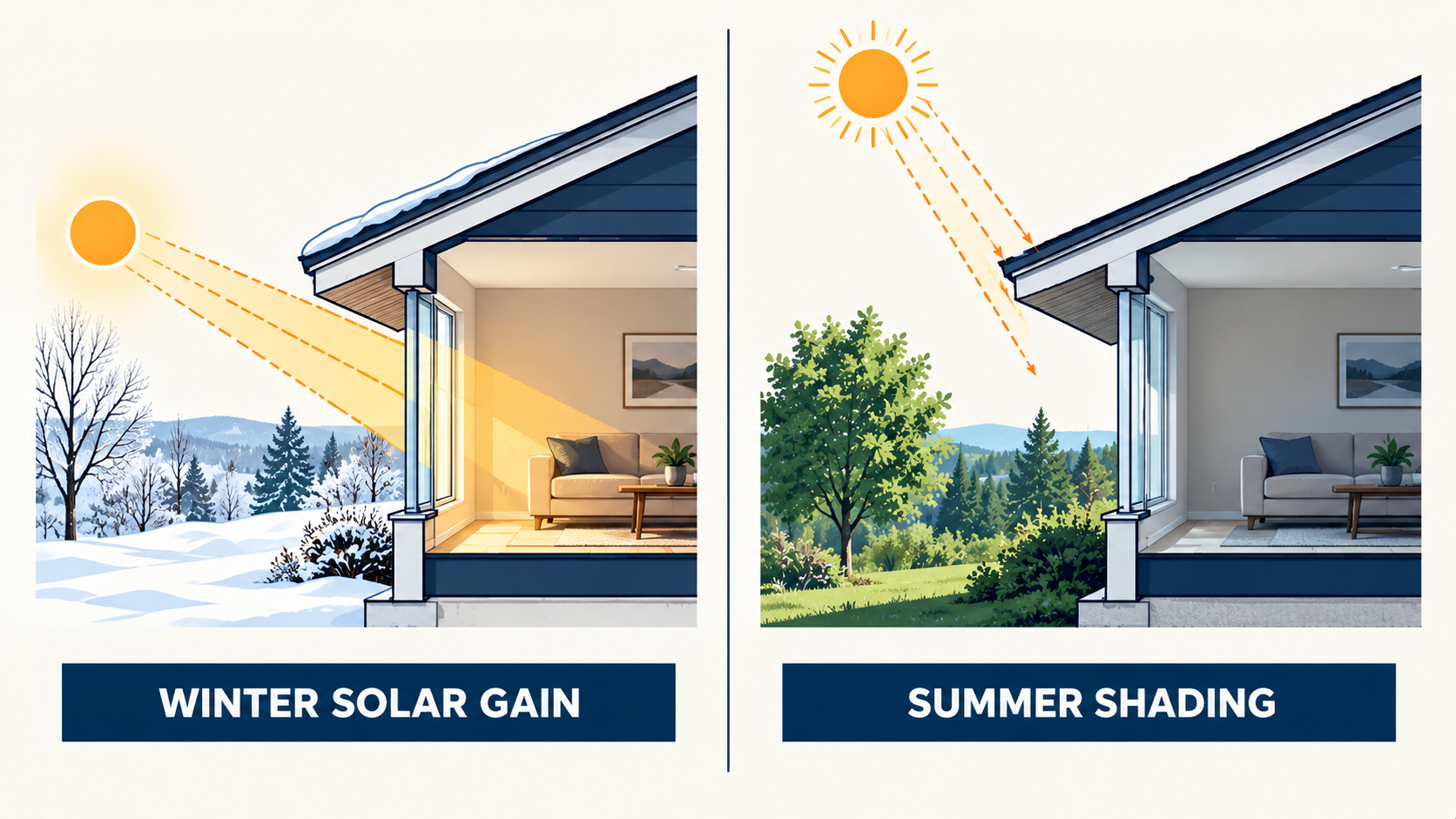
SHGC describes how much of the sun's heat passes through the window.
A higher SHGC allows more solar heat into the house.
A lower SHGC blocks more of it. Natural Resources Canada
Which is better?
Again—it depends.
A south-facing window receiving winter sunshine can provide useful passive solar heat.
That should sound familiar from the first article in this series.
What Is a Passive Solar Home — and How Can It Reduce Energy Use?
But that same solar gain can contribute to overheating during warmer months if the window isn't appropriately shaded.
NRCan recommends considering climate, window orientation, shading, the home's heating and cooling systems and the building's overall energy performance when selecting the appropriate solar heat gain characteristics. Natural Resources Canada
A window isn't simply a hole where heat escapes. Under the right conditions, it's also a place where useful solar energy can enter.
That's why choosing a window solely because it has the lowest possible heat-loss number doesn't necessarily tell the entire story.
6. There's Actually a Rating That Combines These Factors
If U-factor measures heat transfer and SHGC measures solar gain, how do you compare the overall energy performance of windows?
In Canada, you may also see an Energy Rating—or ER.
The ER combines:
U-factor
solar heat gain
air leakage
into a single rating intended to represent the overall energy performance of the window.
Unlike U-factor, a higher ER is better. Natural Resources Canada
That makes ER useful when comparing products—but I still like understanding the individual numbers.
Why?
Because two windows with similar overall ratings may achieve that performance differently.
One might allow more useful solar gain.
Another might prioritize lower heat transfer.
Depending on where the window is located on the house, that difference may matter.
7. A Great Window Can Still Perform Poorly if It's Installed Badly
This connects directly with the previous article on air sealing.
You could buy an extremely high-performance triple-pane window.
But if air is leaking around the window frame, you haven't solved the whole problem.
The window itself may perform beautifully while heated air escapes around the opening containing it.
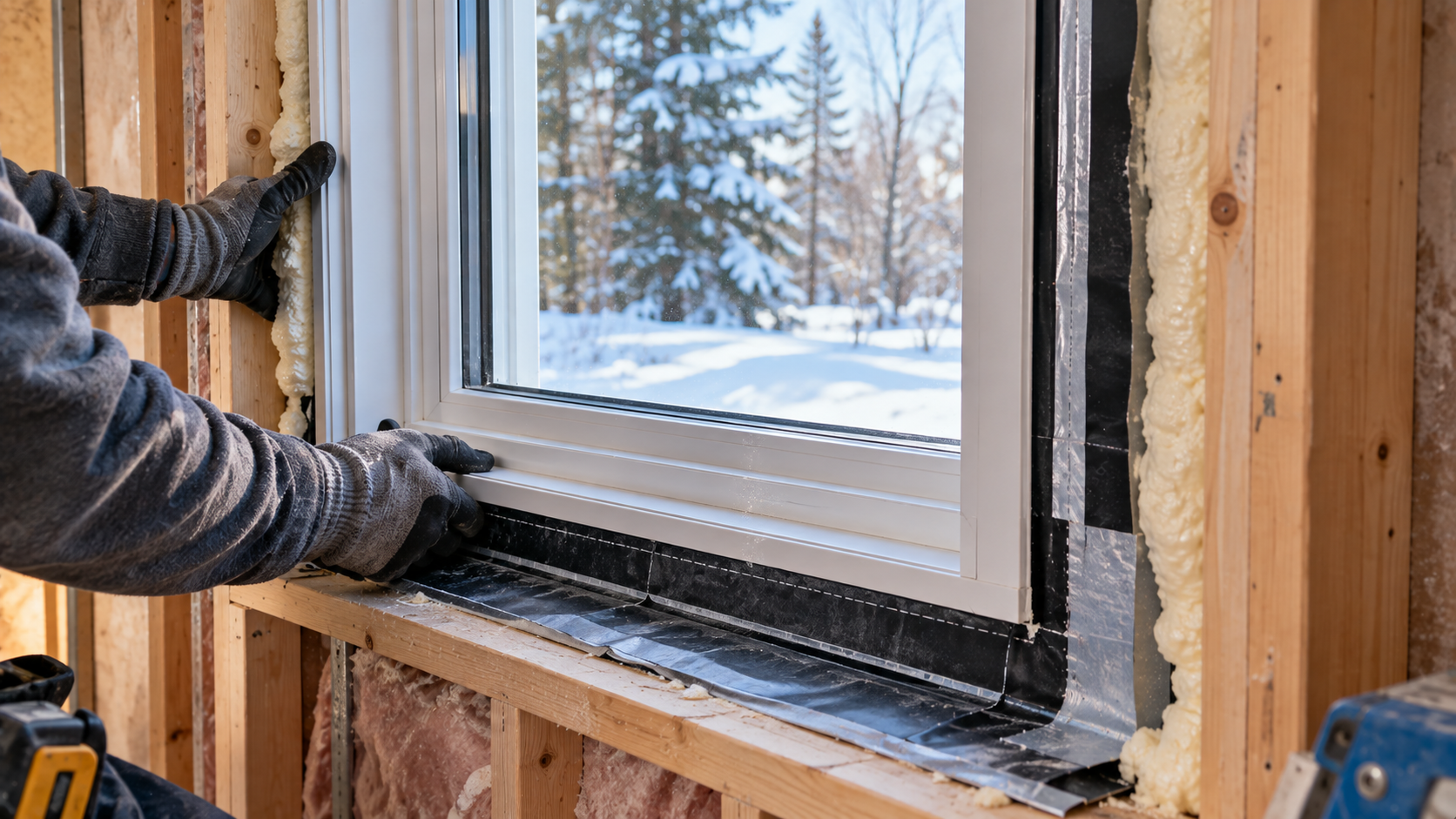
NRCan recommends that window installation provide an airtight, insulated seal and that flashing and exterior finishing direct water away from the opening. Natural Resources Canada
There are also different approaches to replacing a window.
An insert can sometimes be installed within an existing frame if that frame remains sound, properly sealed and insulated.
A complete tear-out removes the existing frame and exposes the rough opening, allowing the installer to create a new insulated and airtight connection between the window and the surrounding wall. Natural Resources Canada
Neither approach is automatically right for every situation.
But the principle is important:
The performance of the window and the quality of its installation go together.
Your House May Be Leaking Money — Understanding Air Sealing
8. Should You Replace Good Double-Pane Windows With Triple-Pane?
This is where I'd separate energy efficiency from financial payback.
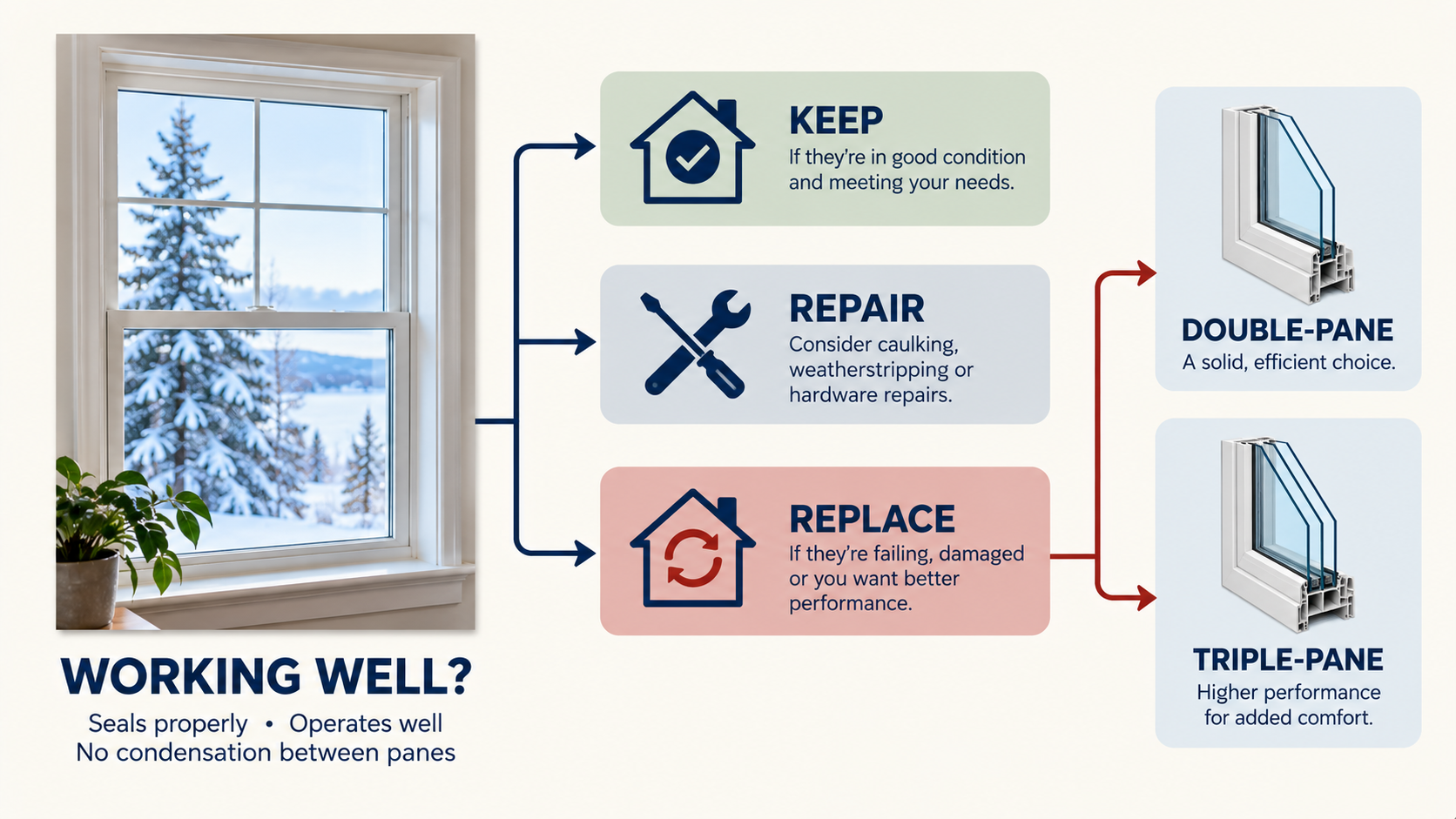
Suppose your existing windows:
are double-pane
seal properly
operate correctly
have no failed glazing seals
don't have deteriorated frames
aren't creating significant comfort or condensation problems
Would replacing all of them with high-performance triple-pane windows reduce heat loss?
Yes.
Does that automatically mean the energy savings will recover the entire cost of replacing otherwise-good windows within a reasonable period?
Not necessarily.
Windows can be a relatively expensive building component to replace.
NRCan's retrofit guidance doesn't suggest that every existing window needs replacement. Depending on its condition, an existing window may instead benefit from repairing hardware, improving caulking or weatherstripping, adding glazing or storm windows, or replacing only the glazing or sash. Natural Resources Canada
That's an important distinction.
Something can be more energy efficient without automatically being the most cost-effective retrofit.
If your existing windows are performing well, there may be other parts of the house where the same renovation dollars would make a larger difference—particularly if the house has significant air leakage or inadequate insulation.
9. When Triple-Pane Becomes More Compelling
The decision looks different when you're already replacing the windows.
Perhaps the existing windows are failing.
Maybe the frames are deteriorated.
The sealed units have failed.
They're uncomfortable.
They're difficult to operate.
Or you're building a new home and choosing windows from the beginning.
At that point, you're no longer comparing:
“Keep my existing windows” vs. “buy triple-pane windows.”
You're comparing:
“Buy new double-pane windows” vs. “pay the incremental cost for triple-pane.”
That's a very different calculation.
If you're already paying for the frame, installation, trim and labour, the additional cost of upgrading the glazing package may be easier to justify—particularly when you consider comfort and condensation resistance along with energy savings.
That doesn't make triple-pane automatically worthwhile.
But if the windows already need replacing, that's when I'd give the upgrade a much closer look.
10. What About a House With Lots of Glass?
The more glazing a house has, the more important window performance can become.
NRCan estimates that windows, doors and skylights can account for up to 35% of total house heat loss, depending on the house. Natural Resources Canada
A small bedroom window and a wall of floor-to-ceiling glass obviously aren't going to have the same influence on comfort and heat loss.
Window orientation matters too.
So does shading.
And so does the efficiency of the rest of the building envelope.
In a highly insulated, airtight home, windows can represent one of the weaker parts of an otherwise very efficient envelope.
That's one reason high-performance homes often put considerable thought into window specifications rather than simply treating windows as a cosmetic choice.
11. What Should Buyers Look For?
When you're viewing a home, you probably won't know the exact U-factor of every window.
But there are still useful things to look for.
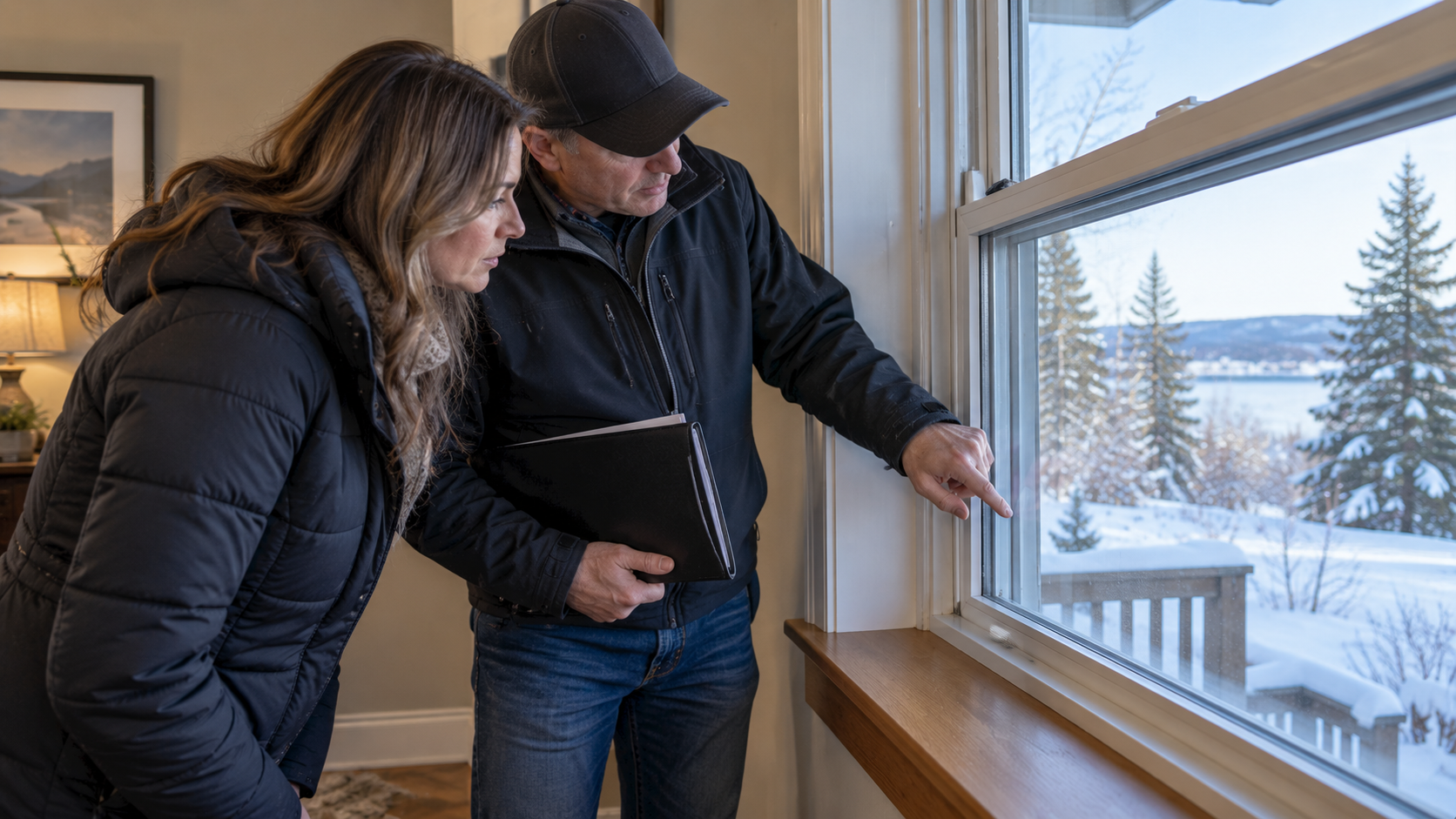
Check:
Are the windows double- or triple-pane?
Is there condensation between the panes?
Are frames or sashes deteriorated?
Do operable windows open and close properly?
Do they latch tightly?
Can you feel obvious drafts?
Is there excessive interior condensation?
Are there signs of staining or moisture around the frames?
Do large windows make nearby areas noticeably uncomfortable?
Is information about the window manufacturer or performance available?
Were the windows professionally installed?
Were they installed as inserts or complete replacements?
When were they installed?
And if energy performance is important to you, ask whether documentation from the installation is available.
Sometimes the window label, invoice or product information can tell you considerably more than simply looking at the glass.
So, Are Triple-Pane Windows Worth the Extra Cost?
If you're asking whether triple-pane windows perform better thermally than otherwise comparable double-pane windows, the answer is generally straightforward:
Yes.
They can reduce heat transfer, keep the interior glass warmer and improve condensation resistance.
But that's not quite the same as asking:
“Should I replace my perfectly good double-pane windows with triple-pane windows to save money?”
That answer is much less certain.
If your existing windows are functioning properly and aren't causing significant comfort, condensation or air-leakage problems, replacing them solely to reduce energy consumption may not necessarily be the first retrofit I'd prioritize.
If your windows already need replacement, however, the calculation changes.
At that point, compare the incremental cost of moving from a good double-pane product to a high-performance triple-pane product—not the entire cost of replacing the window.
And look beyond the number of panes.
Consider:
U-factor.
Energy Rating.
Solar heat gain.
Air leakage.
Frame quality.
Installation.
Comfort.
Condensation resistance.
Because just like insulation, the biggest number—or in this case, the most panes—doesn't tell the whole story.
Smarter, Greener Homes
This article is part of my Smarter, Greener Homes series, where I take a practical look at energy efficiency, green building and the features that can affect how comfortable and economical a home is to operate.
So far, we've looked at passive solar design, why similar houses can have very different heating requirements, heat pumps, insulation, air sealing and now windows.
And there's a common theme developing:
Energy efficiency isn't usually about one product. It's about how the different parts of the house work together.
As a Canadian Certified Green Representative (CCGR), I help buyers and sellers better understand the features that can affect a home's energy performance, comfort, sustainability and operating costs.
Thinking about buying or selling an energy-efficient home—or just curious about what features really matter?
Get in touch. I'm always here to help.
Rob Schellenberger, REALTOR®
Canadian Certified Green Representative
RE/MAX Banner Real Estate
902-300-8674
robschellenberger.ca
.jpg)