.png)

Older homes are part of the character of many Nova Scotia communities.
In places such as Wolfville, Annapolis Royal, Bridgetown, Digby, Chester and communities throughout the Annapolis Valley and South Shore, it's common to find houses that have been standing for many decades—and sometimes well over a century.
They can offer craftsmanship, mature neighbourhoods, established properties and architectural details that can be difficult to reproduce in a newer home.
They can also tell a complicated story.
An older house may have been renovated several times, had additions built in different decades, received new electrical or plumbing systems, had insulation added and changed heating systems more than once.
That doesn't make an older home a bad choice.
It means that when you're buying one, understanding what has changed—and what hasn't—is often more important than simply knowing when the house was built.
Age Alone Doesn't Tell You the Condition of a Home
A 120-year-old house isn't automatically in worse condition than a 30-year-old house.
Maintenance matters.
So do renovations, materials, workmanship and the way the property has been used over time.
An older home that has been consistently maintained and thoughtfully updated may have fewer immediate concerns than a much newer property where maintenance has been deferred.
That's why the age listed for the property should be the beginning of your investigation rather than the conclusion.
Instead of asking:
“Is this house too old?”
A better question is:
“What parts of this house are original, what has been updated and what may need attention next?”
An Older Home Is Usually a Collection of Different Ages
The house may have been built in 1900.
That doesn't mean everything in it is 126 years old.
The roof may be 8 years old. The electrical panel might be 15 years old. The windows may have been replaced in stages. The kitchen could have been renovated five years ago while some plumbing remains much older.
An addition may have been built decades after the original house.
Thinking about an older home this way makes it easier to evaluate.
You're not really buying a single 100-year-old system.
You're buying a collection of components, renovations and systems from different periods.
The goal is to understand as much of that history as reasonably possible.
Start With the Structure
Older houses can use construction methods and materials that are different from those found in newer homes.
When walking through one, pay attention to how the house feels.
Are floors noticeably uneven?
Do doors close properly?
Are there significant cracks?
Does part of the house appear to slope?
Has an addition been connected to the original structure?
Some movement and unevenness can occur over a home's long life and doesn't automatically indicate a serious structural problem.
What matters is determining whether what you're seeing appears to be old and stable or evidence of an active problem.
That's where a home inspector—and sometimes a structural engineer or other specialist—can become important.
Look Carefully at the Foundation and Basement
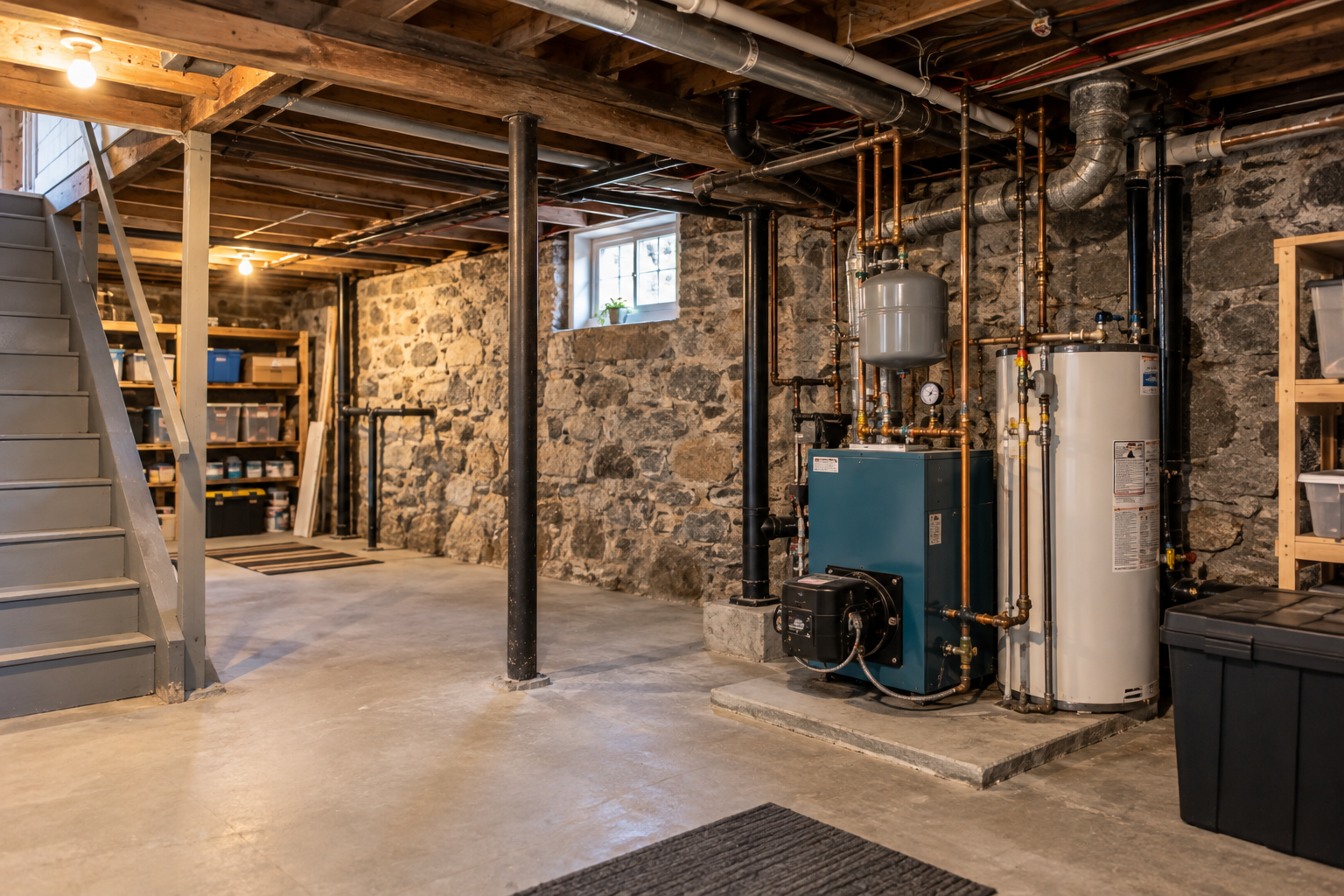
Basements in older Nova Scotia homes can look very different from modern poured-concrete basements.
Depending on the age and location of the property, you may encounter stone foundations, masonry, concrete block, poured concrete or combinations of materials from different renovations.
You may also find a basement that was originally intended more as a utility or storage space than finished living space.
Look for signs of:
Water entry
Dampness
Efflorescence or staining
Cracking
Deteriorating mortar
Previous repairs
Rot near sill areas
Improvised structural supports
Changes where additions meet the original house
A basement doesn't have to look new to be functional.
The important question is whether the foundation is performing properly and whether moisture is being managed.
Water Management Matters at Any Age
Many expensive problems in houses begin with water.
Older homes are no exception.
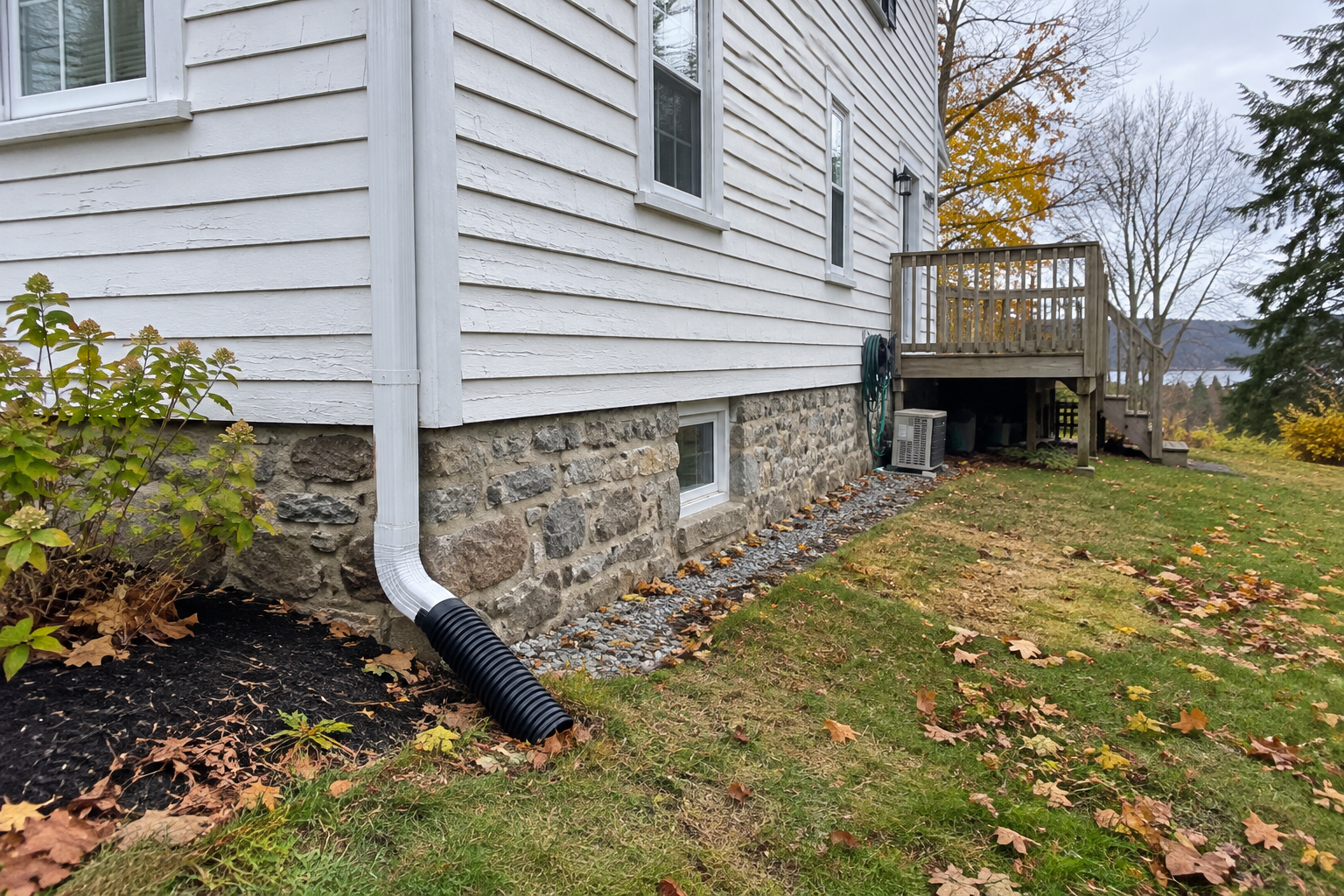
Look beyond the basement itself and examine how water moves around the property.
Consider:
Roof drainage
Gutters and downspouts
Grading around the foundation
Low areas beside the house
Drainage from neighbouring land
Signs of previous basement water
Rot or deterioration around exterior wood
Condition around decks, porches and additions
A wet basement doesn't necessarily mean the foundation has failed.
Sometimes the cause is surprisingly simple.
But visible moisture or a history of water entry deserves investigation rather than assumption.
Electrical Systems Can Tell You a Lot About an Older Home
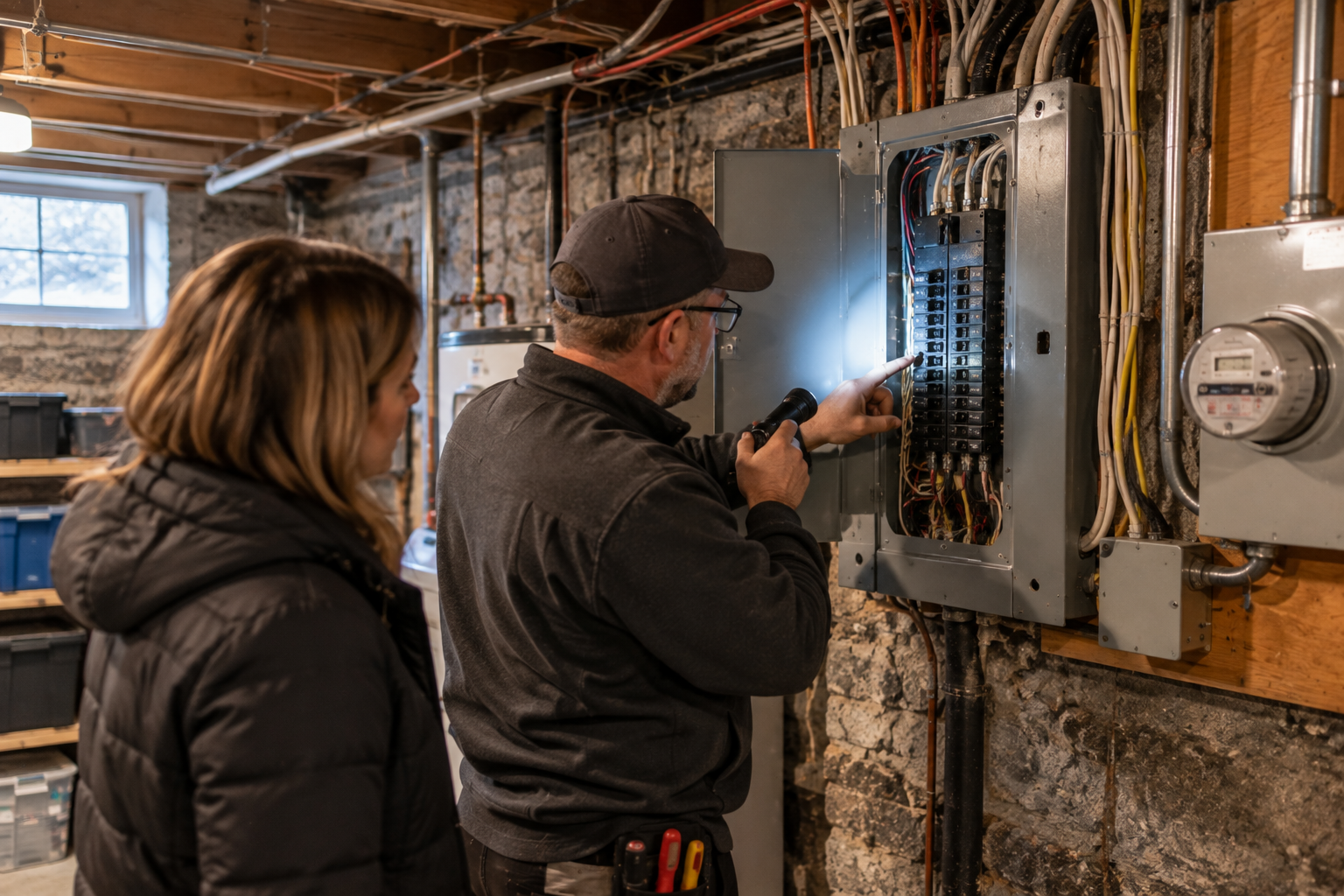
Electrical systems often change significantly during the life of an older house.
A home may have a modern electrical panel while some older wiring remains elsewhere.
That's why looking only at the panel isn't enough.
Depending on the age and renovation history, an inspector or electrician may identify older wiring methods, additions to circuits, outdated equipment or work completed at different times.
Buyers should also think about capacity, not just age.
Modern households can place very different demands on an electrical system than the house was originally designed to support.
Heat pumps, electric water heaters, appliances, workshops, hot tubs and electric-vehicle chargers can all increase electrical demand.
If you're planning significant changes after purchasing the home, understanding the electrical system beforehand can help you determine whether upgrades may eventually be required.
Don't Assume Renovated Means Everything Was Updated
A beautifully renovated kitchen can make an older home feel new.
But new cabinets, flooring and countertops don't tell you what happened behind the walls.
The electrical system may have been updated during the renovation—or it may not have been.
The plumbing may be new in that room while older supply or drain lines remain elsewhere.
Insulation may have been improved in one addition but not in the original house.
When a property has undergone substantial renovations, useful questions include:
What work was completed?
When was it completed?
Who completed it?
Were permits required?
Are permits, invoices, warranties or other records available?
Documentation isn't always available, particularly for work completed many years ago.
Its absence doesn't automatically mean something is wrong.
It simply means you may need to rely more heavily on the physical condition of the property and appropriate professional evaluations.
Additions Deserve Their Own Look
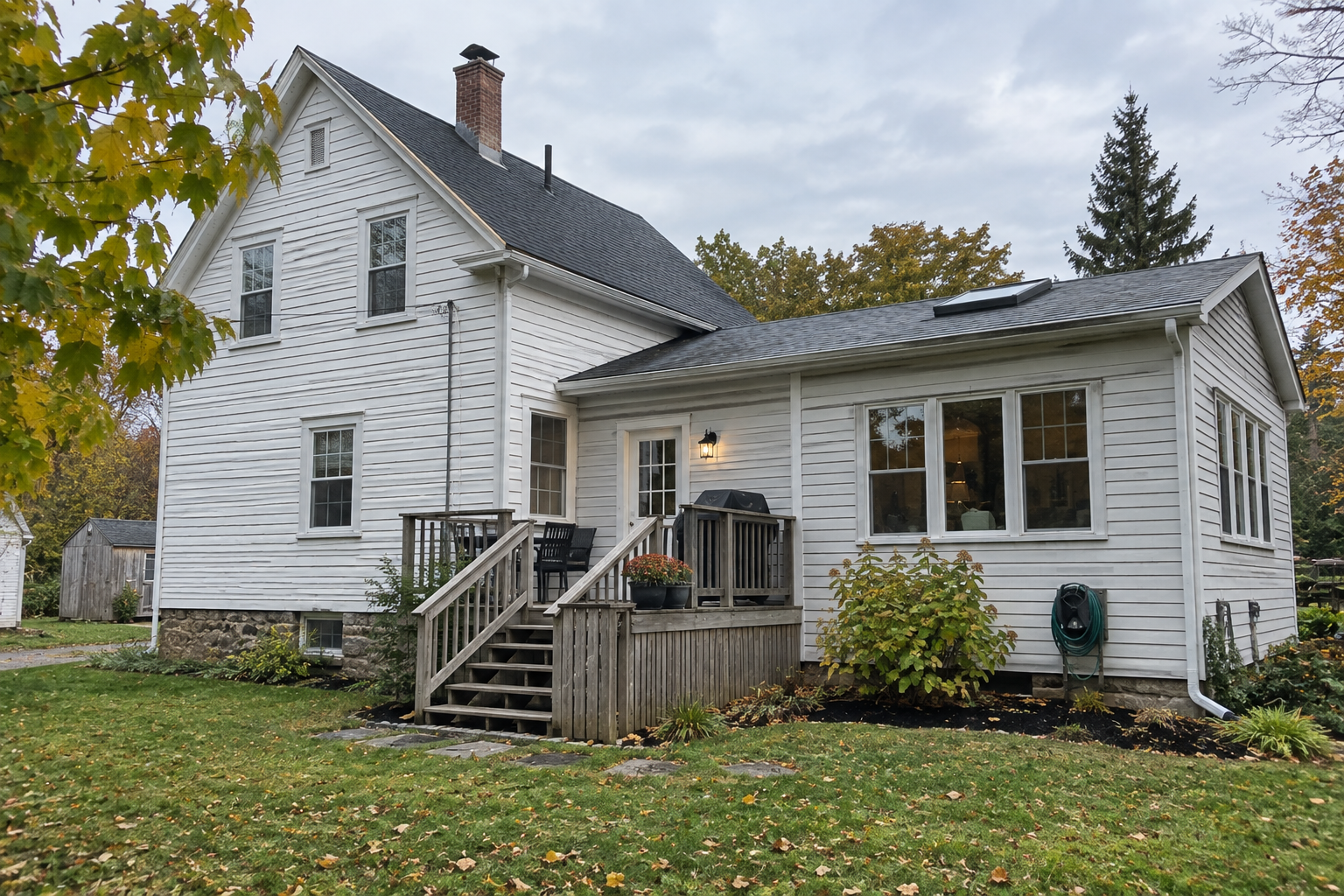
Older houses often grow over time.
A rear kitchen, mudroom, sunroom, garage or additional living space may have been added decades after the original house was constructed.
Treat an addition almost like a small building attached to the main one.
Look at:
How it connects to the original structure
Foundation type
Roof connection
Drainage
Insulation
Heating
Electrical service
Floor levels
Signs of movement or water entry
Problems sometimes occur not in the original house or the addition itself, but where the two structures meet.
Plumbing May Have Been Updated in Stages
Like electrical systems, plumbing in an older home may represent several generations of materials.
A renovated bathroom may have modern supply and drain lines while older plumbing remains in the basement or elsewhere in the house.
Look for visible leaks, corrosion, staining and evidence of previous repairs.
Water pressure and drainage performance are also worth paying attention to during an inspection.
And remember that plumbing inside the house is only part of the picture.
Depending on the property, the home may also rely on a private well and septic system, which should be investigated separately.
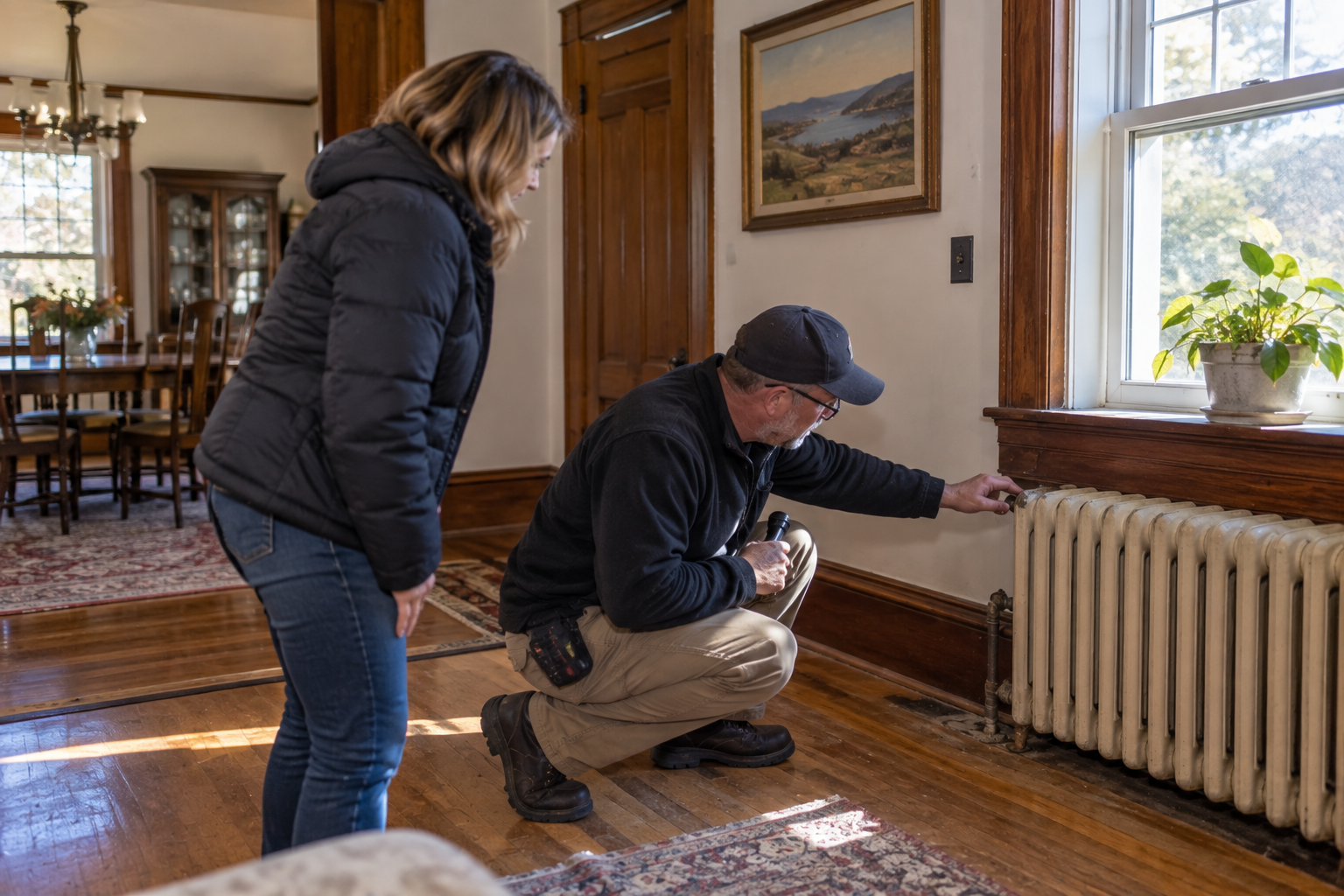
Heating Systems Often Change During the Life of the House
An older Nova Scotia home may have been heated several different ways over its lifetime.
You might find an oil-fired boiler that replaced an earlier system, electric baseboards added to an addition, heat pumps installed more recently and a wood stove providing supplemental heat.
That's not necessarily a problem.
In fact, multiple heating systems are common enough that the important question is how they work together.
Find out:
What provides most of the heat?
Which areas does each system serve?
How old is the equipment?
What maintenance has been completed?
Are any older components still present but no longer used?
How is domestic hot water produced?
Understanding the heating configuration can also help when estimating future operating and replacement costs.
Older Doesn't Automatically Mean Energy Inefficient
It's easy to assume that an older home will automatically be expensive to heat.
That's too simple.
Some older homes have received substantial insulation, air-sealing, window and heating upgrades. Others may still perform much closer to their original construction.
Even two houses built in the same year can perform very differently.
Instead of using age as a shortcut, look at the actual home.
Consider its insulation, air leakage, windows, heating equipment, size and previous improvements.
This gives you a much better picture of how the house is likely to perform than the construction date alone.
Windows Don't Have to Be New to Be Worth Keeping
Older homes sometimes retain original wood windows.
Buyers occasionally assume these automatically need to be replaced.
Condition matters more than age alone.
Older wood windows may require maintenance, weatherstripping, storm windows or repairs. In other situations, replacement may make sense.
If windows have already been replaced, look at the quality of the installation as well as the window itself.
Water intrusion and air leakage can occur around a poorly installed newer window just as they can around an older one.
The Roof Is More Than the Shingles
When evaluating the roof of an older house, don't focus only on the age of the shingles.
The roof structure may have been altered over time.
Dormers may have been added.
Chimneys may have been removed or abandoned.
Additions can create valleys and complicated roof intersections.
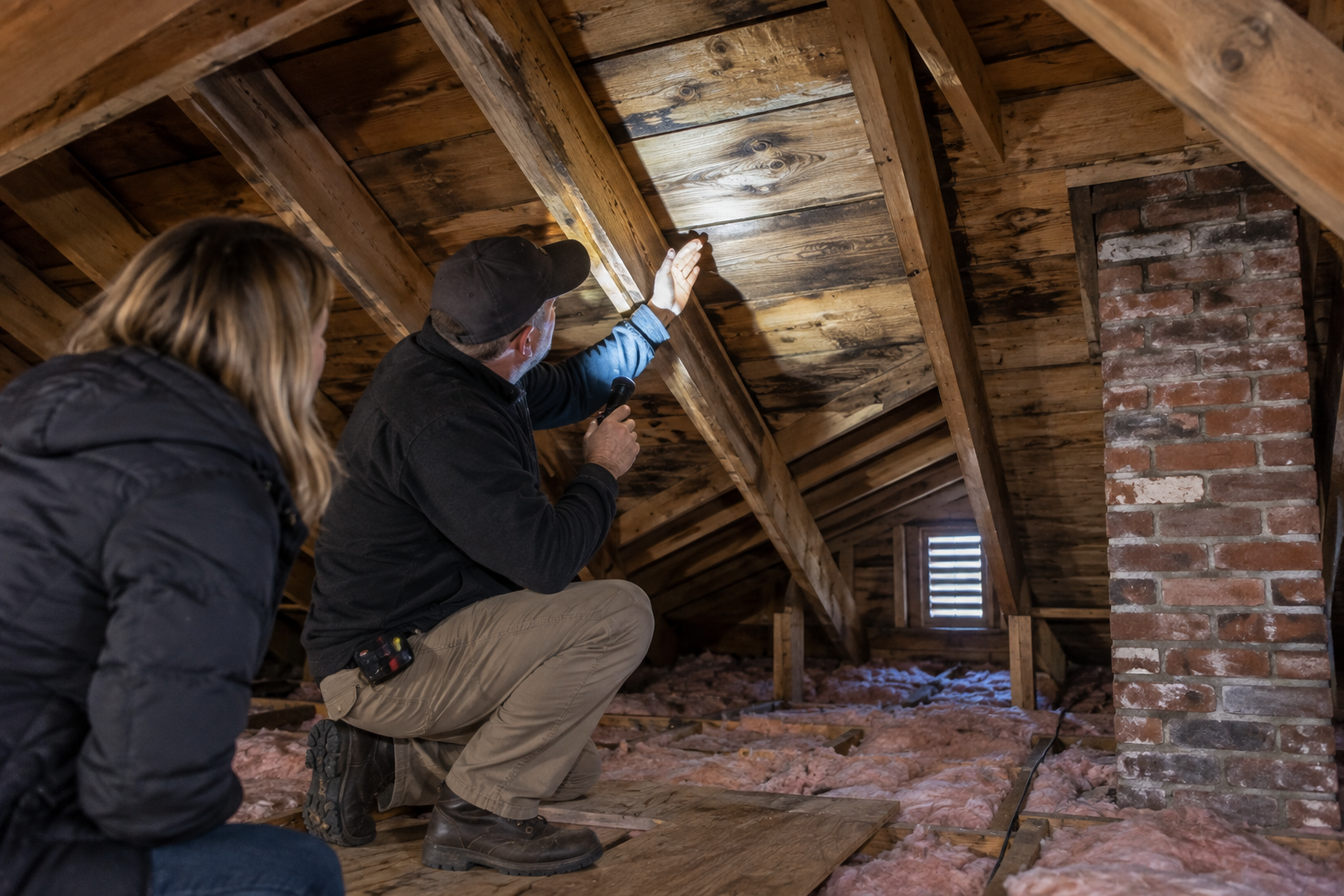
Inside the attic, an inspector may be able to identify evidence of previous leaks, ventilation issues, structural changes or older repairs.
A newer roof covering is certainly useful information, but it doesn't replace looking at the roof as a complete system.
Chimneys Can Outlive the Systems They Once Served
Older homes may have one or more chimneys even if the original heating equipment is long gone.
A chimney might currently serve a wood stove or heating appliance.
Another may be unused.
Some have been partially removed during renovations while portions remain elsewhere in the house.
If a chimney is still in use, its condition and suitability for the connected appliance matter.
If it isn't being used, you may still want to understand its condition and whether it has been properly capped or altered.
Attics Can Reveal a Lot About a House
If accessible, the attic can be one of the most informative places in an older home.
It may reveal:
Roof structure
Insulation levels
Ventilation
Evidence of previous leaks
Electrical wiring
Chimney condition
Signs of animals or pests
Changes made during renovations
It can also help explain why certain rooms feel colder or warmer than others.
A finished house can hide much of its construction history.
The attic often doesn't.
Watch for Signs of Past Repairs—But Don't Assume Repairs Are Bad
Repairs are normal in an older house.
In fact, a century-old home with no evidence of repair would be unusual.
The presence of new framing, patched foundations, replaced plumbing or repaired roofing isn't automatically a warning sign.
The question is why the repair was needed and whether it was completed properly.
Sometimes evidence of a repair tells you that a previous owner addressed a problem.
Other times it identifies an area that deserves a closer look.
Context matters.
Older Homes and Radon
Radon isn't specifically an “old house problem.”
Newer homes can have elevated radon too.
Radon is a naturally occurring radioactive gas that can enter buildings from the soil and rock beneath them. Nova Scotia currently recommends testing homes because elevated levels can occur throughout the province. The only way to know the radon level in an individual home is to test it. Government of Nova Scotia
That distinction is important when buying an older property.
The age of the house doesn't tell you whether it has a radon problem.
Testing does.
For long-term assessment, Health Canada recommends testing for at least three months. Government of Nova Scotia
Insurance Is Worth Investigating Early
Older homes can sometimes require additional information before an insurer is comfortable providing coverage.
The insurer may ask questions about systems such as:
Electrical wiring
Plumbing
Heating
Oil tanks
Wood-burning appliances
Roof age and condition
Requirements vary between insurance companies and between properties.
Don't assume that because the seller currently has insurance, your insurer will automatically insure the home under the same terms.
If the property has older systems or unusual features, starting the insurance conversation early can prevent surprises later in the buying process.
Heritage Registration Is Different From Simply Being an Old House
An old home isn't automatically a registered heritage property.
Nova Scotia has both provincial and municipal heritage registries, and a property can potentially appear on one or both. Registered properties receive protection under heritage legislation, while municipalities administer their own municipal registries. Cultural Heritage Hub
If you're considering a registered heritage property, find out exactly what designation applies and investigate what that means before planning renovations or exterior changes.
This is different from buying an older home that simply has historic character.
The distinction matters.
A Home Inspection Becomes Particularly Valuable
A home inspection is useful with any property, but an older house gives the inspector a longer history to interpret.
The inspector isn't there simply to produce a list of everything that isn't new.
A useful inspection helps you understand the home's major systems, identify visible concerns and determine where additional investigation may be appropriate.
Depending on what is found, that could mean consulting:
An electrician
A plumber
A structural engineer
A roofing contractor
A heating technician
A chimney or WETT-trained professional
A foundation or drainage specialist
Another qualified professional
The home inspector doesn't replace these specialists.
The inspection can help identify when bringing one in makes sense.
Don't Expect an Old House to Behave Like a New One
This is an important mindset when viewing older properties.
Original floors may not be perfectly level.
Walls may not be perfectly straight.
Doors may have been adjusted over the years.
Trim may show generations of paint.
Rooms may have dimensions that wouldn't be used in a modern floor plan.
Those characteristics aren't necessarily defects.
At the same time, “it's an old house” shouldn't be used to dismiss genuine structural, moisture, electrical or safety concerns.
The goal is to distinguish age and character from problems that require attention.
Think About the Renovations You Want to Make
Before buying an older house, consider what you hope to change.
Opening walls, moving kitchens, adding bathrooms, finishing basements or significantly changing the heating system can uncover conditions that weren't visible during the purchase.
You may also discover that a seemingly simple renovation affects electrical, plumbing, insulation or structural components.
If your plans are important to whether the property works for you, investigate their feasibility before assuming they can easily be completed.
This becomes particularly important with registered heritage properties, unusual construction and major structural alterations.
Budget for Ownership, Not Just the Purchase
Older homes don't necessarily require constant expensive repairs.
But they do reward owners who plan ahead.
Rather than asking whether the home will ever need work, identify the major components and consider what may need attention over the next several years.
Perhaps the roof is relatively new but the heating equipment is older.
Maybe the electrical system has been updated but some windows need maintenance.
Perhaps the house is structurally sound but would benefit from insulation and air-sealing improvements.
Understanding those priorities can help you build a more realistic ownership budget.
What Should a Buyer Investigate?
Every older home is different, but depending on the property, a buyer may want to understand:
Foundation and structural condition
Water entry and drainage
Roof and attic
Electrical system
Plumbing
Heating equipment
Oil tanks or wood-burning appliances
Insulation and air sealing
Windows and exterior condition
Chimneys
Additions and major renovations
Available permits or renovation records
Private well and septic systems, if applicable
Radon
Insurance requirements
Heritage registration, if applicable
That doesn't mean every older house needs every possible specialist.
It means the investigation should respond to what is actually present in that particular home.
Buy the House That's Actually in Front of You
An older home shouldn't be judged simply because it's old.
And it shouldn't be given a free pass because its age gives it character.
Look at the actual house.
Understand its systems.
Find out what has been updated.
Investigate what hasn't.
Pay attention to water, structure, electrical, plumbing, heating and the changes made over the home's lifetime.
Then consider how those things fit your budget, your plans and the way you want to live.
A home that's been standing for generations can still have many years ahead of it.
The important part is knowing as much as reasonably possible about the house you're taking ownership of today.
Part of the Buyer Resource Centre: Practical guides to help you prepare, evaluate a property and navigate the home-buying process in Nova Scotia.
.jpg)