RSS

Beyond the Home Inspection: Tests and Investigations a Buyer May Need

A home inspection can tell you a great deal about a property.

But it doesn't answer every question.

Some parts of a home require specialized knowledge, equipment, laboratory testing or access that falls outside the scope of a standard home inspection. Other concerns may only become apparent after the inspector identifies something that deserves a closer look.

This is particularly relevant in Nova Scotia, where a property may have a private well, septic system, wood heat, an oil tank or other features requiring their own investigation.

The goal isn't to order every test available.

It's to figure out which investigations make sense for the particular property you're considering buying.


Start With the Home Inspection—Then Follow the Evidence

For many buyers, the general home inspection is the starting point.

A home inspector looks at the visible and accessible components of the property and may identify areas that deserve additional investigation.

That could mean an electrician examining a concern at the electrical panel.

It could mean a heating technician evaluating a boiler.

It could mean a structural engineer looking at unusual foundation movement.

Or the property itself may have features—such as a private well or septic system—that you planned to investigate separately from the beginning.

Think of due diligence as a process.

The first investigation may answer some questions while showing you which questions still need answers.


Not Every Property Needs the Same Due Diligence

A newer subdivision home on municipal water and sewer presents a different set of questions from a 150-year-old rural property with a drilled well, septic system, wood stove and several outbuildings.

A waterfront cottage presents different questions again.

So does vacant land.

So does a house that has undergone extensive renovations.

This is why a checklist can only take you so far.

Your due diligence should respond to the property, its systems, its history and what you intend to do with it.


Private Well Water Should Be Tested

If the property has a private well, don't assume clear, odourless water means the water is safe.

Nova Scotia says more than 40% of households obtain their drinking water from private wells and recommends regular testing for both bacteria and chemical contaminants. The province specifically notes that you can't determine whether well water is safe based on its appearance, smell or taste. Government of Nova Scotia

For ongoing ownership, Nova Scotia recommends testing well water at least annually for bacteria and every five years for chemical contaminants. Government of Nova Scotia

During a real estate purchase, water testing can help you understand the water supply before you take ownership.

Depending on the circumstances, testing may include:

  • Total coliform and E. coli

  • General chemistry

  • Metals

  • Arsenic

  • Uranium

  • Manganese

  • Other parameters appropriate to the property

Specific additional testing may make sense when there is a reason to suspect another source of contamination.

Nova Scotia identifies potential sources including petroleum products, septic systems, agricultural activity, road salt and other environmental influences. Government of Nova Scotia
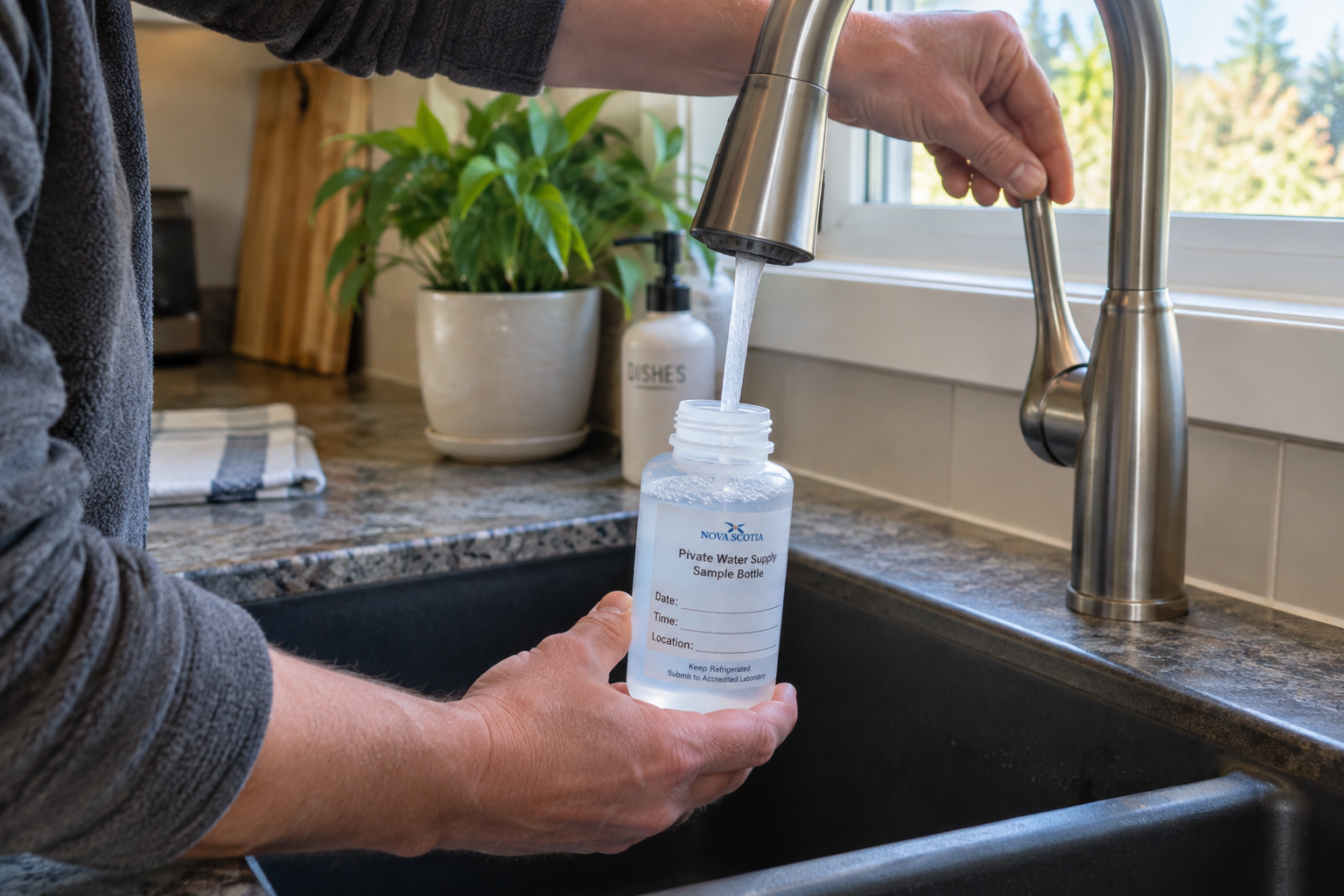
Well water sample being collected for testing in a Nova Scotia home

Water Quality and Water Quantity Are Different Questions

A laboratory test tells you about water quality.

It doesn't necessarily tell you whether the well can consistently provide enough water for the household.

That's a different question.

If there are concerns about the well's capacity, history or performance, a buyer may want additional information about the well itself.

That could include looking for the well construction record, asking about previous shortages or having an appropriate professional evaluate the well or its yield.

A property can have perfectly acceptable water chemistry and still have a quantity issue.

Likewise, a productive well can still require water treatment.

Don't confuse the two.


A Water-Treatment System Doesn't Eliminate the Need to Understand the Water

Some homes have equipment to address particular characteristics or contaminants in the water.

You might see:

  • Sediment filters

  • Water softeners

  • UV treatment

  • Iron or manganese treatment

  • Reverse-osmosis equipment

  • Other filtration or treatment systems

Find out what the equipment is intended to treat.

Ask how it has been maintained.

And consider whether the water should be sampled in a way that helps you understand both the untreated source water and how effectively the treatment system is working.

The presence of treatment equipment isn't automatically a concern.

It's information about the property that you should understand.


A Septic System Deserves Its Own Inspection

A general home inspection shouldn't automatically be treated as a substitute for a dedicated septic-system inspection.

The Nova Scotia Real Estate Commission recommends that buyers have a septic system inspected before finalizing the purchase of a property with an on-site system. NSREC notes that an inspection may involve pumping the tank and examining the disposal field and that septic inspections may be conducted by appropriately qualified professionals such as licensed septic installers, licensed sewage haulers or professional engineers. Nova Scotia Real Estate Commission

A septic investigation may help answer questions such as:

  • Where is the tank?

  • Where is the disposal field?

  • What type of system is installed?

  • Is the system functioning as expected?

  • Are there visible signs of a problem?

  • When was the tank last pumped?

  • Is there available information about the system's installation or maintenance?

The appropriate scope depends on the property and the professional conducting the inspection.
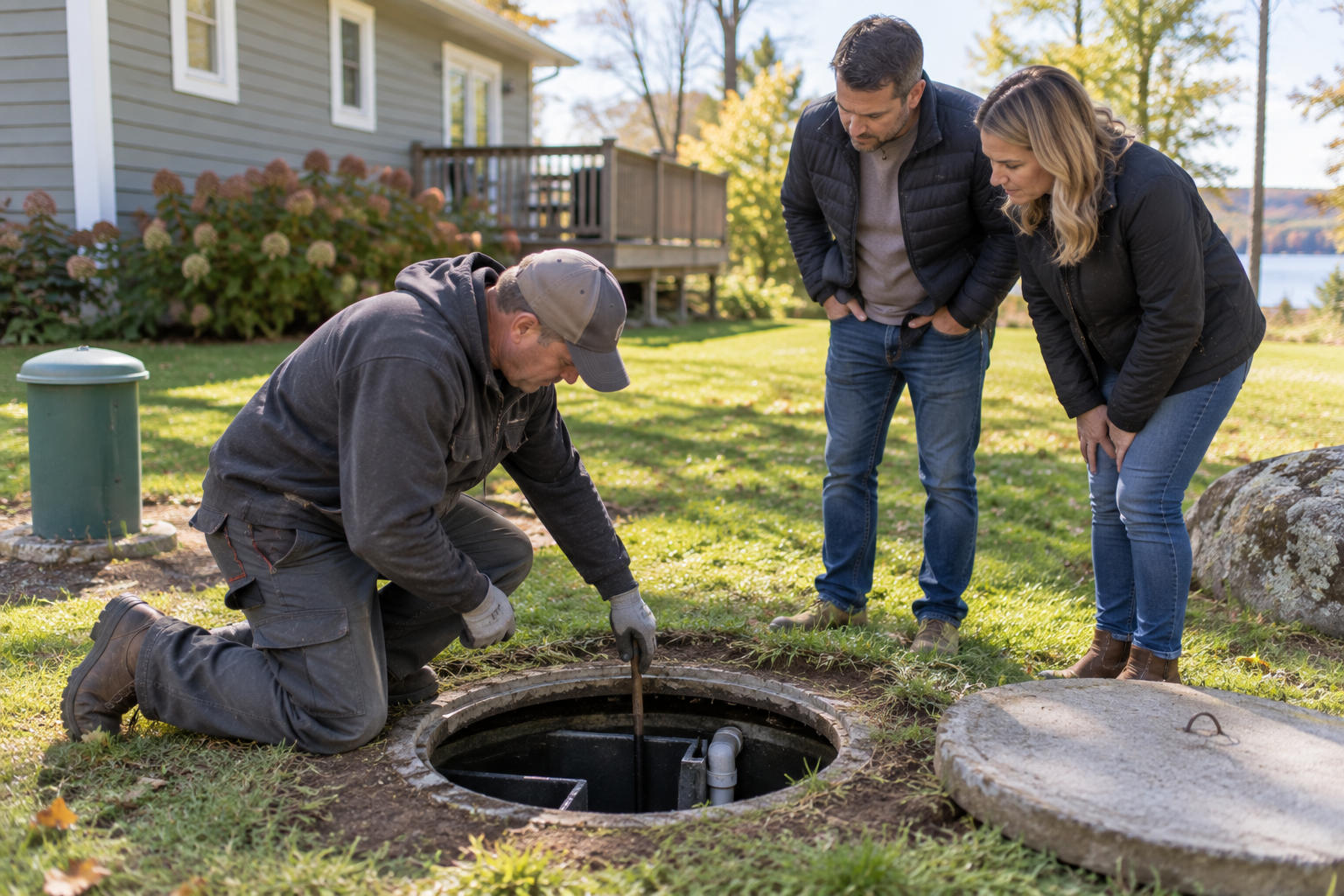
Septic system being inspected at a Nova Scotia property

Don't Assume a Working Toilet Means the Septic System Is Fine

A septic problem isn't always obvious during a showing.

The sinks may drain.

The toilets may flush.

There may be no noticeable odour.

That doesn't provide the same information as an appropriate investigation of the septic system.

This is especially important because the system is largely underground.

A buyer should understand that what happens inside the house is only one part of the wastewater system.


Radon Requires Testing

Radon is another issue you can't evaluate simply by looking at the house.

Nova Scotia advises that testing is the only way to know the radon level in an individual home. Long-term testing is the preferred approach, with Health Canada recommending a testing period of at least three months. Nova Scotia Real Estate Commission

That creates an obvious challenge during many real estate transactions: the condition period may be much shorter than the recommended long-term testing period.

That doesn't mean radon should be ignored.

It means buyers should understand what can realistically be determined before closing and what may need to become part of their ownership plan.

Radon isn't simply an “old house” issue, either.

Testing is what determines the level in a particular home.


Wood Stoves and Fireplaces May Need a Specialized Inspection

Wood heat is common enough in Nova Scotia that buyers will regularly encounter wood stoves, fireplaces and other solid-fuel-burning systems.

A general home inspector may observe the system, but an inspection by a WETT-certified professional may be requested or appropriate—particularly for insurance or when evaluating the installation itself.

WETT says solid-fuel systems are inspected for reasons including real estate transactions, insurance requirements and concerns about system performance. It also uses different SITE inspection levels depending on accessibility and the depth of investigation required. Wettinc

There's an important terminology distinction here:

The stove itself isn't “WETT certified.”

WETT certifies individuals. A WETT-certified professional can inspect the wood-burning system and issue an inspection report. Wett Inc.

If you're buying a property with wood heat, it's also worth discussing the system with your insurance provider early in the process.
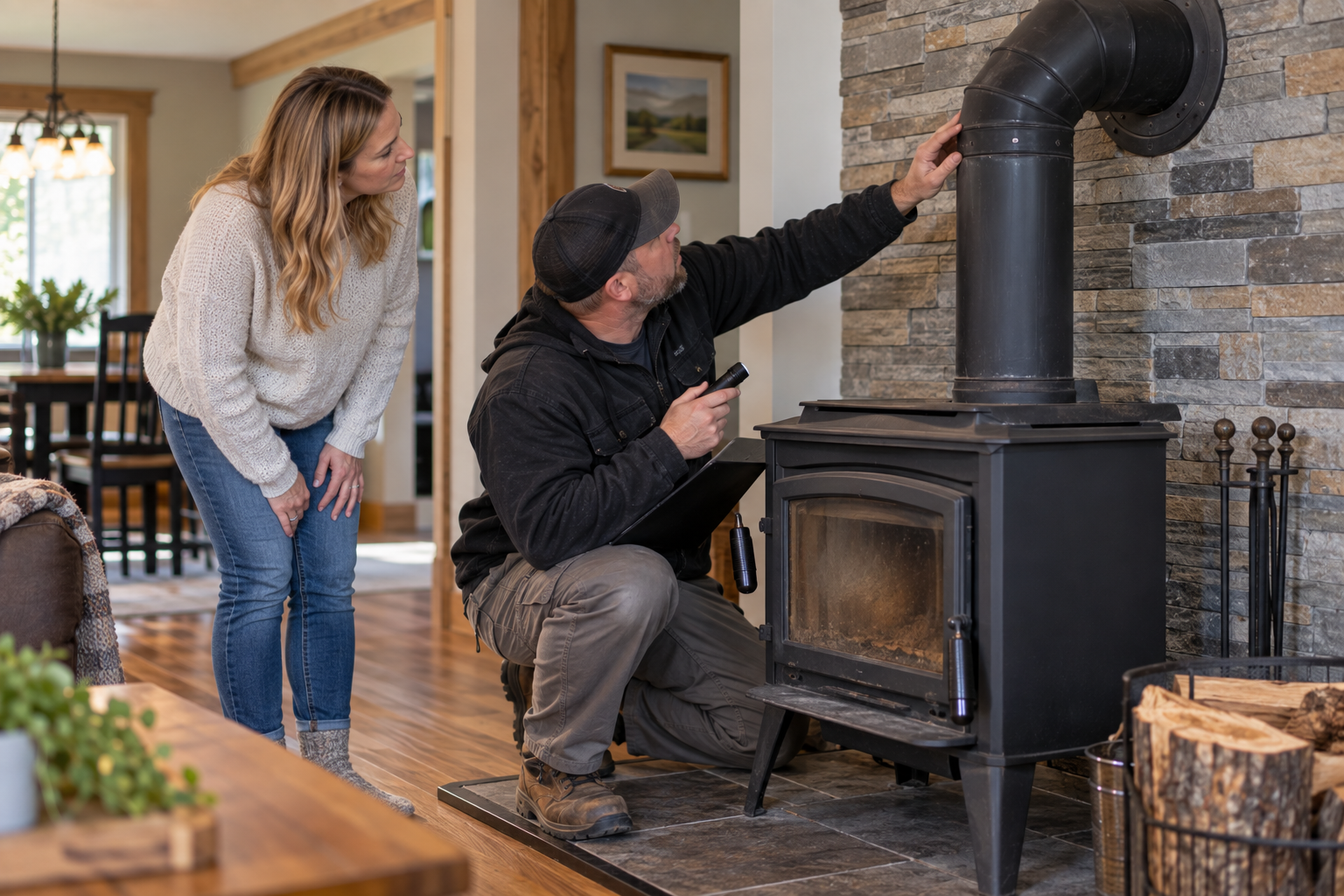
Wood-burning system being inspected in a Nova Scotia home

An Oil Tank May Need More Than a Quick Look

A home inspector may note the location, apparent condition and visible characteristics of a heating-oil tank.

But sometimes further investigation is appropriate.

An oil-heating system includes more than the tank itself. Tank condition, installation, fuel lines, corrosion, evidence of leakage and other factors can all matter.

Nova Scotia's guidance on domestic heating-oil tanks recommends having a heating-service professional conduct a more detailed examination when an evaluation raises concerns about the system. Government of Nova Scotia

Insurance can matter here as well.

If you're buying a property heated by oil, provide the relevant information to your insurer rather than assuming the system will automatically meet its underwriting requirements.
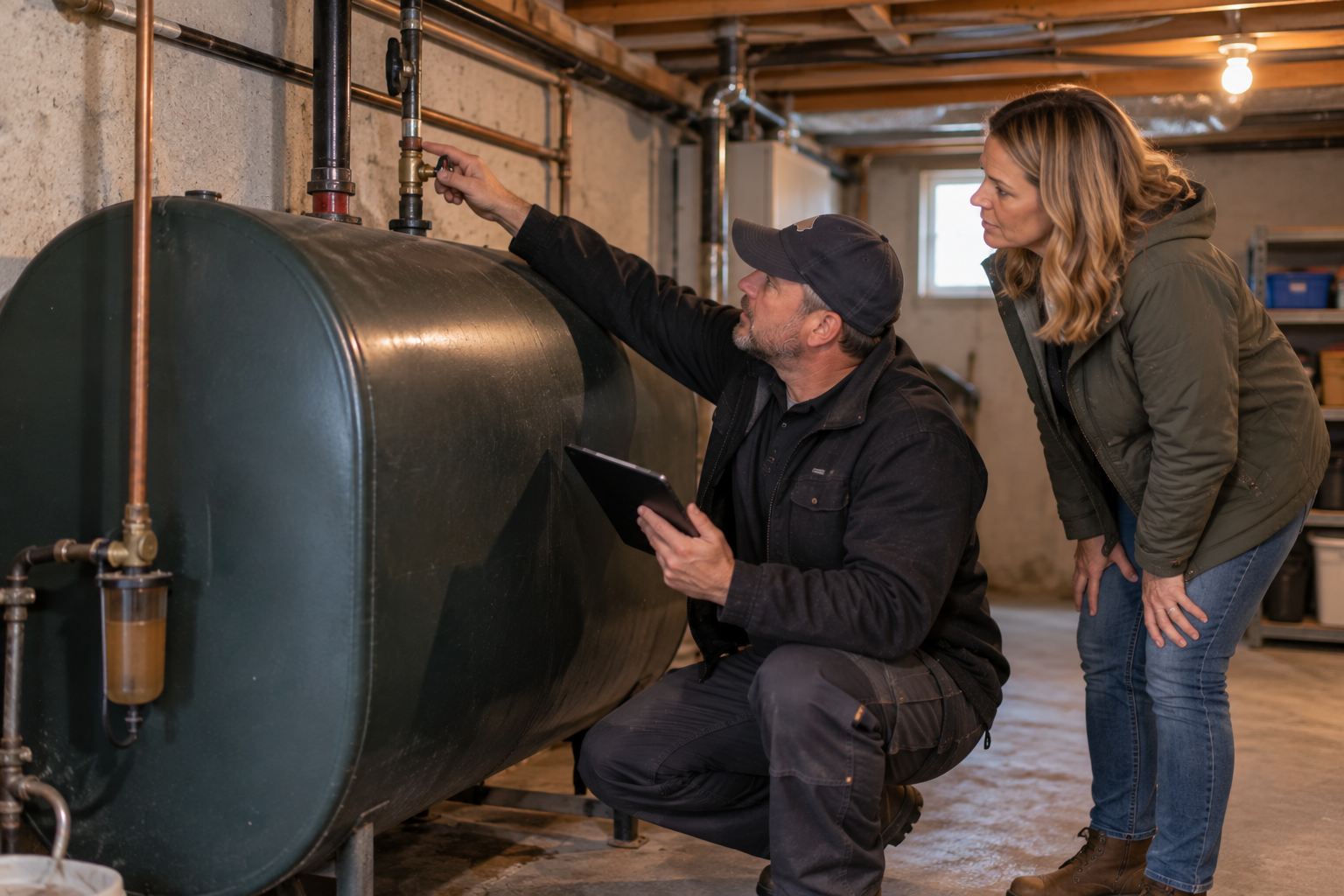
Heating oil tank being evaluated in a residential basement

Electrical Concerns May Need an Electrician

A home inspector may identify electrical concerns during the general inspection.

Sometimes the observation is straightforward.

Other times, it raises a question that should be answered by a licensed electrician.

That might happen when there are concerns about:

  • An electrical panel

  • Older wiring

  • Improper alterations

  • Unusual connections

  • Renovated areas

  • Insufficient electrical capacity for planned improvements

  • Other visible conditions identified during the inspection

The distinction is important.

The home inspector helps identify a potential concern.

The electrician can investigate the electrical issue in greater depth and advise on what work, if any, is appropriate.


Heating Equipment May Need a Heating Professional

The same principle applies to heating and cooling equipment.

A general inspection may identify the approximate age, visible condition or operation of a furnace, boiler, heat pump or other equipment.

But if the equipment isn't operating properly—or if its condition is important to your purchasing decision—you may want an HVAC or heating professional to evaluate it.

This can be particularly useful when the system is older, appears poorly maintained or shows signs of leakage, unusual operation or previous repair.

It can also help when you're trying to understand whether an existing system can reasonably support renovations or changes you intend to make.


Structural Concerns May Require an Engineer

Cracks aren't all the same.

Neither are sloping floors.

Neither are sagging roofs, altered framing or foundation movement.

A home inspector may identify something that appears unusual without being able to determine the underlying cause or its structural significance.

That's where further investigation can become valuable.

Depending on the concern, a structural engineer or other appropriately qualified professional may be able to evaluate the condition and help determine whether it represents ordinary movement, a previous repair, an active problem or something requiring corrective work.

The objective isn't to panic every time a crack appears.

It's to get the right expertise when the answer matters.
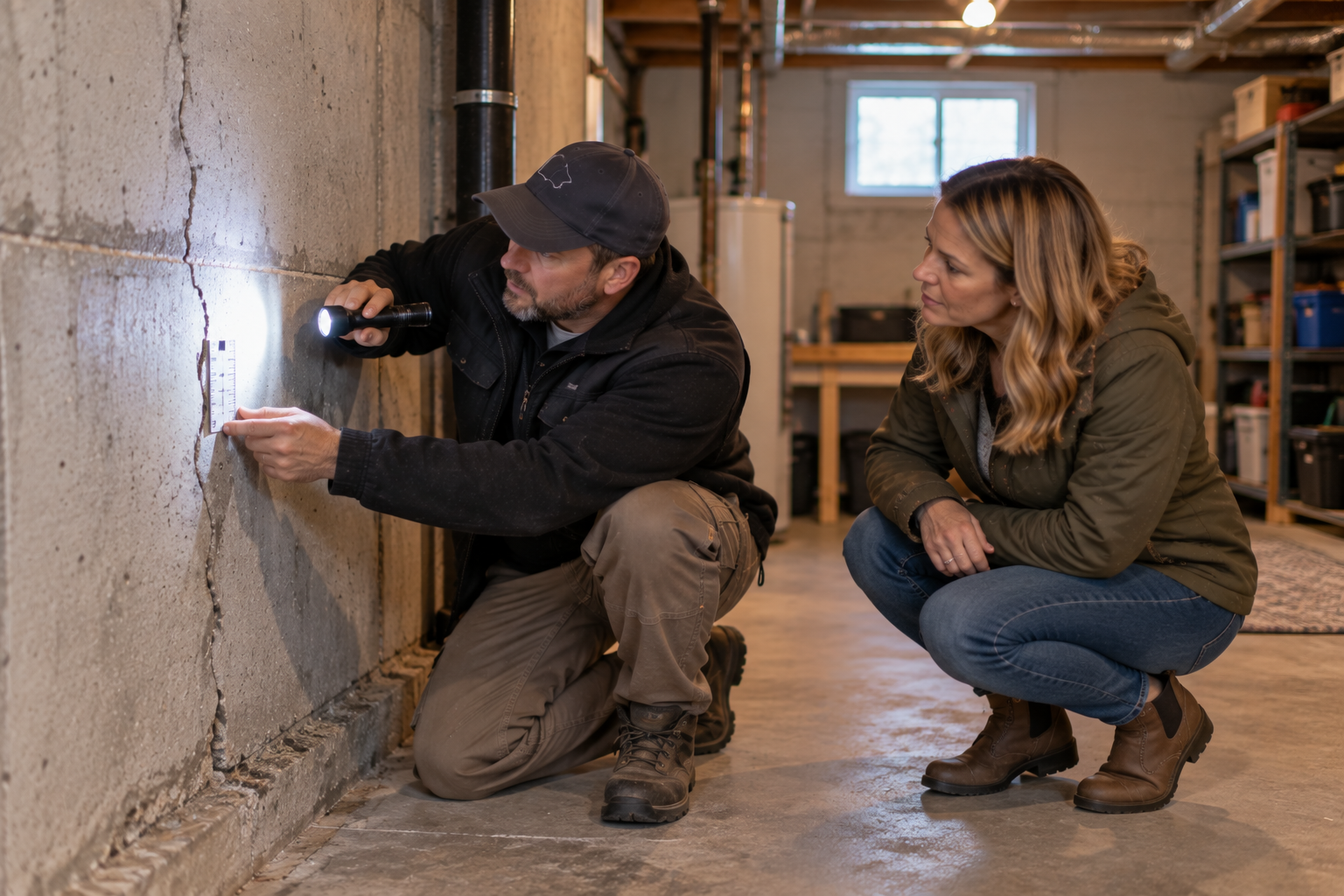
Foundation concern being evaluated by a building professional

Moisture Problems Sometimes Need More Investigation

Water staining tells you that water has been there.

It doesn't always tell you:

  • Where the water came from

  • Whether the source has been repaired

  • Whether the problem is still active

  • What may be concealed behind the finished surface

  • How extensive any resulting damage may be

An inspector may use visible evidence and moisture readings to help evaluate the situation within the scope of the inspection.

But significant or unexplained moisture can justify additional investigation.

That might involve a roofer, plumber, foundation contractor, building professional or another specialist depending on the suspected source.

The right specialist depends on the problem.


A Sewer Line Can Be a Separate Question

On a property connected to municipal sewer, the plumbing inside the house isn't necessarily the end of the investigation.

The lateral connecting the home to the municipal system can be another consideration.

A sewer camera inspection may sometimes be worth considering—particularly where there are signs of drainage problems, a history of backups, older buried piping, mature trees near the route or another reason to question the condition of the line.

This isn't something every buyer needs to order.

It's another example of property-specific due diligence: investigate further when the property gives you a reason to ask the question.


Renovations Can Raise Questions Beyond Physical Condition

A beautifully renovated kitchen can look excellent during an inspection.

But a home inspection doesn't necessarily establish the permit or approval history of the work.

If a property has undergone significant alterations, buyers may want to understand what was changed and what documentation is available.

This can be particularly relevant for work involving:

  • Additions

  • Structural changes

  • Finished basements

  • New bedrooms or living spaces

  • Electrical work

  • Plumbing changes

  • Decks

  • Secondary suites

  • Major renovations

The appropriate municipal requirements depend on the property, location and work involved.

If the status of renovations matters to your purchase, investigate it rather than assuming that attractive finished work tells you everything about how it was completed.


Property Boundaries Aren't Determined by the Lawn

A fence isn't necessarily on the boundary.

A driveway isn't necessarily entirely within the property.

A shed that appears to belong to the house isn't proof of where the legal property line runs.

And a row of trees isn't a survey.

If boundaries matter to your purchase, additional investigation may be appropriate.

This becomes especially important when you're buying because of a particular feature:

  • A large yard

  • Waterfront access

  • A driveway

  • Space for a future garage

  • A detached building

  • Room for an addition

  • Access to another part of the property

Your lawyer and REALTOR® can help identify what information is available and when a surveyor or other professional may be appropriate.
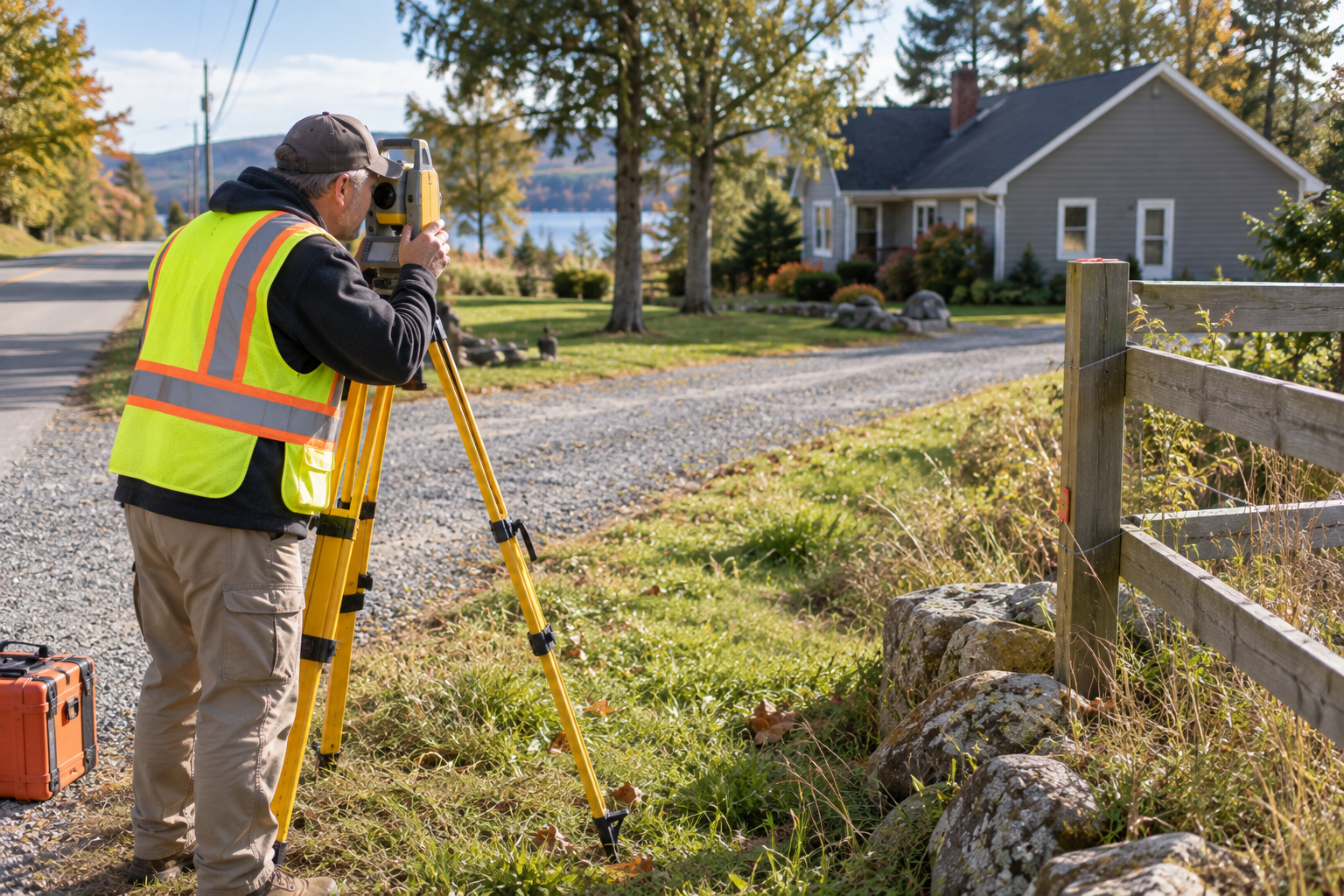
Property boundary being investigated before a home purchase

Access Can Matter Just as Much as Boundaries

Some Nova Scotia properties aren't accessed from a straightforward municipal road frontage.

You may encounter:

  • Shared driveways

  • Rights-of-way

  • Private roads

  • Easements

  • Shared maintenance arrangements

  • Access crossing another parcel

Being able to physically drive to a property doesn't, by itself, explain the legal rights and obligations associated with that access.

Questions about title, easements and legal access belong with your lawyer.

Questions about road condition, maintenance and practical use may require additional investigation as well.

This can be particularly important if year-round access, snow clearing or future financing depends on the arrangement.


Waterfront Property Creates Additional Questions

A waterfront home can require due diligence beyond the building itself.

Where exactly is the boundary?

Is the shoreline changing?

Are there erosion concerns?

How is the property accessed?

Where are the well and septic system in relation to the water?

What restrictions could affect future work near the shoreline?

Are docks, retaining structures or other waterfront improvements relevant to the purchase?

The view may be what first attracts you to the property.

Your investigation should focus on what owning that particular waterfront property actually involves.


Outbuildings Shouldn't Automatically Be Ignored

Garages, barns, workshops and other outbuildings can be a major part of a property's value to a buyer.

But the scope of a standard home inspection may not necessarily include every structure on the property in the same way as the house.

If an outbuilding matters to your decision, establish whether it is included in the inspection and what the inspector will evaluate.

A large barn you're counting on for animals, a workshop you plan to use every day or a detached garage supporting your purchase decision deserves appropriate attention.

Don't discover afterward that the structure you cared about wasn't part of the inspection you ordered.


Environmental Concerns Are Property-Specific

Most residential purchases don't require an exhaustive environmental investigation.

But certain properties or observations can create reasons to ask additional questions.

Examples might include:

  • Evidence of a previous fuel leak

  • Unusual tanks or containers

  • Former commercial or industrial use

  • Suspected contaminated soil

  • Nearby activities that create a specific concern

  • Other information discovered during due diligence

The appropriate investigation depends heavily on the circumstances.

This is an area where specialist environmental advice may be necessary rather than relying on assumptions.


Your Insurance Company Is Part of the Due-Diligence Process Too

A property can be physically acceptable to you and still raise questions for an insurer.

Depending on the home, an insurance company may want information about things such as:

  • Electrical systems

  • Heating equipment

  • Oil tanks

  • Wood-burning systems

  • Roof condition

  • Plumbing

  • Property occupancy

  • Other characteristics of the home

Don't wait until the day before closing to discover that your insurer needs information you don't have.

Starting the insurance conversation early gives you more time to determine whether additional inspections, reports or upgrades are required.


Your Lender May Also Require Information

Financing and property due diligence sometimes overlap.

NSREC notes, for example, that a financial institution may request a septic-system inspection. Nova Scotia Real Estate Commission

A lender may also have questions about a property's condition, appraisal, intended use or characteristics before final mortgage approval.

That's another reason not to assume that mortgage pre-approval means every property will automatically qualify.

The borrower matters to the lender.

So does the property being financed.


Specialists Answer Different Questions

One of the easiest mistakes during due diligence is asking the wrong professional to answer a question outside their area of expertise.

A REALTOR® isn't a structural engineer.

A home inspector isn't necessarily an electrician.

An electrician isn't a surveyor.

A surveyor isn't a septic installer.

Your lawyer isn't conducting the physical home inspection.

Each professional has a different role.

Part of good due diligence is recognizing which question you're trying to answer and who is qualified to answer it.


More Testing Isn't Automatically Better

It's possible to turn due diligence into an endless search for absolute certainty.

No investigation can guarantee that a house will never develop a problem.

The objective is to make reasonable, informed decisions based on the property and the information available.

Ask yourself:

What do I already know?

What don't I know?

Does the unanswered question materially affect my decision?

Who can give me the best information about it?

That approach is much more useful than ordering every conceivable test simply because it exists.


Leave Enough Time for Follow-Up

This is one of the practical reasons to think about due diligence early.

If your home inspection identifies a concern near the end of your condition period, you may need time to arrange another professional.

A specialist may not be available the same day.

Laboratory results may take time.

A contractor may need access to the property.

Additional information may need to be obtained.

In a Nova Scotia transaction, the Agreement of Purchase and Sale establishes deadlines for the buyer's conditions. NSREC confirms that buyers must complete their due diligence and provide the required written waiver of applicable conditions by the agreed deadline if they're satisfied; otherwise the agreement is deemed terminated. Nova Scotia Real Estate Commission

Know your deadlines and plan accordingly.

Buyers reviewing property inspection and testing information

What Tests or Investigations Might a Buyer Consider?

There isn't one list that applies to every home.

Depending on the property, your investigation could involve some combination of:

  • General home inspection

  • Well-water testing

  • Well-yield or water-supply investigation

  • Septic-system inspection

  • Radon testing

  • WETT inspection of a wood-burning system

  • Heating or HVAC evaluation

  • Oil-tank or oil-heating-system evaluation

  • Electrical evaluation

  • Plumbing investigation

  • Structural evaluation

  • Roofing evaluation

  • Sewer camera inspection

  • Moisture investigation

  • Survey or boundary investigation

  • Permit or renovation-history research

  • Environmental investigation

  • Specialist evaluation of an outbuilding

  • Other property-specific investigation

That looks like a long list.

It isn't a recommendation to order all of them.

It's a reminder that “I had a home inspection” and “I completed my due diligence” aren't always exactly the same thing.


Let the Property Tell You What to Investigate

Good due diligence isn't about trying to eliminate every possible risk from home ownership.

That's impossible.

It's about identifying the questions that matter before you become responsible for the property.

A private well creates questions about water.

A septic system creates questions about wastewater.

A wood stove creates questions about the solid-fuel system.

A foundation crack may create a structural question.

A major renovation may create questions about permits or workmanship.

A shared driveway may create questions about legal access.

Follow those questions.

Use the general home inspection as an important starting point, bring in specialists where appropriate and make sure you understand the information you receive before your condition deadlines arrive.

The objective isn't to prove that the house is perfect.

It's to understand the property you're actually buying.


Part of the Buyer Resource Centre: Practical guides to help you prepare, evaluate a property and navigate the home-buying process in Nova Scotia.

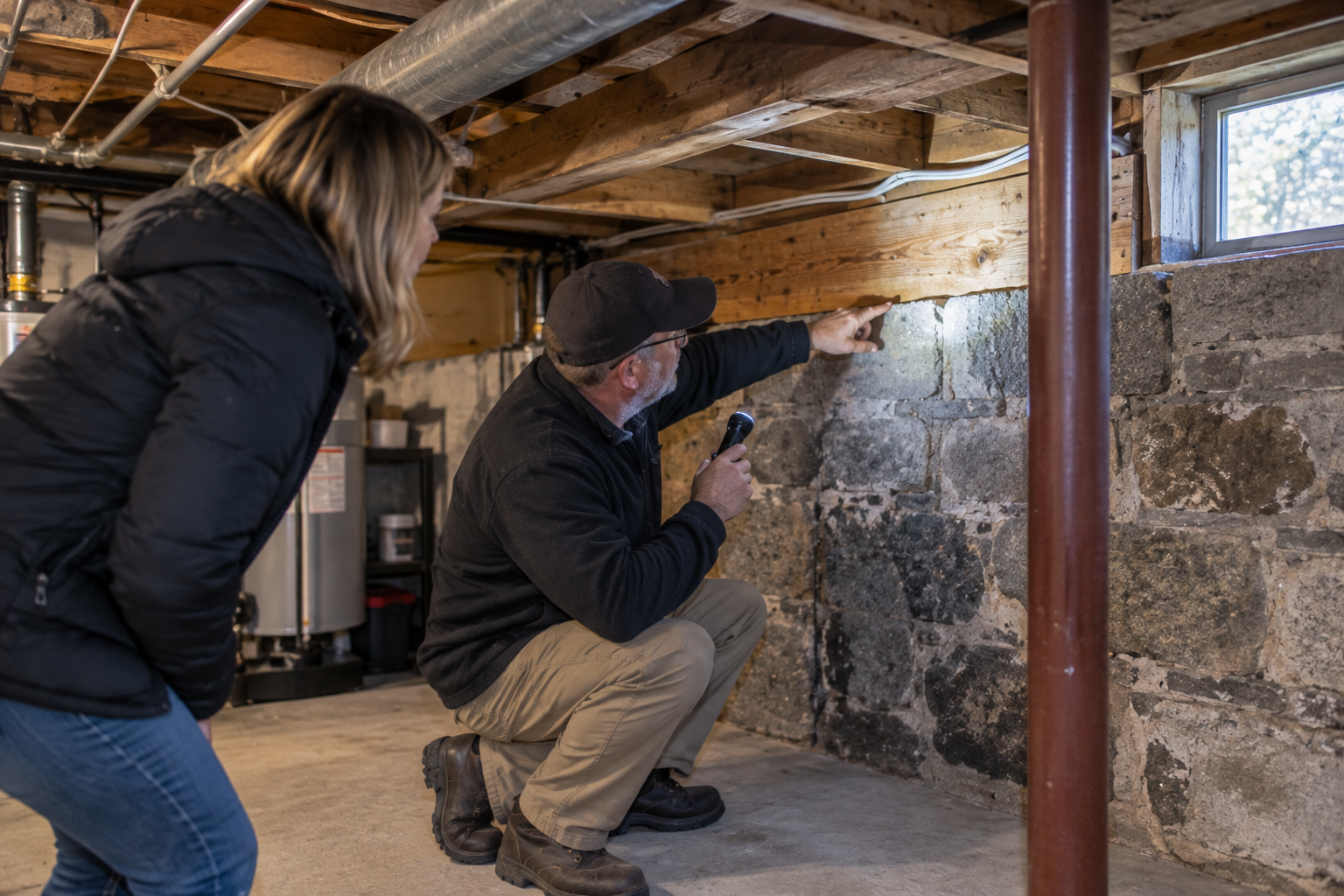
Read

Home Inspections in Nova Scotia: What Buyers Should Know

A home inspection is one of the most useful opportunities a buyer has to learn about a property before completing a purchase.

It can help you understand the condition of the home's major systems, identify visible problems, learn about maintenance that may be coming and determine whether anything deserves further investigation.

But a home inspection isn't a guarantee that nothing will ever go wrong.

It also isn't a pass-or-fail test.

The real value is information.

When you're buying a home in Nova Scotia, understanding what an inspection can tell you—and what it can't—can help you use that information much more effectively.


What Is a Home Inspection?

A home inspection is a professional examination of the visible and accessible components of a property.

The Nova Scotia Real Estate Commission strongly recommends that buyers have a home inspection and identifies property inspection as one of the common conditions included in an Agreement of Purchase and Sale. Nova Scotia Real Estate Commission

Depending on the property and the inspector's scope of work, the inspection may include major components such as:

  • Roof

  • Exterior

  • Structure and foundation

  • Plumbing

  • Electrical system

  • Heating and cooling

  • Interior

  • Attic

  • Insulation and ventilation

The purpose isn't to prove that everything is perfect.

It's to give you a better understanding of the property you're considering buying.


A Home Inspection Is Primarily a Visual Inspection

This is one of the most important things for buyers to understand.

A standard home inspection generally evaluates visible and accessible components of the home.

The Canadian Association of Home & Property Inspectors (CAHPI) describes its standard as a visual building inspection covering major systems and components. Its standards also make clear that this type of inspection isn't a verification that a property complies with every building code, regulation or insurance requirement. Cahpi

An inspector generally isn't opening finished walls to see the wiring behind them, excavating around the foundation or dismantling equipment to inspect every internal component.

That means there are limits to what any inspection can reveal.

A finished basement wall can conceal what is happening behind it.

Snow can prevent parts of a roof from being fully evaluated.

Stored belongings can block access.

An attic hatch may be inaccessible.

Understanding these limitations doesn't make the inspection less valuable. It helps you understand what the inspection actually represents.

Home inspector examining visible components of a house

A Home Inspection Isn't the Same as a Building-Code Inspection

Buyers sometimes expect a home inspector to determine whether every part of a house meets current building code.

That's not generally the purpose of a standard home inspection.

Building codes also change over time.

A house built decades ago wasn't necessarily constructed to today's requirements, and the presence of an older building component doesn't automatically mean that it must be upgraded simply because newer construction would be done differently.

An inspector may identify conditions that appear unsafe, unusual or worthy of further investigation.

But don't assume a standard home inspection provides formal certification that the entire property complies with current codes.

If a specific code, permit or compliance issue matters to your purchase, it may require investigation through the appropriate municipality, authority or qualified professional.


The Inspector Isn't There to Decide Whether You Should Buy the House

A home inspector provides information.

The buying decision remains yours.

An inspection report may contain dozens of observations, ranging from small maintenance items to significant concerns.

A long report doesn't automatically mean the house is bad.

Likewise, a short report doesn't guarantee that the property will never need repairs.

CAHPI describes the inspector's role similarly: the inspector provides information to help the buyer make a decision rather than making the purchasing decision for them. Cahpi

Your job is to understand which findings matter to you.


Choose the Inspector, Not Just the Inspection Company

Not every inspector has the same experience, qualifications or approach.

In Nova Scotia, the Real Estate Commission specifically notes that home inspectors are not regulated by the Commission and recommends confirming that the inspector carries Errors and Omissions insurance. Nova Scotia Real Estate Commission

When choosing an inspector, consider asking about:

  • Training and qualifications

  • Experience

  • Professional affiliations

  • Standards of practice followed

  • Errors and Omissions insurance

  • What is included in the inspection

  • What isn't included

  • Whether you'll receive photographs

  • How the findings will be reported

  • Whether you can attend

Price can certainly be part of the decision.

But when you're using an inspection to help evaluate a purchase worth hundreds of thousands of dollars, experience, scope and communication matter too.


Attend the Inspection If You Can

An inspection report is useful.

Walking through the property with the inspector can be even more useful.

Both the Nova Scotia Real Estate Commission and CAHPI encourage buyers to consider attending so they can ask questions and become more familiar with the property. Nova Scotia Real Estate Commission

During an inspection, you may be able to see:

  • Where the main water shutoff is

  • Where the electrical panel is

  • How the heating system operates

  • Where the attic access is

  • Which maintenance items should be monitored

  • What an inspector means when describing a particular concern

Something that sounds alarming in a written report may be easier to understand when the inspector shows it to you.

Conversely, seeing a problem in person can help you appreciate why the inspector considers it significant.

Home buyer attending a professional home inspection

Don't Turn the Inspection Into a Second Showing

Attending the inspection doesn't mean you need to follow the inspector every second.

Inspectors need room to work and concentrate.

Use the opportunity to learn about the house, but allow the inspector to follow their process.

There may also be areas you shouldn't enter because of safety, access or the inspector's own procedures.

A good approach is to ask the inspector how they prefer to communicate during the inspection.

Some explain findings as they go.

Others prefer to complete portions of the inspection before reviewing observations with the buyer.


What Does the Inspector Look at Outside?

The inspection begins before anyone enters the house.

Exterior conditions can provide important clues about what's happening inside.

Depending on accessibility, an inspector may look at areas such as:

  • Roof covering

  • Flashing

  • Chimneys

  • Gutters and downspouts

  • Exterior cladding

  • Windows and doors

  • Decks and porches

  • Foundation

  • Grading

  • Drainage

  • Visible structural components

Water management deserves particular attention.

Where does roof water go?

Does the ground slope toward or away from the foundation?

Are downspouts discharging beside the house?

Are there signs of deterioration where exterior materials meet?

Many interior moisture problems begin outside.

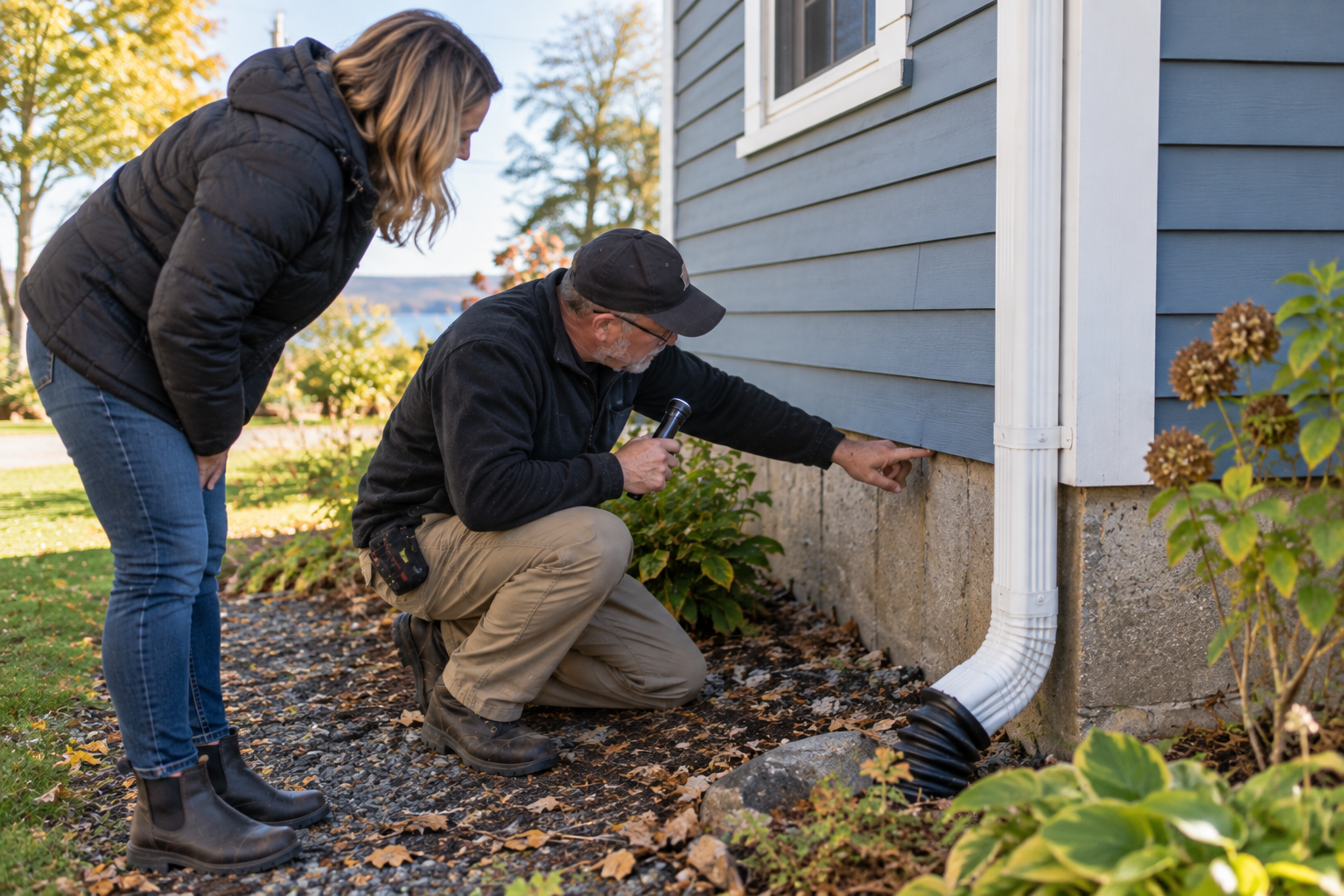
Inspector evaluating the exterior and drainage around a home

What Happens in the Basement or Crawlspace?

Basements can reveal a great deal about a house.

An inspector may be able to evaluate visible portions of:

  • Foundation

  • Framing

  • Support posts and beams

  • Plumbing

  • Electrical wiring

  • Heating equipment

  • Moisture conditions

  • Insulation

  • Drainage systems

In an older home, the basement may also show changes made over several generations.

New plumbing may run beside older plumbing. Structural repairs may be visible. Heating systems may have been replaced. An addition may have a different foundation from the original house.

Again, the goal isn't to expect everything to look new.

It's to understand what is there and whether anything warrants further investigation.


The Attic Can Be One of the Most Informative Areas

If the attic is accessible, it can provide information that isn't visible from the finished rooms below.

An inspector may look for things such as:

  • Roof structure

  • Evidence of previous leakage

  • Insulation

  • Ventilation

  • Visible electrical wiring

  • Chimney condition

  • Moisture or staining

  • Signs of pests

  • Alterations to framing

Access matters.

CAHPI notes that when components aren't accessible, the inspector may be unable to inspect them and should identify that limitation in the report. Cahpi

If an important area can't be inspected, ask what that means and whether any follow-up investigation makes sense.

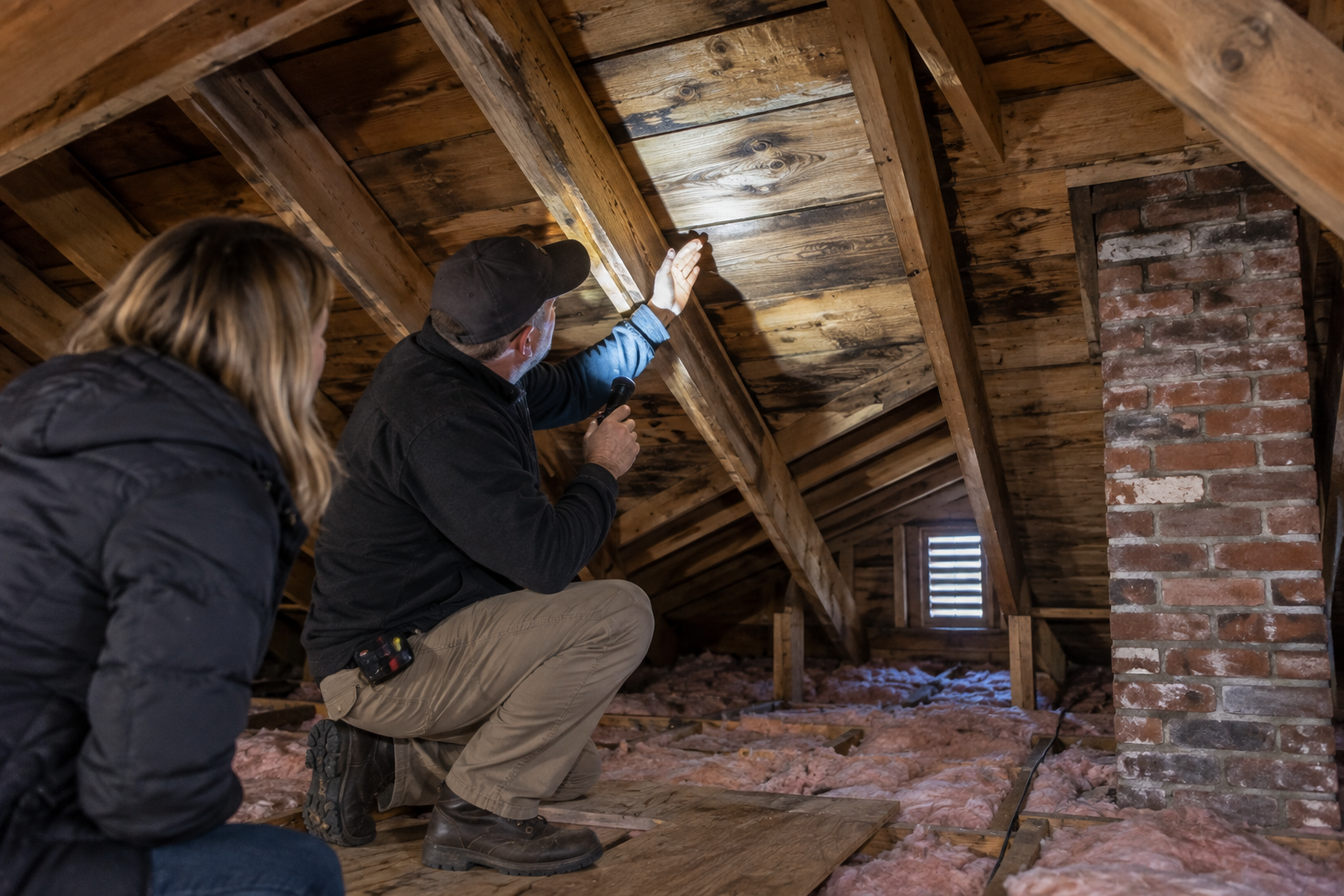
Home inspector examining insulation and roof framing in an attic

Electrical Systems Deserve More Than a Quick Look at the Panel

The electrical panel is important, but it's only one part of the electrical system.

An inspector may look at visible wiring, receptacles, grounding, panels and other accessible components.

In older or renovated homes, electrical work may have been completed at several different times.

The inspection may identify something that should be evaluated by a licensed electrician.

That's an important distinction.

A home inspector is generally evaluating the overall property as a generalist. When a specific technical concern is identified, a specialist may be better positioned to determine exactly what is happening and what, if anything, needs to be done.

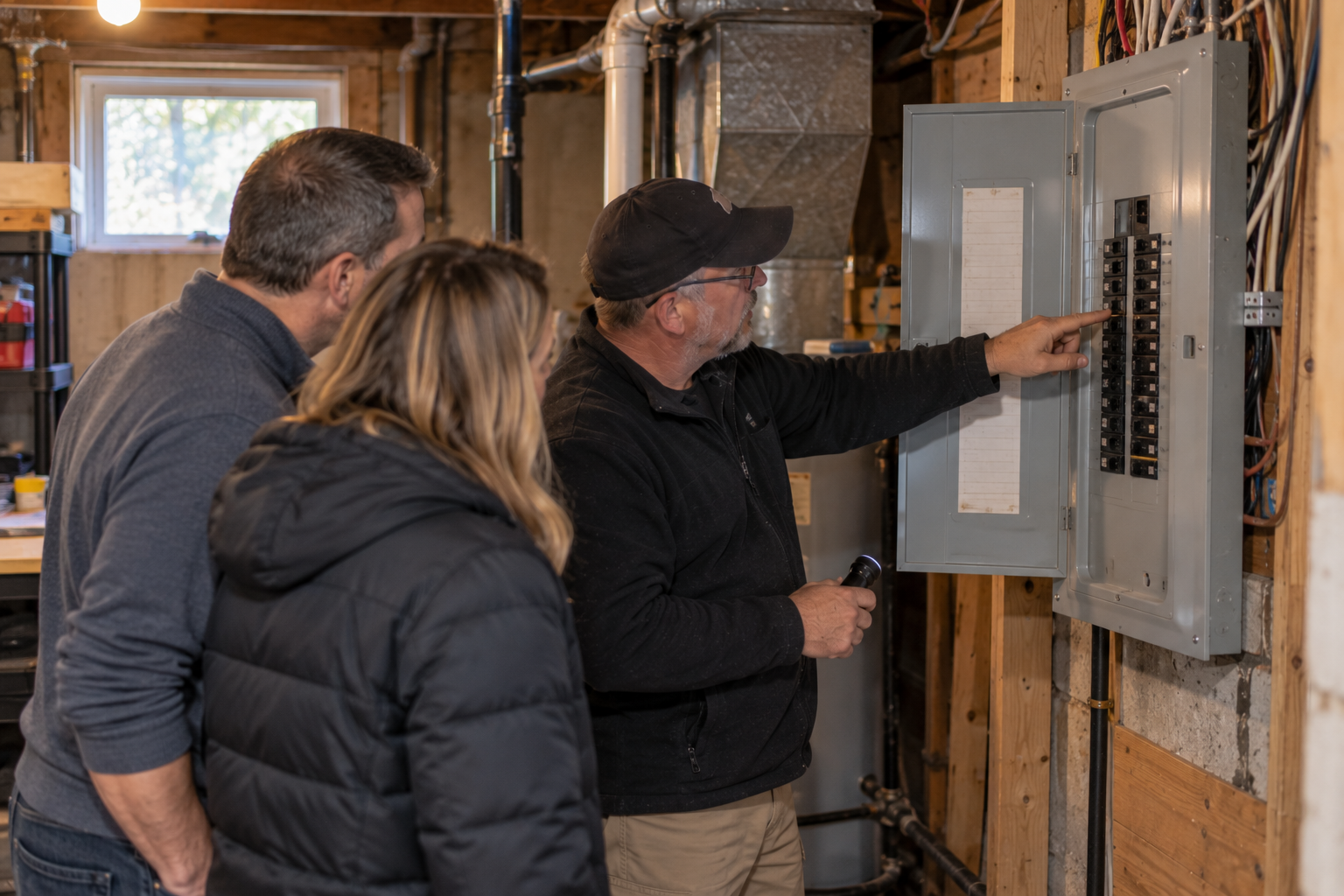
Electrical panel being examined during a home inspection

Plumbing Is More Than Checking Whether the Taps Work

Running the taps can provide useful information, but an inspection can go further.

Visible plumbing may be evaluated for:

  • Leaks

  • Corrosion

  • Drainage

  • Water pressure or flow concerns

  • Fixture operation

  • Water-heating equipment

  • Visible supply and waste piping

However, the inspector can't see every pipe hidden behind walls, ceilings or floors.

And if the property uses a private well or septic system, those systems may require their own testing or specialized inspections rather than relying on the general home inspection alone.


Heating and Cooling Systems Are Part of the Picture

Nova Scotia homes can use a wide variety of heating systems.

During an inspection, visible heating and cooling equipment may be evaluated for operation and apparent condition within the inspector's scope.

That might include:

  • Furnaces

  • Boilers

  • Heat pumps

  • Electric heating

  • Distribution systems

  • Visible fuel-related components

  • Thermostats

But a home inspector isn't necessarily an HVAC technician.

If the equipment has a problem, is unusually old or raises a specific concern, further evaluation by a qualified heating professional may make sense.

The same principle applies to many components of the house:

the inspection can identify the question; a specialist may be needed to provide the detailed answer.


A Home Inspection Doesn't Replace Well and Septic Investigation

This is particularly important in Nova Scotia.

A property may look entirely conventional but still rely on a private well and on-site septic system.

The Nova Scotia Real Estate Commission recommends septic inspection before finalizing the purchase of a property with an on-site system and notes that the inspection may involve pumping the tank and examining the disposal field. It also identifies licensed septic installers, licensed sewage haulers and professional engineers as professionals who may conduct this type of inspection. Nova Scotia Real Estate Commission

Water testing, well investigation and septic inspection should therefore be considered separately from the general home inspection.

Don't assume that ordering a home inspection automatically covers all three.


A Home Inspection Doesn't Test for Everything

Another common misconception is that a home inspection is a comprehensive test for every possible problem.

It isn't.

Depending on the property, separate investigation may be appropriate for things such as:

  • Well water

  • Septic system

  • Radon

  • Wood-burning appliances

  • Sewer lines

  • Environmental concerns

  • Structural issues

  • Electrical concerns

  • Plumbing concerns

  • Oil tanks

  • Property boundaries

  • Permits or renovation history

Some inspectors may offer additional services.

Others may refer you to specialists.

What's appropriate depends on the particular property.

That's why due diligence should be designed around the house you're actually buying, rather than treating every property exactly the same way.


Radon Is a Good Example of the Inspection's Limits

You can't determine a home's radon level simply by looking at it.

Testing is required.

Nova Scotia says testing is the only way to determine whether a home has elevated radon, and Health Canada recommends a long-term test of at least three months. Government of Nova Scotia

That timeline also illustrates why not every question about a property can necessarily be answered during a typical purchase-condition period.

The important thing is to understand the limitation and decide what information you need before proceeding and what may need to be addressed after ownership.


The Property Disclosure Statement Doesn't Replace an Inspection

If the seller provides a Property Disclosure Statement, it can be a useful source of information about the property's history.

But it isn't the same thing as an inspection.

The Nova Scotia Real Estate Commission points out that the seller may not know about every defect and that the information in a Property Disclosure Statement is based on the seller's personal knowledge. Nova Scotia Real Estate Commission

A seller may genuinely be unaware of a condition hidden behind a finished wall or beneath a roof covering.

Similarly, your REALTOR® may notice visible concerns during a showing, but that isn't a substitute for a professional property inspection.

These sources of information complement one another.

They don't replace one another.


What If the Inspector Finds a Problem?

This is where buyers sometimes become overwhelmed.

Finding problems is part of the inspection process.

Homes require maintenance.

Components wear out.

Older properties may have repairs or systems approaching replacement.

The important questions are:

What was found?

How significant is it?

Does it need immediate attention?

Should a specialist investigate it?

What could it reasonably cost to address?

Does it change how you feel about purchasing the property?

A loose handrail and a significant structural concern shouldn't receive the same weight simply because both appear in the report.

Prioritize.

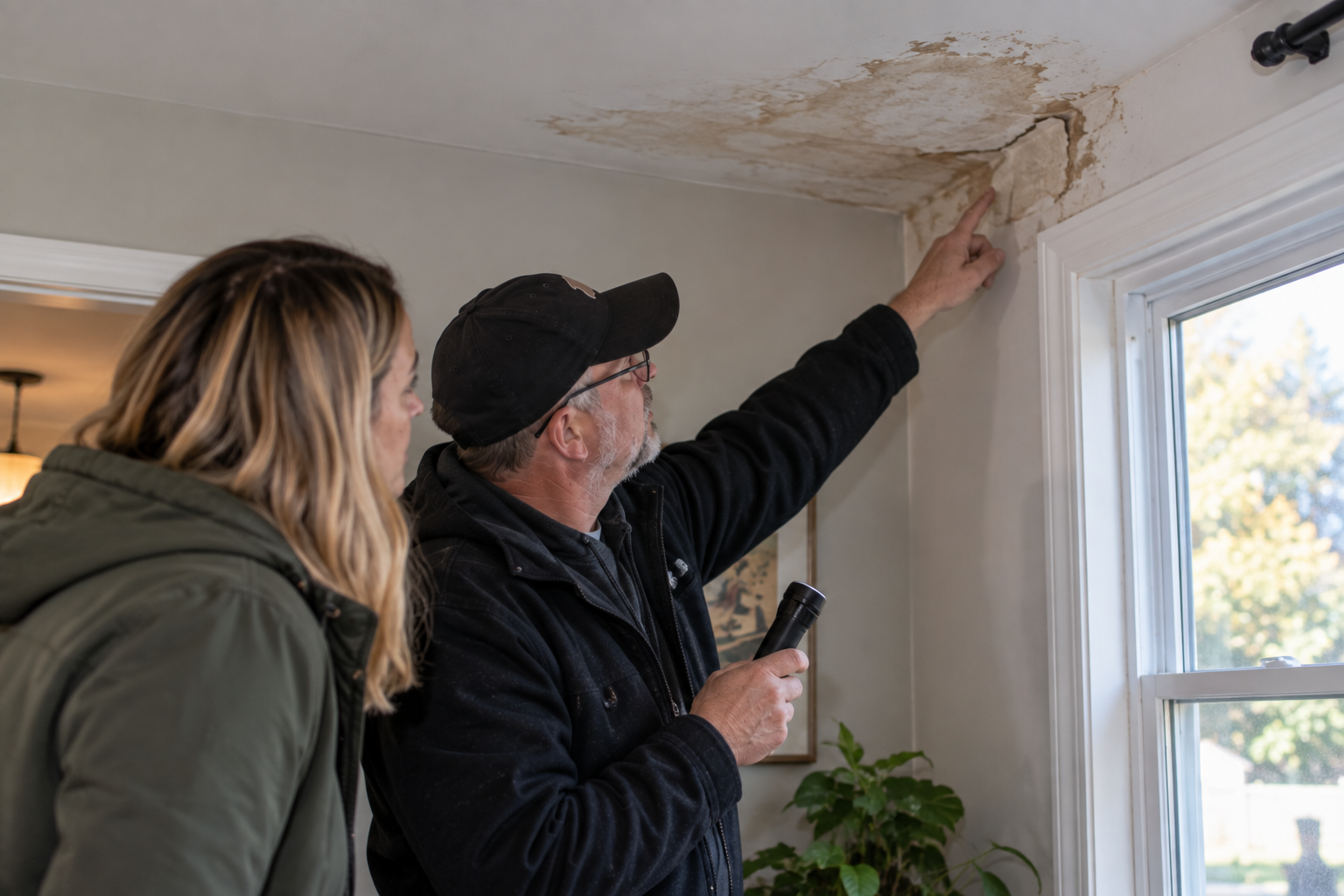
Buyer reviewing a concern identified during a home inspection

Don't Expect the Inspector to Price Every Repair

An inspection report may help you identify repairs, but a home inspector isn't necessarily the right person to provide a firm repair quote.

If the cost matters to your decision, obtaining information from the appropriate contractor or specialist can be much more useful.

For example, if an inspector identifies a roofing concern, a roofing contractor may be able to determine whether a localized repair is appropriate or whether more substantial work is required.

The same principle applies to electrical, plumbing, structural and heating concerns.

Get the right person answering the right question.


An Inspection Report Isn't Automatically a Renovation List for the Seller

A home inspection may identify numerous maintenance items and improvements.

That doesn't automatically mean the seller is required to repair all of them.

What happens after an inspection depends on the Agreement of Purchase and Sale, the inspection condition, the findings, the buyer's priorities and what the parties agree to do.

Possible outcomes can vary.

A buyer may decide they're satisfied and proceed.

A concern may require additional investigation.

The parties may agree to an amendment addressing an issue.

Or a buyer may determine that they're not satisfied with their condition.

The important point is that the inspection gives you information to make a decision; it doesn't automatically dictate what the seller must do.


Inspection Conditions Have Deadlines

This is particularly important in a Nova Scotia real estate transaction.

The Agreement of Purchase and Sale can make the purchase conditional on the buyer being satisfied with specified conditions, including property inspection.

Those conditions have a deadline.

Under the current Nova Scotia process, when a buyer is satisfied with the applicable buyer conditions, written notice is provided using Form 408: Buyer Waiver of Conditions on or before the agreed deadline. If the required waiver isn't provided by the deadline, the agreement is deemed terminated. Nova Scotia Real Estate Commission

That means inspection day isn't the deadline for simply receiving a report.

You need enough time to understand the findings, complete any necessary follow-up and make your decision within the timeline established in your agreement.


Sometimes the Inspection Creates More Questions

That's normal.

A general inspection may identify a concern without being able to determine its full extent.

For example:

An inspector notices unusual foundation movement.

An electrician may need to evaluate older wiring.

A roofing contractor may need to assess a leak.

A heating technician may need to examine a boiler.

A septic professional may need to investigate the on-site system.

In those situations, the inspection has done something valuable.

It has told you where to look more closely before making your decision.


What About Newer Homes?

New doesn't mean inspection-proof.

Newer houses can still have installation issues, drainage problems, incomplete work, equipment concerns or other defects.

A home doesn't need to be old before an inspection can provide useful information.

The questions may simply be different.

With an older property, you may be trying to understand decades of changes and repairs.

With a newer property, you may be looking more closely at installation, workmanship, operation and whether components are performing as expected.


What About a House Being Sold “As Is”?

“As is” doesn't necessarily make information less valuable.

In fact, understanding the property's condition may become even more important.

The seller's willingness or obligation to make repairs is a separate issue from your need to understand what you're purchasing.

An inspection can still help you estimate future work, identify concerns that require specialist investigation and decide whether the property fits your expectations and budget.

The exact effect of “as is” wording depends on the agreement, so discuss the particular terms with your REALTOR® and obtain legal advice where appropriate.


What Should You Do Before the Inspection?

Once an inspection is scheduled, think about what you already know about the property.

Review available information such as:

  • Property Disclosure Statement

  • Age of the home

  • Known renovations

  • Heating systems

  • Well and septic information

  • Previous concerns noticed during showings

  • Features you don't understand

  • Areas you specifically want the inspector to look at

Make a list of questions.

You don't need to become a home inspector before the appointment.

You simply want to make sure the inspection helps answer the questions that matter to you.


What Should You Do After the Inspection?

Don't look only at the summary page.

Review the report.

Ask questions about anything you don't understand.

Separate routine maintenance from larger concerns.

Determine whether any findings require a specialist.

If estimates or additional inspections are important to your decision, remember your condition deadline.

Then consider the property as a whole.

Every house will eventually require maintenance and repairs.

The goal of the inspection isn't to find a home that will never need work.

It's to help you understand what you're buying today and what may be ahead.

Home buyers reviewing a property inspection report

Use the Inspection to Learn About the Home

A home inspection is sometimes treated as an obstacle between an accepted offer and closing.

It can be much more useful than that.

It's an opportunity to spend time learning how the property works.

Where does the water shut off?

How old is the heating equipment?

What maintenance should you plan for?

What does the inspector think you should monitor?

Which concerns deserve immediate attention and which are longer-term ownership items?

Those are useful questions even when the inspection doesn't uncover a major problem.


Information Is the Real Value of the Inspection

A home inspection can't reveal everything.

It can't see through walls.

It can't predict exactly when an appliance will fail.

It doesn't replace every specialist, test or investigation that might be appropriate for a particular property.

And it doesn't make the buying decision for you.

What it can do is give you a much better understanding of the home before you take ownership.

Use the inspection to identify visible concerns, understand the home's systems, ask better questions and determine whether anything needs a closer look.

Then use that information—along with the rest of your due diligence—to decide whether you're comfortable moving forward.


Part of the Buyer Resource Centre: Practical guides to help you prepare, evaluate a property and navigate the home-buying process in Nova Scotia.
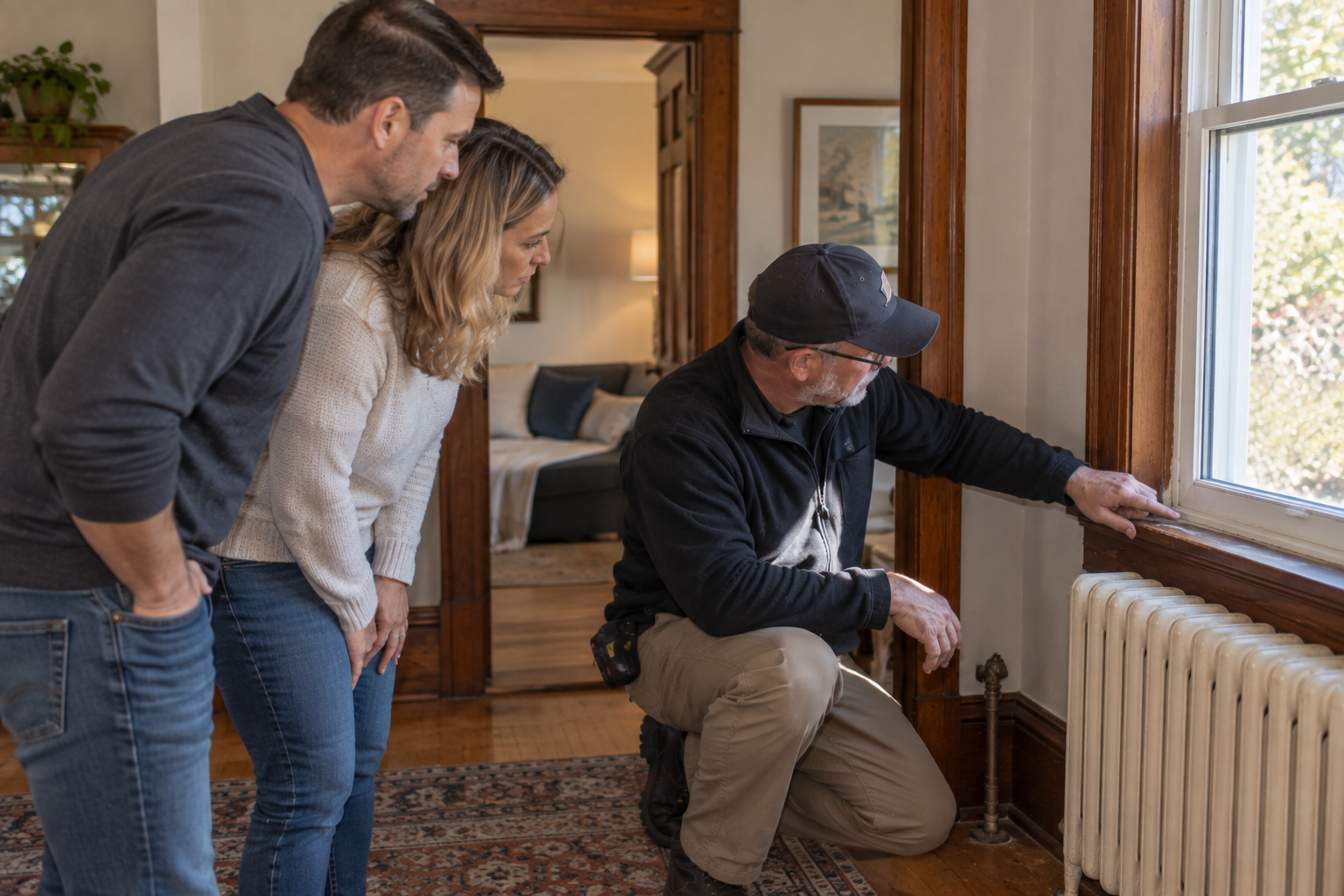
Read