RSS

Buying Waterfront Property in Nova Scotia: What Should You Investigate?

There's something special about living beside the water.

It might be a cottage overlooking a quiet lake, a home along the Annapolis River, a property beside a tidal inlet, or an oceanfront home with views across the Bay of Fundy.

Waterfront properties can offer privacy, scenery, recreation and a lifestyle that's difficult to duplicate.

But buying waterfront property involves more than evaluating the house and enjoying the view.

The water itself, the surrounding land and the rules governing how the property can be used all deserve careful investigation.

Flooding, shoreline erosion, insurance, building restrictions, septic systems, drinking water and legal access can all affect whether a property is suitable for your plans.

When I'm helping buyers consider waterfront homes in Nova Scotia, I encourage them to look beyond the appearance of the property and understand how it functions throughout the year.

Here are the important areas I recommend investigating before committing to a waterfront purchase.


Not All Waterfront Properties Have the Same Risks

One of the first things to understand is that waterfront properties can be very different depending on the type of water they border.

An oceanfront property may experience tides, storm surge, salt exposure and coastal erosion.

A lakefront property may experience seasonal changes in water levels, shoreline erosion, ice movement or flooding during periods of heavy rainfall.

Riverfront properties may be affected by spring runoff, heavy rain, ice jams and flooding from upstream.

Properties along tidal rivers and estuaries can experience a combination of river flooding and coastal water-level changes.

Even two properties on the same lake or river may have very different risks depending on their elevation, shoreline conditions and surrounding terrain.

Being beside the water doesn't automatically make a property high risk, but it does mean the location deserves more investigation than the view alone.


Is the Property Actually Waterfront?

A listing may describe a property as waterfront, water access or water view.

Those descriptions don't necessarily mean the same thing.

A waterfront property may have direct frontage on the ocean, a lake or a river.

A water-access property might be separated from the shoreline but have a deeded right-of-way or shared access area.

A water-view property may simply overlook the water without any legal right to reach it.

It's important to understand exactly what you're purchasing.

Questions worth investigating include:

  • Does the property legally extend to the shoreline?

  • Is there a road, separate parcel or Crown land between the property and the water?

  • Is access private, shared or provided through a right-of-way?

  • Are there restrictions on using the shoreline?

  • Does an existing dock or wharf belong to the seller?

  • Are there rights or easements benefiting neighbouring properties?

In Nova Scotia, ownership of waterfront land doesn't automatically mean ownership of the submerged land or every part of the shoreline.

Coastal submerged land is generally provincial Crown land unless a recognized exception applies. Inland water boundaries can also involve specific legal considerations.

When waterfront boundaries or access rights are important to a purchase, I encourage buyers to have their lawyer review the title and any relevant surveys or easements.

A licensed land surveyor may also be needed to establish where the property boundaries actually lie.

Never assume that a visible shoreline, pathway or dock is legally included simply because it appears to be part of the property.


Flood Zones and Flood History Should Be Investigated

Flooding is one of the most important considerations when buying waterfront property.

And it isn't limited to oceanfront homes.

River valleys, lakeshores, low-lying land and properties near streams can all experience flooding under certain conditions.

In Nova Scotia, potential causes include:

  • Heavy or prolonged rainfall

  • Rapid snowmelt

  • River overflow

  • Ice jams

  • Storm surge and unusually high tides

  • Blocked drainage systems or culverts

  • Changes in upstream water flow

  • Water collecting in low-lying areas

The Annapolis River and its tributaries are examples of waterways where buyers should consider surrounding terrain and the possibility of high-water events.

Along the Bay of Fundy and other coastal areas, tides and storm surge introduce additional considerations.

One of the first steps is to investigate whether the property is located within a known flood-risk area.

Municipal planning departments may have floodplain information, development restrictions or mapping relevant to a particular location.

For coastal properties, the Nova Scotia Coastal Hazard Map can help buyers investigate potential coastal flooding and erosion risks. However, it does not provide a complete assessment of river or lake flooding.

The absence of a property from a flood map doesn't guarantee that it has never flooded or cannot flood in the future.

Flood mapping has limitations, and not every watercourse or potential flood area has been mapped in the same detail.

I encourage buyers to ask about previous flooding, review available mapping and consider professional advice when the location raises concerns.

River and low-lying land in the Annapolis Valley

Look for Evidence of Previous Flooding

Maps are useful, but the property itself may also provide important information.

During a viewing, I pay attention to the surrounding land as well as the house.

Potential indicators worth investigating include:

  • Water staining in a basement or crawl space

  • Repeated repairs to lower-level finishes

  • Erosion or deposited debris along the shoreline

  • Drainage channels leading toward the home

  • Low areas where water may collect

  • Sump pumps or drainage systems

  • Evidence of previous shoreline protection work

  • Changes in grading around the foundation

None of these automatically proves that a property has experienced damaging flooding.

A sump pump, for example, may simply be part of an appropriate drainage system.

But these features can justify additional questions.

Ask whether the seller is aware of previous flooding, water intrusion, erosion or insurance claims.

Where appropriate, a home inspector, drainage specialist, engineer or other qualified professional can help assess concerns.

A property that looks dry during a summer viewing may behave very differently during spring runoff or a major rainstorm.


Shoreline Erosion Can Change a Property Over Time

Waterfront land isn't always static.

Waves, currents, ice, storms and changing water levels can gradually alter the shoreline.

Some properties have rocky shorelines that are relatively resistant to erosion.

Others have softer soil, steep banks or exposed areas where erosion may be more noticeable.

This can affect more than the appearance of the property.

Over time, erosion may threaten:

  • Buildings located close to the shoreline

  • Decks, stairs and walkways

  • Driveways and access routes

  • Septic systems

  • Landscaping and retaining structures

  • The amount of usable land

Existing retaining walls, rock protection or other shoreline structures should also be examined.

Their presence doesn't necessarily mean the shoreline is permanently protected.

Repairs or new shoreline protection work may require permits or professional design.

For oceanfront buyers, Nova Scotia provides a Coastal Hazard Map and a property-specific Coastal Hazard Assessment Report service.

These can be useful starting points, but they aren't substitutes for a site-specific professional assessment when erosion is a serious concern.

A beautiful waterfront location today should also be evaluated for how it may change in the years ahead.
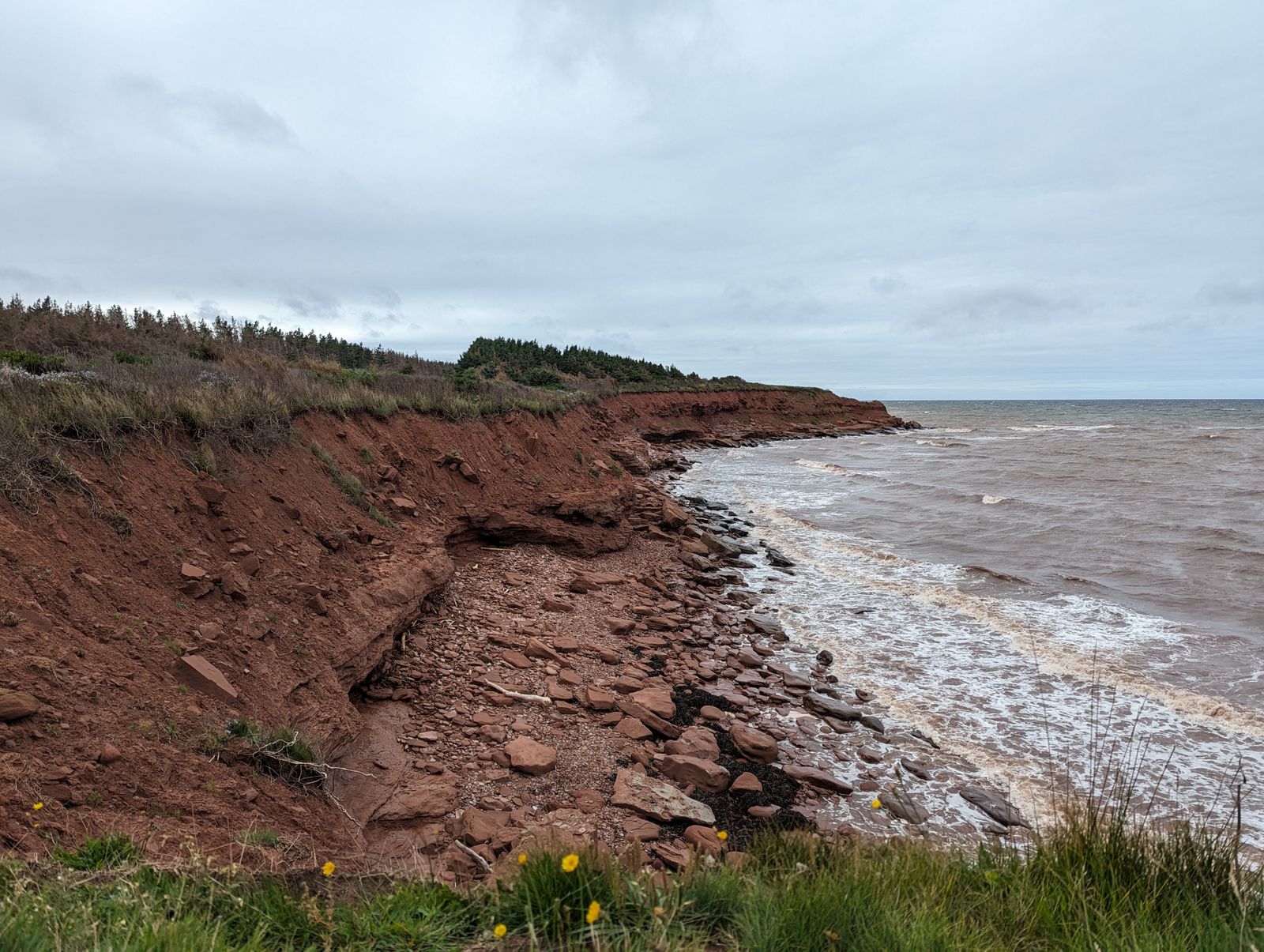
Natural shoreline bank along a Nova Scotia waterfront

Insurance Can Be More Complicated Near Water

Home insurance is another important part of waterfront due diligence.

A standard home insurance policy doesn't necessarily cover every type of water-related damage.

For example, coverage for sewer backup, overland flooding and coastal flooding may be treated differently depending on the insurer and policy.

Some types of coverage may be optional, restricted or unavailable for certain properties.

Insurance companies may consider factors such as:

  • Distance from the shoreline

  • Property elevation

  • Flood history and mapped risk

  • Proximity to rivers or other watercourses

  • Construction type and foundation

  • Whether the property is seasonal or occupied year-round

  • Previous claims

  • Access for emergency services

An insurer may provide coverage for the home while excluding certain flood-related losses.

That distinction matters.

Having home insurance doesn't automatically mean every potential source of waterfront flooding is insured.

I encourage buyers to speak directly with an insurance broker or provider early in their purchase conditions.

Ask specifically what types of water damage are covered, what exclusions apply, whether deductibles differ and whether the insurer has any property-specific requirements.

If you're obtaining a mortgage, the lender will also need to be satisfied with the insurance arrangements.

An insurance problem can therefore become a financing problem.


Check Local Zoning, Building Setbacks and Development Restrictions

One of the biggest mistakes a waterfront buyer can make is assuming that owning the property means they can build wherever they want.

Municipal land-use bylaws may establish restrictions involving:

  • Minimum setbacks from shorelines or watercourses

  • Building setbacks from property boundaries

  • Minimum lot sizes

  • Building height and permitted uses

  • Development within floodplains

  • Construction on steep slopes

  • Accessory buildings, garages and boathouses

  • Renovations or expansions of existing buildings

  • Subdivision of waterfront land

Requirements vary by municipality, zoning designation and property.

A setback is generally the minimum required distance between a building or development and a specified boundary or feature.

On a waterfront lot, that feature may include a shoreline, watercourse or wetland.

A property may have a substantial amount of land on paper but a much smaller area where construction is permitted.

This is particularly important when buying vacant waterfront land or a cottage you hope to expand.

An existing building close to the water may also be subject to rules that limit reconstruction or expansion.

The fact that a building already exists doesn't automatically mean you can enlarge it, replace it in the same location or rebuild it after major damage.

Before relying on future development plans, I encourage buyers to contact the municipality's planning or development department and obtain property-specific guidance.

Depending on the proposed work, provincial or federal requirements may also apply.


Can You Build a Dock, Wharf or Shoreline Structure?

A dock can be a major attraction when purchasing waterfront property.

But installing or replacing one isn't always as straightforward as it appears.

Different rules may apply to:

  • Floating docks

  • Permanent docks and wharves

  • Boat launches

  • Shoreline stairs and access structures

  • Retaining walls and erosion protection

  • Dredging or shoreline excavation

  • Culverts and watercourse crossings

In Nova Scotia, alterations to the bed or bank of a watercourse, or to water flow, may require a provincial notification or approval.

Buyers planning shoreline work should review the Nova Scotia watercourse alteration requirements to understand when provincial authorization may be necessary.

Work involving submerged Crown land may require separate authorization.

Federal requirements may also apply to certain projects affecting navigation or fish habitat.

The exact requirements depend on the location and type of work.

If a property already has a dock, ask whether permits or other authorizations were required and obtained.

If you intend to install one, investigate the requirements before purchasing.

Don't assume that because neighbouring properties have docks, you will automatically be permitted to build one.

Small wooden dock extending into a Nova Scotia lake

Wetlands and Environmentally Sensitive Areas Can Affect Your Plans

Not every part of a waterfront property is suitable for development.

Some lots include wetlands, marshes, seasonal drainage areas or other environmentally sensitive features.

These areas can play an important role in water filtration, wildlife habitat and floodwater storage.

They may also be subject to restrictions on filling, draining, excavation or construction.

A wet area that appears insignificant during a dry summer may be part of a larger wetland or drainage system.

If you're purchasing land with the intention of building, clearing or landscaping near the water, it's important to establish whether protected or regulated features are present.

A municipality, Nova Scotia Environment and Climate Change, or a qualified environmental professional may need to be consulted.


Septic Systems Deserve Special Attention on Waterfront Properties

Many waterfront homes and cottages in Nova Scotia use private septic systems.

Their location and condition can be especially important when the property is close to a lake, river or ocean.

A septic system generally includes a tank and a disposal area that treats wastewater through the surrounding soil.

Waterfront lots may present challenges involving:

  • Limited space between the house and shoreline

  • High groundwater

  • Shallow soil or bedrock

  • Poor drainage

  • Steep terrain

  • Older or undocumented systems

  • Difficulty locating a suitable replacement area

A system that appears to be functioning today may still create problems if it needs to be replaced.

For example, a small waterfront lot may have limited room for a new disposal field that meets current requirements.

That's why I encourage buyers to investigate not only the condition of the existing system but also its location and available documentation.

A septic inspection can help identify concerns, but it doesn't automatically establish that a replacement system could be installed in the same location.

If the septic system fails in the future, where could a replacement system go?

That question is particularly important for small waterfront lots.


Investigate the Well and Drinking Water Supply

A waterfront location doesn't guarantee a reliable or safe drinking water supply.

Many Nova Scotia waterfront properties rely on private wells.

Others, particularly older cottages, may draw water from a lake, river, spring or another surface-water source.

It's important to establish exactly where the household water comes from.

Private wells

Water testing is an important part of investigating a private drinking water supply.

Nova Scotia recommends testing private well water for bacteria every 6 months and chemical contaminants at least every five years. More frequent testing may be appropriate depending on the well's condition or potential contamination risks. Buyers can review Nova Scotia's well water testing recommendations for guidance on testing and interpreting results.

A satisfactory water test provides information about the sample collected at that time. It does not guarantee that water quality or quantity will remain unchanged.

For a drilled or dug well, buyers should investigate:

  • The type and location of the well

  • Available well records

  • Water quantity and recovery

  • Bacterial water quality

  • Chemical water quality

  • Proximity to septic systems and potential contamination sources

  • Whether the well has experienced shortages

  • Whether treatment equipment is installed

Waterfront properties can have additional concerns where groundwater interacts with nearby surface water.

Low-lying areas may also be more vulnerable to contamination during flooding.

Along coastal properties, saltwater intrusion can sometimes affect groundwater supplies.

Testing for chloride and related indicators may be appropriate where saltwater intrusion is suspected.

In Nova Scotia, naturally occurring substances such as arsenic, uranium and manganese are also important considerations for private well owners.

Lake, river or spring water

Some cottages use water drawn directly from a lake, river or spring.

This should not be treated as equivalent to a properly constructed private well.

Surface water can contain bacteria, parasites and other contaminants, even when it looks clear.

A surface-water supply intended for household drinking water generally requires appropriate filtration, disinfection, testing and ongoing maintenance.

The source may also be affected by seasonal water levels, drought or freezing.

When I'm helping buyers consider a property with an unconventional water supply, I encourage them to involve a qualified water-treatment professional and confirm that the system can reliably provide water suitable for its intended use.

Being surrounded by water doesn't mean you have an adequate supply of safe drinking water.

Private drilled well on a waterfront residential property

Is the Property Accessible Year-Round?

Some of Nova Scotia's most attractive waterfront properties are located along private roads or seasonal access routes.

That can be part of their appeal, but it also deserves investigation.

Questions include:

  • Is the road publicly maintained or privately owned?

  • Who is responsible for grading, repairs and snow removal?

  • Is there a formal road maintenance agreement?

  • Are there annual fees?

  • Is access legally registered?

  • Can emergency vehicles reach the property?

  • Is the road vulnerable to flooding or washouts?

  • Are bridges or culverts maintained?

  • Can the property be accessed during winter?

A cottage that is easy to reach in July may be more challenging during a February snowstorm.

If you plan to live there year-round, reliable access becomes particularly important.

Road conditions and legal access can also affect insurance and financing.


Understand Seasonal Water Levels and Recreational Use

Waterfront properties often look their best during the summer.

But water levels can change significantly throughout the year.

On lakes and rivers, spring runoff and heavy rainfall can raise water levels.

During dry periods, water may recede, exposing mud, rocks or shallow areas.

On tidal waterfront, the shoreline may look completely different at high tide and low tide.

This is especially noticeable around the Bay of Fundy.

If swimming, boating or fishing is important to you, investigate the actual conditions.

Consider:

  • Water depth near the shore

  • Rocky, muddy or sandy bottom conditions

  • Currents and tidal movement

  • Seasonal weeds or aquatic vegetation

  • Water quality and swimming advisories

  • Boat access at different water levels

  • Whether the water is suitable for the type of boat you intend to use

  • Winter ice conditions

  • Nearby recreational activity and noise

A property with a beautiful view may not provide the swimming or boating experience you expect.

When possible, I encourage buyers to see the shoreline under different conditions rather than relying entirely on listing photographs.


Existing Buildings and Cottages May Have Additional Limitations

Many older homes and waterfront cottages were built decades ago, sometimes under different building standards or planning requirements.

Some were originally designed for seasonal use and later converted for year-round living.

That history can raise questions involving:

  • Insulation and heating

  • Foundation construction

  • Plumbing and freeze protection

  • Electrical systems

  • Septic capacity

  • Permits for additions or renovations

  • Legal use and occupancy

  • Insurance eligibility

  • Mortgage financing

An attractive renovated cottage isn't automatically suitable for year-round use.

If you're planning to convert a seasonal cottage into a permanent residence, investigate the building, services and applicable municipal requirements before assuming that conversion is possible.


Consider Ongoing Maintenance and Long-Term Costs

Waterfront ownership may involve maintenance that isn't typical of an inland property.

Depending on the location, this could include:

  • Shoreline vegetation management

  • Dock removal and installation

  • Maintaining shoreline stairs or walkways

  • Erosion monitoring

  • Drainage and culvert maintenance

  • Salt-related corrosion

  • Repairs to private roads

  • Maintaining water-treatment equipment

  • Septic system maintenance

  • Higher or more specialized insurance costs

Not every waterfront property will have these expenses.

However, buyers should understand which responsibilities apply to the property they're considering.

A relatively inexpensive cottage can become costly if major shoreline, access or infrastructure work is required.


Questions to Ask Before Buying Waterfront Property

Before removing your purchase conditions, I encourage buyers to work through questions such as these:

  1. Does the property legally include waterfront frontage, or is access shared or provided through an easement?

  2. Are the boundaries and shoreline ownership clear?

  3. Has the property experienced flooding, erosion or water intrusion?

  4. Is it within a mapped flood-risk or coastal hazard area?

  5. What flood-related losses are covered or excluded by insurance?

  6. Are there municipal shoreline setbacks or restrictions on construction?

  7. Can existing buildings legally be expanded or replaced?

  8. Are permits required for a dock, wharf, retaining wall or shoreline work?

  9. Are there wetlands or other regulated environmental features?

  10. Where are the septic tank and disposal field located, and is there room for a replacement system?

  11. What is the drinking water source, and has it been properly tested?

  12. Is there reliable legal and physical access throughout the year?

  13. How do seasonal water levels affect the shoreline and recreational use?

  14. Are existing structures and improvements properly authorized?

  15. Are there ongoing maintenance costs or responsibilities that aren't immediately obvious?

Not every property will require the same level of investigation.

A modern year-round home on a large lakefront lot may present different concerns from an older cottage on a narrow tidal shoreline.

The goal is to identify the questions that matter for the specific property.

Buyer and real estate professional examining a waterfront property

Waterfront Living Can Be Wonderful — When You Understand What You're Buying

Waterfront property can offer an exceptional lifestyle.

Whether you're looking for a lakefront cottage, a riverfront home in the Annapolis Valley or a property overlooking the Bay of Fundy, the setting may be one of the biggest reasons you're interested.

But the most important details aren't always visible during a showing.

Flood exposure, erosion, legal boundaries, insurance, drinking water, septic systems and development restrictions can all affect how you use and maintain the property.

When I'm helping buyers explore waterfront properties in Nova Scotia, I encourage them to investigate these issues early and involve the appropriate professionals when additional information is needed.

A waterfront property doesn't need to be free of every potential concern. You need to understand the risks, restrictions and responsibilities before deciding whether it's the right property for you.


Part of the Buyer Resource Centre: Practical guides to help you prepare, evaluate a property and navigate the home-buying process in Nova Scotia.


Read

Your Mortgage Is Pre-Approved — So Why Can Financing Still Fall Through?

You've spoken with a mortgage broker or bank, provided your financial information and received a mortgage pre-approval.

You know approximately how much you can borrow, you've established a budget, and you're ready to start looking at homes.

Then you find a property you love.

Your offer is accepted, and everything seems to be moving in the right direction.

So why would financing still be a concern?

Because a mortgage pre-approval is not the same as final mortgage approval for the home you're purchasing.

A lender needs to approve both your ability to repay the mortgage and the property being used as security for the loan.

Even after an offer is accepted, there may be outstanding requirements involving an appraisal, income verification, the down payment, property insurance or the home's condition.

Understanding these differences can help you avoid an unexpected financing problem during your purchase.


What Does a Mortgage Pre-Approval Actually Mean?

A mortgage pre-approval is an important starting point when buying a home.

Depending on the lender and the type of pre-approval, it may involve reviewing your income, debts, credit history, available down payment and other financial information.

It can help establish:

  • Approximately how much you may qualify to borrow

  • An estimated mortgage payment

  • The mortgage rate or rate hold available to you

  • A realistic starting budget for your home search

Some pre-approvals involve a detailed review of supporting documents, while others are more preliminary.

That's an important distinction.

A pre-approval based largely on information you've provided may still require substantial verification before the lender makes a final decision.

Even a thoroughly reviewed pre-approval is generally subject to additional conditions.

Being pre-approved means you're in a better position to start shopping. It doesn't mean every property within your price range will qualify for financing.


The Lender Must Also Approve the Property

This is one of the most important parts of mortgage financing that buyers sometimes overlook.

You might qualify financially to purchase a $400,000 home.

But that doesn't automatically mean a lender will approve a mortgage on every property selling for $400,000.

The lender also needs to be satisfied with the property securing the mortgage.

That assessment may consider:

  • The property's market value

  • Its condition and construction

  • Its location

  • Whether it is suitable for year-round residential use

  • The property type and intended occupancy

  • Whether acceptable insurance can be obtained

  • Whether it meets the lender's or mortgage insurer's requirements

This becomes particularly relevant in Nova Scotia, where buyers encounter a wide range of properties.

A conventional home in a subdivision may present different lending considerations from a century-old farmhouse, seasonal cottage, manufactured home or unusually constructed rural property.

When I'm helping buyers evaluate a property that has unusual features, I encourage them to discuss those details with their mortgage professional before making assumptions about financing.

A property can be attractive, well maintained and reasonably priced without necessarily meeting every lender's requirements.


What Happens If the Appraisal Comes in Too Low?

One of the most common concerns after an accepted offer is the property appraisal.

A lender may require an appraisal or another form of valuation to determine whether the property's value supports the proposed mortgage.

An appraisal is not the same as a home inspection.

The appraiser's primary purpose is to assess the property's market value for the lender, not to provide a comprehensive evaluation of its condition.

And the agreed purchase price isn't automatically the appraised value.

For example, imagine you agree to purchase a home for $400,000.

You plan to provide a 20% down payment of $80,000 and borrow $320,000.

But the lender's appraisal comes back at $375,000.

If the lender will finance only 80% of the appraised value, the maximum mortgage would be $300,000 instead of $320,000.

That means you would need an additional $20,000 to complete the purchase, bringing your total required contribution to $100,000.

You would need to find an acceptable way to address that difference, such as contributing additional funds or negotiating a different purchase price if the seller agrees.

This is a simplified example. Actual financing depends on the lender, mortgage product, down payment and any applicable mortgage insurance requirements.

An appraisal shortfall doesn't automatically end a purchase, but it can change how much money you need to complete it.

Property appraiser assessing the exterior of a residential home

Rural and Unusual Properties Can Require More Investigation

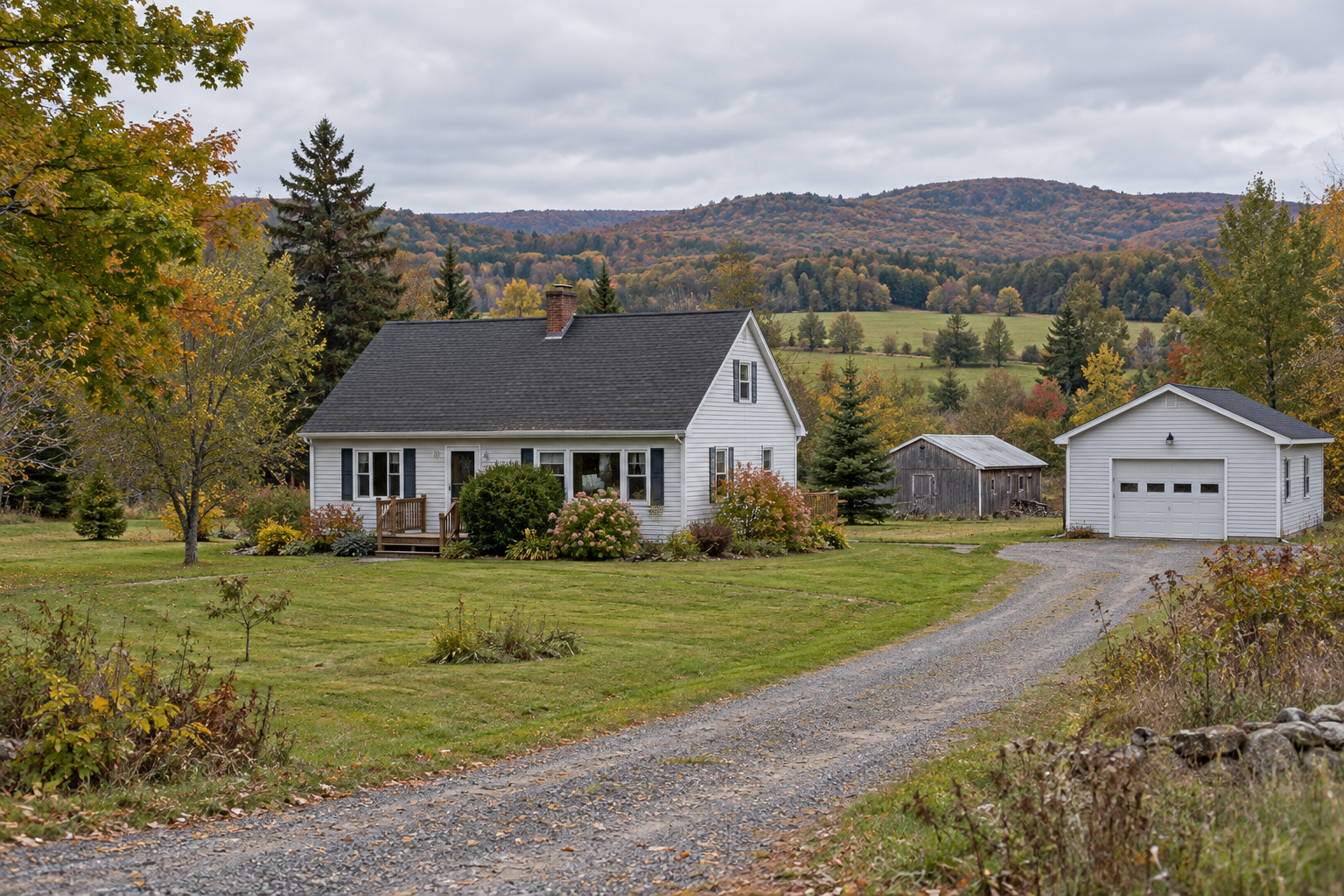
The Annapolis Valley has many properties that don't fit neatly into the typical suburban-home category.

You may find homes with extensive acreage, hobby farms, converted buildings, unusual construction or multiple outbuildings.

Some properties have been expanded or renovated over many years.

Others may have a main residence alongside agricultural buildings or structures that contribute to the property's asking price.

A lender may assess these features differently from a buyer.

For example, a buyer may see considerable value in a large workshop, barn or additional acreage.

The lender may place less value on some of those features when determining how much it is prepared to finance.

Other considerations can include whether the property is accessible year-round, whether it is primarily residential, and whether comparable sales are available to support the valuation.

This doesn't mean unusual properties cannot be financed.

It means some may require a more specialized lender, additional documentation or a different financing structure.

When I'm helping buyers consider rural acreage or an unconventional home, I encourage them to provide the property details to their mortgage professional as early as possible.

The property's uniqueness may be exactly what makes it appealing to you, but it can also require additional attention from the lender.

Rural Annapolis Valley home with acreage and outbuildings

Older Homes and Property Condition Can Affect Financing

Nova Scotia has many older homes that are more than 100 years old.

Some have been extensively renovated, while others still contain older heating, electrical, plumbing or structural components.

Age alone doesn't automatically prevent mortgage approval.

However, lenders and mortgage insurers may have requirements concerning the property's condition and suitability.

Potential concerns could include:

  • Significant structural deterioration

  • An unsafe or inadequate heating system

  • Major roof problems

  • Serious water damage

  • Unfinished or incomplete construction

  • A property that isn't suitable for its intended residential use

  • Conditions that prevent acceptable property insurance

A lender might request further information, require an appraisal, or impose conditions that must be addressed before funds are advanced.

In some cases, a property may need repairs that the buyer or seller isn't prepared to complete.

This is one reason I encourage buyers to consider their home inspection findings alongside their financing and insurance requirements.

A home inspector, mortgage lender and insurance company are evaluating different aspects of the same property. An acceptable result from one doesn't guarantee acceptance by the others.

Older Nova Scotia home with traditional wooden construction

Home Insurance Can Become a Financing Problem

Home insurance is closely connected to mortgage financing.

Most lenders require acceptable property insurance before advancing mortgage funds.

If an insurance company refuses coverage, requires major repairs or imposes restrictions that don't meet the lender's requirements, financing may be affected.

This is particularly important when buying a property with:

  • An older oil tank

  • A wood stove, fireplace or wood-fired furnace

  • Older electrical systems

  • A deteriorated roof

  • A history of water damage

  • Unusual construction

  • Seasonal or vacant occupancy

Some homes over 100 years old may also require additional insurance investigation.

The insurance company determines whether it will provide coverage, while the lender determines whether that coverage meets its requirements.

When I'm helping buyers purchase older or rural homes, I encourage them to investigate insurance during their purchase conditions rather than waiting until closing approaches.

A mortgage approval may still depend on obtaining acceptable insurance for the property.


Changes to Your Employment or Income Can Affect Approval

Mortgage pre-approval is based on your financial circumstances at the time of the review.

If those circumstances change, your financing may need to be reassessed.

For example:

  • You change employers

  • You leave a salaried position to become self-employed

  • Your hours are reduced

  • Your employment becomes temporary or seasonal

  • You lose your job

  • A significant portion of your expected income can no longer be verified

Even a positive career change can create complications.

A new job with a higher salary may sound like good news, but the lender may want additional documentation or confirmation of employment terms.

If you're relocating to Nova Scotia, this can be especially important.

Perhaps you've been pre-approved based on your current employment in another province, but you plan to leave that position when you move.

The lender needs to understand how your income will continue after the relocation.

For military buyers, employment may be more straightforward, but posting-related documentation and the timing of the move can still be relevant.

Before changing jobs or making a significant employment decision, speak with your mortgage professional about how it could affect your approval.


Taking on New Debt Before Closing Can Create Problems

After receiving a pre-approval, it may be tempting to make purchases for your new home.

A new vehicle, furniture, appliances or a line of credit might seem manageable within your budget.

But taking on additional debt can change the financial picture the lender originally reviewed.

Mortgage qualification considers more than income.

It also considers your existing financial obligations.

A new car payment, increased credit card balance or additional loan may affect the amount you're eligible to borrow.

Even applying for new credit can introduce questions that need to be reviewed.

The safest approach is to avoid significant new borrowing or financial commitments until your purchase has closed, unless you've discussed them with your mortgage professional.

Being pre-approved for a mortgage isn't a reason to make large purchases before you receive the keys.


Your Down Payment Must Be Verified

Having enough money for the down payment is only part of the requirement.

The lender may also need to verify where the funds came from and confirm that they're available.

Depending on the circumstances, this could involve:

  • Bank or investment statements

  • Records showing funds transferred between accounts

  • Documentation of proceeds from another property sale

  • A gift letter and supporting information

  • Evidence of other approved down payment sources

Large deposits or unexplained transfers may lead to additional questions.

For example, if a family member is contributing money toward your down payment, the lender may need to establish whether it is a genuine gift or a loan that must be repaid.

That distinction can affect qualification.

Moving funds between accounts isn't necessarily a problem, but it may create additional documentation requirements.

If you're planning to use gifted funds, investments or proceeds from another sale, discuss the arrangements with your mortgage professional early.

The lender needs to be satisfied not only that you have the money, but also that its source meets the applicable requirements.

Homebuyer reviewing financial records for mortgage down payment verification

Don't Forget About Closing Costs

A mortgage pre-approval doesn't mean the lender will finance every expense associated with purchasing a home.

You'll also need to account for closing costs.

In Nova Scotia, these may include:

  • Legal fees and disbursements

  • Deed transfer tax, where applicable

  • Property tax adjustments

  • Appraisal costs, if charged to the buyer

  • Inspection costs

  • Other transaction-related expenses

The amount will depend on the municipality, property, financing arrangements and your individual circumstances.

If you're moving from another province, remember that relocation and moving expenses may also require a substantial amount of money.

Some buyers have enough saved for the down payment but haven't allowed sufficient funds for closing.

Your lender may require evidence that these additional funds are available.

When I'm helping buyers plan their purchase, I encourage them to understand the full financial commitment rather than focusing only on the down payment and monthly mortgage payment.


A Mortgage Rate Hold Has an Expiry Date

Some pre-approvals include an interest rate hold for a specified period.

That can be helpful when you're searching for a home.

However, the rate hold and the mortgage approval are not the same thing.

A rate hold may expire before you find a property or before your transaction is completed.

The lender may also have specific requirements concerning the mortgage product, closing date and circumstances under which the rate can be used.

If interest rates or qualification requirements change, your available options may be different when the original arrangement expires.

Ask your mortgage professional how long your pre-approval and any rate hold remain valid, and what happens if your purchase takes longer than expected.


Why the Financing Condition in Your Offer Matters

In Nova Scotia, an accepted Agreement of Purchase and Sale may include a financing condition.

This gives the buyer an agreed period to investigate whether satisfactory financing can be arranged, according to the terms of the agreement.

It's an important protection because a pre-approval doesn't confirm that the lender will finance the particular property.

During the conditions period, the mortgage professional may need to submit the accepted agreement, verify documents, arrange a property valuation and obtain a lending decision.

The exact process varies by lender and transaction.

The financing condition has a deadline.

Under Nova Scotia's standard buyer-condition process, a buyer who is satisfied with the applicable conditions provides the required written waiver using Form 408 within the agreed timeframe.

If the buyer isn't satisfied, the agreement and the applicable condition provisions determine the next steps.

An extension or amendment may be proposed, but the seller isn't automatically required to agree.

A verbal assurance that financing looks good isn't the same as confirming that all important lending requirements have been addressed.

When I'm helping buyers through the conditions period, I keep track of the deadlines, coordinate the real estate documentation and encourage direct confirmation with their mortgage professional before they make a final decision.

Homebuyer and real estate professional reviewing purchase conditions

What Does “Approved Subject to Conditions” Mean?

You may hear that your mortgage has been approved, but that the approval is still subject to certain requirements.

This is common.

Those conditions could involve:

  • A satisfactory appraisal

  • Updated income verification

  • Confirmation of down payment funds

  • Proof of property insurance

  • Additional documentation

  • Mortgage insurer approval, where required

  • Final lender instructions and other funding requirements

Not all outstanding conditions carry the same level of risk.

Some may be routine administrative items.

Others, such as an incomplete appraisal or unresolved property concern, could materially affect whether the mortgage proceeds.

Before waiving a financing condition, ask your mortgage professional which requirements remain outstanding and whether any could still prevent funding.

The important question isn't simply “Am I approved?” It's “What still needs to happen before the lender will release the money?”


Can Financing Fall Through After Conditions Are Waived?

Yes.

This is a distinction buyers need to understand.

Even after a lender has approved the mortgage and the buyer has waived the financing condition, circumstances can arise that affect funding.

For example, the lender may discover a significant change in income, new debt, an issue with down payment verification or an unresolved requirement concerning the property.

A buyer who has already waived the applicable purchase conditions may no longer have the same contractual protection if financing fails.

That can create serious consequences.

Depending on the agreement and circumstances, the buyer may be unable to complete the purchase and could face financial or legal liability.

A deposit isn't necessarily the limit of a buyer's potential exposure.

This is why I encourage buyers to maintain stable financial circumstances between mortgage approval and closing, and to respond promptly to requests from their mortgage professional and lawyer.

Don't treat the financing process as finished until the mortgage funds are available for closing.


What Should You Do If Financing Is Delayed or Declined?

First, find out exactly what the problem is.

A financing delay doesn't always mean the lender has declined the application.

Perhaps the lender is waiting for an appraisal, updated employment confirmation or another document.

If financing is declined, ask your mortgage professional to explain the reason and whether alternatives are available.

Depending on the circumstances, possibilities may include:

  • Providing additional documentation

  • Considering another lender

  • Adjusting the mortgage amount

  • Increasing the down payment, if feasible

  • Reviewing a different financing product

  • Investigating whether a property concern can be resolved

  • Discussing a proposed amendment to the purchase agreement

Not every alternative will be practical, and some may involve additional costs or risks.

Timing is especially important. If the financing condition deadline is approaching, it's essential to understand your options before that deadline passes.

As I explain in my article, The Inspection Found Problems — What Happens Next?, understanding your purchase conditions and their deadlines is an important part of protecting your interests during the buying process.

When I'm helping buyers navigate financing difficulties, I work with them to understand where the transaction stands, communicate with the seller's representative when appropriate, and address any proposed changes through the proper agreement process.

The mortgage professional handles the financing options, while a lawyer can advise on legal obligations and consequences.

The earlier a financing problem is identified, the more opportunity there may be to investigate a solution.


Questions to Ask Before Waiving Your Financing Condition

Before making your final decision, consider asking your mortgage broker or lender:

  1. Has the lender approved my application for this specific property?

  2. Has the property valuation been completed or accepted?

  3. Are there any concerns about the property's condition, construction, location or intended use?

  4. Is mortgage insurer approval required, and has it been obtained?

  5. Have my income, employment, credit and down payment been adequately verified?

  6. Are there any outstanding requirements that could change the mortgage amount or prevent funding?

  7. Is acceptable property insurance required, and have the lender's requirements been confirmed?

  8. What documents or steps remain before closing?

  9. Are there any financial changes I should avoid before the mortgage funds are advanced?

  10. Is there anything about this transaction that needs further review before my financing condition deadline?

Your mortgage professional is best positioned to explain the status of the application and any remaining lending requirements.


A Pre-Approval Is the Beginning, Not the End

Getting pre-approved is one of the best steps you can take before starting your home search.

It helps you establish a realistic budget and gives you a clearer understanding of your borrowing options.

But a pre-approval is only one stage of the financing process.

The lender still needs to be satisfied with the property, the supporting documentation and any outstanding conditions.

For buyers considering older homes, rural acreage, unusual construction or properties requiring repairs, additional investigation may be especially important.

When I'm helping buyers purchase a home in the Annapolis Valley or elsewhere in Nova Scotia, I encourage them to involve their mortgage professional early, understand the financing condition and avoid making major financial changes before closing.

The goal isn't to make the process complicated.

It's to identify potential problems while there's still time to address them.

A mortgage pre-approval gives you a place to start. Confirmed financing for the property you're buying is what helps you move toward closing with confidence.


Part of the Buyer Resource Centre: Practical guides to help you prepare, evaluate a property and navigate the home-buying process in Nova Scotia.

Read

Home Insurance When Buying in Nova Scotia: What Can Cause Problems?

Buying a home involves more than finding the right property, arranging a mortgage and completing inspections.

You also need to know whether you can insure it.

For many buyers, home insurance seems like a straightforward final step. They expect to contact an insurance company, provide the property details, receive a quote and arrange coverage for closing.

Often, that's exactly what happens.

But some homes raise questions that aren't immediately obvious during a showing.

A home that's more than 100 years old, an aging oil tank, a wood stove, certain electrical systems, a deteriorating roof or even the property's location can affect the insurance available.

And if you're buying with a mortgage, an insurance problem can become a financing problem.

The time to discover an insurance concern is while you're investigating the property—not a few days before closing.


Why Home Insurance Matters Before Closing

Most mortgage lenders require acceptable property insurance before they will advance funds for a home purchase.

The insurance generally needs to be in place for the closing date and meet the lender's requirements.

If an insurer declines the property, requires work that cannot be completed in time, or offers coverage that doesn't satisfy the lender, closing could be affected.

Even when buying without a mortgage, appropriate insurance is an important part of protecting what may be one of your largest investments.

A common misconception is that if a home passes its inspection, obtaining insurance should be automatic.

It isn't.

A home inspection evaluates the visible condition of the property and its systems.

An insurance company assesses the risks it is prepared to insure, using its own underwriting requirements.

Those assessments can produce different conclusions about the same property.


An Insurance Quote Isn't Always Final Approval

There is an important difference between receiving an estimated premium and having an insurance company confirm that it will issue a policy.

An initial quote may be based on information you provide about the property.

The insurer may subsequently ask for photographs, inspection reports, details about heating systems, or confirmation of previous improvements.

In some situations, an insurer may require work before coverage begins or impose conditions that must be satisfied afterward.

A quote may also change if new information becomes available.

Before removing your purchase conditions, ask whether the insurer has sufficient information to accept the property and whether any outstanding requirements could affect coverage.

Knowing the estimated annual premium is useful. Knowing the home can actually be insured is more important.


Homes Over 100 Years Old Can Be More Difficult to Insure

Nova Scotia has an abundance of older homes, including many that are more than 100 years old.

These properties can offer beautiful architectural details, craftsmanship and character that are difficult to find in newer construction.

However, the age of a home can sometimes create additional challenges when arranging insurance.

Some insurance companies have specific underwriting guidelines for older properties, particularly homes that are 100 years old or more.

That doesn't mean these homes are uninsurable.

It does mean that insurers may want more information before agreeing to provide coverage.

They may ask about:

  • The age of the home and its construction

  • Whether the electrical system has been updated

  • The condition and age of the plumbing

  • The type and age of the heating system

  • When the roof was last replaced

  • Whether major renovations or structural improvements have been completed

  • Whether original building materials or unusual construction methods could make repairs more complicated

One important distinction is that the age of the home and the age of its major systems are not necessarily the same thing.

A home built in 1890 may have modern wiring, updated plumbing, a newer roof and a recently installed heating system.

Another home of the same age may still contain several original or outdated components.

Those two properties could be viewed quite differently by an insurance company.

Some insurers may decline older homes based on their underwriting guidelines, while others may offer coverage after reviewing the property's condition and improvements.

When I'm helping buyers consider a century home, I encourage them to contact their insurance provider early and provide as much information as possible about renovations and major system upgrades.

A home's age shouldn't automatically discourage you from buying it, but it should be part of your insurance investigation before you commit to the purchase.

Architectural details of an older Nova Scotia home

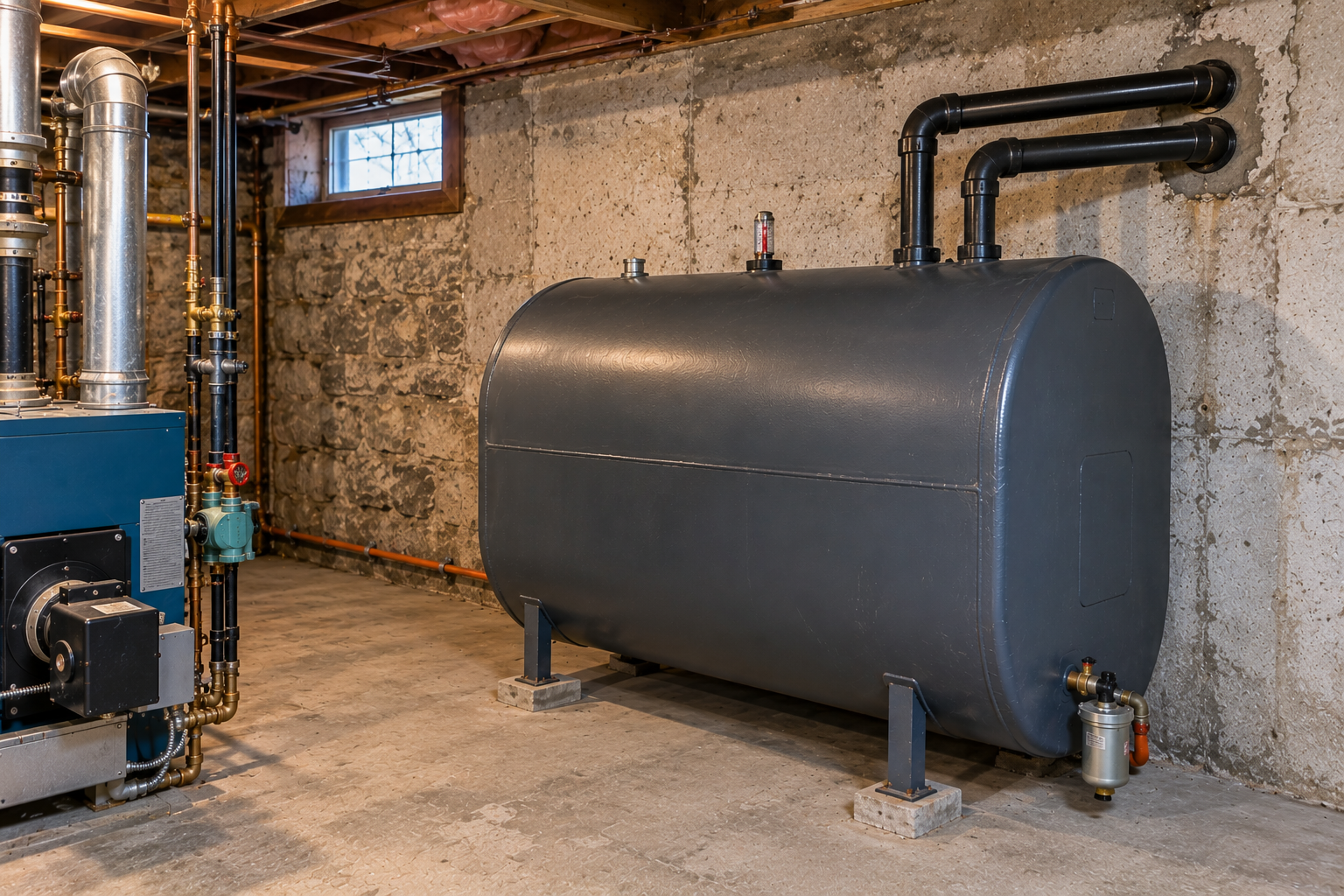
Oil Tanks Can Create Insurance Complications

Oil heating remains common in Nova Scotia, particularly in older homes.

An oil-fired furnace or boiler doesn't automatically make a property difficult to insure, but the oil storage tank can be an important consideration.

Insurance companies may ask:

  • How old is the tank?

  • Is it located indoors or outdoors?

  • Is it steel, fibreglass or another approved construction?

  • Is it a single-wall or double-wall tank?

  • Is there evidence of corrosion, damage or leakage?

  • Is documentation available showing when it was installed?

Some insurers apply age limits or other requirements to particular tank types.

A tank may appear to be functioning normally but still fall outside an insurer's guidelines.

For example, a buyer might discover that the insurer requires replacement of an older tank before issuing coverage.

That creates an unexpected expense and potentially a timing problem if closing is approaching.

If the property has oil heating, ask about the tank's age and installation history early, rather than assuming that a functioning heating system will be acceptable.

Residential heating oil storage tank in a Nova Scotia home basement

Wood Stoves, Fireplaces and Wood Furnaces May Require Additional Documentation

Wood-burning heating systems are common throughout rural Nova Scotia.

While wood stoves and fireplaces are often used for supplemental heating, some homes have wood-fired furnaces or boilers that provide much of the home's heat.

Other properties have combination heating systems, such as wood-and-oil furnaces.

These systems can be economical and practical, but they can also create additional insurance requirements.

One common requirement is a WETT inspection.

WETT stands for Wood Energy Technology Transfer. A WETT-trained professional can examine a wood-burning installation and document observations concerning its condition and installation.

Depending on the equipment, an insurer may require a WETT inspection for:

  • Wood stoves

  • Wood-burning fireplaces and fireplace inserts

  • Wood-fired furnaces

  • Wood-fired boilers

  • Combination wood-and-oil heating systems

Potential concerns include:

  • Clearance from combustible materials

  • Chimney and flue condition

  • Proper installation of the appliance

  • Floor and wall protection

  • Visible deterioration or unsafe modifications

  • Connections between heating appliances and the chimney

A WETT inspection isn't an insurance approval or a blanket certification that every aspect of an installation is compliant.

The insurer determines what documentation it will accept.

Some insurers may also ask whether wood is the primary or supplemental heating source.

When I'm helping buyers consider a property with wood-burning equipment, I encourage them to confirm the insurer's requirements early, particularly when a wood furnace or combination heating system is involved.

If a home has a wood stove, fireplace, wood furnace or other solid-fuel heating appliance, find out what the insurer requires before your purchase conditions expire.

Professional examining the flue connection of a residential wood stove during an inspection

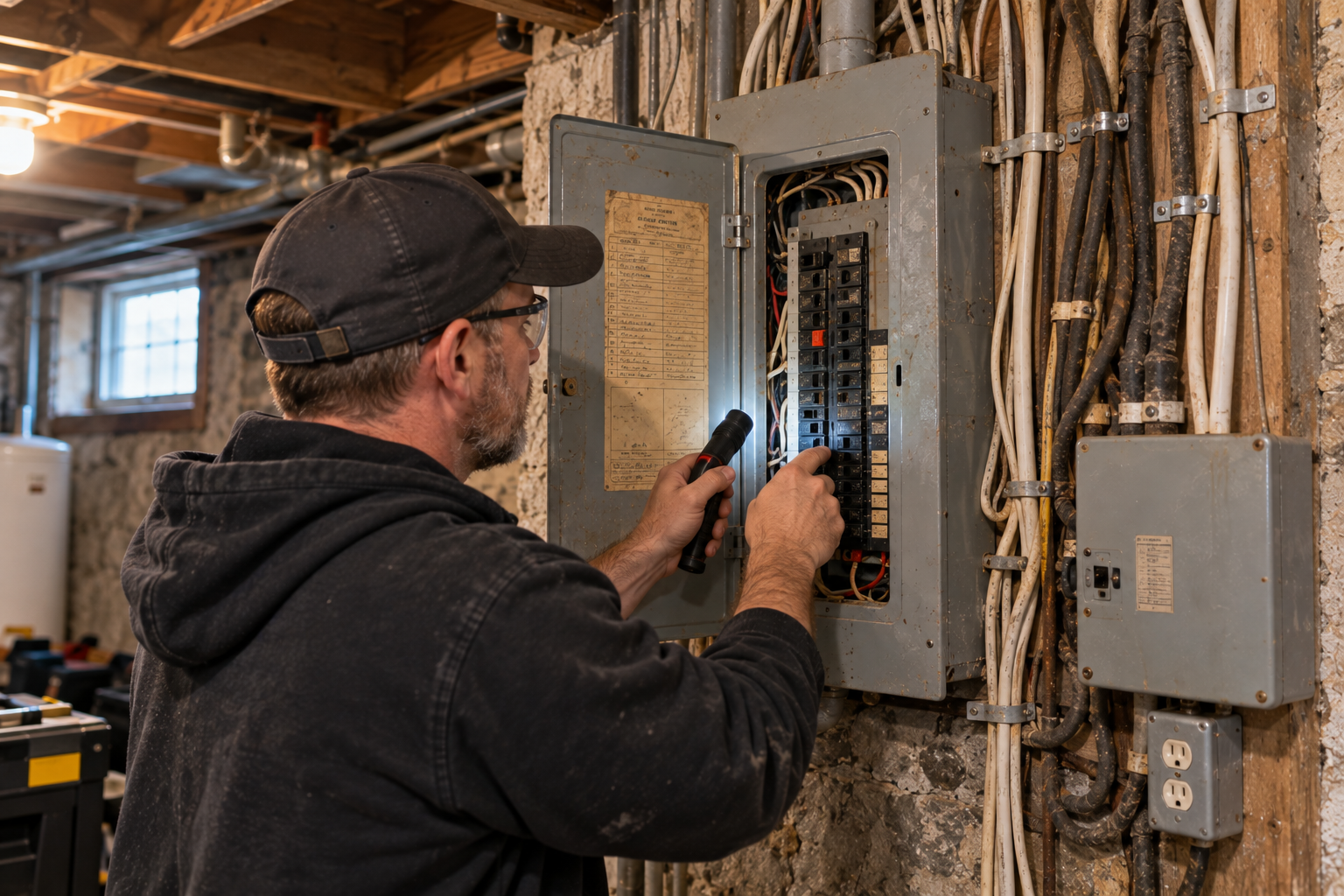
Older Electrical Systems Can Be a Concern

Nova Scotia has many older homes, including properties that have been renovated and expanded over several decades.

Some contain a combination of newer electrical components and older wiring.

Insurance companies may have concerns about:

  • Knob-and-tube wiring

  • Aluminum branch-circuit wiring

  • Older fuse panels

  • Certain electrical panel models with known safety concerns

  • Visible unsafe electrical installations

  • Electrical work that requires further professional assessment

Not every older electrical installation is automatically unacceptable.

For example, a properly maintained older system may be treated differently from one with evidence of overheating, damaged wiring or unsafe modifications.

An insurer may request an electrician's report or require specific upgrades.

It's also important not to assume that replacing an electrical panel automatically resolves concerns elsewhere in the system.

If an inspection identifies an electrical concern, I encourage buyers to have it assessed by a qualified electrician and confirm any insurance requirements before making a decision.

The insurance question is not simply whether the electricity works. It's whether the insurer considers the installation acceptable.

Electrician assessing an electrical panel in an older residential home

Roof Age and Condition Can Affect Coverage

A roof doesn't have to be new to obtain home insurance.

However, insurers may consider its age, roofing material, visible condition and history of leaks.

Missing shingles, significant deterioration, damaged flashing or evidence of ongoing water intrusion may create concerns.

Depending on the circumstances, an insurer might:

  • Request additional information

  • Require repairs or replacement

  • Apply limitations to certain coverage

  • Offer different settlement terms for roof damage

  • Decline coverage until the issue is addressed

It's also worth understanding that insurance is not a maintenance plan.

A roof reaching the end of its useful life doesn't automatically qualify for replacement through an insurance claim.

Coverage generally depends on the cause of damage and the policy's terms.

If the roof is older, ask the seller about its replacement history and discuss the information with your insurance provider.

Don't rely on an estimated roof age alone if the insurer needs more specific documentation.


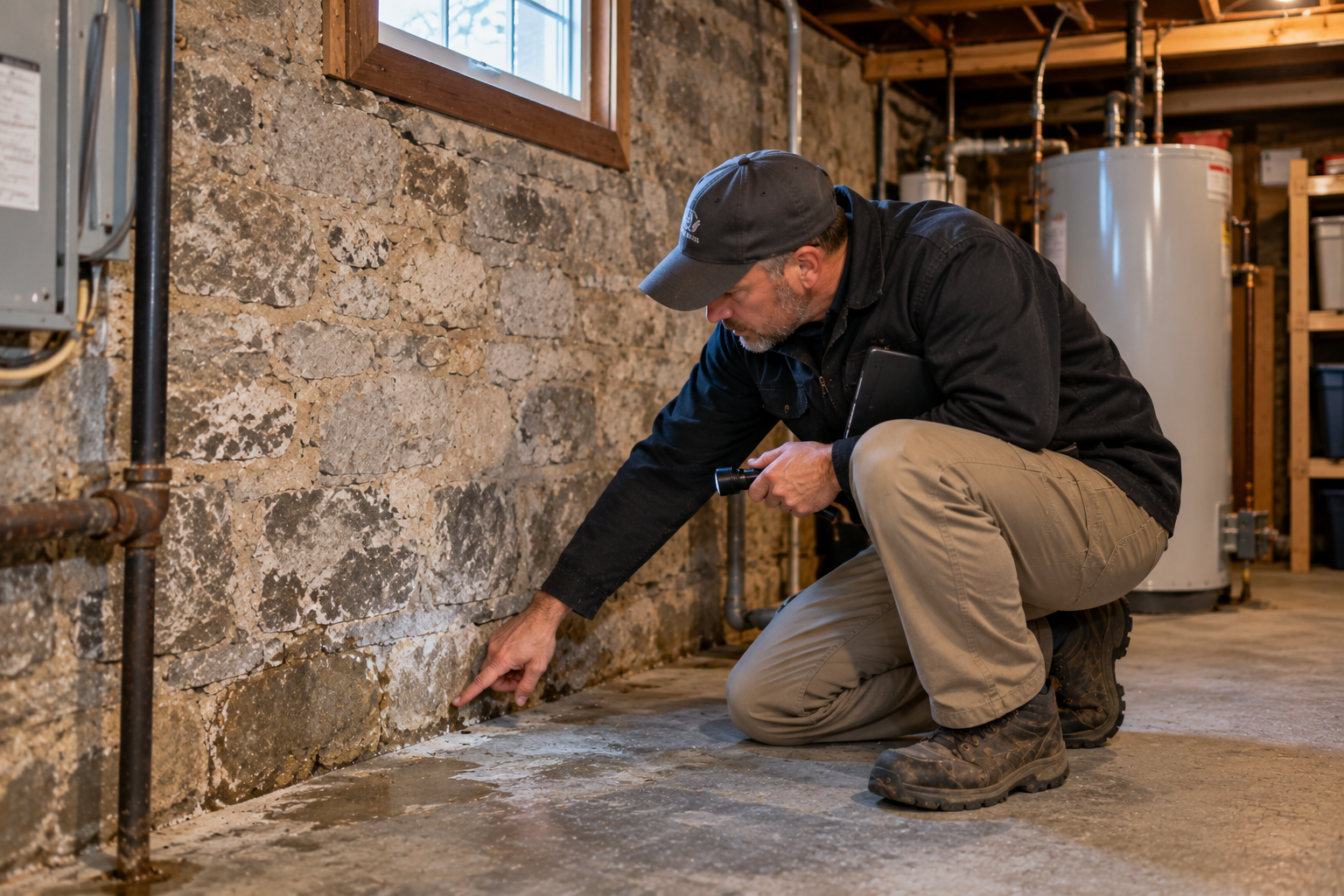
Previous Water Damage and Plumbing Problems

Water damage can be expensive, and insurers often pay particular attention to a property's water-related risks.

Concerns may include:

  • Previous basement flooding

  • Recurring water intrusion

  • Older or deteriorated plumbing

  • Past water-damage claims

  • Evidence of unresolved leaks

  • Drainage or sewer backup problems

A previous claim doesn't automatically mean the property is uninsurable.

The nature of the incident, whether repairs were completed, and whether the underlying cause was corrected can all matter.

It's also important to distinguish between different types of water coverage.

Damage from a sudden plumbing failure may be treated differently from sewer backup, overland flooding or coastal flooding.

These risks aren't necessarily covered in the same way, and some coverage may be optional, restricted or unavailable for a particular property.

Ask what is actually covered rather than assuming that a policy described as comprehensive includes every kind of water damage.

Home inspector evaluating signs of moisture in a residential basement

Rural Homes May Have Different Insurance Considerations

Living in the country is one of the attractions of buying in the Annapolis Valley and other parts of Nova Scotia.

More land, privacy and distance from neighbouring properties can be appealing.

But location can affect insurance.

An insurer may consider:

  • Distance from a responding fire station

  • Availability of fire hydrants or other firefighting water sources

  • Access for emergency vehicles

  • Road conditions and accessibility

  • Construction materials

  • Heating systems and occupancy

A home located outside a community with municipal fire hydrants may be assessed differently from a similar home in town.

That doesn't mean rural homes are necessarily difficult to insure.

It does mean that insurance costs and requirements may differ, even between properties that otherwise appear similar.

Get a quote for the actual property rather than assuming the insurance cost will be comparable to your current home.


Coastal and Waterfront Properties Need Special Attention

Nova Scotia offers beautiful coastal, lakefront and riverfront properties.

But water access and scenic views can come with insurance considerations.

Depending on the location, insurers may assess exposure to:

  • Coastal flooding

  • Storm surge

  • Overland flooding

  • Erosion

  • Wind and storm damage

  • Previous water-related losses

Not every waterfront property faces the same risks.

A home elevated well above the shoreline may present different concerns from one located close to the water at a low elevation.

Waterfront properties can introduce additional insurance considerations, particularly around flooding, shoreline erosion and the property's location. My guide to buying waterfront property in Nova Scotia explains what buyers should investigate before committing to a purchase.Some risks may be excluded, while others may be available through additional coverage.

Before buying, ask the insurer to explain the relevant exclusions and limitations for the specific property.

Being able to obtain home insurance doesn't necessarily mean every risk associated with a waterfront location is covered.

Coastal Nova Scotia home near the shoreline where insurance coverage may require additional review

Vacant Homes, Cottages and Renovation Properties

How you intend to use a property can be just as important as its physical condition.

An insurer may treat a year-round residence differently from:

  • A seasonal cottage

  • A property that will remain vacant

  • A home awaiting major renovations

  • A property undergoing substantial construction work

  • A home occupied only occasionally

Insurance companies commonly distinguish between a home that is temporarily unoccupied and one considered vacant under the policy.

Those distinctions can affect coverage.

This is particularly important for buyers relocating to Nova Scotia.

Perhaps you're purchasing several months before your move.

Maybe you plan to renovate before occupying the home.

Or perhaps you're buying a cottage that will only be used during part of the year.

Tell the insurer exactly how the property will be used, when you expect to occupy it and whether significant work is planned.

Don't assume a standard owner-occupied policy will automatically fit your circumstances.


What Happens If an Insurance Company Refuses the Property?

An insurance refusal can be unsettling, particularly after you've already invested time and money in inspections.

But one insurer declining a property doesn't necessarily mean no insurer will cover it.

Different companies have different underwriting requirements and risk tolerances.

Depending on the issue, possible next steps may include:

  • Providing additional property information

  • Obtaining a specialist inspection

  • Supplying documentation of previous repairs

  • Completing a required improvement

  • Contacting another insurance provider

  • Working with an insurance broker to explore other options

Sometimes the concern can be resolved relatively easily.

For example, the insurer may simply need confirmation of when an oil tank was installed.

Other situations may be more complicated.

An insurer might require a major electrical upgrade, roof replacement or correction of a heating-system concern.

These can involve substantial costs and may not be practical before closing.

Don't assume that agreeing to complete repairs after purchasing the home will satisfy the insurer. Get confirmation of what is required and when.


Can an Insurance Problem Affect Your Mortgage?

Yes.

If you're purchasing with mortgage financing, your lender will generally require acceptable property insurance.

A problem obtaining coverage may prevent the lender from advancing funds.

It's also possible for an insurer to offer a policy that doesn't meet the lender's requirements.

For example, a lender may have requirements concerning the insured amount, coverage type or how its interest in the property is recorded.

This is why buyers should keep their mortgage professional informed if an insurance issue arises.

A mortgage pre-approval doesn't guarantee that every property will meet the lender's requirements.

And a home that satisfies the lender's property assessment may still need to satisfy the insurance company's requirements.

Insurance is just one of several issues that can affect mortgage approval. I explain other potential complications in my article, Your Mortgage Is Pre-Approved — So Why Can Financing Still Fall Through?

Financing and insurance are separate parts of the purchase, but they can affect one another.


What If an Insurance Problem Is Found During Your Purchase Conditions?

Suppose you've had an offer accepted on an older home.

During your insurance inquiries, you discover that the insurer requires the oil tank to be replaced.

What happens next?

First, establish exactly what the insurer requires.

Is replacement mandatory before coverage begins?

Would another insurer accept the existing tank?

Is an inspection or additional documentation sufficient?

If replacement is necessary, what will it cost, and can the work be completed within the available time?

Once you understand the issue, you can consider your options under the Agreement of Purchase and Sale.

Depending on the circumstances, you might decide to proceed, investigate further, propose an amendment to address the concern, or determine that you're not comfortable continuing.

A seller isn't automatically required to complete work simply because an insurance company has requested it.

Any proposed change to the agreement is subject to the seller's acceptance.

The original condition deadline also remains important unless the parties agree to amend it.

Discovering an insurance problem doesn't automatically change the purchase agreement or extend your deadline.

When an insurance issue arises during a purchase, I help my buyers understand their options under the agreement, coordinate communication with the seller's representative, and keep track of important condition deadlines.

I can help navigate the real estate process, while the insurance professional determines coverage requirements and a lawyer provides legal advice when needed.

Homebuyer discussing property insurance concerns with a real estate professional

Don't Wait Until the Last Few Days Before Closing

One of the simplest ways to avoid an insurance surprise is to start the process early.

When I'm working with buyers, I encourage them to contact their insurance provider early in the conditions period, rather than waiting until closing approaches.

Provide accurate information about the property, including its heating systems, roof, electrical system and intended occupancy.

If the insurer needs additional documentation, there may still be time to obtain it.

If a problem arises, you may have time to investigate alternatives before deciding whether to proceed.

Waiting until closing is only a few days away can leave limited options.

This is especially important for buyers moving from another province who may be unfamiliar with some of the heating systems, property types and rural conditions commonly found in Nova Scotia.


Questions Worth Asking Your Insurance Broker

Before finalizing your purchase, consider asking:

  1. Is this particular property acceptable to the insurer?

  2. Are there concerns about the age of the home, heating system, oil tank, wood stove, electrical wiring or roof?

  3. Will additional inspections or documentation be required?

  4. Are any repairs or upgrades required before or after closing?

  5. Are there coverage exclusions or limitations I should understand?

  6. What water, flood, sewer backup and storm-related coverage is available?

  7. Does the policy reflect how I intend to use and occupy the property?

  8. What deductible will apply, including for weather-related losses?

  9. Is the quoted premium subject to further underwriting review?

  10. Can acceptable coverage be confirmed in time for closing?

An insurance broker may be able to compare options from multiple insurers, while a direct insurance provider can explain its own requirements.

The important thing is to understand the coverage being offered and any outstanding conditions.


The Home Inspection and Insurance Review Should Work Together

A home inspection can provide valuable information that helps with your insurance inquiries.

For example, the inspector may identify an older oil tank, a wood stove without available documentation, or electrical components that warrant further evaluation.

Those findings may prompt questions for the insurer.

Likewise, an insurance company may request information that wasn't part of the general home inspection.

Neither process replaces the other.

A home inspector doesn't approve insurance coverage.

And an insurance company doesn't provide a comprehensive home inspection simply because it agrees to issue a policy.

When I'm helping buyers, I encourage them to consider both the inspection findings and any insurance requirements before making their final decision.

Use both processes to understand the property before making your final purchase decision.


Don't Choose Insurance Based on Price Alone

It's natural to compare premiums.

But the least expensive policy isn't necessarily the most suitable one.

Two policies with different premiums may also have important differences in:

  • Coverage limits

  • Deductibles

  • Water damage protection

  • Exclusions

  • Replacement-cost provisions

  • Coverage for detached buildings

  • Requirements concerning occupancy or maintenance

For a rural home, waterfront property, older house or cottage, these differences can be particularly important.

Ask your insurance professional to explain the policy rather than comparing only the annual cost.

A lower premium may be attractive, but understanding what you're purchasing matters more.


Home Insurance Is Part of Understanding the Property

When buying a home, it's easy to focus on whether you like the layout, location and condition.

Those things matter.

But so does understanding what it will take to own and maintain the property.

A century-old home may require additional insurance investigation, even if it has been beautifully maintained.

An older oil tank may represent a future replacement expense.

A wood stove may require additional inspection.

A rural location may affect insurance costs.

A waterfront setting may come with coverage limitations that deserve careful consideration.

None of these automatically means the property is a poor purchase.

They are simply part of understanding what you're buying.

When I'm helping buyers purchase a home in Nova Scotia, I encourage them to investigate insurance early, particularly when a property has older systems, unusual features or a rural location.

An insurance concern doesn't automatically mean a home is a poor choice. What matters is understanding the requirements, potential costs and available options before making a final commitment.

If you're planning to buy a home in Nova Scotia, I'm always happy to help you work through the buying process, ask the right questions and connect with the appropriate professionals when additional information is needed.

The goal is to identify potential problems early, understand the requirements and make your decision with the right information.


Part of the Buyer Resource Centre: Practical guides to help you prepare, evaluate a property and navigate the home-buying process in Nova Scotia.

Read

After an Offer Is Accepted: Conditions and Closing in Nova Scotia

An accepted offer starts the next stage of the sale. During the buyer’s condition period, the buyer may arrange inspections and complete other steps set out in the Agreement of Purchase and Sale.

Once the buyer confirms their conditions and the sale is firm, we can focus on any agreed work, prepare for the move and get ready for closing. I’ll help keep the dates and next steps organized.

Buyer inspections happen during the condition period

The buyer typically arranges inspections during the condition period. Depending on the property and the terms of the offer, these may include a home inspection, a well inspection or water test, and a septic inspection.

If the property has a well or septic system, you are responsible for exposing—digging up—and marking the locations so the inspector can find and access them. We’ll coordinate the timing and access with the buyer’s representative.

The offer may include a water and septic schedule or other specific terms. I’ll review those with you so we know what the agreement requires and when. The Nova Scotia Real Estate Commission’s overview of real estate forms explains the purpose of the Agreement of Purchase and Sale and related schedules.


Complete agreed work after conditions are confirmed

If the buyer’s inspections lead to repairs or updates that become part of the sale agreement, arrange that work after the buyer confirms their conditions and before closing—or by another deadline agreed to in writing.

If the property has a septic system, it will typically need to be pumped before closing. We’ll check the agreement for the required timing and any documentation the buyer is to receive. Keep invoices or other records for agreed repairs and septic work so they can be provided as required.

If there is a change to the property or an agreed item cannot be completed on time, tell me promptly so we can address it with the buyer’s representative.

Home maintenance professional tightening a kitchen cabinet handle.

Arrange insurance and electricity before closing

Once the buyer’s conditions are confirmed, contact your insurance provider. Tell them the expected closing date and ask when your coverage should end. Keep coverage in place until the sale has closed and possession has transferred, and confirm how an early move-out could affect your policy.

If Nova Scotia Power supplies electricity to the property, arrange to stop your service for the appropriate date before closing. Nova Scotia Power asks for 10 days’ notice, and moving out does not automatically close your account. Contact them as soon as the sale is firm; if the property is supplied by a municipal utility, contact that provider instead. See Nova Scotia Power’s instructions for starting, stopping or moving service.

Keep essential services available for any remaining access or work required by the agreement. In colder weather, check before changing the heat settings or shutting off service.


Prepare for the buyer’s pre-closing viewing

The buyer may have a final pre-closing viewing under the terms of the agreement. Sometimes this is called a pre-closing inspection, but it is not a second home inspection. The Nova Scotia Real Estate Commission describes it as a final look to confirm that the property’s condition has not changed since the buyer agreed to purchase it. See the Commission’s explanation of the final pre-closing viewing.

Before the viewing, complete agreed work, remove your belongings and garbage, and leave items included in the sale. I’ll coordinate access with the buyer’s representative.

If you notice new damage or another change before closing, tell me right away so we can address it promptly.

Empty home interior with clear floors and walkways, ready for inspection after the sellers have moved out.

Closing day and handing over the home

Your lawyer will guide you through the legal and financial steps and let you know what documents or information they need. Respond promptly to their requests, and ask them directly about the timing of the final accounting and sale proceeds.

Follow the agreement’s requirements for moving out and possession. Gather the keys, garage remotes and other access items for handover. I’ll confirm when the sale has closed and coordinate the handoff according to the agreement.

For the earlier offer-review stage, read Reviewing an Offer on Your Home in Nova Scotia. For the full selling process, visit my Selling Your Home in Nova Scotia guide.

I’ll help you keep track of what needs to happen between the accepted offer and closing day.

Read

Reviewing an Offer on Your Home in Nova Scotia

Receiving an offer is an important step, but the price is only one part of the decision. The conditions, deposit, closing date, included items and deadlines can all affect how the offer works for you.

I’ll review the written terms with you, explain how the pieces fit together and help you communicate your decision. We can compare an offer with your priorities and the plan we made for the sale.

Look at the whole offer

A strong offer is the one whose full terms fit your situation—not necessarily the one with the highest price.

When we review an offer, I’ll help you look at:

  • Price: How does it compare with your expectations and the market information we discussed?

  • Conditions: Has the buyer included conditions, such as financing, an inspection, or the sale of their current property? What are the deadlines?

  • Deposit: What amount is offered, when is it due, and what does the agreement say about it?

  • Closing date: Does the proposed date give you enough time to move and make your next arrangements?

  • Included or excluded items: Are fixtures, appliances or other items described clearly?

  • Other terms and deadlines: Are there requests or dates that affect your plans?

The written agreement matters. If something is unclear or an issue needs legal interpretation, I’ll help identify the question and involve your lawyer where appropriate.


Understand the conditions and timing

An offer may include conditions that give the buyer time to complete specific steps. The agreement should identify what the condition is and the deadline that applies. The wording and required notices matter, so we’ll read the actual terms rather than rely on assumptions about what a condition means.

A conditional offer is not the same as a completed sale with every step finished. We’ll keep track of the dates and required communication while the buyer works through the conditions. If a deadline or request raises a concern, we can discuss the available responses promptly.

Blank offer papers, a pen and a phone on a table during a home-sale discussion.

Decide whether to accept, reject or negotiate

You can accept an offer as written, reject it, or respond with different terms. A counteroffer may change the price, dates, included items or other terms. The buyer then decides whether to accept, reject or respond with another proposal.

Before deciding, we’ll consider what matters most to you. You might prefer a different closing date, clearer wording about an included item, or a change to another term. Negotiation should focus on the specific points you want addressed and the trade-offs involved.

The Nova Scotia Real Estate Commission explains the standard purchase and sale and counteroffer forms in its overview of Nova Scotia real estate forms.


After an offer is accepted

Once an offer is accepted, the Agreement of Purchase and Sale sets out the terms both parties must follow. If conditions remain, we’ll continue tracking the applicable deadlines and steps. I’ll keep you updated as the transaction moves forward and help coordinate communication with the buyer’s representative.

The offer-review stage follows the work that went into setting a price and bringing the home to market. You can revisit How to Price Your Home in the Annapolis Valley and From Pricing to Listing Day: How Your Nova Scotia Home Goes to Market.

When it’s time to sell, I’ll help you understand the offer in front of you, weigh the terms against your plans and decide how you want to respond. Visit my Selling Your Home in Nova Scotia guide to see the steps involved.

Read

From Pricing to Listing Day: How Your Nova Scotia Home Goes to Market

Putting a home on the market involves more than choosing an asking price and uploading a few photos. Before launch, the property details, presentation, timing and marketing plan all need to come together.

The process should fit the home and your plans. A property in town, an older home, an acreage and a waterfront property may each need a different approach to photography, information and marketing.


When Does Launch Planning Begin?

Launch planning starts before the listing appears online. We’ll discuss your timing, review the property and current competition, and decide what needs to be ready before the listing date.

That includes agreeing on a pricing strategy. My article How to Price Your Home in the Annapolis Valley explains how recent sales, competing properties and buyer response help inform that decision.

The timing also needs to work for you. We’ll discuss when you’d like the home to be available for showings, any scheduling limits and what needs to happen before photography.


Confirm the Details Before the Listing Is Written

A listing should describe the property clearly and accurately. Before launch, I’ll confirm the details that buyers are likely to look for, such as the home’s layout, features, services, heating, land and included items.

If there are property plans, service records, renovation details or other information that may help explain the home, we can review what you have. My article What to Prepare Before Listing covers records and property details that may be useful, depending on the home.

We’ll also clarify anything that could otherwise be easy to assume, such as what land or equipment is included and whether any items are rented or leased.

Homeowner checking a wall-mounted heat pump and recording a property detail before listing.

Prepare the Home for Photography

The goal of listing photography is to show the home accurately and help buyers understand the rooms, layout and important features. Preparation may involve tidying, cleaning, opening curtains, turning on appropriate lights and moving items that block a clear view.

Not every room needs to look staged, and preparation doesn’t automatically mean taking on a renovation. We can decide what is worth doing based on the home, its condition and your timing.

For more practical preparation ideas, read Preparing Your Home for Sale in Nova Scotia.


Choose Marketing That Fits the Property

Good listing information and photography are the foundation. Depending on the home, I may also recommend video, a virtual tour or drone imagery to help buyers understand the layout, land or surroundings.

Your listing is distributed through MLS® and major real estate websites. Social media and open houses may also be part of the plan when they suit the property and likely audience. Each tool has a purpose; the aim is to present the home clearly to the buyers who may be considering it.

REALTOR® photographing a wood staircase inside a home for its listing.

What Happens on Listing Day?

Before the listing goes live, I’ll check the details and media that are ready for publication. Once launched, buyers can view the listing online and contact their REALTOR® to arrange a showing.

We’ll make sure the showing instructions are clear, including any access details or practical considerations for the property. If your schedule, pets or other circumstances affect access, we’ll plan around them.


Make Showings Practical

Showings are a chance for buyers to experience the home in person after seeing it online. A simple routine can make it easier to keep the property presentable without having to reset everything each time.

Before a showing, put away personal documents and valuables, clear walkways, manage pets safely and leave access to the rooms and features buyers may want to see. If the property includes an outbuilding, gate or particular access route, we’ll make sure the instructions are understood.


Review the Early Response Together

After launch, we can review activity such as online attention, showing requests and feedback. These signals can help us understand whether the listing is reaching buyers and how they’re responding to the property and its price.

One comment or a quiet day doesn’t necessarily mean a change is needed. It’s more useful to look at patterns alongside current competition and any new sales.

If the response suggests we should revisit the plan, we can discuss the evidence and your priorities before deciding what to do.

REALTOR® and homeowner discussing showing feedback at a kitchen table.

The Plan Should Fit Your Home

No single marketing plan works for every property. The right mix depends on the home, its features, your timing and the buyers who may be interested in it.

My Selling Your Home in Nova Scotia guide covers preparation, pricing, marketing, offers, conditions and closing. If you’re considering a sale, a home evaluation gives us a chance to discuss your property and what a realistic launch plan could involve.

I’m always here to help.

Read

How to Price Your Home in the Annapolis Valley

Choosing an asking price is one of the most important decisions when preparing to sell. It can influence which buyers find your home, how they compare it with other properties and the conversations that follow once it is on the market.

There isn’t one formula that sets the right price for every Annapolis Valley home. A useful pricing strategy considers the property, recent sales, current competition and what buyers are responding to in the market.


What Shapes a Home’s Market Position?

A home’s market position reflects more than its square footage or the number of bedrooms. Buyers may also consider its location, condition, layout, features, lot, services and the work they expect to take on after moving in.

Two homes with similar sizes can appeal to different buyers and occupy different positions in the market. A home in town, an older house, a newer property and a home with acreage may each need a different comparison set.

That’s why pricing starts with understanding the specific property—not relying on a broad average or a single recent sale.

Annapolis Valley home and surrounding property

How a Comparative Market Analysis Helps

A Comparative Market Analysis, or CMA, is one way to study how your property fits into its current market. It considers relevant recent sales and homes currently competing for buyers, along with differences in location, condition, features and property type.

No two properties are identical. A CMA is not an appraisal or a guarantee of what a buyer will offer. It is a reasoned estimate that helps inform the asking-price decision.

The most useful comparisons help explain why a similar property may have sold for more or less. The sale price matters, but so do the property’s features, timing and the choices available to buyers at the time.

REALTOR® reviewing comparable home sales

Price Also Affects How Buyers Find Your Home

Buyers often search within selected price ranges. An asking price can affect which searches include your property and how buyers compare it with other options.

That doesn’t mean there is one perfect price point or that a particular search range guarantees more interest. It means the asking price is part of how your home is positioned for buyers to consider.

Recent sales help show what buyers have paid. Active listings show what they can choose from now, though an asking price does not prove what a property will sell for.


Market Conditions Can Change

Buyer demand, available listings, interest rates, financing conditions and broader economic circumstances can all influence how buyers approach a purchase. Local market activity can also vary between communities and property types.

Season and timing may affect the number of buyers who are active, but there is no single season that guarantees a stronger result for every home. The relevant question is how your property fits the conditions and competition at the time you plan to sell.

That’s one reason a pricing discussion should use current information. The market when you first considered selling may not be the same market you face when you are ready to list.

Hand using a blue pen to review charts showing market trends.

The Risks of Getting the Price Wrong

A price that is higher than the available evidence may cause some buyers to rule out the property or focus on alternatives. If a home stays on the market while competing properties attract interest, buyers may start asking why. A later price reduction can also change how they interpret the listing.

Pricing below the evidence has different risks. It may fail to reflect the property’s features, condition or current competition, and it can leave the seller wondering whether a different strategy would have been more appropriate.

Neither outcome can be predicted with certainty. A supported asking price gives you a more informed starting point and a clearer basis for reviewing buyer response.


What Buyer Response Can Tell You

Once the home is listed, buyer activity provides new information. Online views, showing requests and feedback can help show whether the listing is reaching buyers and how they are responding to the property and its price.

One comment or one quiet day does not necessarily call for a change. It is more useful to look for patterns and consider them alongside current competition and any new sales.

If buyers are showing interest but raising similar concerns, that feedback may help clarify how they see the property. If your home is receiving little activity while comparable properties are drawing attention, it may be time to review the overall position.

REALTOR® and homeowner discussing feedback at a kitchen table.

Practical Steps for Sellers

When you’re considering an asking price:

  1. Review recent sales of properties that are genuinely comparable to yours.

  2. Compare your home with current listings buyers may also consider.

  3. Look at your property’s location, condition, features and services.

  4. Consider current market activity and your timing.

  5. Listen for patterns in showing feedback and buyer response.

  6. Revisit the strategy when new information gives you a reason to do so.

A CMA can provide a data-informed starting point, while local knowledge helps explain how the comparisons relate to your particular property.


Pricing Is Part of the Selling Plan

Price works alongside preparation, photography, marketing and the terms you are willing to consider. My role is to review the property and market information with you, explain how the comparisons apply and discuss whether any adjustments make sense as buyer response comes in.

My Selling Your Home in Nova Scotia guide explains how pricing fits into the broader selling process. You can also review 9 Home Selling Mistakes to Avoid in Nova Scotia while preparing to list.

If you’re thinking about selling, you can request a home evaluation. When we meet, I’ll review your property, recent sales, current competition and plans with you. I’ll also provide a copy of my Complete Home Seller Handbook to help you follow the process.

I’m always here to help.

Read

What to Prepare Before Listing

Getting ready to sell involves more than deciding what to clean or repair. It also helps to gather information about the home, its systems, past work and the items that may stay with the property.

You may already have many of these details in a folder, email or service record. You don’t need to have everything assembled before we talk. Start with what you have, and we can identify what may be useful for your particular home.


What information should I gather before listing?

Start with the basic property information and any records you already have. This may include the civic address, property tax information, a survey or property plan, utility details, appliance manuals and warranties.

If you own more than one parcel, make a note of each parcel you believe is part of the sale. If you have a survey or plan, keep it with the other property information. Don’t rely on a fence or other visible feature to confirm a boundary.

The useful records will vary from one property to another. Gather what you have rather than delaying a conversation because you’re missing a particular document.

A homeowner and REALTOR® reviewing a room during a pre-listing walk-through.

What should I keep about repairs and improvements?

Make a simple list of significant work completed during your ownership. Include the approximate date, the type of work and any contractor or service information you still have.

Receipts, warranties, permits, manuals and service records can help explain what was done and when. Heat-pump installation or service records, roof work, window replacement and major renovations are examples of information a buyer may ask about.

If you aren’t certain of a date or detail, don’t guess. Note that you’re unsure, and we can decide how best to describe the information accurately.

A home maintenance professional working on a heat pump in a house.

If your home has a private well

Private wells are found in rural areas and in some towns. If your home has one, gather any well installation, repair or service records you have. Water test results, pump or filter records and information about the well’s location may also be useful if available.

You don’t need to assume that every older record still exists or arrange new testing before we discuss the property. We can review what you have and consider whether anything else may be helpful for your listing.

A pressure tank and water-treatment equipment in a home with a private well.

If your home has a septic system

If your home has a septic system, gather any records you have about its type, location, installation, repairs, pumping or maintenance. A plan showing the system’s location may also be useful if you have one.

Records can be helpful even if they’re not recent. If you don’t know where the system is located or can’t find its paperwork, make a note of that rather than guessing. We can discuss the information you have and whether further investigation makes sense.

A green septic access cover visible in a residential lawn.

What if the property has heating equipment or leased items?

Make a note of the home’s main heating systems and any related service history you have. This may include heat pumps, oil or propane equipment, wood-burning appliances or other systems.

If equipment is rented or leased, gather the agreement and contact information for the provider. The same applies to other leased items or equipment connected with the property. Knowing what is owned, rented or subject to an agreement helps us describe it clearly.

An outdoor heat-pump unit mounted on an ordinary home in an inland residential neighborhood.

Does the property include land, access or outbuildings?

If the sale includes multiple parcels, an outbuilding or a private access arrangement, gather the information you already have about it. This might include property plans, road-maintenance agreements, access documents, building permits or records of work done to an outbuilding.

These details can matter for properties in town as well as those outside town boundaries. If the land, access or what’s included is unclear, don’t make assumptions. We can identify the question and decide who is best placed to answer it.

A driveway and outbuilding on a property in the Annapolis Valley.

What items will stay with the home?

Before listing, make a note of the appliances, fixtures and other items you expect to include, along with anything you intend to take with you. Also note any rented or leased equipment.

This gives us a chance to clarify expectations before the listing details and sale terms are prepared. Specific items can be easy to overlook when they’re part of everyday life in the home.


How should I organize everything?

A folder—paper or digital—is a simple place to keep the information together. You can add service records, receipts, warranties, plans and notes as you find them.

You don’t have to turn it into a complete property history. Start with the records you have and a short list of anything you’re unsure about. That will give us a useful starting point when we talk about the home and your plans.

For an overview of the selling process, read Selling Your Home in Nova Scotia.


Start with what you have

Every property is different, and the useful information depends on the home and its features. A private well, septic system, leased equipment, extra parcel or outbuilding may call for different details than a home with municipal services and no additional structures.

If you’re planning a sale, a home evaluation gives us a chance to discuss your property, timing and what may be worth gathering before listing.

Read

Preparing Your Home for Sale in Nova Scotia

Getting ready to sell doesn’t mean renovating every room or making your home look like somewhere else. The goal is to present it clearly, take care of the things that may distract buyers, and decide where your time and money are best spent.

The right preparation depends on the home, its condition, the likely buyers and your timing. Here’s a practical place to start for sellers in Nova Scotia and the Annapolis Valley.


Where should I start when preparing to sell?

Begin with a walk-through of your home as if you were seeing it for the first time. Look for things that may be difficult for buyers to overlook: unfinished repairs, cluttered surfaces, rooms that are hard to move through, or areas that need a good cleaning.

Make a short list and sort it into three groups:

  • Take care of: basic cleaning, easy maintenance and small repairs.

  • Consider: improvements that may help the home show better, depending on cost and condition.

  • Leave for now: projects that are expensive, disruptive or unlikely to make a meaningful difference.

You don’t need to have everything done before discussing a sale. A walk-through can help us identify what is worth addressing first and what may not be necessary.

A homeowner and real estate professional assess a room during a home-selling preparation walk-through using a short checklist.

Which repairs should I do before listing?

Start with visible maintenance and items that affect how the home functions. That might include a dripping tap, a loose handle, a burned-out bulb, a sticking door or a damaged screen. A clean, well-maintained home helps buyers focus on the property rather than a list of small distractions.

Before starting a larger renovation, consider its cost, the home’s current condition and what buyers are likely to value. A project can improve presentation without returning its full cost in the sale.

It’s also helpful to make a note of repairs, upgrades and work completed over time. If you know of an issue with the property, let’s discuss it early so we can describe the home accurately and determine what information should be available to buyers.

For other decisions that can make a sale harder than it needs to be, see 9 Home Selling Mistakes to Avoid in Nova Scotia.

Hands tightening a loose kitchen cabinet handle with a screwdriver.

How should I prepare for listing photos?

The photos are often a buyer’s first look inside your home. Preparation doesn’t require removing every personal item; it means making the rooms easy to see and understand.

Before the photographer arrives:

  • Clear kitchen counters and bathroom surfaces where practical.

  • Put away loose items, cords, laundry and everyday clutter.

  • Make beds and straighten cushions, towels and rugs.

  • Clean mirrors, windows and reflective surfaces.

  • Open curtains or blinds to let in natural light.

  • Replace burned-out bulbs and turn on lights where appropriate.

  • Move vehicles and bins away from the front of the home if possible.

  • Tidy the entry, porch and the areas immediately around the house.

The goal is a clear, accurate view of the home—not a staged look that misrepresents how it feels to live there. If a room has an important feature, make sure it isn’t hidden behind furniture or belongings.

A homeowner tidies a lived-in living room before listing photography.

What should I do before each showing?

It helps to have a simple routine you can repeat without having to reset the whole house each time.

Before a showing, put away personal documents, valuables and medications. Make sure pets are safely managed, clear walkways and leave access to rooms and features buyers may want to see. If there are special instructions for the property, such as a gate, outbuilding or access route, we can plan how to communicate those clearly.

You don’t need to make the home look perfect. A tidy, comfortable and accessible home gives buyers a better opportunity to focus on the property.

A tidy home entrance with a clear walkway prepared for a real estate showing.

What should Annapolis Valley sellers consider outside?

The season and property type can change what needs attention. In warmer months, mow or tidy the lawn, clear the entry and keep outdoor areas reasonably accessible. In wet or muddy weather, pay attention to the walkway and entrance. In winter, keep the approach safe and make sure visitors can reach the home.

For rural properties, consider the areas buyers may want to explore: the driveway, yard, outbuildings and access points. Clear paths where practical and make sure gates or other access arrangements are understood. The aim is to help buyers see the property clearly and move around it safely.

A clear walkway leading to a home entrance in the Annapolis Valley.

What should I avoid doing before I sell?

Avoid taking on a large project just because you assume every buyer expects it. The best next step may be a small repair, a thorough cleaning or simply removing clutter—not a major renovation.

Try not to leave all preparation until the last few days before photos. A little time to sort, clean and complete small jobs can make the process less stressful.

And don’t worry if you’re unsure what matters most. We can look at the home, talk about your timing and decide which preparation steps make sense for your situation.


A practical plan for your home

Every home needs a different level of preparation. What makes sense for a newer home in town may be different from what helps an older home, acreage or waterfront property show well.

For a broader overview of the process, read Selling Your Home in Nova Scotia. If you’re deciding what to tackle before listing, a home evaluation gives us a chance to discuss your property, timing and preparation priorities.


Want help deciding what to do first?

You don’t need to finish every project before we talk. We can walk through your home, discuss your timing and identify the preparation that makes the most sense for your property.

If you’d like to start with a conversation about your home, book a home evaluation.

Read

Nova Scotia’s Property Tax CAP: What Home Buyers Need to Know

The property taxes shown in a listing can look reassuring. But before you use that amount in your ownership budget, there is an important question to answer:

Does the seller’s tax bill reflect a capped assessment that will change after you buy?

Nova Scotia’s Capped Assessment Program, usually called CAP, can make the seller’s current taxes a poor guide to your future costs.

When we review a home, I’ll help you look beyond the advertised tax amount and identify what needs to be confirmed before you rely on it.


CAP Limits Assessment Growth, Not Your Entire Tax Bill

CAP limits annual growth in eligible taxable assessments using a rate tied to Nova Scotia’s Consumer Price Index. For 2026, the CAP rate is 2.6%. That is an assessment adjustment, not a municipal tax rate or a guarantee about the increase in your bill. PVSC’s 2026 assessment information.

Property Valuation Services Corporation, or PVSC, assesses properties and administers CAP. Municipalities set tax rates and issue tax bills. PVSC does not set those rates or collect property taxes. About PVSC.

That distinction matters when you are trying to understand a number in a listing. We need to look at both the assessment and the municipal charges applied to it.


Buyer reviewing property assessment information

Understand the Different Assessment Figures

A Property Assessment Notice may show several values:

  • Assessed value: PVSC’s valuation of the property for the assessment year.

  • Capped assessment: The value calculated under CAP, where applicable.

  • Taxable assessed value: The value used for property-tax purposes.

The notice is separate from the municipal tax bill. PVSC’s guide to your assessment notice.

Where CAP applies, taxable assessment is the lower of assessed value and capped assessment. PVSC’s CAP guide.

For a buyer, the useful question is whether there is a substantial gap between those figures. I’ll help you identify that gap and put it into the context of your purchase.


Buyer discussing home ownership questions before purchasing

What Happens After You Buy?

For an ordinary purchase from an unrelated seller, CAP is removed for the assessment year following the sale. It can apply again the following year if the new owner and property qualify.

For example, under the current rules:

TimingAssessment treatment
Purchase during 2026Sale occurs
2027 assessmentCalculated without the seller’s CAP
2028 assessmentNew owner’s CAP can apply if eligible

This follows the purchase timeline explained by PVSC. The seller’s capped value does not simply become your ongoing assessment. PVSC’s CAP guide.

We’ll consider the years after closing when building your budget, rather than relying only on the tax amount available when you make your offer.


A Simple Example Shows Why It Matters

The following figures are hypothetical. They illustrate the effect of a different taxable assessment; they are not a forecast for a particular property or municipality.

Assume a tax rate of $1.00 per $100 of taxable assessment, with no additional charges included.

ExampleTaxable assessmentTax at the illustrative rate
Seller’s capped assessment$200,000$2,000 annually
Buyer’s later uncapped assessment$350,000$3,500 annually
Difference$150,000$1,500 annually

That is $125 more per month to include in a household budget.

The calculation is:

Taxable assessment ÷ 100 × rate per $100

Municipal taxes can also include area rates and other applicable charges. For example, the Municipality of the County of Kings identifies both its general rate and community-specific area rates as part of the calculation. Kings County property-tax information.

The example holds the rate constant to show the assessment effect. Actual assessments, rates and charges may change.


Different homes along an established residential street

Does the Assessment Become Your Purchase Price?

Do not assume that removing CAP means the next assessment will exactly equal the price you paid.

PVSC uses an annual valuation cycle. Its assessment reflects market value at a specified date and the property’s physical condition at another specified date. For example, 2026 assessments reflect market value as of January 1, 2025, and physical condition as of December 1, 2025. PVSC’s assessment timeline.

That timing is one reason an assessment and a current purchase price can differ.

When we review a property, I’ll keep the offer-price discussion separate from the tax estimate. Comparable sales help us consider an offer; the applicable assessment and municipal rates help us investigate taxes.

Neither the seller’s tax bill nor today’s assessment guarantees your future bill.


Eligibility Needs to Be Confirmed

General CAP requirements include at least 50% ownership by a Nova Scotia resident, qualifying property type and ownership duration. Condominiums must be owner-occupied. Certain family transfers have exceptions to the usual sale treatment.

New construction can also affect the calculation: its assessed value is added to the capped amount. PVSC’s CAP guide.

If you are relocating, buying with someone who lives outside Nova Scotia, purchasing through a company or considering a property with several uses, we’ll identify the questions to put directly to PVSC.

The same applies to a family transfer. Before relying on an exception, have PVSC and your lawyer confirm how the particular ownership arrangement will be treated.


Older home with an adjoining finished living space

Renovation Plans Belong in the Conversation

If you intend to add living space, finish an area or undertake substantial work, include assessment questions in your planning.

PVSC’s annual assessment process accounts for physical changes, including renovations, additions and demolition. PVSC’s assessment timeline.

I’ll help you flag planned work that deserves a conversation with PVSC. Ask how the proposed change could affect the assessment and when it would be reflected.

Avoid building your long-term budget around an assumption that the current assessment will continue unchanged after improvements.


Buyer gathering information about property taxes

How We’ll Check Taxes Before You Make an Offer

When we are considering a property, I’ll help you gather the available information and separate confirmed amounts from estimates.

We’ll work through these questions:

  • What year does the tax amount in the listing cover?

  • What are the current assessed, capped and taxable values?

  • What municipal and area rates apply to this address?

  • Are there separate charges that need to be included?

  • What should PVSC confirm about the purchase and CAP eligibility?

  • What allowance should you make for future changes?

PVSC provides a public assessment search by civic address or assessment account number. Find an assessment through PVSC.

The municipality can explain the rates and charges for the property. I’ll help you bring those pieces together into a working estimate, with any remaining uncertainty clearly identified.


Compare Homes Using Your Expected Costs

A home with lower advertised taxes is not necessarily the less expensive home for you to own.

When comparing properties, we’ll look beyond the seller’s current bill. A difference may reflect assessment history, municipal rates, services or other property-specific circumstances.

For a move within Nova Scotia, we’ll also review the property you are buying on its own merits. Your existing home’s tax amount is not a reliable budget for the next one.

This matters particularly when downsizing. A smaller home may reduce some expenses, but I’ll help you check the numbers before assuming every ownership cost will fall.

The guide How Much Does It Really Cost to Buy a Home in Nova Scotia? covers other expenses to include alongside property taxes.


Read Your Assessment Notice After the Purchase

When your notice arrives, check the property details, assessment figures and CAP treatment.

If something appears incorrect, contact PVSC promptly. An assessment appeal must be received within 31 days of the date on the notice; use the deadline printed on your own notice. PVSC’s assessment-notice guidance.

Keep the assessment notice and municipal tax bill together so you can understand how the figures connect.

Questions about valuation or CAP go to PVSC. Questions about the tax rate, billing or payment arrangements go to the municipality.


Modest home with a small established garden

Build Your Budget Around the Home You Are Buying

Property taxes deserve attention before you commit to a purchase, especially when the seller’s taxable assessment is substantially below the assessed value.

I’ll help you review the available information, identify the questions for PVSC and the municipality, and consider the result alongside your other ownership costs.

The seller’s tax bill is useful background. Your budget needs to reflect what may apply after you buy.

Considering a home in the Annapolis Valley or South Shore? Ask Rob about your next steps. We can review the property and identify the tax questions worth resolving before you make an offer.

Explore the Buyer Resource Centre for more practical guidance on buying and owning a home in Nova Scotia.

Read

Competing Offers: What Happens When More Than One Buyer Wants the Home?

Finding a home that feels right can quickly become more complicated when another buyer wants it too.

You may wonder whether to increase your price, change your conditions or make a decision faster than you expected. You may also have very little information about the other offers.

Understanding how competing offers work in Nova Scotia can help you make a clear decision while keeping your finances, property questions and priorities in view.

For the broader process, start with Making an Offer on a House in Nova Scotia: How the Process Works.


What Is a Competing-Offer Situation?

A competing-offer situation arises when a seller receives more than one written offer on the same property.

A busy showing schedule or someone saying they intend to offer is not the same as another written offer. The Nova Scotia Real Estate Commission specifically distinguishes verbal interest from competing written offers. NSREC guidance on competing offers.

I’ll help you separate what has actually been communicated from expectations about other buyers. A busy showing schedule can create urgency, but your decision should be based on confirmed information.


Buyer and REALTOR® discussing the competing-offer process

What Will You Know About the Other Offers?

In Nova Scotia, the seller directs their brokerage or designated agent on whether to disclose the existence of competing offers and the number received.

The listing representative must not disclose the contents of those offers. Knowing that competition exists does not entitle you to see another buyer’s price, conditions or closing date. NSREC By-law 737.

The Commission also prohibits indirect disclosure, such as telling a competing buyer where their offer ranks or that another offer is higher. NSREC guidance on offer confidentiality.

That leaves uncertainty. Your decision needs to be grounded in the property, your circumstances and the terms you are comfortable offering.


What Can the Seller Do?

The seller may accept an offer, counter one while setting others aside, or reject all of them. A properly structured backup agreement may also be considered.

You should not count on another opportunity to revise your offer. Prepare an offer you would be comfortable having accepted as written. NSREC guidance on the seller’s options.

It helps to think through your response before submitting. If the seller accepts, are you ready to proceed on those terms? If the seller counters, which parts would you reconsider?


Buyers considering how a home fits their needs

The Whole Offer Matters

Price deserves careful attention, but your offer contains several commitments.

Consider the proposed closing date, deposit arrangements, included items, conditions and the time available to complete them. A change that seems small during negotiations may have practical consequences later.

For example, an earlier closing date might require temporary accommodation, a change to your rental arrangements or a different financing plan. A larger deposit requires access to those funds when the agreement says they are due.

Before offering flexibility, check whether it works for you.

A term is only useful if you can carry it out.


Buyer reviewing purchase priorities before making an offer

Set Your Price Limit Before the Pressure Builds

Decide what you are comfortable paying before a competing-offer conversation becomes urgent.

We’ll review comparable sales alongside the home’s condition, location and likely ownership costs. We’ll also consider the work you already know you would want or need to do.

Then consider how the purchase would affect your everyday finances. What would remain available for closing costs, repairs and unexpected expenses?

The asking price is a reference point. Your decision also needs to reflect the property itself and your circumstances.

The guide How Much Does It Really Cost to Buy a Home in Nova Scotia? can help you think beyond the purchase price.

A useful question is: Would I still be comfortable with this purchase if I learned there had been less competition than I expected?


Mortgage Pre-Approval Does Not Approve Every Property

A mortgage pre-approval does not guarantee final financing. The lender still considers the property, and its valuation can affect the amount it will lend.

If you are considering a higher offer, speak with your mortgage professional about that specific price and property. Ask what would happen if the lender’s valuation were lower than your agreed purchase price, and whether additional cash might be required. Financial Consumer Agency of Canada: mortgage pre-approval.

Do not assume that room within a pre-approved maximum resolves every financing question.


Basement framing and foundation in an older home

Conditions Should Reflect What You Still Need to Know

Competition can create pressure to remove an inspection condition or shorten the time available to investigate the home.

The Commission recommends a home inspection and cautions that a seller’s disclosure statement reflects the seller’s knowledge; it does not establish that every defect is known. NSREC guidance on home inspections.

Consider the questions still unanswered about this particular property. Can it be financed and insured on acceptable terms? What investigations remain outstanding? Are there documents your lawyer needs to review?

Our guide Conditions in a Real Estate Offer: What Nova Scotia Buyers Should Know explains how those questions relate to the agreement.

Before changing a condition, ask the relevant professional what the change would mean. If you are considering a shorter deadline, check actual appointment availability and turnaround times.

An unanswered question remains unanswered even when another buyer wants the home.


An Offer Review Date Is Not a Guarantee That the Seller Will Wait

A seller may set a date for reviewing offers. However, the Commission explains that the seller can consider an earlier offer, including one that expires before the announced review date.

This is often called a pre-emptive offer. The seller may accept it, reject it, counter it or leave it unanswered. NSREC guidance on offer review dates.

I’ll clarify the seller’s current instructions, explain your offer’s expiry time and keep you informed of changes communicated to me.


Escalation Clauses Are Not an Available Shortcut

You may encounter advice from other markets suggesting an offer that automatically increases above a competing offer.

The Nova Scotia Real Estate Commission states that licensees cannot use escalation clauses when preparing an Agreement of Purchase and Sale. Adding one in a schedule does not make it compliant. NSREC guidance on escalation clauses.

I’ll help you assess the available sales information and prepare an offer at a specific price you understand and are comfortable paying.


Buyer discussing an offer decision by phone

You Can Decide to Hold Your Position

Learning about competition does not mean you must increase your price or change your terms. We’ll review your options together, including keeping your offer as written. If you are considering withdrawing it, I’ll confirm its status and explain when legal advice is needed before you act.

You may decide the offer already reflects what the property is worth to you. You may also decide that a proposed change would leave too little financial room or too much uncertainty.

Those are reasonable limits to establish before the conversation becomes rushed.


If Your Offer Is Not Accepted

It is disappointing to miss a home you had begun imagining yourself living in.

Before changing your approach for the next property, review the experience. Were you comfortable with your price? Did you understand the terms? Did the home suit your needs well enough to justify the commitments you offered?

Avoid assuming that one unsuccessful offer means you should remove protections or stretch further next time.

If a backup agreement is proposed, I’ll walk you through its terms and help identify anything your lawyer should clarify. Before signing, you should understand when it could take effect, how long you would be committed and what it would mean for your continued search.


Maintained home in an established residential neighbourhood

Make an Offer You Can Live With

A competing-offer situation can move quickly. Preparing your limits in advance gives you more space to think when decisions are time-sensitive.

I’ll help you assess the property, review the available sales information and understand the commitments in your offer. We’ll discuss where you have flexibility and which questions still need answers from your lender, inspector, insurer or lawyer.

The right offer is one you understand and are prepared to carry through if accepted.

Considering an offer on a home in the Annapolis Valley or South Shore? Ask Rob about your next steps. We can work through the property, your priorities and the questions that matter before you decide how to proceed.

Explore the Buyer Resource Centre for more practical guidance on buying a home in Nova Scotia, from evaluating a property to preparing an offer and planning for ownership.

Read

Conditions in a Real Estate Offer: What Nova Scotia Buyers Should Know

You’ve found a home you want to buy.

But there are still things you need to confirm.

Will your lender approve the financing for this particular property? What will the inspection reveal? Can you obtain suitable insurance? If the home has a private well and septic system, what should you investigate?

Those questions are part of deciding whether you’re comfortable completing the purchase.

The conditions in your offer help establish what needs to be investigated or arranged, and when those decisions must be made.

Understanding them before you sign is an important part of buying a home in Nova Scotia.


What Is a Condition in a Real Estate Offer?

A condition makes the purchase subject to a specified requirement under the terms of the agreement.

For example, a buyer may need satisfactory financing, a property inspection or an opportunity to review information about the property.

The standard Nova Scotia Agreement of Purchase and Sale includes a buyer’s conditions section with options covering financing, property inspections, insurance and certain documents. The conditions selected and any additional wording need to reflect the transaction. NSREC’s standard purchase agreement

Before agreeing to a condition, understand:

  • What you need to obtain, investigate or review

  • Who is responsible for doing it

  • What deadline applies

  • What notice the agreement requires

  • What happens if the requirement isn’t satisfied

The wording matters as much as the name of the condition.


Start With the Questions This Property Raises

It is tempting to think of conditions as a standard checklist that gets attached to every offer.

A better starting point is the property itself.

An older rural home may raise questions about water, septic, heating, outbuildings and access.

A condominium may require careful review of documents about the corporation and its finances.

A home in a leased-land community involves a different ownership arrangement from a conventional freehold property.

Your own circumstances matter too.

Do you need mortgage financing?

Does the purchase depend on selling your existing home?

Are you buying because you intend to operate a business, add another dwelling or keep animals?

Explain those plans early.

Something that is essential to your decision should be discussed before the offer is prepared.


Buyer discussing mortgage requirements with a lending professional

A Financing Condition Deserves More Than a Pre-Approval

A mortgage pre-approval helps establish what you may be able to borrow, but it does not guarantee that your mortgage will ultimately be approved.

The Financial Consumer Agency of Canada explains that a lender may still decline the mortgage because of the property, its appraised value or other requirements. FCAC’s mortgage pre-approval guidance

During your financing investigation, ask your mortgage professional:

Has the lender reviewed this specific property and purchase price?

Is an appraisal required?

Are any documents still outstanding?

Are there requirements involving my down payment or existing home?

Is there anything unresolved that affects my ability to complete the purchase?

Try to obtain a clear explanation of what has been approved and what remains to be done.

A reassuring conversation is useful. Understanding the outstanding requirements is more useful when you’re deciding whether to waive a financing condition.


Home inspector examining kitchen plumbing while a buyer observes

An Inspection Condition Gives You Information to Evaluate

A showing helps you decide whether you like a home.

A home inspection gives you an opportunity to investigate its condition more closely.

NSREC strongly recommends a home inspection and notes that a seller’s Property Disclosure Statement reflects the seller’s knowledge, which may not include every defect. NSREC’s home-inspection guidance

Think beyond simply booking an appointment.

You also need time to receive the findings, ask questions and decide whether further investigation is appropriate.

If an inspector recommends an electrician, roofer or structural professional, that recommendation may introduce another step before you’re ready to make a decision.

My guide to home inspections explains what buyers should expect from the inspection itself.

For your offer, the practical question is:

Does the condition and its timeline allow the investigation this property may need?


Water sample being collected for testing during a property investigation

Some Properties Need Additional Testing

A general inspection may be only part of your due diligence.

Depending on the property, you may want to discuss:

  • Well-water testing

  • Water-supply information

  • Septic-system inspection

  • Wood-burning appliance inspection

  • Specialist assessment of a building component

  • Review of permits or renovation records

  • Investigation of access or boundary questions

NSREC provides a Water and Septic Schedule, along with other schedules for particular property types. These can add requirements beyond those in the main agreement. NSREC’s guide to real estate forms

Don’t assume that saying “home inspection” automatically addresses every concern.

Explain what you need to learn so the appropriate investigation and contract wording can be considered.

Beyond the Home Inspection explores the additional tests and investigations a buyer may need.


Older home showing roof, chimney and exterior electrical service

Insurance Should Be Investigated Early

Before committing to a purchase, find out whether you can obtain suitable insurance for the property and your intended use.

An insurer may ask about the home’s electrical system, heating equipment, roof and other features. The Insurance Bureau of Canada specifically identifies these as factors insurers consider. IBC’s explanation of home-insurance factors

When discussing coverage, ask:

Does this quote reflect the actual property information?

Is additional documentation required?

Would any work need to be completed?

Are there exclusions or limitations I should understand?

Does the proposed coverage fit how I plan to use the property?

Give the insurer accurate information about matters such as a wood stove, rental use or an expected period of vacancy.

The purpose is to understand the arrangement you can actually obtain before making your decision.


Reviewing Documents Is Part of the Investigation

Some important questions won’t be answered by walking through the house.

You may need to review a Property Disclosure Statement, equipment information, restrictive covenants or documents associated with the property type.

A PDS records information based on the seller’s knowledge. NSREC describes receiving it as the beginning of a conversation and directs buyer representatives to pursue relevant follow-up questions. NSREC’s disclosure guidance

Read the answers carefully.

A reference to a previous leak may deserve another question.

A description of leased equipment may lead you to ask about the contract.

A restriction affecting the property may matter if you’re planning a particular use.

Receiving a document and understanding its implications are separate steps.


Special Property Types Can Bring Additional Conditions

The documents needed for one purchase may be quite different from those needed for another.

NSREC’s forms include schedules for resale condominiums, vacant land, mini/mobile/manufactured homes and leased-land communities, and multi-unit residential income properties. NSREC’s guide to real estate forms

For a buyer, the practical lesson is to look beyond the main offer form.

Read the attached schedules.

Ask which information must be supplied and which matters require your review.

If you don’t understand something in a schedule, raise it before signing rather than assuming it is routine wording that won’t affect you.


What If You Need to Sell Your Current Home?

If buying depends on selling your existing property, explain that when discussing the offer.

NSREC has a Sale of Buyer’s Property Schedule for transactions where the sale of the buyer’s current property is made a condition of the purchase. NSREC’s explanation of the sale-of-property schedule

Before proceeding, discuss questions such as:

  • Does your home need to be listed, sold or closed?

  • What happens if another buyer becomes interested in the property you want?

  • Could you complete the purchase if your sale were delayed?

  • What financing would be available?

  • How do the two transactions’ dates fit together?

Don’t assume that a general financing discussion has resolved all the risks of coordinating two properties.

Your REALTOR®, mortgage professional and lawyer may each have a part in working through the arrangement.


Buyer discussing a purchase agreement with a lawyer

Lawyer Review Has Its Own Purpose

Legal questions deserve legal advice.

A lawyer can help you understand the agreement and the legal issues associated with the purchase.

Under the standard Nova Scotia APS, lawyer review concerns the wording and content of the agreement, with the lawyers acting reasonably. It has its own deadline and notice provisions. NSREC’s standard purchase agreement

Arrange legal representation early and make sure your lawyer receives the documents promptly.

Also explain anything unusual about your plans for the property.

If your concern is whether you can operate a business, build an addition or use an access route, say so explicitly. Don’t assume another professional knows why that issue is important to you.


Give Yourself Enough Time to Investigate

A short condition period can sound appealing during negotiation.

But the useful question is whether the work can actually be completed.

Before proposing a deadline, consider:

  • Inspector and specialist availability

  • Laboratory processing time

  • Documents your lender still needs

  • Insurer response times

  • Your lawyer’s availability

  • Access to the property

  • Weekends and holidays

  • Time to understand the results

For example, having an inspection on the final afternoon may leave very little opportunity to investigate a concern it uncovers.

Build the schedule around the work, including the possibility of follow-up questions.

A deadline should allow time for a decision, not just an appointment.


Buyer coordinating property investigations by phone

Use the Condition Period Actively

Once the offer is accepted, begin the agreed work promptly.

Send the purchase documents to your lender and lawyer.

Book inspections.

Contact your insurer.

Request outstanding information.

Keep track of what has arrived and what remains unresolved.

A simple working list can help:

Investigation or document

Person responsible

Expected completion

Outstanding questions

Decision required

This is particularly useful when several professionals are involved. One person’s part may be complete while another is still waiting for information.

Stay involved in the results. The professionals provide information and advice, but you need to understand what you’re being asked to accept.


Being Satisfied and Providing Notice Are Separate Steps

For conditions requiring Form 408, you must provide the completed form to the seller or seller’s representative by the agreed deadline, clearly waiving all applicable conditions.

If that does not happen, the agreement is deemed terminated.

Signing the form without delivering it is not enough. NSREC’s Form 408 guidance

Before authorizing the notice, ask your REALTOR® to explain exactly which conditions it covers.

Make sure your decision reflects the information you have received and any outstanding questions.


Not Every Condition Uses Form 408

The standard lawyer-review, title-investigation and condominium estoppel-certificate clauses use notice of dissatisfaction rather than Form 408.

Other schedules can have their own procedures.

Follow the wording and deadlines in your agreement. NSREC’s explanation of different notice procedures

For practical purposes, avoid treating the purchase as though it has one deadline and one form that settles everything.

Ask for a clear explanation of which steps belong to you, your REALTOR® and your lawyer.


What If You Need More Time or Find a Problem?

You can propose an amendment requesting an extension or another solution. The seller may accept, reject or ignore it, or propose different terms.

Until an amendment is accepted, the original terms and deadline remain in effect. A terminated agreement cannot be revived by amendment. NSREC’s guidance on amendments and deadlines

Raise delays and concerns as soon as they appear.

If you’re waiting for a specialist, make that known while there is still time to consider options.

If an inspection finding changes your view of the purchase, my guide The Inspection Found Problems — What Happens Next? explains the decisions that may follow.


What If You Remain Unsatisfied?

Under the standard buyer-condition process, a buyer who is unsatisfied may terminate before the deadline in accordance with the agreement.

Discuss the appropriate steps with your REALTOR® and obtain legal advice where needed. NSREC’s buyer-condition guidance

Explain the actual concern and the information behind your decision.

Don’t rely on assumptions about what a condition allows, particularly if the wording has been changed or the issue is disputed.


A Terminated Agreement Doesn’t Automatically Release the Deposit

Termination and release of money held in trust are separate matters.

NSREC explains that a brokerage must retain the deposit until it receives the required written mutual direction or a court order authorizing disbursement. This applies even where the funds are not being disputed. NSREC’s deposit guidance

If the purchase ends, ask what documentation is required and who is arranging it.

Understanding that process can prevent confusion about when the money will become available.


Be Careful About Removing a Condition Before You Have Answers

A decision to proceed should reflect what you know and the uncertainty you are prepared to accept.

Before waiving a condition, ask yourself:

Have I received the information I was waiting for?

Do I understand the findings?

Have I spoken with the appropriate professional?

Is there an unresolved issue that could affect my decision?

Am I relying on an assumption that still needs to be checked?

If you feel rushed, explain why.

Perhaps a report has arrived but you haven’t discussed it with the inspector. Perhaps the lender has responded but you don’t understand an outstanding requirement.

Identify the gap before making the decision.


Buyer taking another look through a home before deciding to proceed

Conditions Work Best When They Lead to Better Information

The purpose of this stage is to understand the purchase more fully.

Can you arrange the financing?

Does the property’s condition work for you?

Can you obtain suitable insurance?

Do the documents raise questions that need answers?

Are there additional investigations appropriate for this home?

A useful condition addresses a real question, allows time to investigate it and provides a clear process for deciding what happens next.

Before you agree to proceed, understand what you have learned—and what you are accepting.


Part of the Buying a Home in Nova Scotia Buyer Resource Centre: Practical guides to help you prepare, evaluate a property and navigate the home-buying process.

Read
×

Do you have questions?

Call or text today.
I am always here to help!

902-300-8674