RSS

What Makes One House More Expensive to Heat Than Another?

Part of the Smarter, Greener Homes series: Practical guides to understanding energy efficiency, home performance and green-building features.

Two houses sit side by side.

They’re roughly the same size. They have a similar number of bedrooms. They were built around the same time.

Yet one homeowner could be spending considerably more to stay warm all winter.

Why?

When we think about heating costs, it's easy to focus on the heating system itself. Is it a heat pump? Oil furnace? Electric baseboard? Wood stove?

But the equipment producing the heat is only part of the equation.

How much heat a home needs—and how well it holds onto that heat—can be just as important as how the heat is produced.

That means two seemingly similar homes can perform very differently.

So, where does the difference come from?


1. Start With the Building Envelope

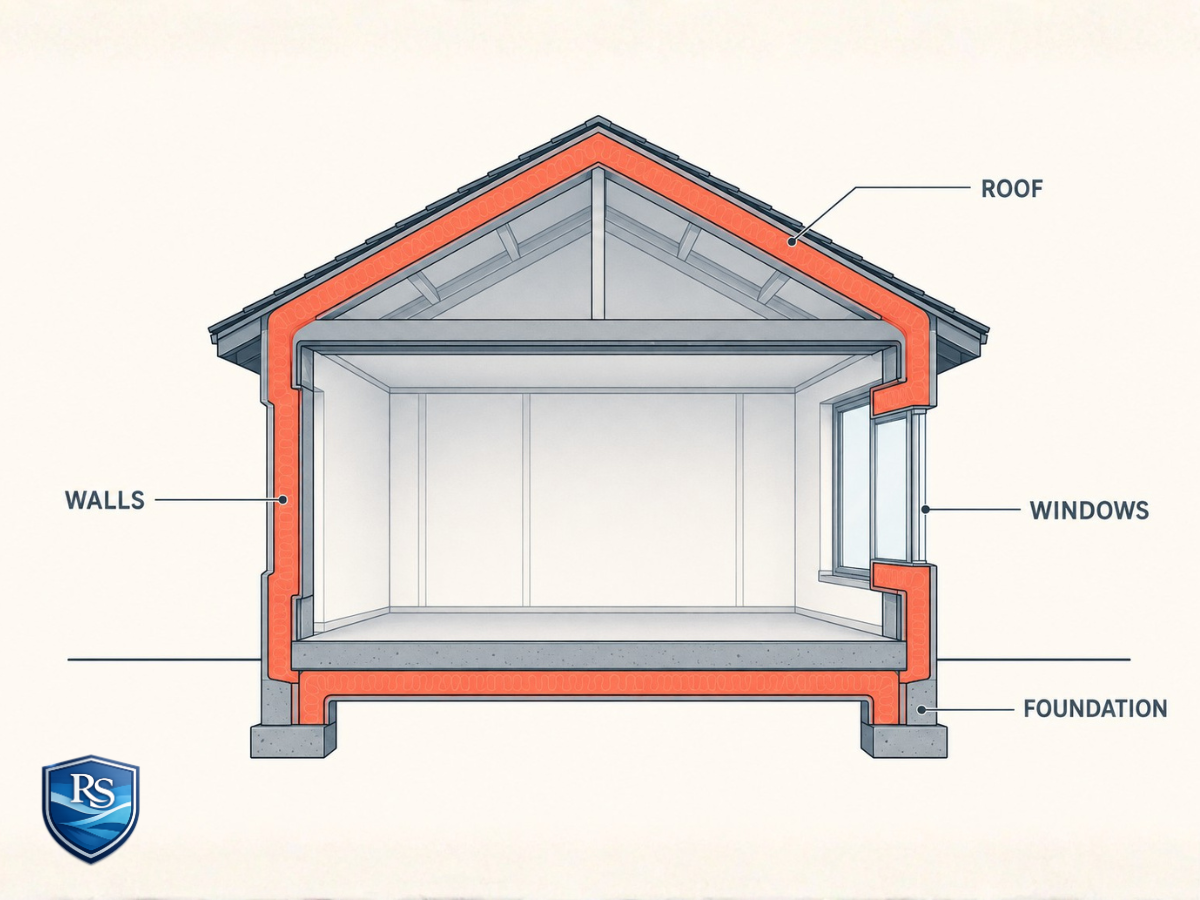
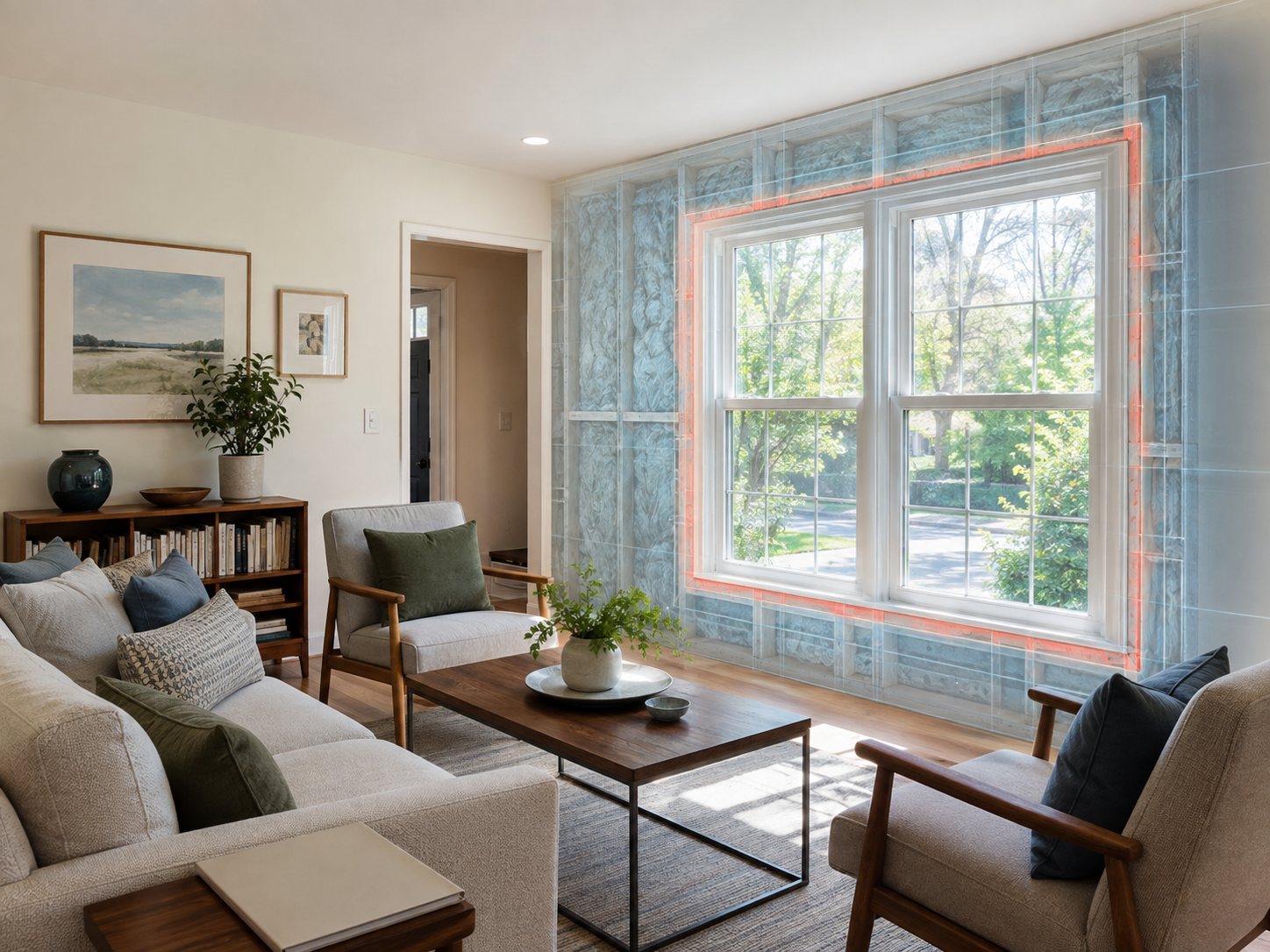
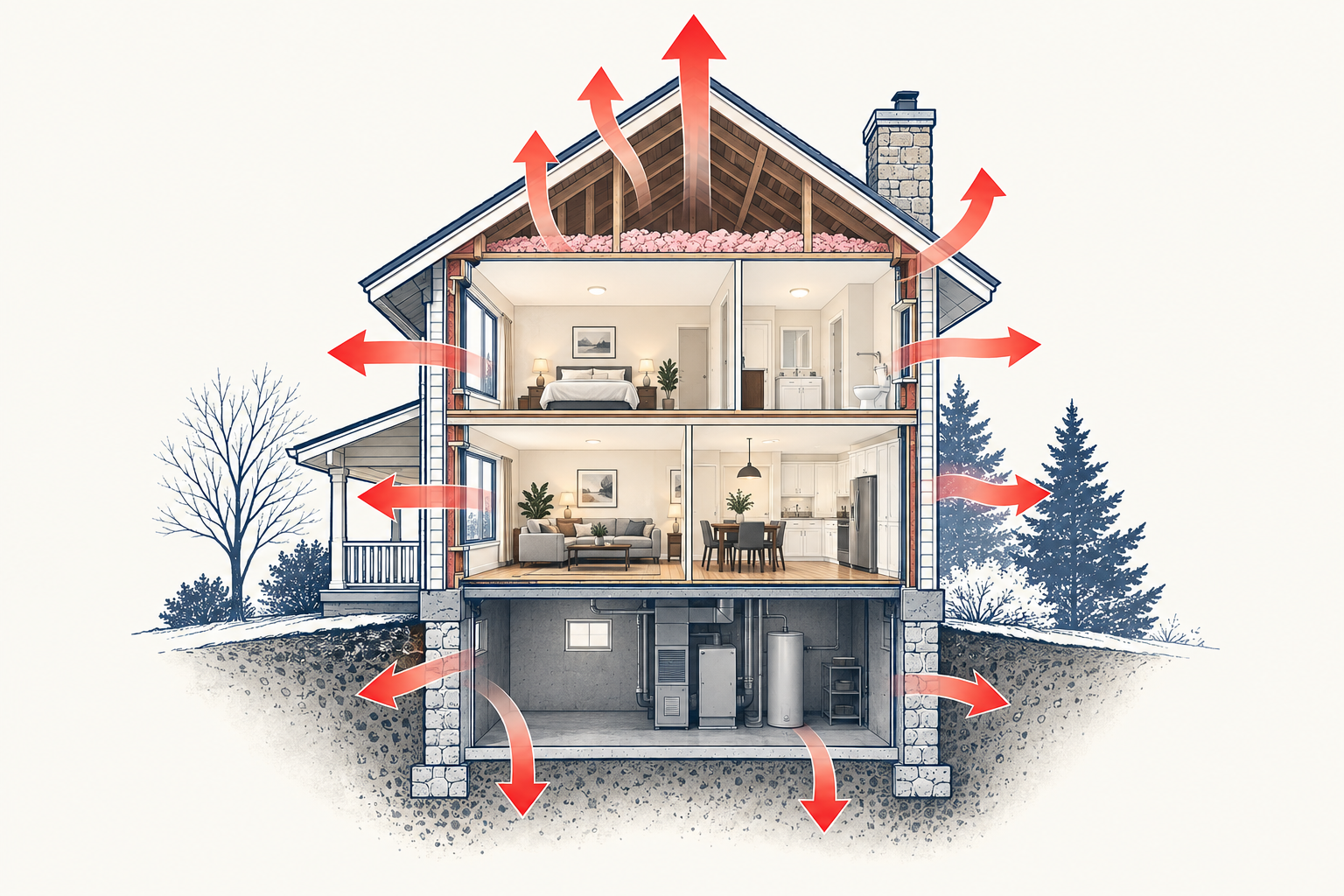
Think of your home's building envelope as everything separating the comfortable space inside from the weather outside.

That includes the:

  • roof and attic

  • exterior walls

  • foundation

  • windows

  • exterior doors

During a Nova Scotia winter, heat naturally moves from the warm interior of your home toward the colder outdoors.

A well-performing building envelope slows that process down. A poorly performing one makes your heating system continually replace heat that's escaping.

Natural Resources Canada describes a house as a system in which the building envelope, mechanical systems and occupants all interact. The envelope's job includes controlling the movement of heat, air and moisture between the home and the outdoors. Natural Resources Canada

The less heat your house loses, the less heat you have to buy.

And that brings us to one of the biggest parts of the envelope.

2. Insulation Slows Down Heat Loss

Most of us know insulation is important, but it's worth understanding what it actually does.

Insulation doesn't create heat.

It slows the movement of heat through the building envelope.

That's what an R-value measures: resistance to heat flow. Generally, the higher the R-value, the greater the resistance to heat transfer. Natural Resources Canada

Insulation can be found in several parts of a home, including:

  • attics and ceilings

  • exterior walls

  • basement walls

  • floors above unheated spaces

  • around foundations

Two otherwise similar homes can have very different levels of insulation depending on when they were built and what improvements have been made since.

But there's another important piece of the puzzle.

A well-insulated house can still be expensive to heat if it's leaking air.


3. Your House May Be Leaking Heat

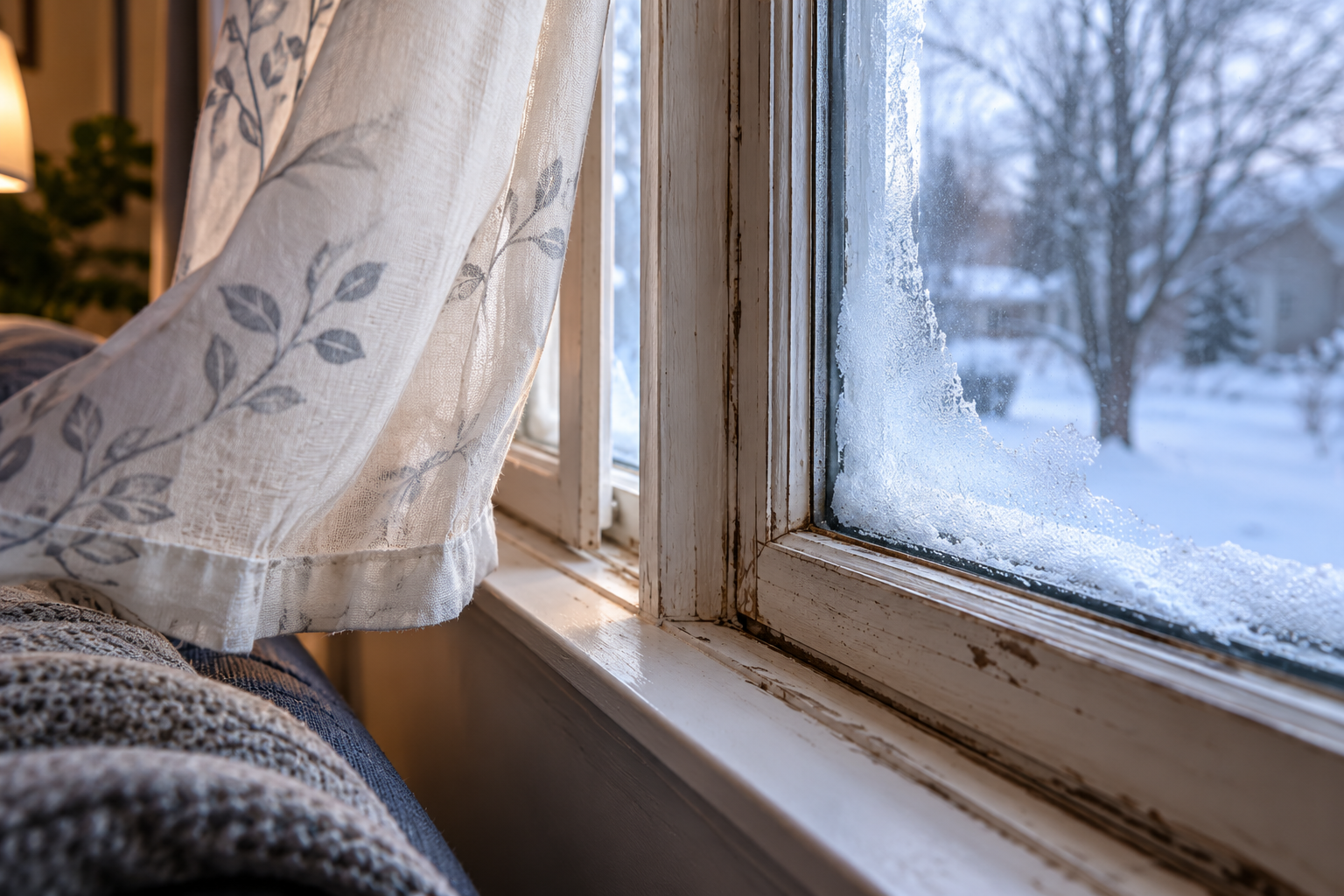
Have you ever sat near a window or exterior wall on a windy winter day and felt a draft?

That's uncontrolled air leakage.

Warm indoor air can escape through gaps and cracks in the building envelope while cold outside air finds its way in.

Potential leakage points can be surprisingly numerous: windows and doors, attic hatches, electrical penetrations, exhaust vents, foundation joints and even gaps around trim can contribute. Natural Resources Canada

Natural Resources Canada considers comprehensive air-leakage control one of the most important areas to consider when improving an existing home's energy performance. Its guidance notes that air leakage can account for a significant portion of heat loss in typical Canadian homes. Natural Resources Canada

This is also why simply adding more insulation isn't always the complete answer.

Insulation and air sealing need to work together.

Insulation helps slow heat moving through the house. Air sealing helps stop heated air from escaping through it.

4. Windows Can Make a Bigger Difference Than You Might Think

Windows give us natural light, views and ventilation—but they're also part of the building envelope.

Natural Resources Canada says windows, doors and skylights can account for up to 35% of total house heat loss. Natural Resources Canada

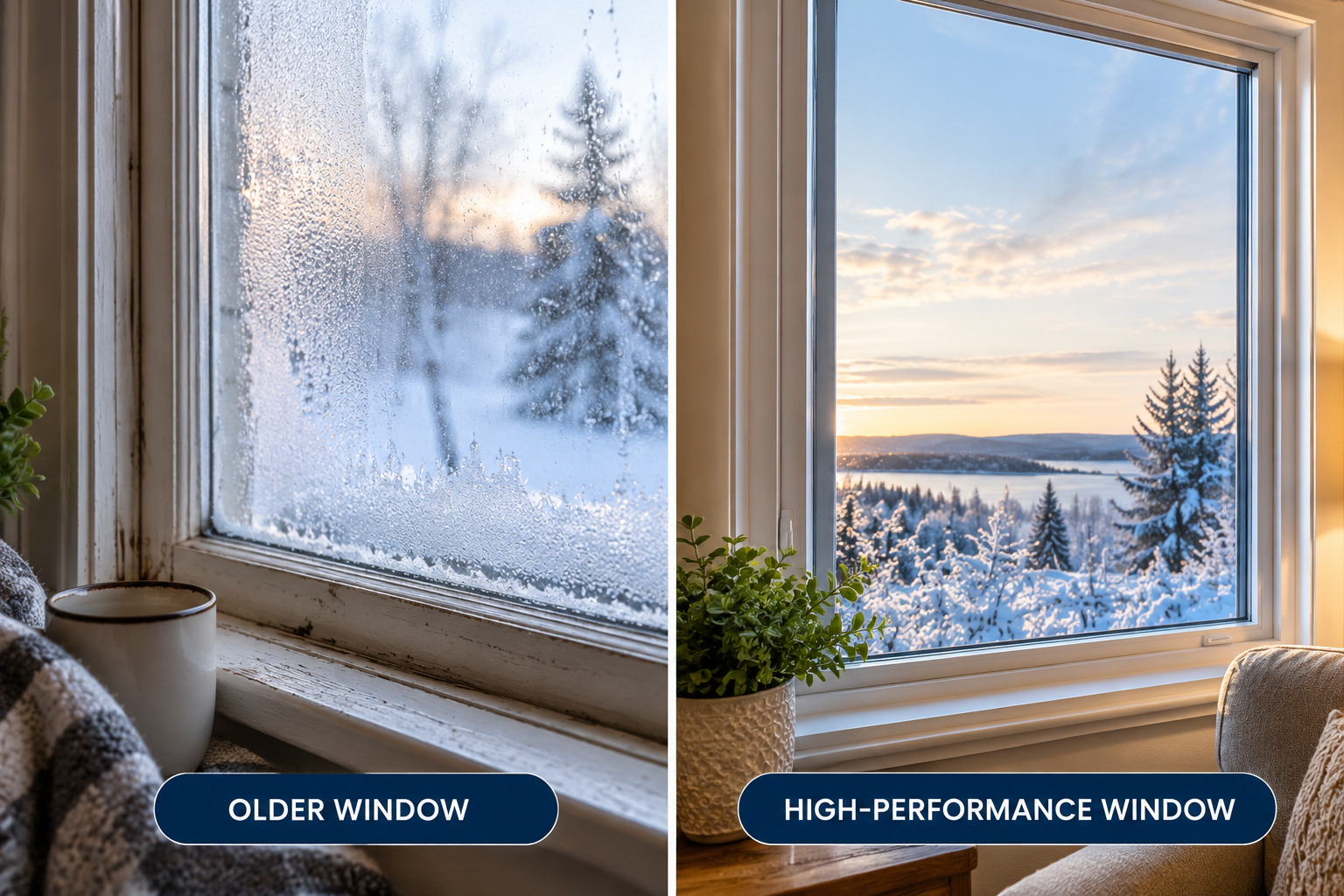
But not all windows perform the same way.

Performance can be affected by things such as:

  • the number of panes

  • glass coatings

  • the space between panes

  • frame construction

  • installation

  • air leakage around the window

  • the window's orientation

Even comfort can be affected.

A room may technically be at the thermostat setting, but sitting next to a very cold window can still make you feel chilly. Better-performing windows generally have warmer interior surfaces and can reduce drafts, making the room feel more comfortable. Natural Resources Canada

That can affect how we use our heating systems too.

If a house feels cold or drafty, what's one of the first things we tend to do?

Turn up the thermostat.

5. Where the House Faces Can Matter Too

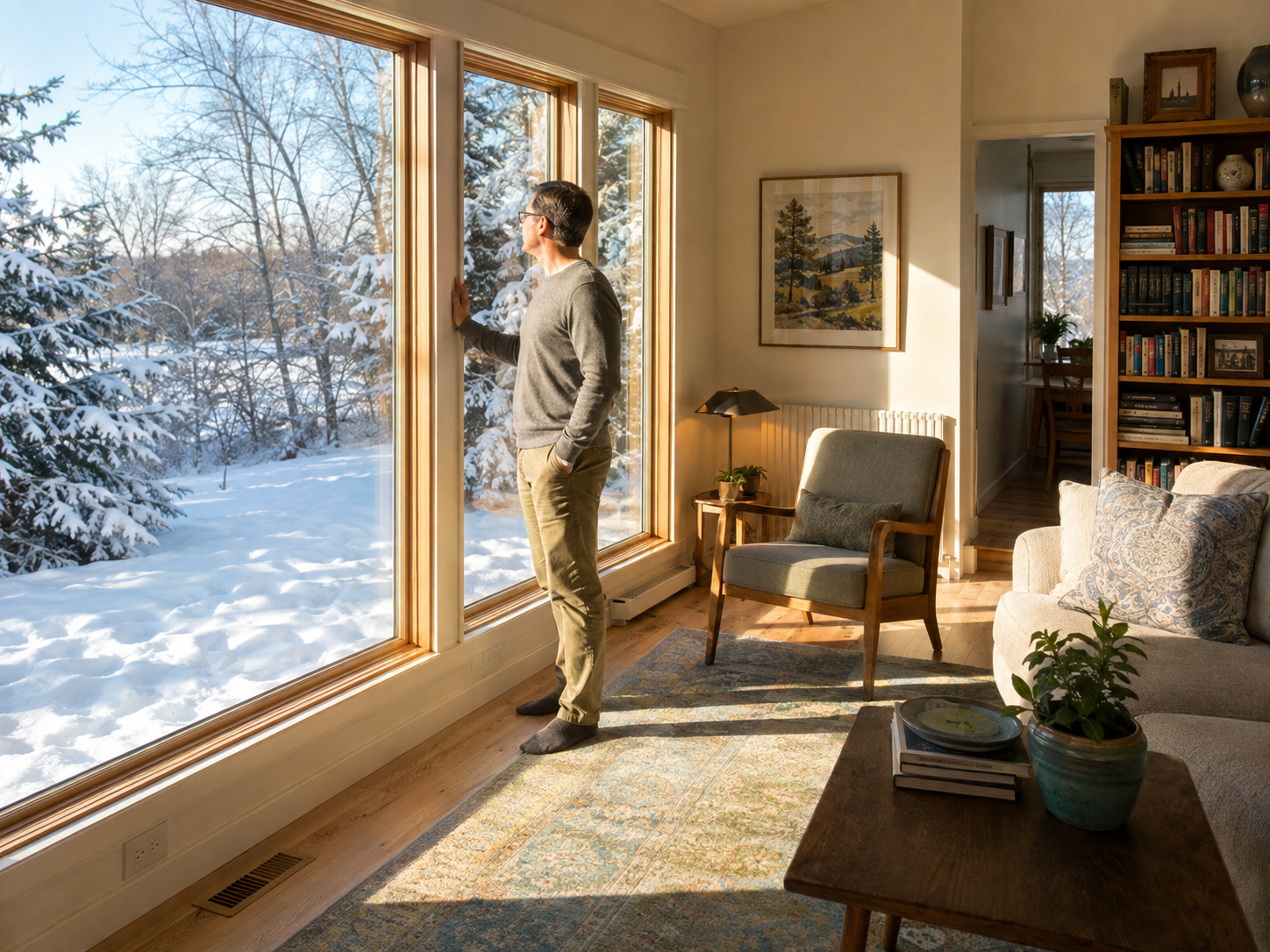
This is something we explored in the first article in this series about passive solar design.

Two otherwise similar homes can interact with the sun very differently.

Windows positioned to receive useful winter sunlight can provide solar heat gain during the heating season. Window size, orientation, shading and the characteristics of the glass all influence that balance. Natural Resources Canada

A house doesn't have to be a purpose-built passive solar home to benefit from sunlight.

Likewise, poorly managed solar gain can sometimes contribute to overheating, particularly at other times of year.

That's why orientation is another piece of the overall energy puzzle—not a magic solution on its own.

If you haven't read my first Smarter, Greener Homes article, you can read more about how passive solar homes use the sun to help reduce energy needs here.

What Is a Passive Solar Home — and How Can It Reduce Energy Use?


6. Then There's the Heating System Itself

Eventually, we get to the equipment actually producing the heat.

And yes—it matters.

Different heating systems convert and deliver energy differently. The age and efficiency of the equipment, how well it's maintained, how it's controlled and how heat is distributed throughout the house can all affect energy consumption and operating costs.

But there's an important relationship here.

The heating system has to make up for the heat the house loses.

Improve the building envelope and the heating demand can decrease. In fact, NRCan notes that well-insulated and air-sealed homes can use smaller space-heating and cooling systems. Natural Resources Canada

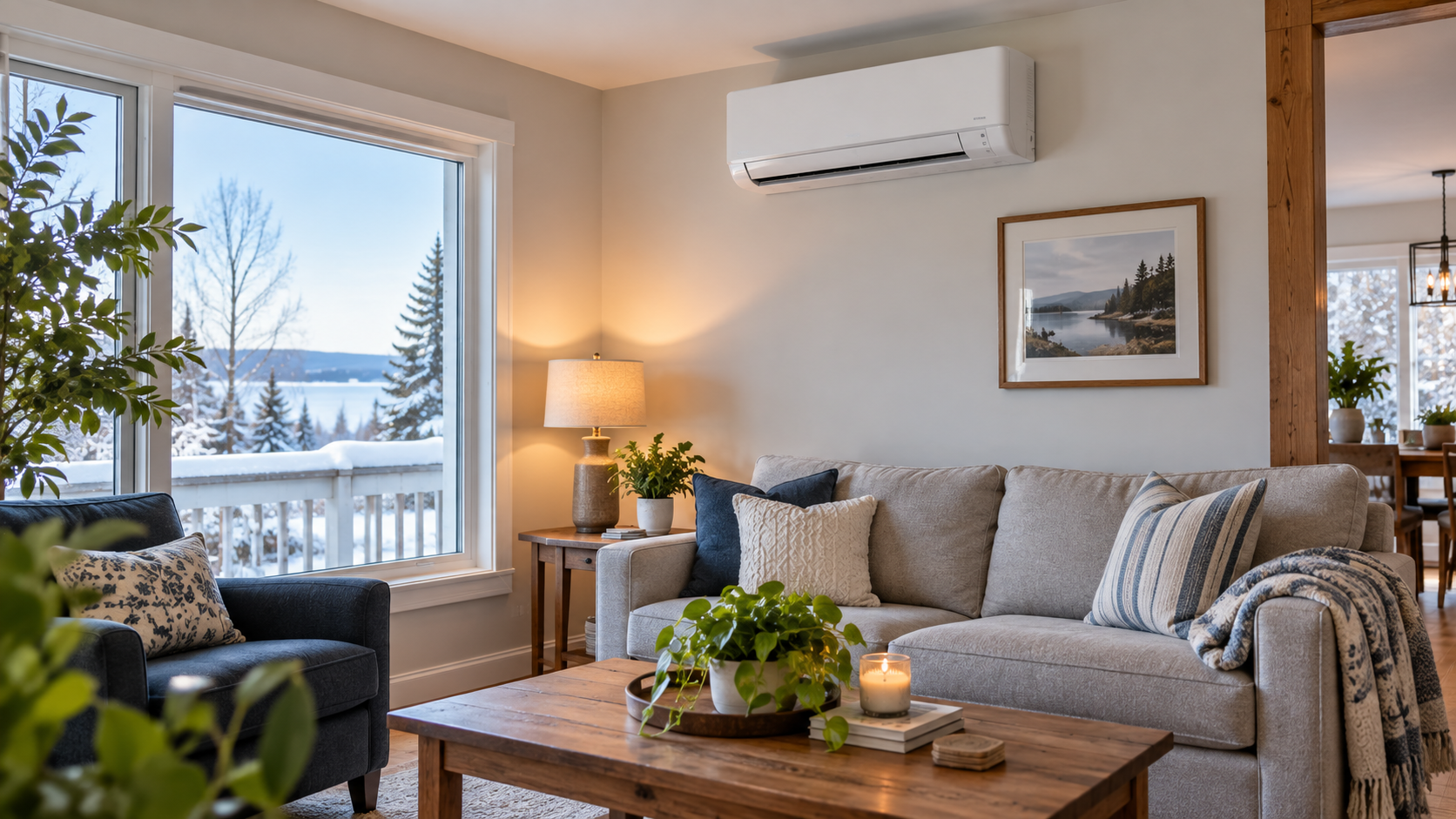
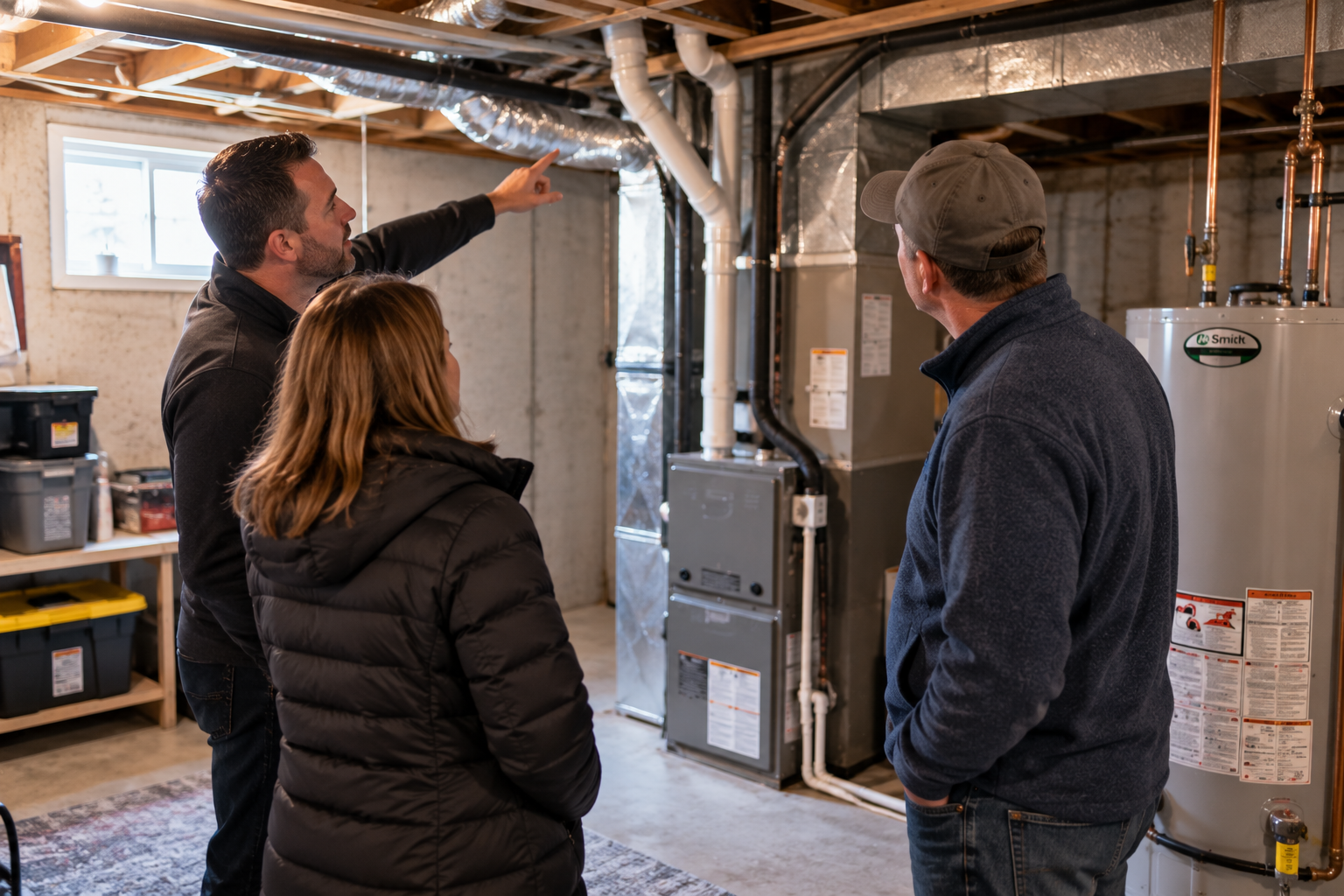
That's why I wouldn't judge a home's potential heating costs simply by seeing a heat pump on the wall or a particular type of furnace in the basement.

You need to consider the house around it.

7. Bigger Isn't Always Better

Size obviously matters.

All else being equal, heating 3,000 square feet generally requires more energy than heating 1,000 square feet.

But square footage alone doesn't tell you how energy efficient a home is.

A larger, well-insulated and relatively airtight home with efficient heating equipment may require less heating energy than you might expect.

Meanwhile, a smaller home with poor insulation, significant air leakage and inefficient equipment may require considerably more.

The shape and design of the house can matter as well. More exterior wall, roof and foundation area means more building envelope exposed to outdoor temperatures.

So when comparing houses, the question shouldn't simply be:

“How big is it?”

It should also be:

“How well does it use and retain energy?”


8. Don't Forget the People Living There

Here's where comparing utility bills gets tricky.

The house isn't the only variable.

The people living in it matter too.

One family might keep the thermostat at 22°C all winter. Another might prefer 19°C.

Someone may work from home every day while another house sits empty for ten hours.

Then consider:

  • number of occupants

  • thermostat settings

  • showers and hot-water use

  • appliance use

  • wood-stove use

  • use of supplemental heaters

  • whether every room is heated

  • how often doors are opened

  • vacations or extended absences

Even weather varies from one year to another.

That's why historical heating or electricity bills can be useful information when you're considering a home—but they aren't a guarantee of what your costs will be.


So, What Should Buyers Look For?

When you're viewing a home, the heating system is certainly worth paying attention to.

But don't stop there.

Look at the house as a whole.

Ask questions about:

  • insulation levels

  • window age and type

  • drafts or evidence of air leakage

  • heating equipment and its age

  • supplemental heat sources

  • renovations or energy upgrades

  • historical energy consumption, when available

Some of the most important energy-efficiency features in a home aren't particularly exciting to look at.

They're hidden in attics, walls, basements and mechanical rooms.

But those hidden features can have a very real effect on comfort and operating costs.

The Cheapest Heat Is the Heat You Don't Lose

When homeowners want to reduce heating costs, it's tempting to immediately start shopping for a more efficient heating system.

Sometimes that's exactly the right investment.

But sometimes the better question is:

Why does the house need so much heat in the first place?

Improving insulation, reducing uncontrolled air leakage, upgrading poorly performing windows or making other building-envelope improvements can reduce the amount of work the heating system has to do. NRCan's retrofit guidance similarly recommends considering the building envelope before—or alongside—changes to heating equipment. Natural Resources Canada

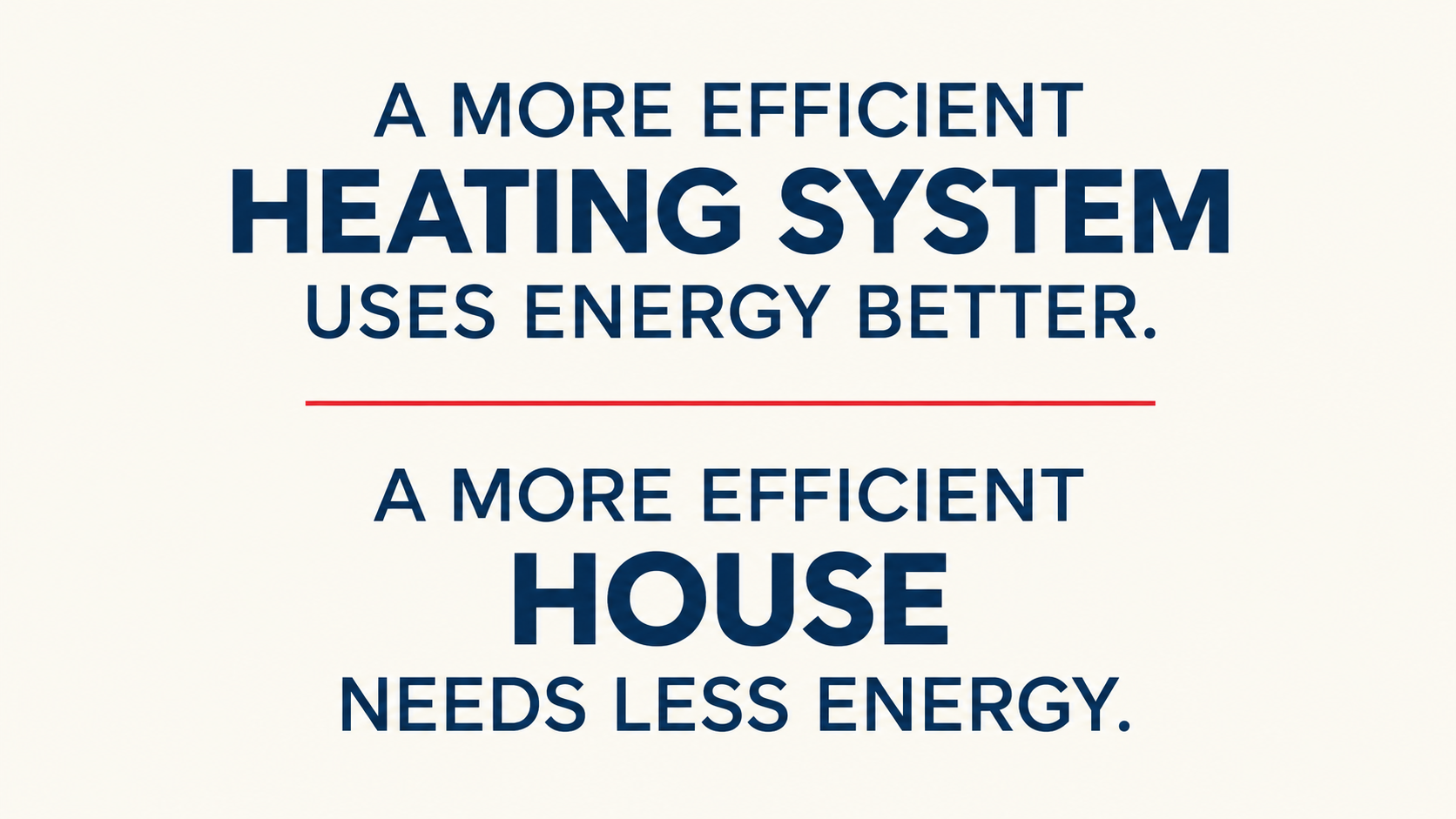
A more efficient heating system can produce heat more efficiently.

A more efficient house needs less of it.

Understanding that difference can help homeowners make better renovation decisions—and help buyers better understand the homes they're considering.

Smarter, Greener Homes

This article is part of my Smarter, Greener Homes series, where I'll be taking a practical look at energy efficiency, green building and the features that can affect how comfortable and economical a home is to operate.

As a Canadian Certified Green Representative (CCGR), I help buyers and sellers better understand features such as insulation, energy-efficient windows, heat pumps, passive solar design and other technologies that can affect a home's energy performance.

Next, we'll take a closer look at another topic that's particularly relevant here in Nova Scotia:

Heat pumps—and whether they're really cheaper to operate.

Have questions about an energy-efficient home you're considering buying or selling?

I'm always here to help.

Rob Schellenberger, REALTOR®
Canadian Certified Green Representative
RE/MAX Banner Real Estate
902-300-8674
robschellenberger.ca

Read

What Is a Passive Solar Home — and How Can It Reduce Energy Use?

Part of the Smarter, Greener Homes series: Practical guides to understanding energy efficiency, home performance and green-building features.

When you hear the words solar home, what comes to mind?

For most people, it’s probably a roof covered in solar panels.

But a home can take advantage of the sun without producing a single watt of electricity. In fact, one of the most effective approaches to energy-efficient home design is surprisingly low-tech.

It’s called passive solar design, and the basic idea is simple:

Instead of producing more energy, design the home to need less of it.

Passive solar design uses the orientation and construction of a home to take advantage of the sun’s natural heat and light. Windows, insulation, building materials, shading and even the angle of the sun throughout the year can all work together to help reduce the amount of energy needed to keep a home comfortable.

Natural Resources Canada describes passive solar technologies as using building location and components such as windows, overhangs and thermal mass to harness the sun’s heat and light without electrical or mechanical equipment. Natural Resources Canada


1. Start With the Sun

One of the fundamental ideas behind passive solar design is orientation.

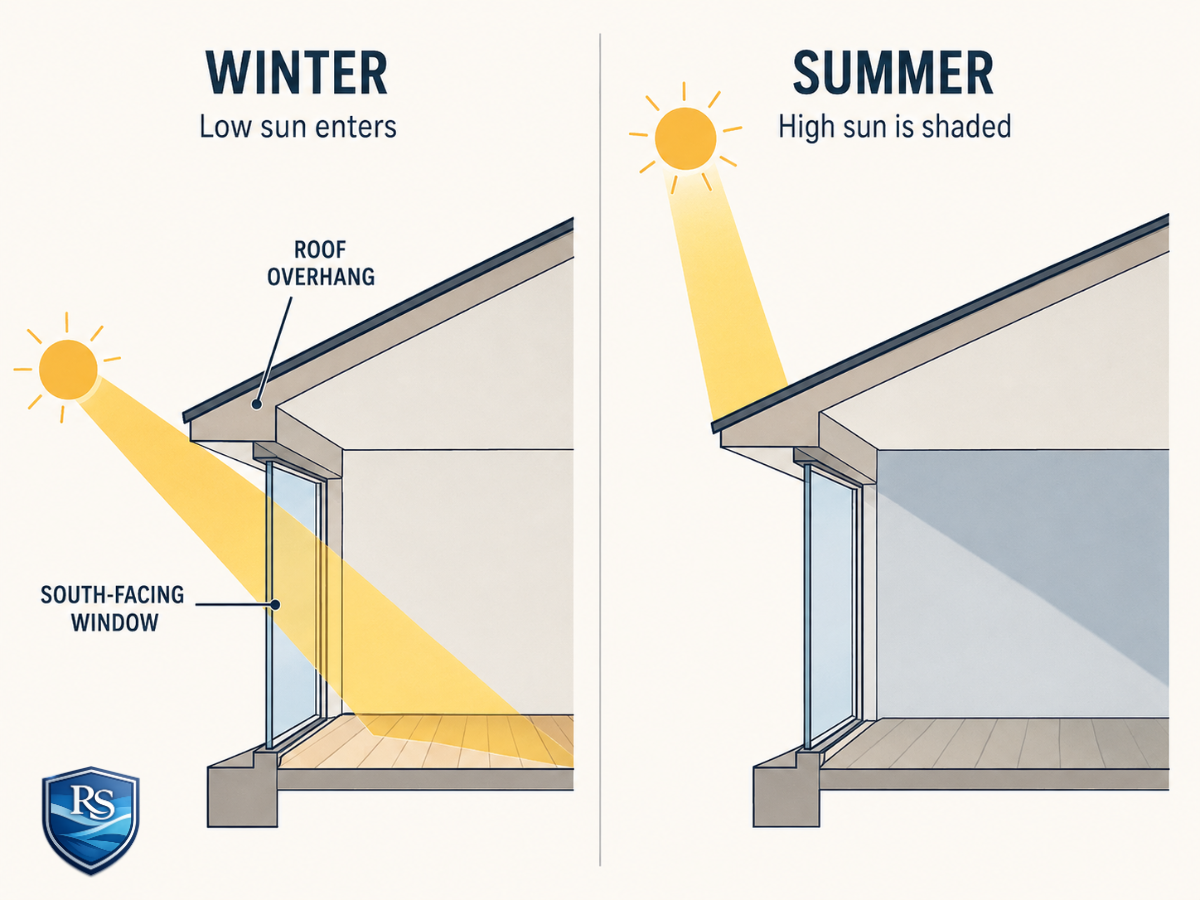
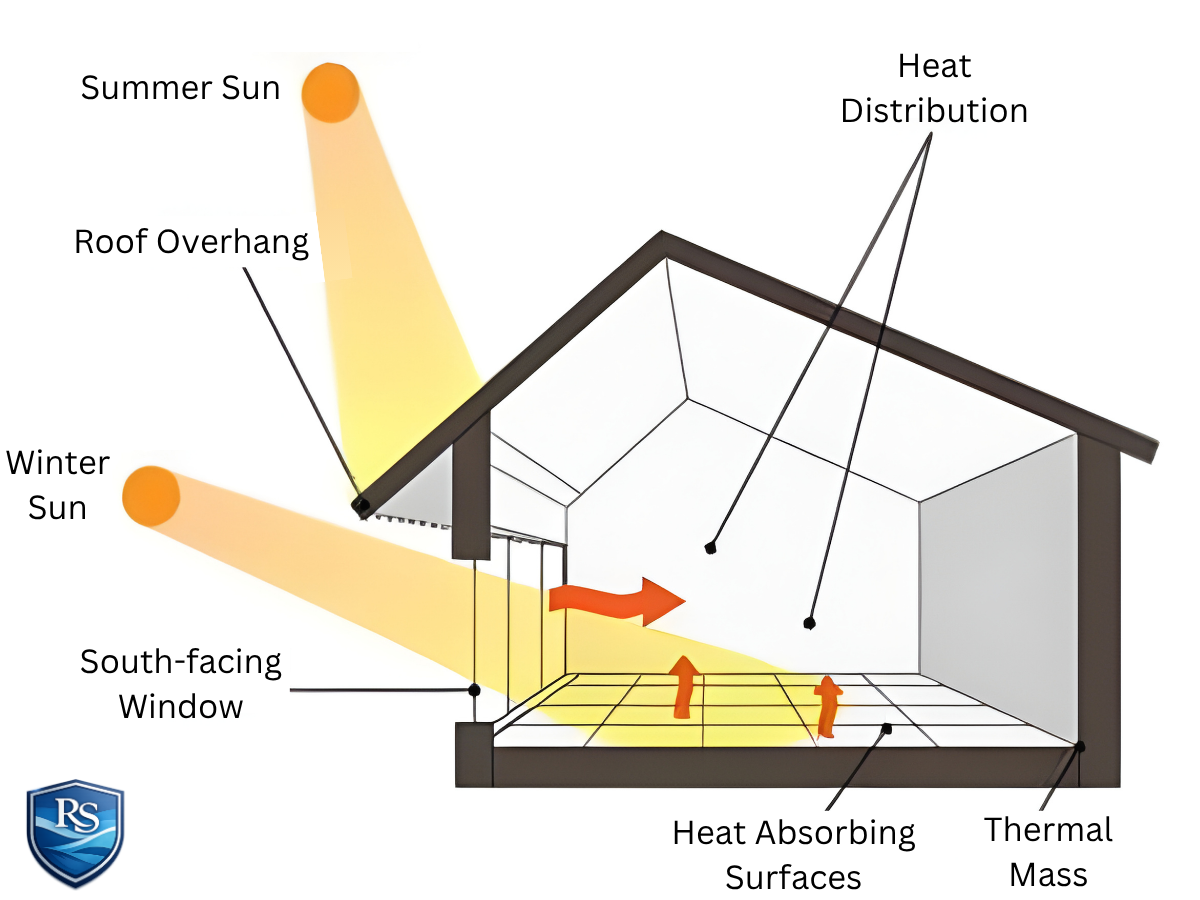
Here in Nova Scotia, as elsewhere in the Northern Hemisphere, the sun travels through the southern portion of the sky. During winter it sits lower on the horizon, while during summer it travels much higher overhead.

A passive solar home can be positioned and designed to take advantage of that predictable seasonal change.

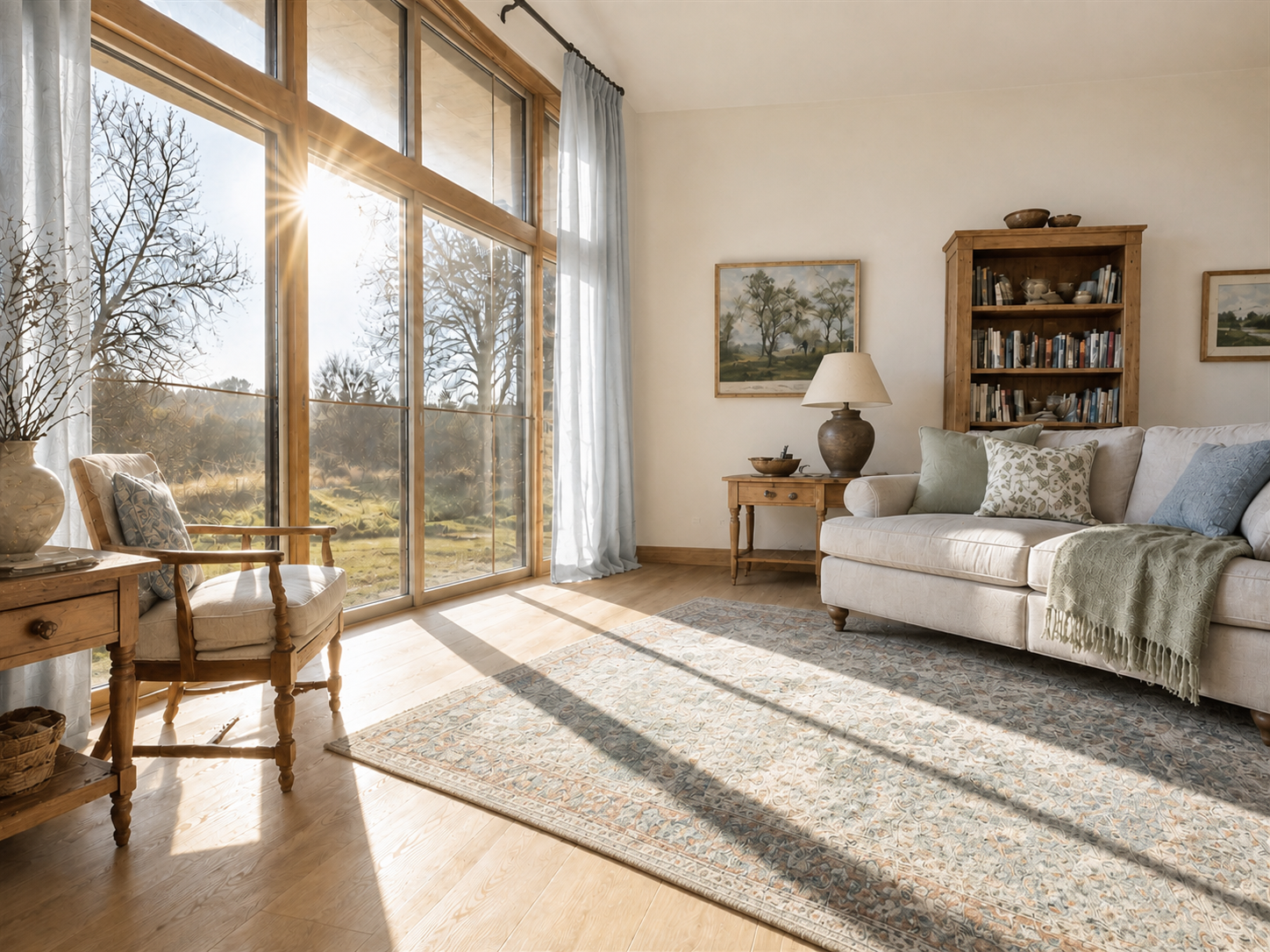
Strategically placed south-facing windows can allow the lower winter sun to reach farther into the home, providing natural light and useful solar heat during the time of year when we need it most.


2. Windows Can Help Heat a Home

Windows can be a significant source of heat loss in a home.

But properly selected and positioned windows can also provide useful solar heat gain during the heating season. Natural Resources Canada specifically considers this balance between heat loss and passive solar gain when evaluating window energy performance. Natural Resources Canada

In passive solar design, the size, location and performance of the windows all matter.

High-performance windows can help reduce heat loss while still allowing sunlight into the home. The objective isn't simply to install as much glass as possible. It's to find the right balance between letting useful solar energy in and keeping valuable heat from escaping.

That distinction matters, because too much uncontrolled solar gain can create the opposite problem: overheating. Natural Resources Canada


3. Capture the Heat — Then Keep It

Capturing the winter sun is only useful if the home can hold on to that heat.

That's why the building envelope is such an important part of an energy-efficient home.

Good insulation and careful construction help reduce heat transfer through the walls, ceiling, foundation, windows and doors.

Passive solar provides an opportunity for free heat. A well-designed building envelope helps you hang on to it.

This combination can reduce the amount of work the home's conventional heating system has to do to maintain a comfortable indoor temperature.


4. The House Can Store Some of the Sun's Heat

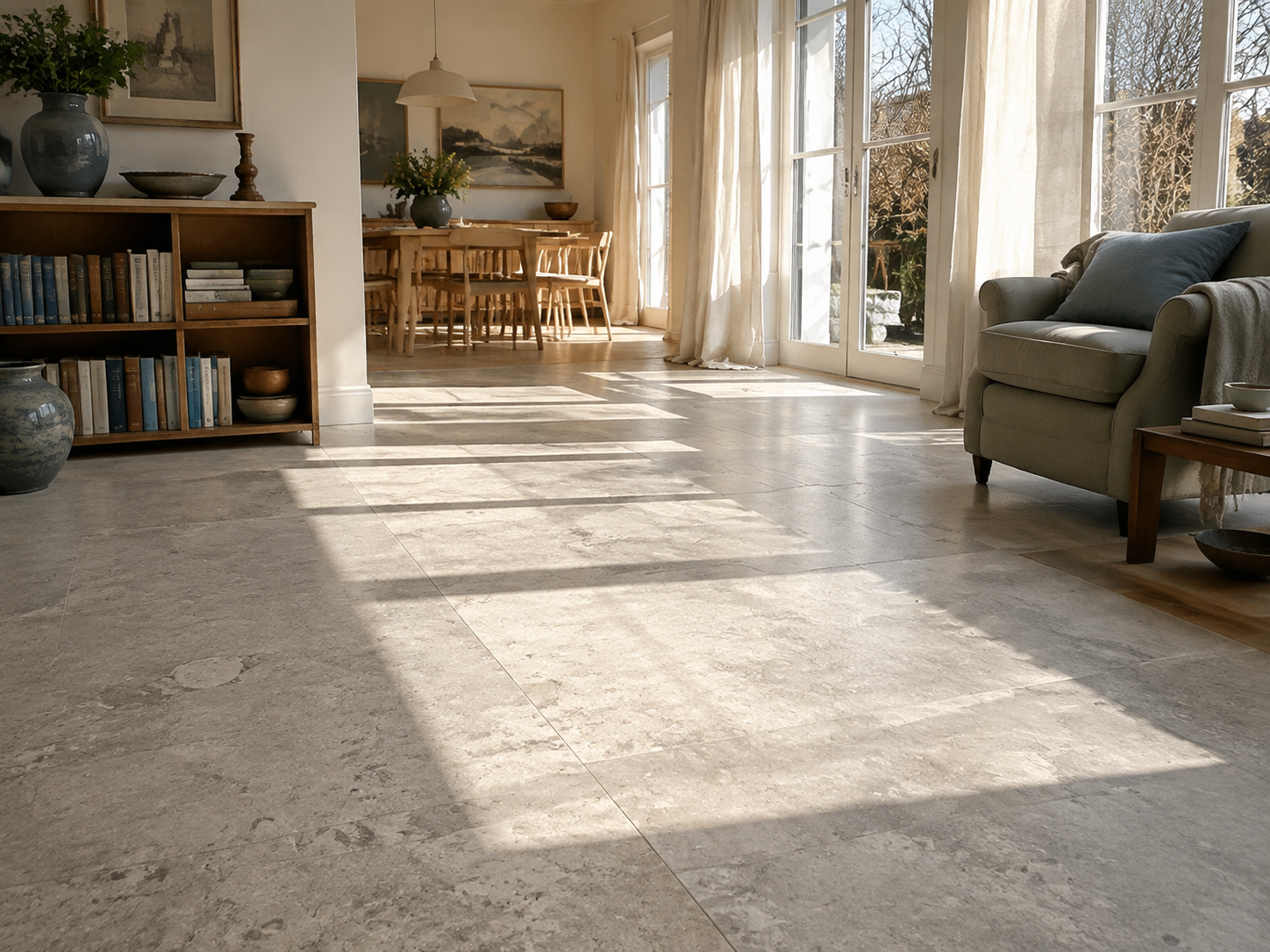
Thermal mass is another important part of passive solar design.

Certain materials can absorb heat when their surroundings are warmer and release that heat later as temperatures cool.

Concrete, stone, brick and tile are common examples.

If winter sunlight reaches a material with good thermal mass, some of that solar energy can be absorbed rather than immediately disappearing. As the room cools later in the day, the stored warmth can gradually be released back into the space.

This helps smooth out temperature fluctuations rather than having a home rapidly warm when the sun is shining and rapidly cool once it disappears.


5. What Happens in the Summer?

A house designed to welcome sunlight in January certainly doesn't need to collect the same amount of heat in July.

Because the summer sun travels much higher in the sky, properly designed shading can reduce direct sunlight entering the home during warmer months while still allowing lower-angle winter sunlight to enter during the heating season.

Roof overhangs, exterior shading, window selection and other design elements can all play a role.

The objective isn't simply to collect solar heat—it's to manage it.

That's an important distinction. Natural Resources Canada cautions that excessive solar gain can lead to uncomfortable indoor temperatures and increased cooling requirements, so passive solar design has to consider both heating and cooling seasons. Natural Resources Canada


6. Passive Solar Isn't the Same as Solar Panels

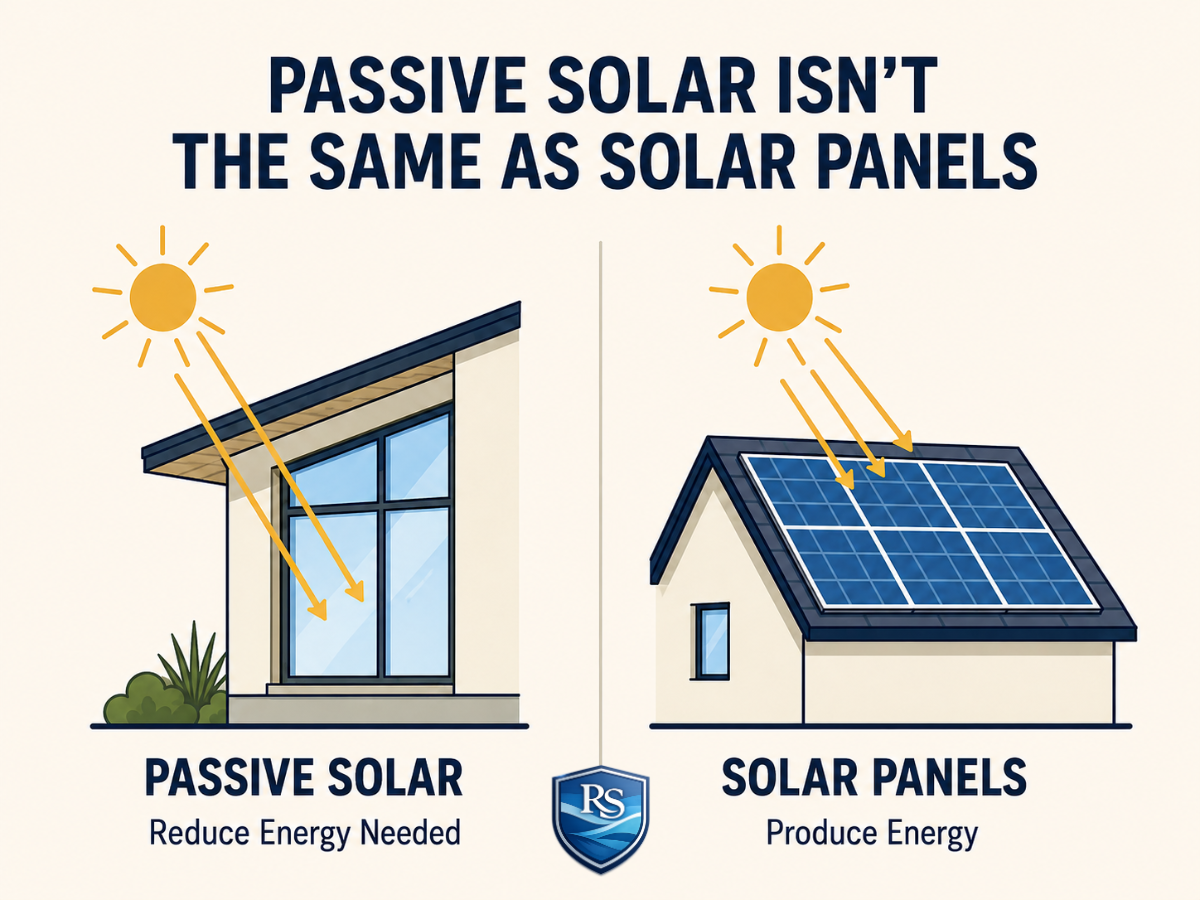
Passive solar and solar photovoltaic (PV) systems are two different things.

Solar panels are an active technology. They collect sunlight and convert it into electricity.

Passive solar design doesn't require electricity-producing equipment at all.

Instead, the house itself becomes part of the energy strategy.

Its orientation, windows, insulation, thermal mass and shading work together to make better use of naturally available energy.

There's no reason the two approaches can't be combined, but they solve the energy question differently:

Solar panels help produce energy. 
Passive solar design helps reduce the amount of energy a home needs.


7. Does a Passive Solar Home Still Need Heating?

The term passive solar doesn't mean a house magically heats itself every day of the year.

We're still in Nova Scotia. We have cloudy days, short winter days and plenty of cold weather.

Passive solar design is about reducing the home's heating and cooling demand, not necessarily eliminating conventional heating systems altogether.

How much energy a particular home uses will depend on many factors, including its design and construction, weather, occupant behaviour, thermostat settings, appliances and heating systems.

Passive solar is best understood as one part of an overall approach to energy-efficient housing, rather than as a stand-alone feature.


Why Should Home Buyers Care About Energy-Efficient Design?

For homeowners, energy efficiency goes beyond environmental considerations—it can affect some very practical things:

  • Energy consumption

  • Operating costs

  • Comfort

  • Temperature consistency

  • Drafts

  • Heating and cooling requirements

Two houses of similar size can perform very differently depending on their orientation, insulation, windows, air sealing, construction and mechanical systems.

And unlike a new countertop or freshly painted room, many of the features that determine a home's energy performance are hidden behind the walls, underneath the floor or above the ceiling.

That's one of the reasons I believe buyers should understand how a home was built, not simply how it looks.


A Real-World Passive Solar Example Here in Nova Scotia

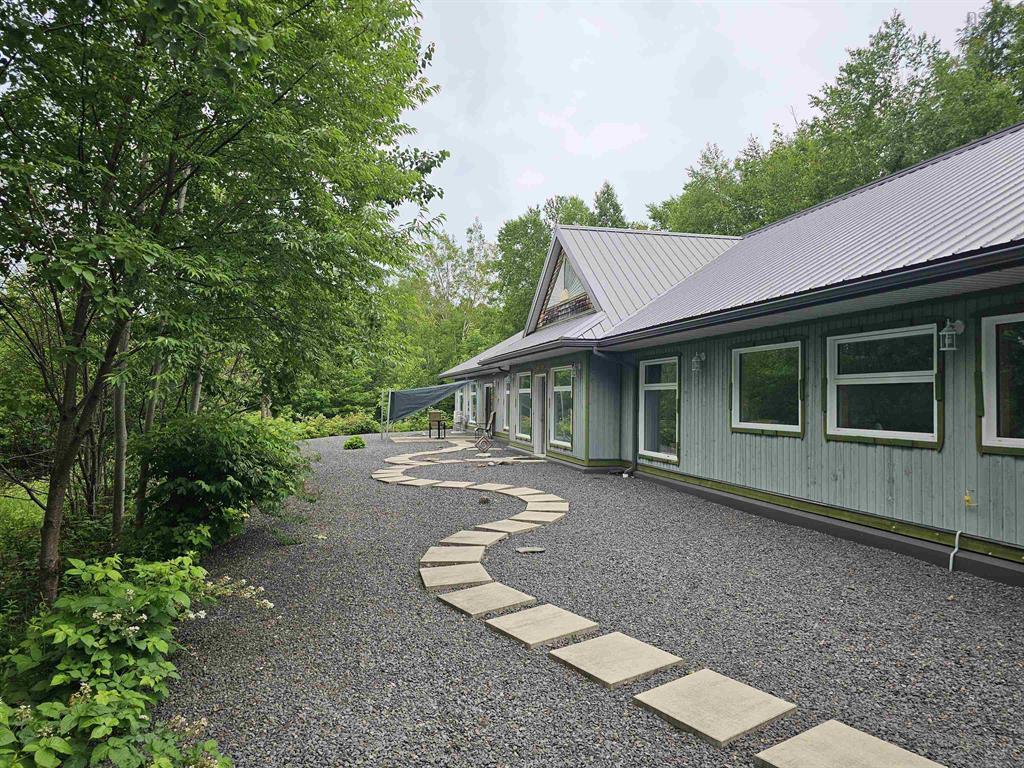
Understanding the individual concepts is one thing. Seeing them brought together in an actual home makes passive solar much easier to visualize, and 516 Burgess Mountain Road in Woodville provides an excellent local example.

This custom-built home incorporates passive solar construction with south-facing triple-pane windows, extended roof overhangs and high levels of insulation. The property was designed around energy efficiency, comfort and accessibility. Explore 516 Burgess Mountain Road

Here’s how those passive solar principles show up in the home:

South-facing orientation and windows

The home is oriented to take advantage of low-angle winter sunlight through its south-facing windows. During summer, when the sun travels higher overhead, the design helps limit unwanted solar gain.

R-60 wall construction

The exterior walls use a multi-layer assembly incorporating several layers of insulation and an insulated air cavity. According to the home's construction information, the resulting wall system is approximately R-60.

R-80 attic insulation

Above the living space, approximately R-80 of attic insulation helps reduce heat loss through the upper portion of the building envelope.

Seasonal solar control

The home's extended roof overhangs demonstrate another passive solar principle. Lower winter sunlight can reach the south-facing windows, while the higher summer sun is more effectively shaded.

An insulated foundation and slab

Energy efficiency doesn't stop at the walls and roof. The home also incorporates an insulated foundation and an R-20 insulated concrete slab to help reduce heat loss through the floor.

Energy efficiency isn't necessarily one piece of technology. It's often the result of many building components working together.


What Does That Mean for Actual Energy Consumption?

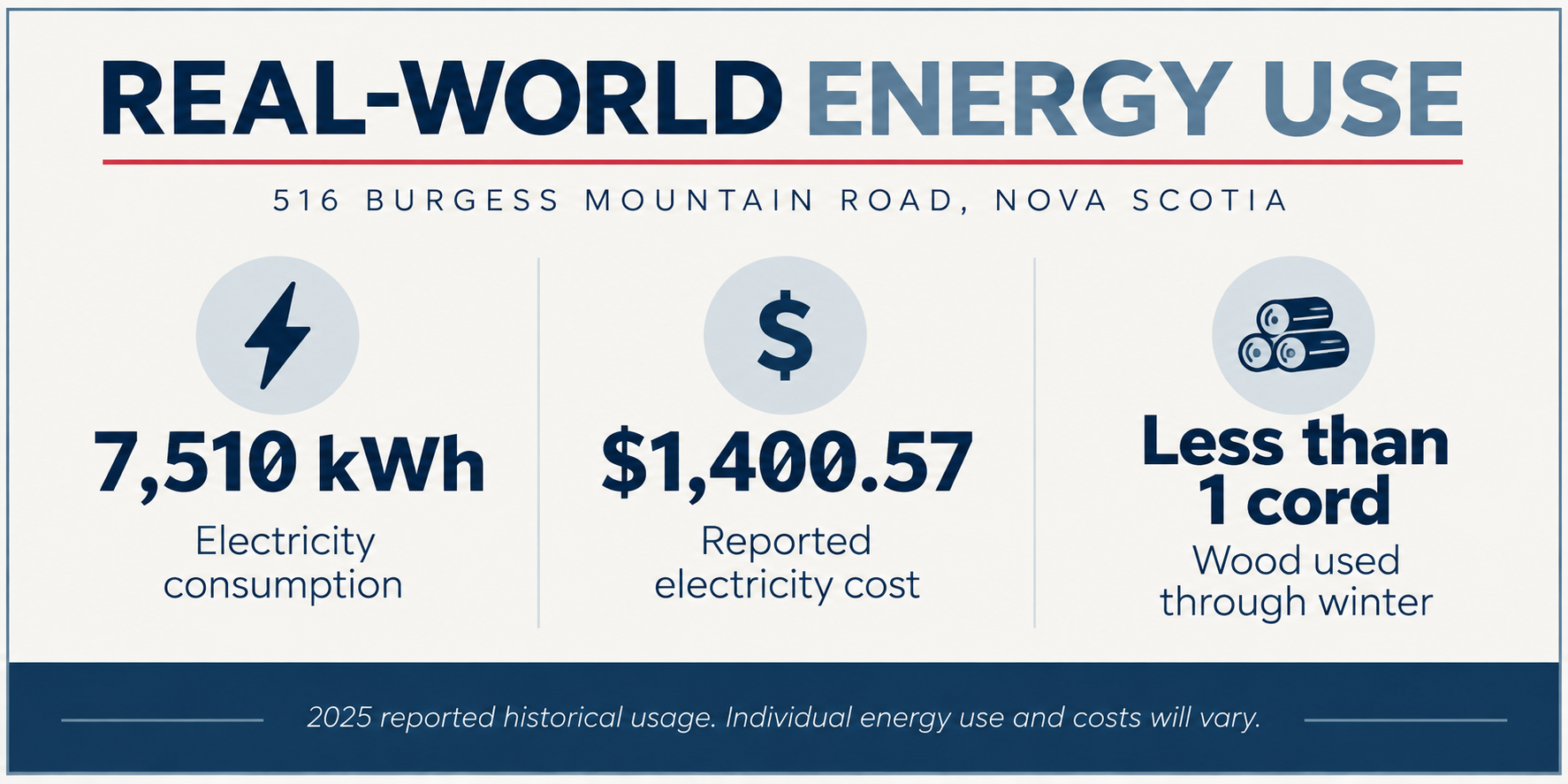
The home’s utility history gives us a real-world look at its energy consumption.

The information supplied for 516 Burgess Mountain Road shows 7,510 kWh of electricity consumption and $1,400.57 billed for the reported 2025 period, compared with 7,675 kWh and $1,562.73 for the comparison period shown in the property's documentation. The property information also reports using less than one cord of wood through the winter.

These figures reflect the home's historical usage and aren't a guarantee of future energy consumption or costs. Actual results will vary based on occupancy, lifestyle, weather, thermostat settings, appliances, energy prices and other factors.

What the history does provide is a real-world example of relatively low energy consumption in a home that incorporates passive solar design and a highly insulated building envelope.


Want to See Passive Solar in Action?

If you'd like to see these passive solar principles brought together in a real home, 516 Burgess Mountain Road is currently offered for sale in Woodville, Nova Scotia.

The 3,040-square-foot, single-level home sits on five wooded acres and combines energy-conscious construction with an accessible design. It offers two bedrooms, two bathrooms, flexible living space, an attached garage and workshop, plus a garden area and pond.

Explore 516 Burgess Mountain Road and full listing details


Green Homes Are About More Than One Feature

As a Canadian Certified Green Representative (CCGR), I help buyers and sellers better understand the features that can affect a home's energy performance, comfort, sustainability and operating costs.

Passive solar is just one piece of that conversation.

In future articles, I’ll explore other aspects of energy-efficient homes, including insulation, high-performance windows, heat pumps, solar energy and what buyers should look for when evaluating a home.

Whether you're building, renovating, buying or selling, understanding how a home uses energy can be just as important as knowing how many bedrooms it has.

Thinking about buying or selling an energy-efficient home—or just curious about what features really matter? Get in touch. I’m always here to help.

Rob Schellenberger, REALTOR®
Canadian Certified Green Representative
RE/MAX Banner Real Estate
902-300-8674
robschellenberger.ca
Read

Moving to Nova Scotia from Ontario: Is It Actually Cheaper in 2026?

Quick Answer: Yes, homes are generally less expensive in Nova Scotia than many parts of Ontario. However, lower home prices do not automatically mean a lower cost of living. Property taxes, income taxes, and energy costs can be higher, while lifestyle, community, and housing opportunities are often what attract people here in the first place.


Thinking About Moving to Nova Scotia?

If you're researching a move from Ontario to Nova Scotia, you've probably asked the same question I hear almost every week:

"Is it actually cheaper to buy a house in Nova Scotia?"

Having made the move myself five years ago and now helping people relocate to Nova Scotia, I've learned that the answer isn't as simple as comparing home prices.

While homes are often more affordable here, there are other costs and lifestyle considerations that deserve equal attention.

In this guide, I'll share what I've learned from both my own experience and from helping buyers explore a move to Nova Scotia.


Scenic Cape Breton Highlands

Table of Contents

  • Is Nova Scotia Cheaper Than Ontario?

  • Why Homes Are Often More Affordable

  • Costs That Surprise Ontario Buyers

  • Common Misconceptions About Nova Scotia

  • Why People Are Moving Here

  • What Surprised Me After Moving

  • The Biggest Mistake Buyers Make

  • My Advice Before You Move

  • Frequently Asked Questions


Is Nova Scotia Cheaper Than Ontario?

In most cases, yes.

Housing prices in Nova Scotia remain lower than many markets across Ontario. This is especially true when comparing rural properties, hobby farms, waterfront homes, and detached houses with acreage.

However, focusing solely on purchase price can be misleading.

A lower mortgage payment may be offset by:

  • Higher property taxes

  • Higher provincial income taxes

  • Increased heating costs

  • Well and septic maintenance

  • Rural commuting expenses

  • Home maintenance on older properties

The better question is:

"Will Nova Scotia give me the lifestyle I'm looking for while still fitting my financial goals?"


Why Homes Are Often More Affordable

One of the biggest reasons people explore Nova Scotia is housing affordability.

Many buyers are surprised by what they can purchase here compared to Ontario.

I regularly work with buyers who are able to:

  • Purchase acreage for the first time

  • Start a hobby farm

  • Buy waterfront property

  • Eliminate their mortgage entirely

  • Purchase a larger home than they could afford in Ontario

For retirees especially, selling a property in Ontario can sometimes provide enough equity to purchase a home in Nova Scotia while freeing up funds for travel, renovations, hobbies, or retirement savings.


Annapolis Valley from the look-off

The Costs That Surprise Ontario Buyers

Property Taxes

This is often the biggest surprise.

Many people assume lower home prices automatically mean lower property taxes.

That is not always true.

Because many Nova Scotia municipalities have smaller populations spread across larger geographic areas, property taxes can sometimes be significantly higher than buyers expect.

This was one of my own biggest surprises after moving here.

Heating Costs

Natural gas is common in many Ontario communities.

In Nova Scotia, natural gas availability is limited outside larger urban centres.

Many homes rely on:

  • Electricity

  • Heat pumps

  • Oil

  • Wood

  • Combination heating systems

Understanding how a home is heated is often just as important as understanding its purchase price.

Income Taxes

Nova Scotia's income tax rates are generally higher than Ontario's.

One detail many people don't realize is that your tax province is determined by where you live on December 31st. This can create an unexpected surprise during your first tax season after relocating.


Utilities in Nova Scotia

Common Misconceptions About Nova Scotia

"Nova Scotia Is Still Dirt Cheap"

Before COVID, Nova Scotia housing prices lagged behind much of Canada.

Today, homes remain more affordable than many Ontario markets, but the gap is not what it once was.

Many buyers arrive expecting to find move-in-ready homes on large lots for $200,000-$300,000.

In today's market, those properties often require repairs, updates, or significant renovation work.

Not Understanding Wells and Septic Systems

Many Ontario buyers have never owned a property with a private well or septic system.

These systems can work extremely well but require different maintenance and planning than municipal services.

Treating Nova Scotia Like One Community

Nova Scotia is not one place.

Living in Halifax is very different from living in Digby.

Wolfville is different from Yarmouth.

Annapolis Royal is different from Cape Breton.

Each region offers a unique lifestyle, pace, and level of services.


Why People Are Really Moving Here

While affordability is important, it usually isn't the primary reason people move.

The most common reasons I hear include:

Retirement

Many buyers are looking for a slower pace of life and a place where retirement savings stretch further.

Being Closer to Nature

Ocean views, hiking trails, beaches, forests, and open spaces are major attractions.

Slower Pace of Life

Many buyers tell me they're simply tired of traffic, congestion, and constantly feeling rushed.

Starting a Hobby Farm

Nova Scotia offers opportunities that are increasingly difficult to find in Ontario.

Homeownership

Some buyers simply want to own a home and find that Nova Scotia provides options that no longer fit their budget in Ontario.


Halls Harbour Nova Scotia at Low Tide

What Surprised Me After Moving Here

Quality of Life

After years of demanding careers, we wanted a slower pace.

What we found was more time together as a family and more opportunities to enjoy everyday life.

The Beauty of Nova Scotia

We originally fell in love with the ocean.

What surprised us was how beautiful the entire province is and how dramatically the landscape changes with each season.

The People

Nova Scotians have a reputation for friendliness.

After moving here, we discovered that reputation is well deserved.


Rob Schellenberger with his wife and puppies

The Biggest Mistake Buyers Make

The number one mistake I see is focusing on the house before understanding the community.

A beautiful property means very little if it doesn't fit your lifestyle.

Before falling in love with a home, ask:

  • How far is the nearest grocery store?

  • What healthcare services are available?

  • How reliable is the internet?

  • How far is the nearest hospital?

  • What are winter driving conditions like?

A house can be changed.

A location cannot.


My Advice Before You Move

Visit Nova Scotia.

Then visit again.

And if possible, visit during different seasons.

Summer is wonderful, but July is not representative of everyday life throughout the year.

Take time to explore:

  • Annapolis Valley

  • South Shore

  • Halifax Region

  • Digby Area

  • Cape Breton

  • Northumberland Shore

Every region offers a different experience.

The best move decisions happen when buyers fall in love with a community first and a house second.


Nova Scotia through the seasons

Frequently Asked Questions

Is Nova Scotia cheaper than Ontario?

Generally yes when it comes to housing, but other expenses such as property taxes, energy costs, and income taxes can be higher.

Can I buy waterfront property in Nova Scotia?

Yes. Waterfront properties remain more attainable than in many Ontario markets, though prices vary significantly by region.

Are homes in Nova Scotia still affordable?

Compared to many Ontario markets, yes. However, prices have increased substantially since 2020.

What should I know before moving to Nova Scotia?

Understand property taxes, heating systems, wells, septic systems, and the differences between communities before choosing a location.

Is Nova Scotia a good place to retire?

Many retirees are attracted by the slower pace of life, access to nature, and housing opportunities available throughout the province.


Final Thoughts

Yes, homes are often cheaper in Nova Scotia than Ontario.

But after moving here myself and helping many others do the same, I've learned that cost is only part of the equation.

The people who are happiest with their move aren't usually chasing the lowest housing prices.

They're looking for a different lifestyle, a stronger sense of community, more connection to nature, and a place that aligns with their goals for the future.

If you're considering a move to Nova Scotia and would like honest advice from someone who has been through the process himself, I'd be happy to help.


About Rob Schellenberger

Originally from Ontario, I moved my family to Nova Scotia five years ago after falling in love with the province during family vacations. Today, I help buyers relocate to Nova Scotia while drawing on my engineering background, home building and renovation experience, and personal relocation journey.

📞 902-300-8674

🌐 robschellenberger.ca

📍 Serving the Annapolis Valley, Digby Area, South Shore, and beyond

Read

Pricing Your Home Right: A Guide for Annapolis Valley Sellers

When it comes to selling your home, few decisions are as critical as setting the right price. For homeowners in the Annapolis Valley, accurate pricing is key to attracting serious buyers, maximizing your home’s value, and ensuring a smooth sale. Let’s dive into why pricing matters, how it’s determined, and the risks of getting it wrong. Plus, we’ll explore how I can help you navigate this crucial step with confidence.


Why Pricing Matters

Pricing your home correctly is about striking the perfect balance. Too high, and you risk driving buyers away. Too low, and you leave money on the table. Here’s why pricing is so important:

  • First Impressions Count: The first few weeks your home is on the market are crucial. A competitively priced home will attract more attention and generate interest from serious buyers.

  • Attracting the Right Buyers: Correct pricing ensures your home appears in the right searches and attracts buyers who are ready and able to purchase.

  • Avoiding Extended Time on the Market: Overpriced homes tend to linger, which can lead to a stigma that something is wrong with the property.


How a Comparative Market Analysis (CMA) Works

A Comparative Market Analysis (CMA) is a powerful tool used to determine your home’s fair market value. It involves analyzing:

  • Recent Sales: Examining prices of similar homes that have sold recently in your area.

  • Active Listings: Comparing your home to similar properties currently on the market.

  • Market Trends: Assessing how factors like demand, seasonality, and local economic conditions influence pricing.

By combining this data with my in-depth knowledge of the Annapolis Valley market, I can provide a realistic and competitive price range for your home.


The Risks of Overpricing or Underpricing

Overpricing:

  • Deters Buyers: High prices can push your home out of buyers’ budgets or make it less attractive compared to other options.

  • Prolonged Time on Market: Homes that sit unsold for too long can develop a negative perception, leading to fewer offers.

  • Price Reductions: Frequent price drops can signal desperation, weakening your negotiating power.

Underpricing:

  • Lost Value: Setting a price too low may result in leaving potential profits behind.

  • Perceived Issues: Buyers may assume there are problems with the home.


How Market Trends Influence Pricing

The real estate market is dynamic, and pricing must reflect current conditions:

  • Buyer Demand: High demand can justify slightly higher pricing, while low demand requires a more competitive approach.

  • Seasonal Factors: Spring and summer often bring more buyers, while fall and winter may require more aggressive pricing.

  • Economic Conditions: Interest rates, mortgage policies, and local economic growth all play a role in determining how much buyers are willing to pay.


How I Help You Price Your Home Right

As a real estate professional with extensive experience in the Annapolis Valley market, I provide personalized guidance to ensure your home is priced accurately and competitively. Here’s what I offer:

  • Expert Market Analysis: My CMAs are thorough, data-driven, and tailored to your property.

  • Local Insight: I understand the nuances of Annapolis Valley neighborhoods and what buyers are looking for.

  • Strategic Adjustments: If market conditions change, I’ll work with you to adapt your pricing strategy.

  • Comprehensive Marketing: I ensure your home is presented to the right audience, maximizing visibility and appeal.


Actionable Tips for Pricing Your Home

  1. Research the Market: Stay informed about local market trends and recent sales.

  2. Be Realistic: Avoid letting emotional attachments cloud your judgment.

  3. Trust the Data: A CMA provides an objective basis for pricing decisions.

  4. Monitor Feedback: Pay attention to buyer reactions and adjust if necessary.

  5. Work with a Professional: Partnering with an experienced full time real estate agent ensures you’re making informed decisions.


Take the First Step Toward a Successful Sale

Pricing your home right is the foundation of a successful sale. Whether you’re preparing to list your home or just starting to explore your options, I’m here to help every step of the way.

Contact me today at 902-300-8674 or visit robschellenberger.ca for a free personalized home evaluation. Together, we’ll set the right price and get your home sold with confidence.

I’m here to help every step of the way!


Request my comprehensive Seller’s Guide, delivered to your door, TODAY!

Seller’s Guide

Read
×

Do you have questions?

Call or text today.
I am always here to help!

902-300-8674