.png)

Part of the Smarter, Greener Homes series: Practical guides to understanding energy efficiency, home performance and green-building features.
Walk through a home and it's fairly easy to notice the things you can see.
The kitchen.
The flooring.
The bathrooms.
The appliances.
But some of the features that can have the biggest impact on how a home feels and performs aren't nearly as obvious.
How much insulation is in the attic?
How airtight is the house?
What kind of windows are installed?
How old is the heating system?
Is there mechanical ventilation?
Which direction does the house face?
And perhaps one of the most useful questions:
How much energy has the house actually been using?
Natural Resources Canada takes a similar whole-house approach when evaluating energy performance. An EnerGuide home evaluation considers airtightness, insulation, windows and doors, heating and cooling equipment, water heating and ventilation—not simply one feature in isolation. Natural Resources Canada
That's a useful way to think when you're buying a home too.
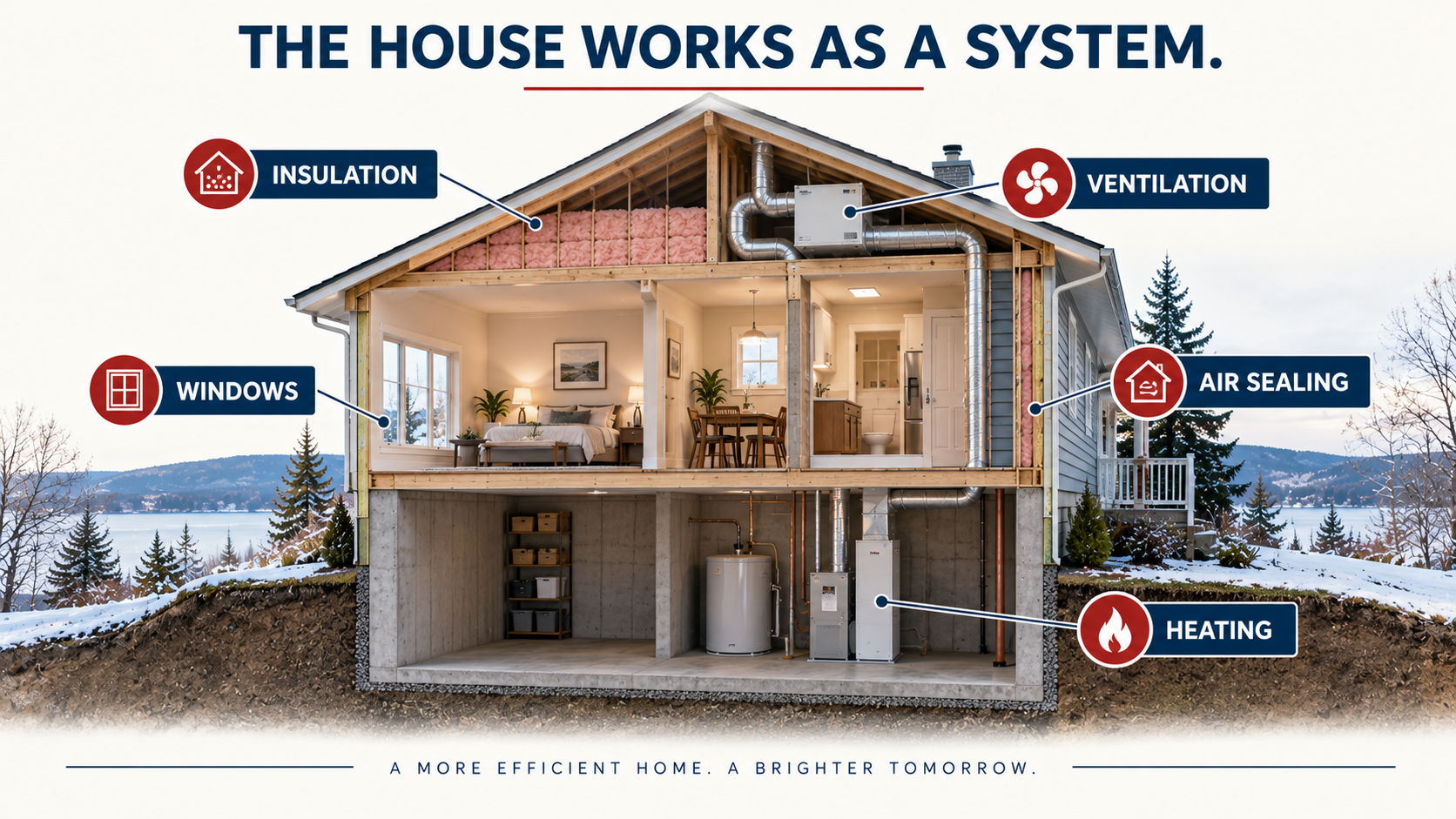
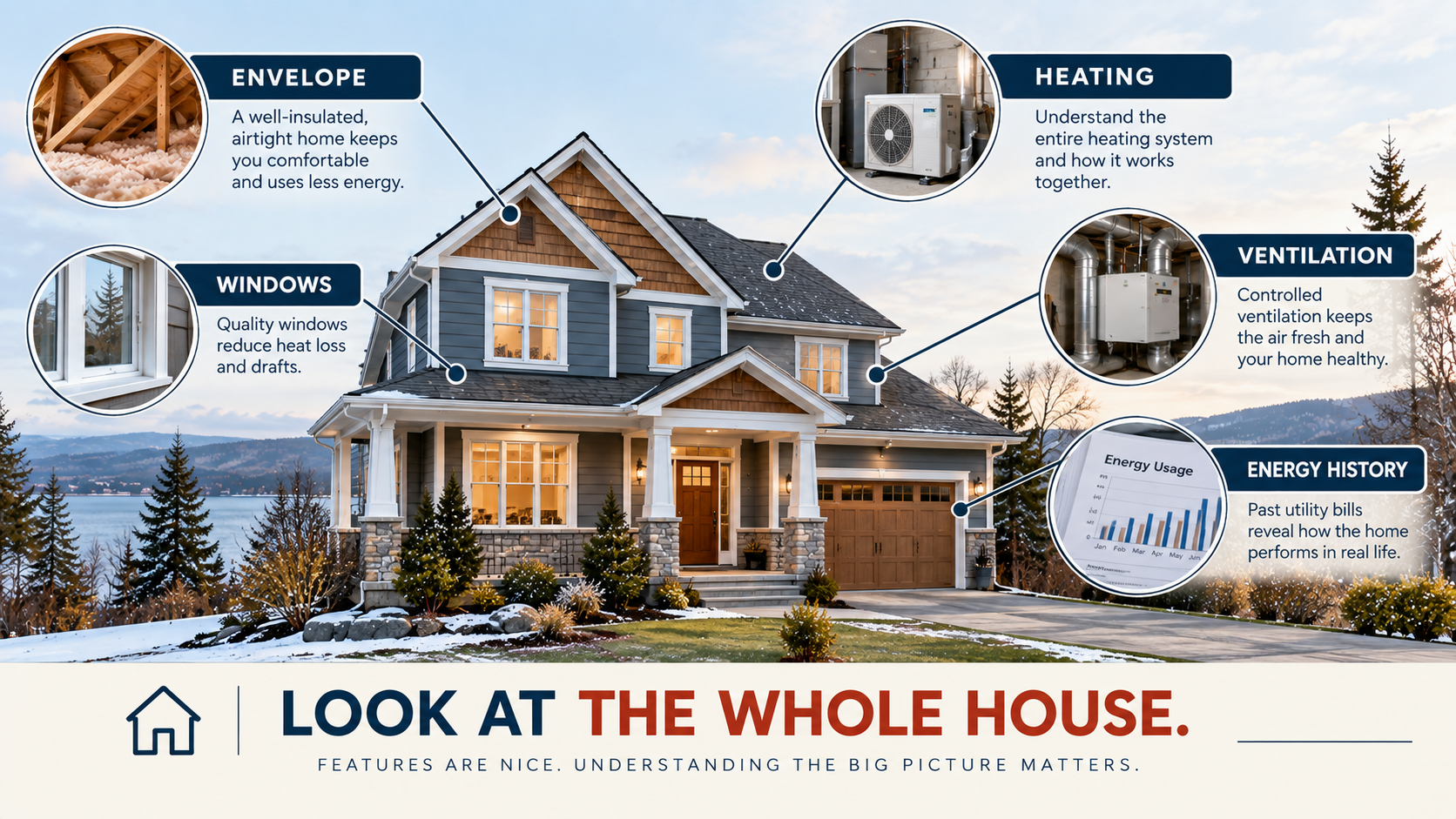
Don't look for one “green” feature. Look at how the house works as a system.
1. Start With the Building Envelope
Before worrying about what produces the heat, I like to think about where that heat goes.
The building envelope is essentially the boundary separating the conditioned part of the house from the outdoors.
That includes things like:
exterior walls
ceilings and attics
foundation and basement walls
exposed floors
windows
exterior doors
A better-performing building envelope can reduce how quickly heat moves out of the house during winter—or into it during summer.
That matters because every bit of heat the house loses eventually has to be replaced by the heating system.
The less energy the house needs, the less work the equipment has to do.
This is why I wouldn't judge an energy-efficient home simply by whether it has a heat pump, solar panels or new windows.
Start with the house itself.
2. Look at the Insulation—But Don't Stop at the R-Value
If insulation information is available, it's certainly worth reviewing.
You might see numbers such as:
R-20.
R-40.
R-60.
Generally, a higher R-value means greater resistance to heat flow.
But the number alone doesn't tell the whole story.
I'd also want to know:
Where is the insulation?
What type is it?
How consistently was it installed?
Are there gaps or compressed areas?
Are there significant thermal bridges?
Was insulation added during a renovation?
Is there documentation showing what was actually done?
An attic with a deep, consistent layer of insulation is very different from one where insulation has been disturbed, compressed or pushed away from certain areas.
The same principle applies to walls and foundations.
Good insulation is important. Good installation is important too.
Insulation: What Do R-Values Actually Mean?
3. Air Sealing Can Be Just as Important
This is one of the energy-efficiency features buyers are least likely to see.
A house can have plenty of insulation and still lose a surprising amount of heated air through small gaps and penetrations.
Potential leakage points include areas around:
windows and doors
attic hatches
plumbing and wiring penetrations
exhaust vents
electrical penetrations
sill and rim joists
foundation connections
chimneys and flues
You probably won't discover every air leak during a showing.
But you can look for clues.
Do you feel drafts around windows or doors?
Is the weatherstripping damaged?
Does the attic hatch appear well sealed?
Are there obvious gaps around service penetrations?
If the home has had an EnerGuide evaluation, even better. Airtightness is measured with a blower door test as part of the evaluation. Natural Resources Canada
And remember:
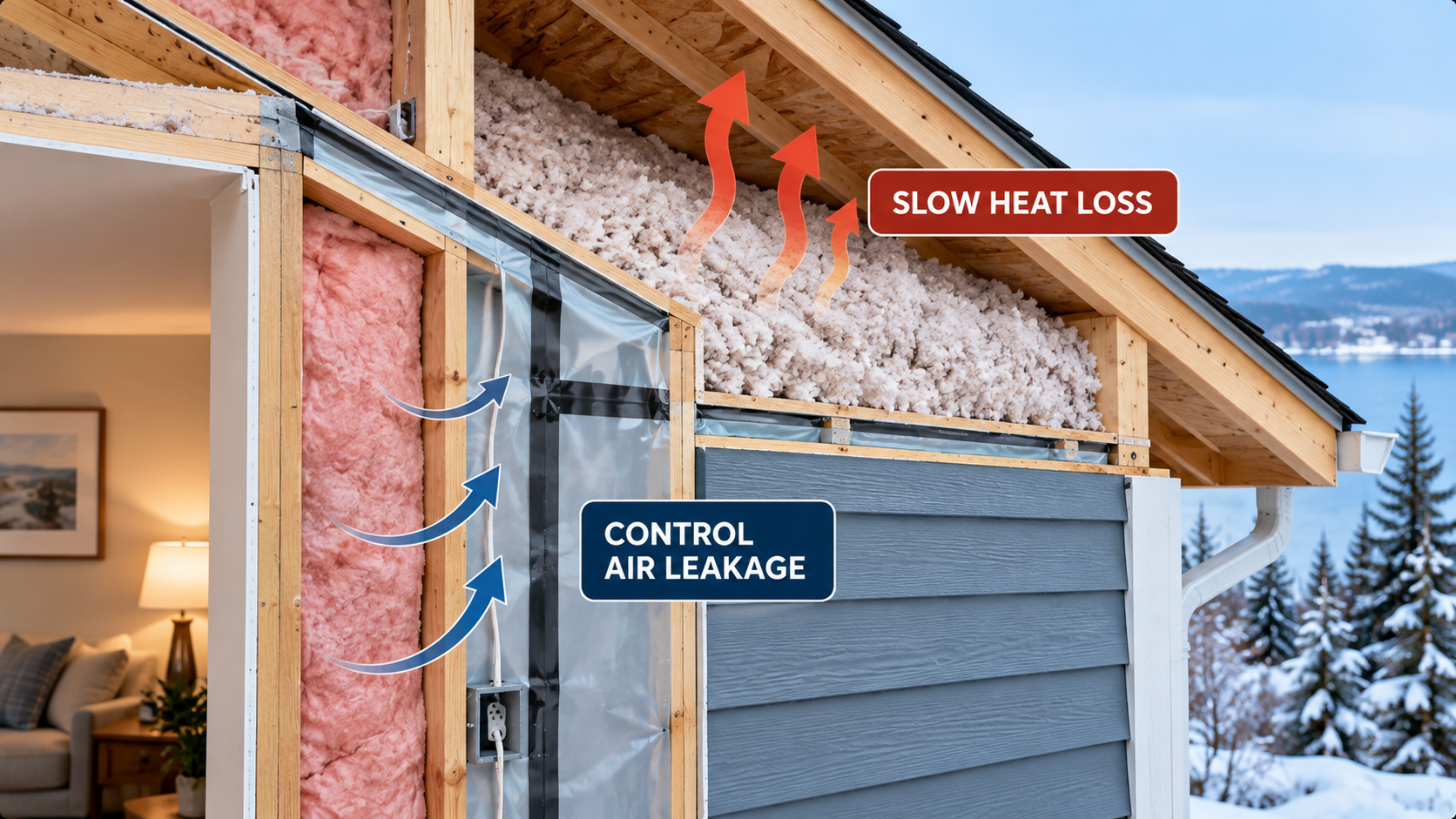
Insulation and air sealing aren't the same thing.
Insulation slows heat moving through the building envelope.
Air sealing reduces air moving through it.
A good energy-efficient house needs to address both.
Your House May Be Leaking Money — Understanding Air Sealing
4. Don't Just Ask Whether the Windows Are “New”
I hear this one regularly in real estate:
“The windows have all been replaced.”
That's useful information.
But replaced with what?
A window's energy performance depends on more than its age.
Look at things such as:
double- or triple-pane glazing
low-E coatings
gas-filled glazing units
insulated frames
warm-edge spacers
overall air tightness
condition of the seals
quality of installation
Then look at the windows themselves.
Do they operate properly?
Do they latch tightly?
Is there condensation between the panes, which can indicate a failed sealed unit?
Do you feel noticeably colder standing beside large windows?
Is there evidence of water intrusion around the frame?
Natural Resources Canada specifically identifies high-efficiency windows and doors as an important consideration when buying an energy-efficient home. Natural Resources Canada
And don't forget installation.
A very good window installed poorly can still be a weak point in the building envelope.
Triple-Pane Windows: Worth the Extra Cost?
5. Pay Attention to Which Direction the House Faces
Orientation is rarely near the top of a buyer's checklist.
For energy performance, though, it can matter.
Sunlight entering appropriately positioned windows can contribute useful heat during winter.
But large amounts of glass can also create unwanted solar gain and overheating if orientation and shading aren't properly considered.
When I'm looking at a home with significant glazing, I'd consider:
Which direction do the largest windows face?
Are there roof overhangs?
Are deciduous trees providing seasonal shading?
Does the house receive useful winter sun?
Could certain rooms overheat during summer?
Are window coverings doing most of the work controlling solar gain?
This becomes particularly important when a home is described as passive solar.
A few large windows don't automatically make a house passive solar.
The orientation, glazing, insulation, airtightness, thermal mass and shading should work together.
What Is a Passive Solar Home — and How Can It Reduce Energy Use?
6. Then Look at the Heating System
Once you have some understanding of the building envelope, look at what heats it.
In Nova Scotia, you can encounter almost every combination imaginable:
ductless heat pumps
ducted heat pumps
electric baseboards
oil furnaces
oil boilers
propane systems
wood stoves
wood furnaces
pellet appliances
combinations of several systems
Don't just identify the fuel.
Ask:
How old is the equipment?
What areas of the house does it serve?
Is there a backup heating system?
How is the heat distributed?
Is maintenance history available?
Are there rooms that are difficult to heat?
Has the system been modified as the house changed?
NRCan recommends considering both the type and age of heating and cooling equipment when evaluating an energy-efficient home. Natural Resources Canada
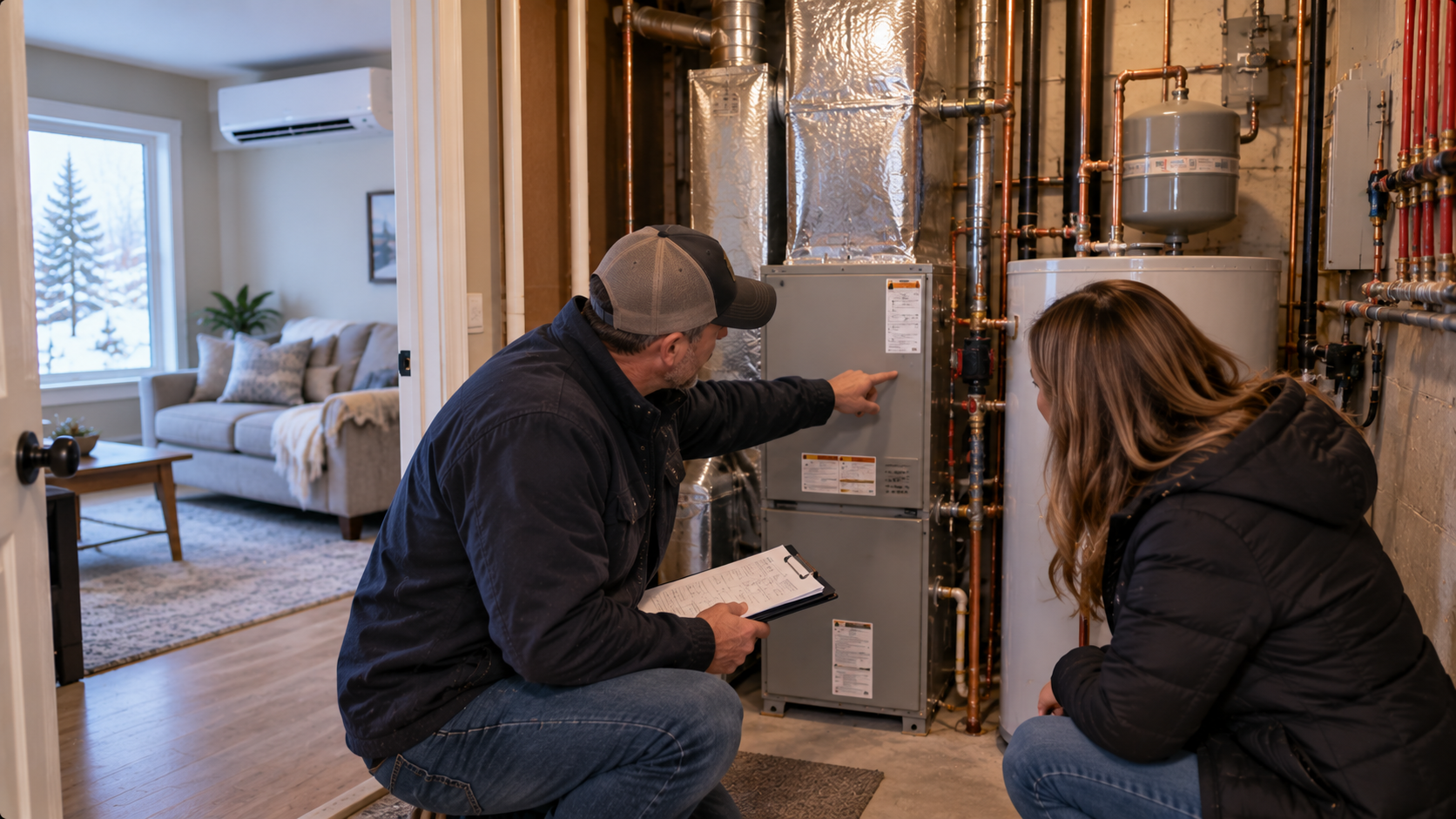
If there's a heat pump, I'd also want to know its make and model, approximate installation date and whether it is intended to carry most of the heating load or primarily supplement another system.
Because simply seeing a heat pump on the wall doesn't tell you how the whole house is heated.
Heat Pumps: Are They Really Cheaper to Run in Nova Scotia?
7. Don't Forget About Ventilation
Here's something that sounds contradictory at first.
We've spent an entire article talking about making houses more airtight.
Now I'm telling you to look for ventilation.
Both can be important.
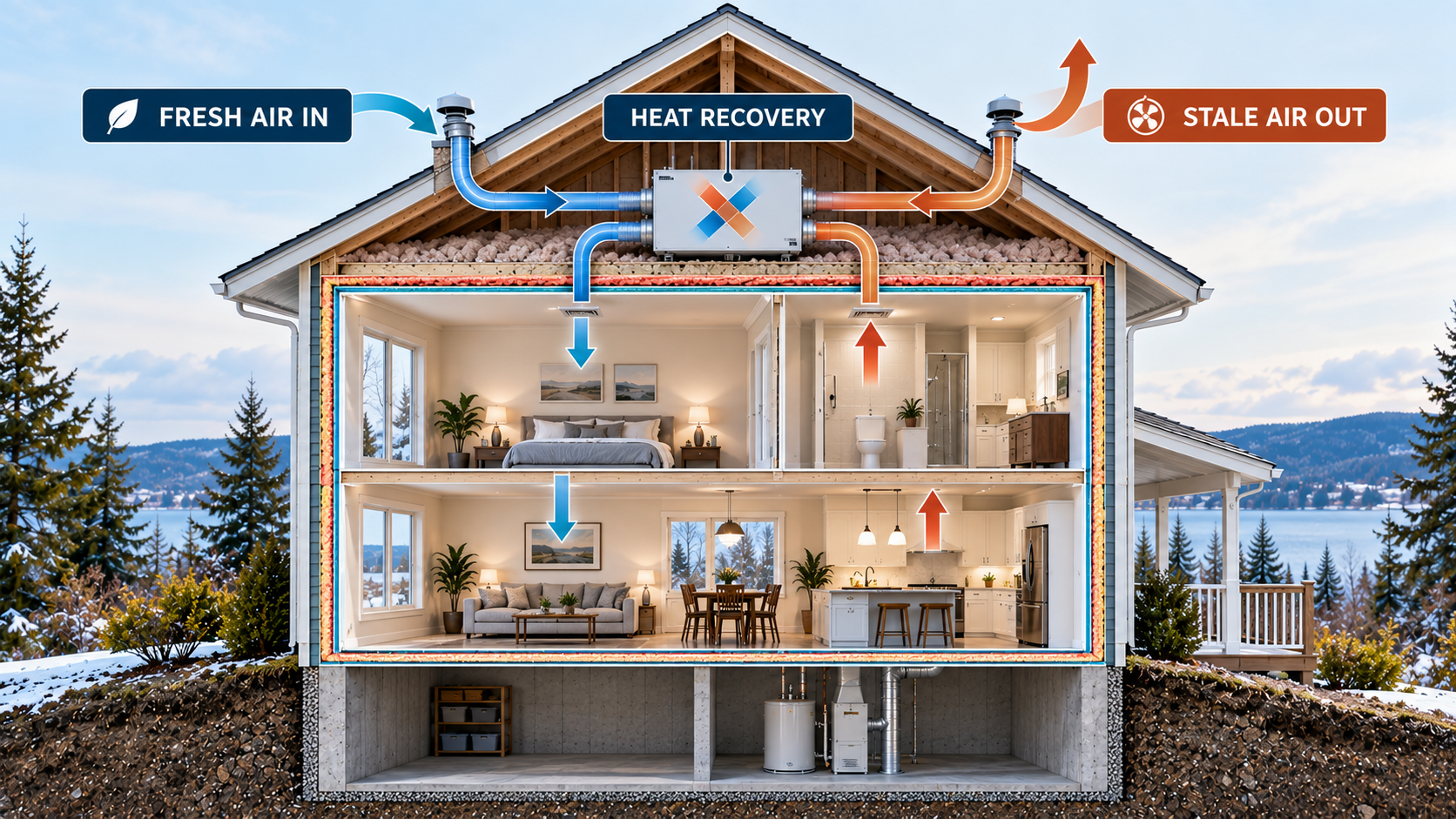
An efficient house shouldn't rely on random cracks and gaps to provide fresh air.
As homes become tighter, controlled mechanical ventilation becomes increasingly important.
That's where systems such as an HRV—Heat Recovery Ventilator—or ERV—Energy Recovery Ventilator can come into the picture.
These systems exchange stale indoor air for outdoor air while recovering some of the energy that would otherwise be lost in the process. NRCan specifically recommends looking at ventilation when evaluating an energy-efficient home and notes the role HRVs and ERVs can play in indoor air quality and energy performance. Natural Resources Canada
If one is installed, ask:
Is it operating?
How old is it?
Has it been maintained?
Are filters clean?
Where are the supply and exhaust points?
Is documentation available?
A tighter house and good ventilation should work together—not against each other.
8. Look at the Hot-Water System Too
Space heating tends to get most of the attention.
But it isn't the only significant energy load in a house.
Domestic hot water matters too.
Look at:
what type of water heater is installed
what fuel it uses
its age
tank versus tankless
whether it's a conventional electric resistance tank, heat-pump water heater or fuel-fired system
whether hot-water pipes are insulated where appropriate
whether there are unusual hot-water demands in the home
This becomes particularly important when comparing utility histories.
If one house uses oil for both space heating and hot water, while another uses electricity for hot water and a heat pump for space heating, comparing only their electricity bills won't tell you much.
You need to understand what each energy source is actually doing.
9. Ask for the Utility History
This is one of the most useful pieces of information a buyer may be able to obtain.
But I wouldn't simply ask:
“What's the average power bill?”
When records are available, I would rather know:
annual electricity consumption in kWh
oil deliveries in litres
propane consumption in litres
approximate wood consumption
solar production, if applicable
major changes to the house during the period being reviewed
Why consumption rather than dollars alone?
Because energy prices change.
If the price of electricity or heating oil increases, the homeowner can spend more even if the house uses exactly the same amount of energy.
Historical consumption isn't a guarantee of what a buyer will use either.
Thermostat settings, number of occupants, weather, hot-water use, appliances, electric vehicles, hot tubs and lifestyle can all change the result.
But it provides useful context.
Dollars tell you what the previous owner paid. Consumption helps tell you what they actually used.
How Much Energy Does a House Actually Use?
10. Ask Whether There's an EnerGuide Evaluation
If a home has been evaluated through Canada's EnerGuide Rating System, ask to see the information.
An EnerGuide home evaluation looks at the house much more systematically than we can during an ordinary showing.
NRCan says an evaluation collects information about:
airtightness
insulation levels
windows and exterior doors
heating equipment
cooling equipment
water heating
ventilation
other factors affecting energy performance
The results include an EnerGuide rating and information about the home's building envelope and mechanical systems. Natural Resources Canada
The current rating is expressed in gigajoules per year—GJ/year.
Generally:
Lower is better.
A rating of zero represents a home that produces as much energy as it consumes on an annual basis under the rating methodology. Natural Resources Canada
But there's an important distinction.
An EnerGuide rating and the homeowner's utility bills aren't supposed to match exactly.
EnerGuide uses standardized operating conditions so homes can be compared more consistently. Actual occupants have different thermostat settings, hot-water use, household sizes and lifestyles, while weather also varies. Natural Resources Canada
That's why, when available, I like having both:
EnerGuide information tells us about the house under standardized conditions.
Utility history tells us what happened with the people actually living there.
Together, they can provide a much better picture.
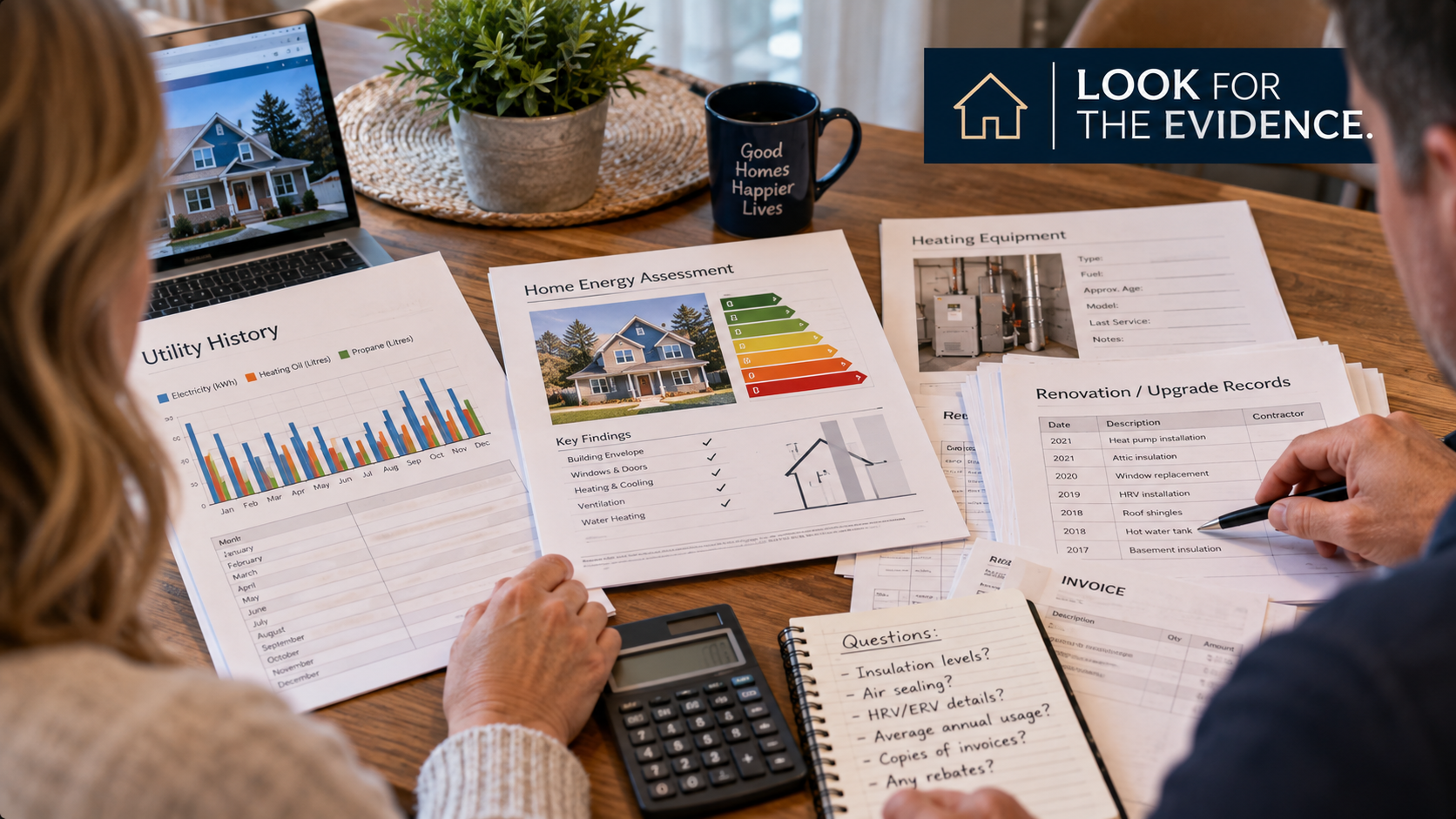
11. Solar Panels Are Useful—but Ask More Questions
Seeing solar panels on a roof can certainly get a buyer's attention.
But don't stop at:
“It has solar!”
Find out:
When was the system installed?
What size is it?
Is it owned?
What equipment is included?
Is there battery storage?
Is production history available?
What is the condition and age of the roof beneath it?
Were permits and installation records retained?
Has the system required repairs?
How much electricity does the house itself actually consume?
And remember something we've already discussed in this series:
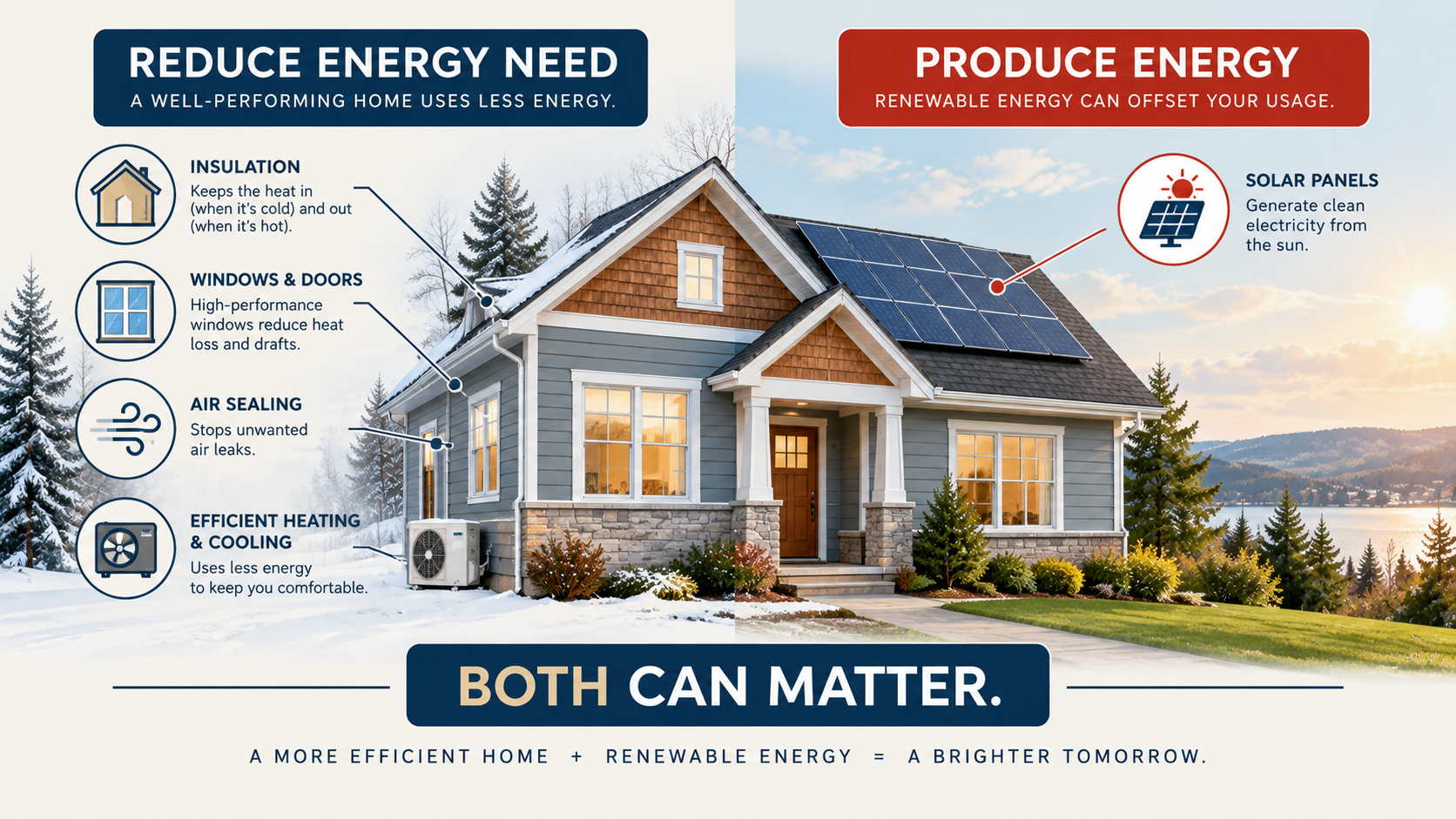
Solar panels don't necessarily make the house itself energy efficient.
They produce electricity.
A well-designed building envelope reduces the amount of energy the house needs.
Those are different things—and a home can have both.
Solar Panels vs. Passive Solar: What's the Difference?
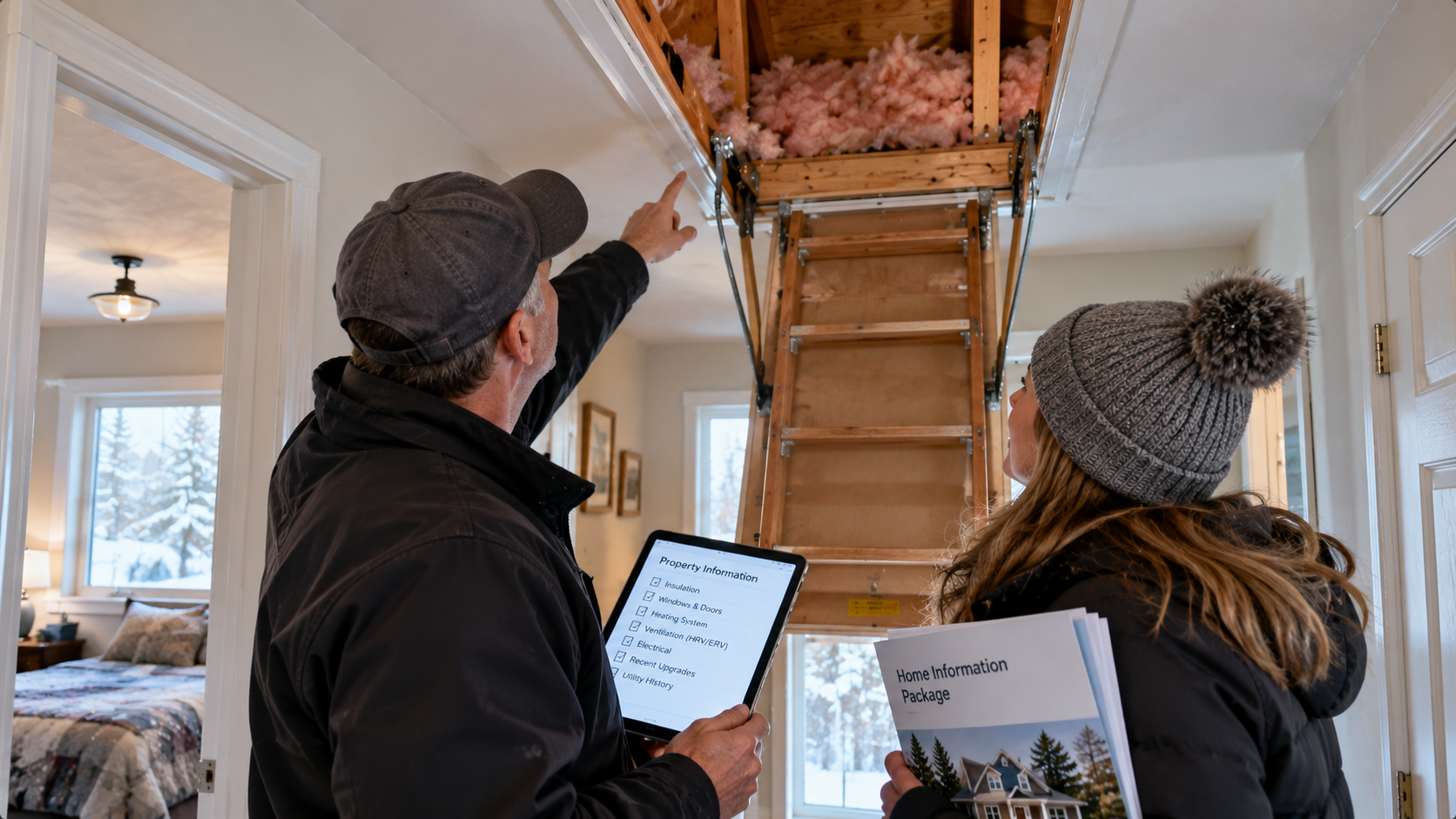
12. Look for Evidence, Not Just Descriptions
Real-estate descriptions naturally highlight a home's best features.
You'll see phrases such as:
Energy efficient.
Well insulated.
High-efficiency heating.
Upgraded windows.
Solar home.
Those descriptions can absolutely be accurate.
But when energy efficiency is important to you, I'd try to go one step further.
Ask whether there is supporting information.
That might include:
utility records
EnerGuide reports
equipment model numbers
installation invoices
renovation receipts
insulation records
building plans
window specifications
solar-production records
permits
warranties
maintenance records
Not every homeowner keeps everything.
An older home may have excellent upgrades with very little documentation.
So missing paperwork doesn't automatically mean something is wrong.
But when documentation is available, use it.
“Energy efficient” is a description. The records can help you understand why.
13. Newer Doesn't Automatically Mean Better—and Older Doesn't Automatically Mean Worse
Age provides context.
It doesn't provide the answer.
A newer home may have been built to more recent energy requirements.
But construction quality still matters.
An older home may have started with a very different building envelope but subsequently received:
extensive air sealing
additional insulation
new windows
high-efficiency heating
mechanical ventilation
solar
other substantial improvements
So I wouldn't automatically eliminate an older house if energy performance matters to you.
And I wouldn't automatically assume a newer house is exceptionally efficient.
Look at the house that's actually in front of you.
Its age tells you where the story started.
The current condition tells you where it is now.
14. Comfort Can Tell You Something the Equipment List Can't
This is one of the simplest things you can do during a showing.
Pay attention to how the house feels.
Walk toward the windows.
Stand near an exterior wall.
Go downstairs.
Visit the rooms farthest from the heating system.
Look upstairs.
Ask yourself:
Are there obvious temperature differences?
Do I feel drafts?
Are the floors particularly cold?
Does the basement feel damp?
Is there condensation on windows?
Are some rooms noticeably warmer than others?
Is the heating equipment running constantly while we're here?
None of those observations alone proves that a house is inefficient.
Weather, thermostat settings and many other factors can affect what you experience during a showing.
But comfort can provide clues worth investigating.
Sometimes energy efficiency isn't something you see.
It's something you feel.
15. Don't Let One Impressive Feature Distract You From the Rest of the House
This may be the most important lesson in this article.
Imagine a house with:
Triple-pane windows.
Great.
But what if the attic is poorly insulated?
Or:
A brand-new cold-climate heat pump.
Excellent.
But what if the house leaks air everywhere?
Or:
A large solar array.
Interesting.
But what if the house consumes an unusually large amount of energy?
Energy-efficient features have value.
But they're most effective when they're part of a house that works well as a system.
Natural Resources Canada makes the same point in its homeowner guidance: the building envelope, mechanical systems, indoor and outdoor environment and occupants all interact, and changing one part can affect another. Natural Resources Canada
Don't buy the feature. Understand the house.
My Energy-Efficient Home Buyer's Checklist
When energy performance matters to a buyer, these are the areas I'd want to investigate:
BUILDING ENVELOPE
Attic insulation
Wall insulation, if known
Basement/foundation insulation
Air sealing
Attic hatch
Obvious drafts or penetrations
WINDOWS & DOORS
Double or triple pane
Condition of sealed units
Low-E/performance information, if available
Operation and latching
Installation condition
Evidence of condensation or water intrusion
HEATING & COOLING
System type
Fuel source
Equipment age
Heat-pump specifications
Backup heat
Distribution throughout the house
Maintenance history
VENTILATION
HRV/ERV present
Age and condition
Maintenance history
Filters and ductwork
ENERGY INFORMATION
Electricity consumption
Oil consumption
Propane consumption
Wood use
Solar production
EnerGuide rating/report
Major upgrade dates
SOLAR & ORIENTATION
House orientation
South-facing glazing
Seasonal shading
Solar PV system details
Production history
Ownership/equipment documentation
DOCUMENTATION
Equipment invoices
Renovation records
Energy evaluations
Permits, where applicable
Warranties
Maintenance records
You won't necessarily get an answer to every one of these questions.
That's okay.
The goal isn't to find a house with every box checked. It's to understand what you're buying.
So, What Does an Energy-Efficient Home Actually Look Like?
It doesn't necessarily look futuristic.
It doesn't have to have solar panels.
It doesn't have to be brand new.
And there isn't one product that suddenly makes a house energy efficient.
A good-performing home may simply have:
A well-insulated and relatively airtight building envelope.
Good windows and doors.
Efficient, appropriately selected mechanical systems.
Controlled ventilation.
Thoughtful use of sunlight and shading.
Reasonable historical energy consumption.
And ideally, documentation that helps you understand how those pieces fit together.
That's why buying an energy-efficient home requires looking beyond the finishes—and sometimes beyond the equipment.
The question isn't just, “What energy-efficient features does this house have?”
A better question is:
“How well does this house work as a whole?”
Smarter, Greener Homes
This article is part of my Smarter, Greener Homes series, where I take a practical look at energy efficiency, green building and the features that can affect how comfortable and economical a home is to operate.
Throughout this series, we've looked individually at insulation, air sealing, windows, heat pumps, passive solar, solar panels and energy consumption.
But they're all connected.
Energy efficiency isn't usually one feature. It's the result of the building envelope, mechanical systems, energy sources—and the people living in the home—working together.
As a Canadian Certified Green Representative (CCGR), I bring that perspective into the buying process, helping buyers ask better questions and better understand the energy-efficient and green-building features they encounter while looking at homes.
Thinking about buying an energy-efficient home in Nova Scotia—or simply want to better understand the features of a home you're considering?
Get in touch. I'm always here to help.
Rob Schellenberger, REALTOR®
Canadian Certified Green Representative
RE/MAX Banner Real Estate
902-300-8674
robschellenberger.ca
.jpg)