.png)

Part of the Smarter, Greener Homes series: Practical guides to understanding energy efficiency, home performance and green-building features.
Drive through almost any neighbourhood in Nova Scotia and you'll see them.
Small outdoor units beside houses. White units mounted high on interior walls.
Heat pumps have become one of the most common heating upgrades in Nova Scotia—but are they actually cheaper to run?
For many homeowners, the answer can be yes.
But that's not quite the same as saying a heat pump will automatically lower the heating bill in every home.
What you're replacing, the heat pump you choose, how well it's sized, the efficiency of the house and even how you operate it can all affect the answer.
So, let's look at why heat pumps can cost less to operate—and why the results aren't necessarily the same from one house to another.
1. A Heat Pump Doesn't Create Heat the Same Way
One of the easiest ways to understand a heat pump is to compare it with electric baseboard heating.
An electric baseboard uses electricity to create heat.
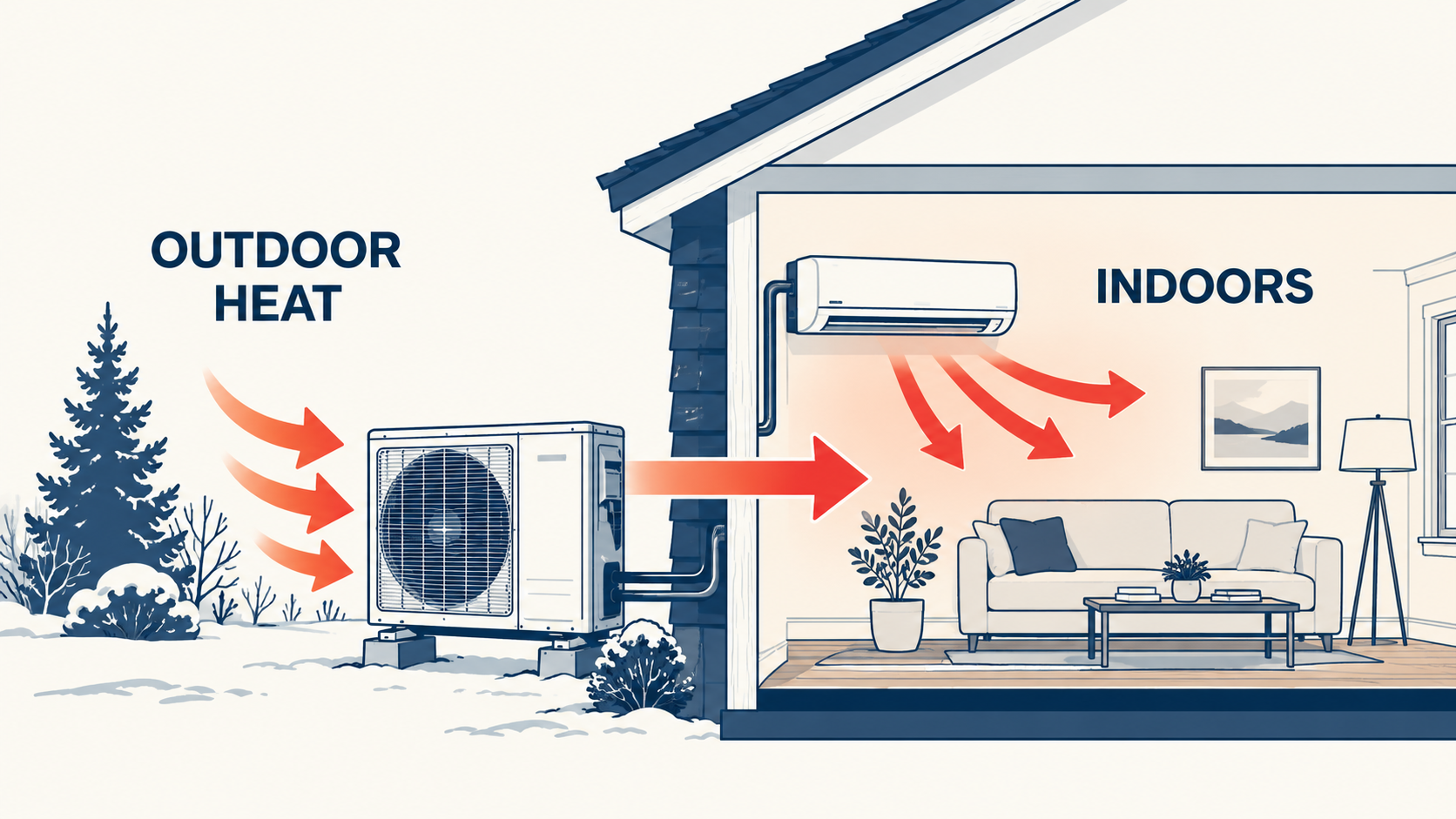
A heat pump uses electricity primarily to move heat.
During the winter, an air-source heat pump extracts heat from the outdoor air and transfers it inside. In summer, the process can be reversed, moving heat from inside the house to the outdoors and providing air conditioning. Natural Resources Canada
Yes, there is still usable heat in the outside air when it's below freezing.
And because the system is transferring heat rather than simply creating it through electrical resistance, it can deliver substantially more heat energy than the electrical energy it consumes.
Natural Resources Canada says air-source heat pumps can provide space heating up to twice as efficiently as electric furnaces or baseboards, while cold-climate models can reach up to 2.5 times the efficiency of electric resistance heating. Natural Resources Canada
That's the basic reason a heat pump can reduce energy consumption: you're using electricity to move heat rather than simply turning electricity directly into heat.
2. So, Are Heat Pumps Cheaper Than Electric Baseboards?
This is probably the easiest comparison.
If you're heating a space with electric resistance heat—such as baseboards—and a properly selected heat pump can provide that same heat using substantially less electricity, there is clear potential to reduce the electricity used for space heating.
But there's an important distinction:
Heating energy isn't your entire electricity bill.
Your lights, appliances, hot water, cooking, electronics and everything else using electricity haven't suddenly become more efficient because you installed a heat pump.
And if you didn't previously have air conditioning but start using your new heat pump for cooling all summer, you've also added an electrical load that wasn't there before.
So a homeowner shouldn't necessarily expect their total electricity bill to drop by the same percentage as the reduction in energy required for space heating.
3. What About Oil?
This comparison is a little different because now we're comparing two different energy sources.
With oil heat, you're buying heating oil and burning it in a furnace or boiler to produce heat.
With a heat pump, you're buying electricity and using it to transfer heat.
Natural Resources Canada reports that air-source heat pumps can provide space heating up to 2.5 times more efficiently than oil furnaces or boilers, with cold-climate models reaching efficiencies up to three times higher. Natural Resources Canada
NRCan has also modelled cold-climate air-source heat pumps in different Canadian climates and types of homes. Its analysis found that operating costs for cold-climate heat pumps were lower than oil heating for space heating across the Canadian locations it studied. Natural Resources Canada
That doesn't mean every Nova Scotia homeowner replacing oil will save the same amount.
The actual financial comparison depends on things such as:
current oil and electricity prices
efficiency and condition of the existing oil system
efficiency of the heat pump
how much of the house the heat pump serves
how much backup heat is used
the home's heating requirements
thermostat settings and occupant behaviour
Some homeowners also retain their oil system as supplemental or backup heat rather than eliminating it completely.
So the better question isn't simply:
“Is electricity cheaper than oil?”
It's:
“How much will it cost each system to deliver the heat this particular house needs?”
4. But Do Heat Pumps Actually Work When It's Cold?
This is one of the questions I hear most often.
The short answer is yes—but not every heat pump performs the same way at low temperatures.
As outdoor temperatures fall, an air-source heat pump generally has to work harder to extract heat from the outdoor air, and its efficiency and available heating capacity can decrease.
That's where cold-climate heat pumps come in.
They're specifically designed to operate more effectively at low outdoor temperatures. Natural Resources Canada says cold-climate air-source heat pumps can operate at temperatures as low as approximately -30°C, although performance varies by model and supplemental heating may still be required under some conditions. Natural Resources Canada
That makes the particular model important.
A homeowner shouldn't simply ask:
“Do I have a heat pump?”
A better question is:
“How does this heat pump perform when it's cold outside?”
5. Why Does Backup Heat Matter?
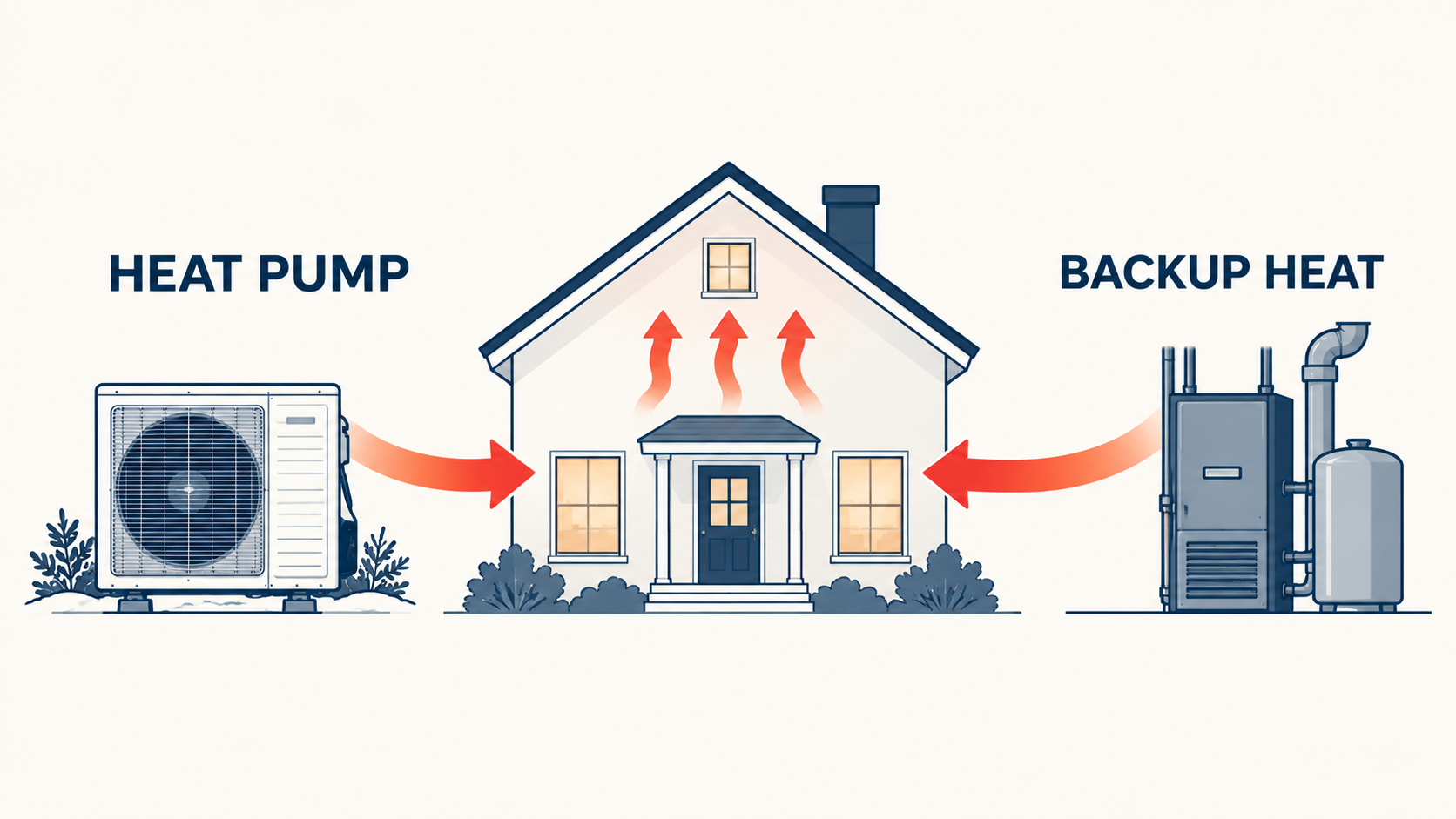
A heat pump doesn't necessarily have to provide 100% of a home's heating requirement under every possible condition.
Many systems are designed with another heat source available when needed.
Depending on the house, that might be:
electric baseboards
an electric furnace or duct heater
an oil furnace or boiler
another compatible supplemental heating system
As the outdoor temperature falls, there may eventually be a point where the heat pump alone can't provide all of the heat the house requires.
Supplemental heat then makes up the difference.
NRCan notes that conventional air-source systems may require supplemental heat at relatively moderate sub-zero temperatures, while cold-climate models are designed to continue operating at considerably lower temperatures. Natural Resources Canada
This matters to operating cost because the type and amount of backup heat you use can affect your overall heating bill.
If electric resistance backup is running frequently, for example, the system may use considerably more electricity than when the heat pump itself is meeting the heating demand.
Backup heat isn't necessarily a sign that something is wrong.
The important question is how often it's required and why.
6. Bigger Isn't Necessarily Better
It's easy to assume that buying a larger heat pump means you'll get more heat and therefore better performance.
It doesn't quite work that way.
Proper sizing matters.
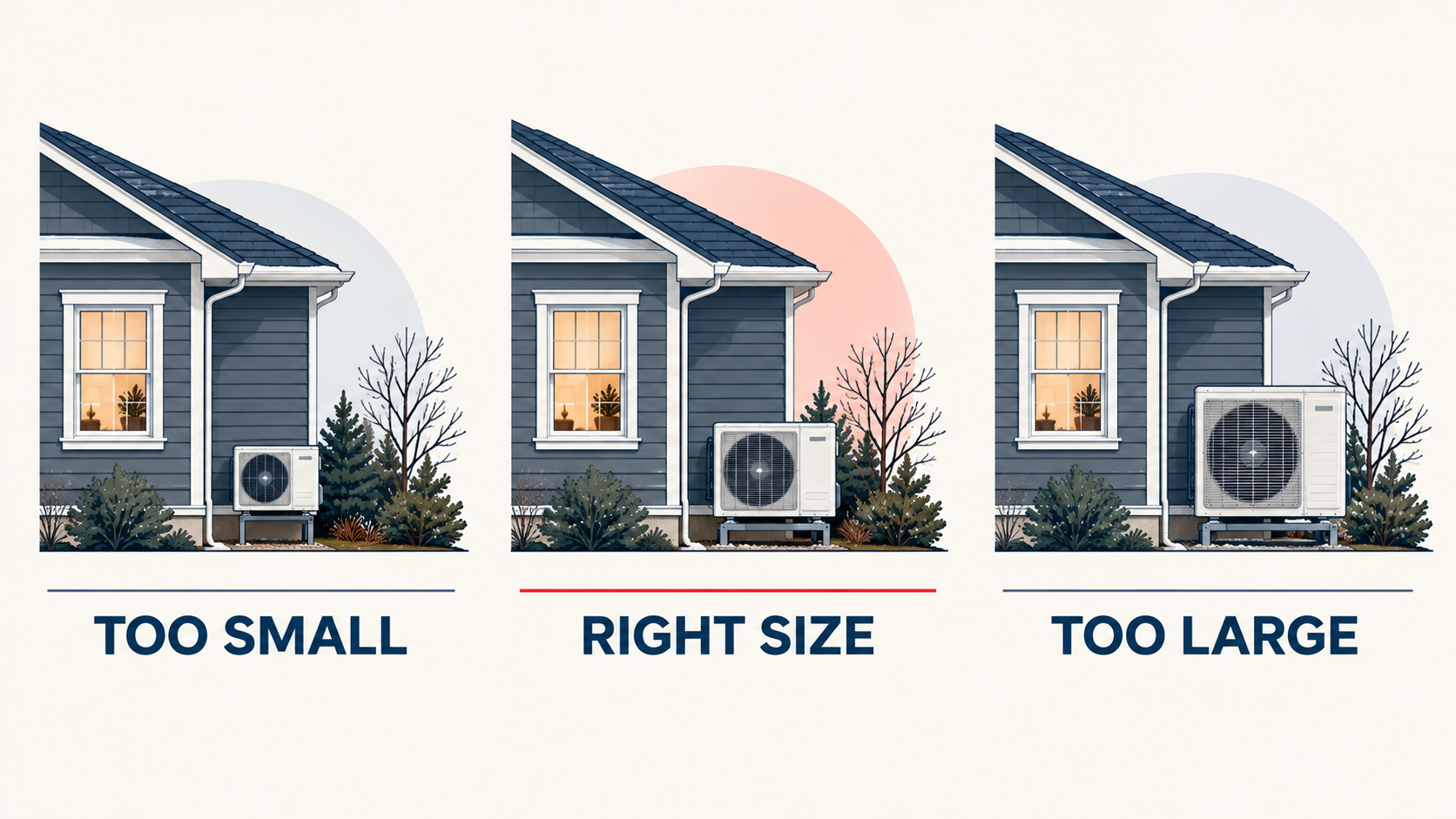
A heat pump that's too small may rely too heavily on supplemental heat during colder weather.
But simply installing the largest possible unit isn't the solution either.
An oversized system may cycle on and off too frequently during milder weather rather than operating efficiently for longer periods. That can reduce efficiency, affect comfort and increase wear on the equipment. Natural Resources Canada
That's why sizing should be based on the home's actual heating and cooling requirements rather than square footage alone.
Natural Resources Canada recommends determining heating and cooling loads using a recognized sizing method such as CSA F280 and provides sizing tools for HVAC professionals specifically for Canadian climates. Natural Resources Canada
The goal isn't to install the biggest heat pump. It's to install the right heat pump for the house.
7. The House Still Matters
This connects directly to the previous article in my Smarter, Greener Homes series.
A heat pump doesn't change the amount of heat escaping through a poorly insulated attic, drafty windows or gaps in the building envelope.
It simply changes how that heat is produced.
Imagine installing the same heat pump in two similar-sized houses.
One has good insulation, relatively little air leakage and efficient windows.
The other is drafty and poorly insulated.
The heat pump in the second house has to replace more escaping heat, which means it has more work to do.
That's why heating equipment and the building envelope should be considered together.
Before asking how efficiently a house can produce heat, it's worth asking how well the house can hold onto it.
What Makes One House More Expensive to Heat Than Another?
8. How You Operate a Heat Pump Matters Too
Heat pumps don't necessarily behave like the heating systems many of us grew up with.
Modern variable-speed heat pumps are designed to adjust their output as the home's heating demand changes. Rather than repeatedly turning completely on and off, they can operate for longer periods at lower output. NRCan notes that variable-speed systems can more closely match the heating or cooling demand of a house and maintain better efficiency during milder conditions. Natural Resources Canada
That means seeing your heat pump running for a long time isn't necessarily a bad thing.
It's also important to keep filters clean, make sure indoor and outdoor units aren't obstructed and have the equipment maintained according to the manufacturer's recommendations.
And there's one winter behaviour Nova Scotia homeowners will eventually notice.
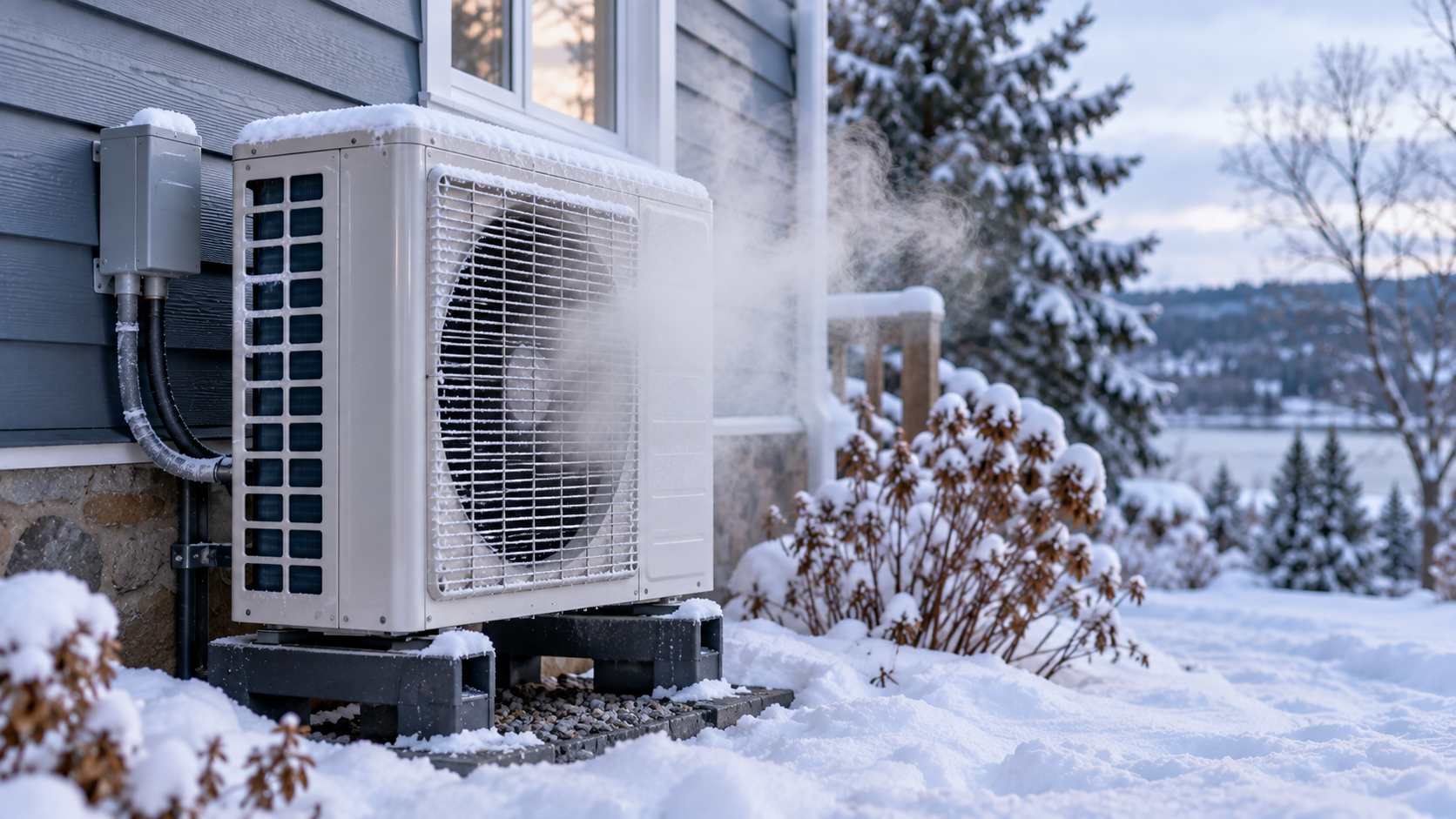
9. Why Does My Heat Pump Sometimes Look Like It's Smoking?
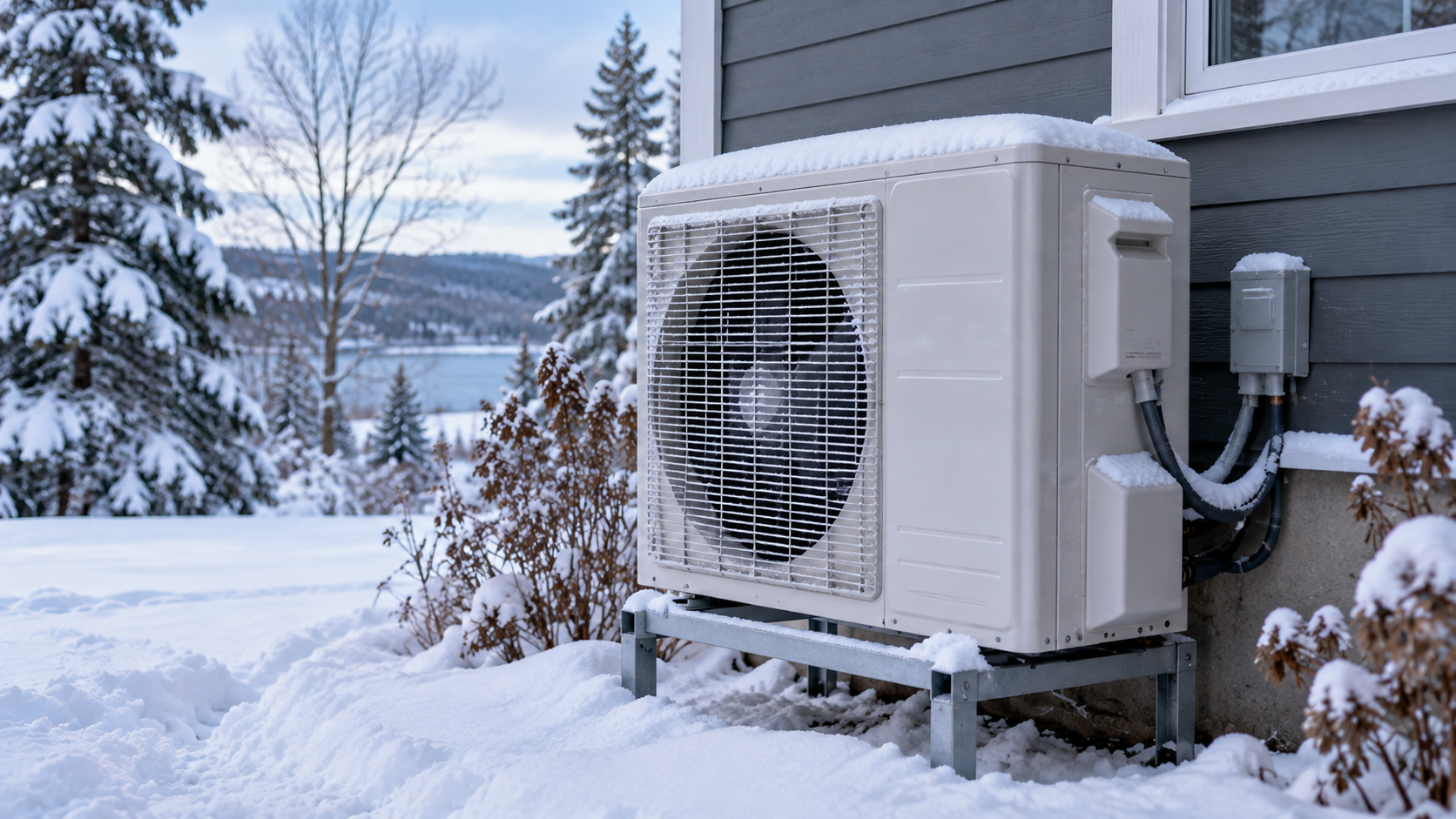
On a cold, damp winter day, you may notice the outdoor unit covered in frost.
Then suddenly it seems to produce a cloud of steam.
Usually, that's completely normal.
When frost accumulates on the outdoor coil, the heat pump periodically enters a defrost cycle. The system temporarily reverses operation to warm the outdoor coil and melt the frost.
The resulting water and steam can look dramatic if you've never seen it before.
Defrost cycles do use energy and temporarily interrupt normal heating, but they're a normal part of operating an air-source heat pump in cold conditions. NRCan notes that modern demand-defrost controls can improve seasonal performance by initiating defrost only when required rather than relying solely on fixed time intervals. Natural Resources Canada
So that cloud coming from your outdoor unit on a cold morning isn't necessarily smoke.
Your heat pump may simply be defrosting itself.
10. What Should Buyers Look For?
Heat pumps have become common enough that buyers may simply see one on the wall and check “efficient heating” off their list.
I wouldn't stop there.
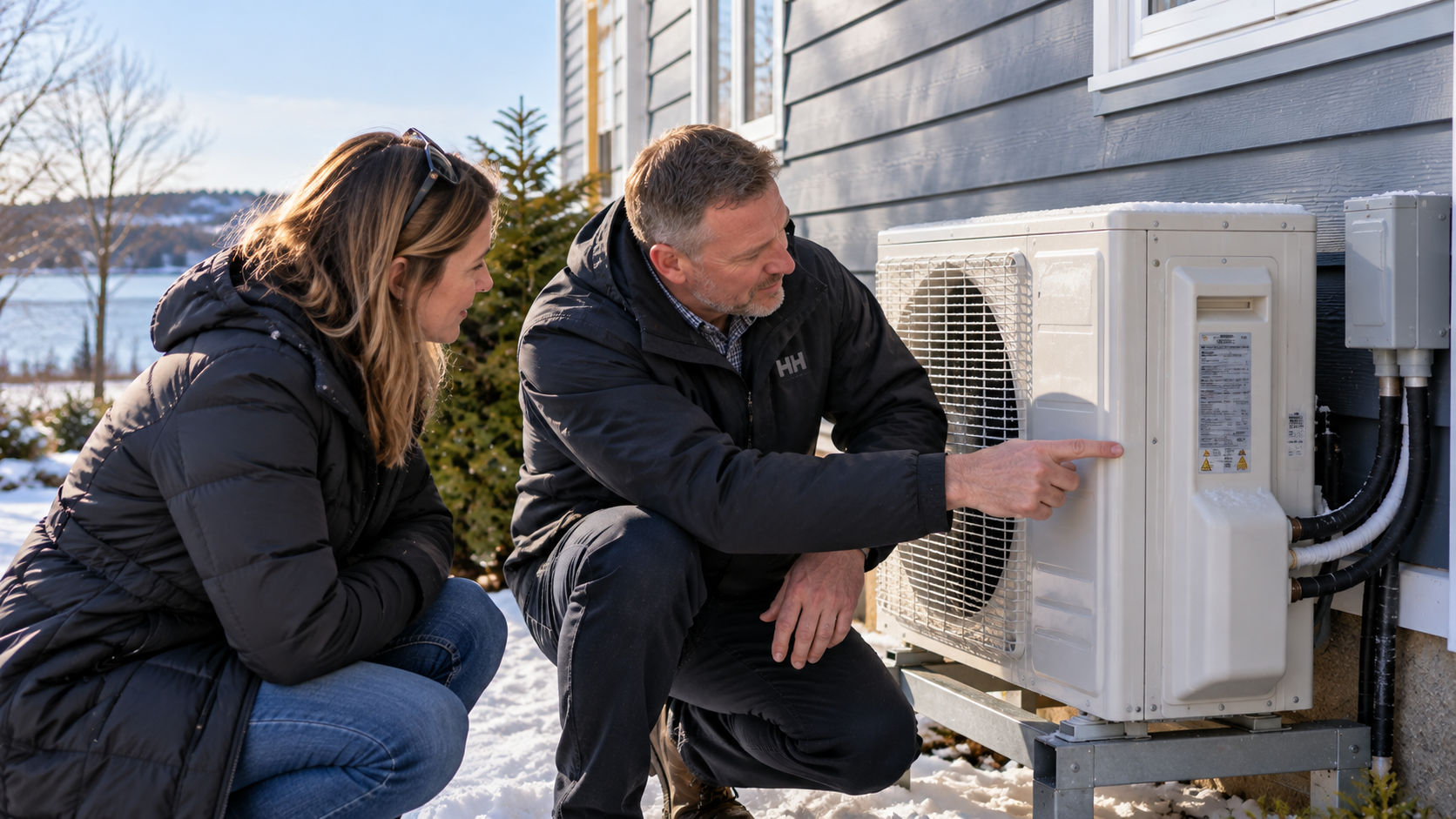
If you're considering a home with a heat pump, try to find out:
the manufacturer and model
approximate age
whether it's a cold-climate model
how many indoor and outdoor units there are
what areas of the home they serve
what the backup or supplemental heating system is
whether the system has been regularly serviced
whether invoices or maintenance records are available
what other heating systems remain in the home
historical energy consumption, when available
Also look at where the indoor units are located.
A ductless heat pump installed in an open living area may do a great job heating that space, but heat doesn't necessarily distribute evenly into every closed bedroom, basement room or distant part of the house.
A house with one heat pump isn't automatically a heat-pump-heated house in every room.
So, Are Heat Pumps Really Cheaper to Run in Nova Scotia?
In many situations, yes—particularly when compared with electric resistance heating or oil.
But there isn't one universal savings number that applies to every Nova Scotia home.
The real result depends on the equipment, the heating system being replaced, the building envelope, the amount of backup heat required, energy prices and how the occupants use the home.
That's why I think the most useful way to look at a heat pump isn't:
“How much will this save me?”
It's:
“How efficiently can this system provide the heat this particular house needs?”
A good heat pump installed in the right application can significantly reduce the energy required for space heating.
But as we've already seen throughout this series:
Energy efficiency isn't usually one piece of equipment. It's the result of the house and its systems working together.
Smarter, Greener Homes
This article is part of my Smarter, Greener Homes series, where I take a practical look at energy efficiency, green building and the features that can affect how comfortable and economical a home is to operate.
As a Canadian Certified Green Representative (CCGR), I help buyers and sellers better understand the features that can affect a home's energy performance, comfort, sustainability and operating costs.
In future articles, we'll look more closely at insulation, air sealing, windows, solar energy and other features that can influence how a home performs.
Thinking about buying or selling an energy-efficient home—or just curious about what features really matter? Get in touch. I'm always here to help.
Rob Schellenberger, REALTOR®
Canadian Certified Green Representative
RE/MAX Banner Real Estate
902-300-8674
robschellenberger.ca
.jpg)