.png)

Part of the Smarter, Greener Homes series: Practical guides to understanding energy efficiency, home performance and green-building features.
Nova Scotia has no shortage of older homes.
Century homes. Farmhouses. Victorians. Craftsman homes. Former sea captains' houses. And homes that have been added to, renovated and modified many times over several generations.
If you're shopping for a home and energy efficiency matters to you, it's easy to make a fairly logical assumption:
Newer house = more energy efficient.
And there's certainly some reason behind that thinking. Newer homes are generally built using more modern insulation, air-sealing practices, windows and mechanical systems.
But does that mean an older home is automatically an energy hog?
No.
And does the fact that a home was “built like they used to build them” mean it will perform well?
Not necessarily.
When evaluating an older home, the date on the front page of the listing tells you when the story started.
It doesn't necessarily tell you how the house performs today.
1. Start With What the House Was Originally Built to Do
A home constructed in 1900 obviously wasn't designed around today's energy standards.
Depending on its age and construction, you may encounter:
little or no original wall insulation
different foundation construction
older windows
multiple chimneys
balloon or platform framing
plaster and lath
unusual wall assemblies
additions built at different times
several generations of heating systems
Natural Resources Canada specifically notes that homes built before 1950 can contain unusual construction details and materials that require retrofit approaches to be adapted to the individual building. Natural Resources Canada
That's important.
You can't always take a solution designed for a new house and simply apply it to a 150-year-old one.
Older buildings need to be understood before they're changed.
2. But You're Probably Not Buying the Original House
Here's where the age comparison becomes more interesting.
Imagine a house built in 1890.
Over its life, perhaps the owners have:
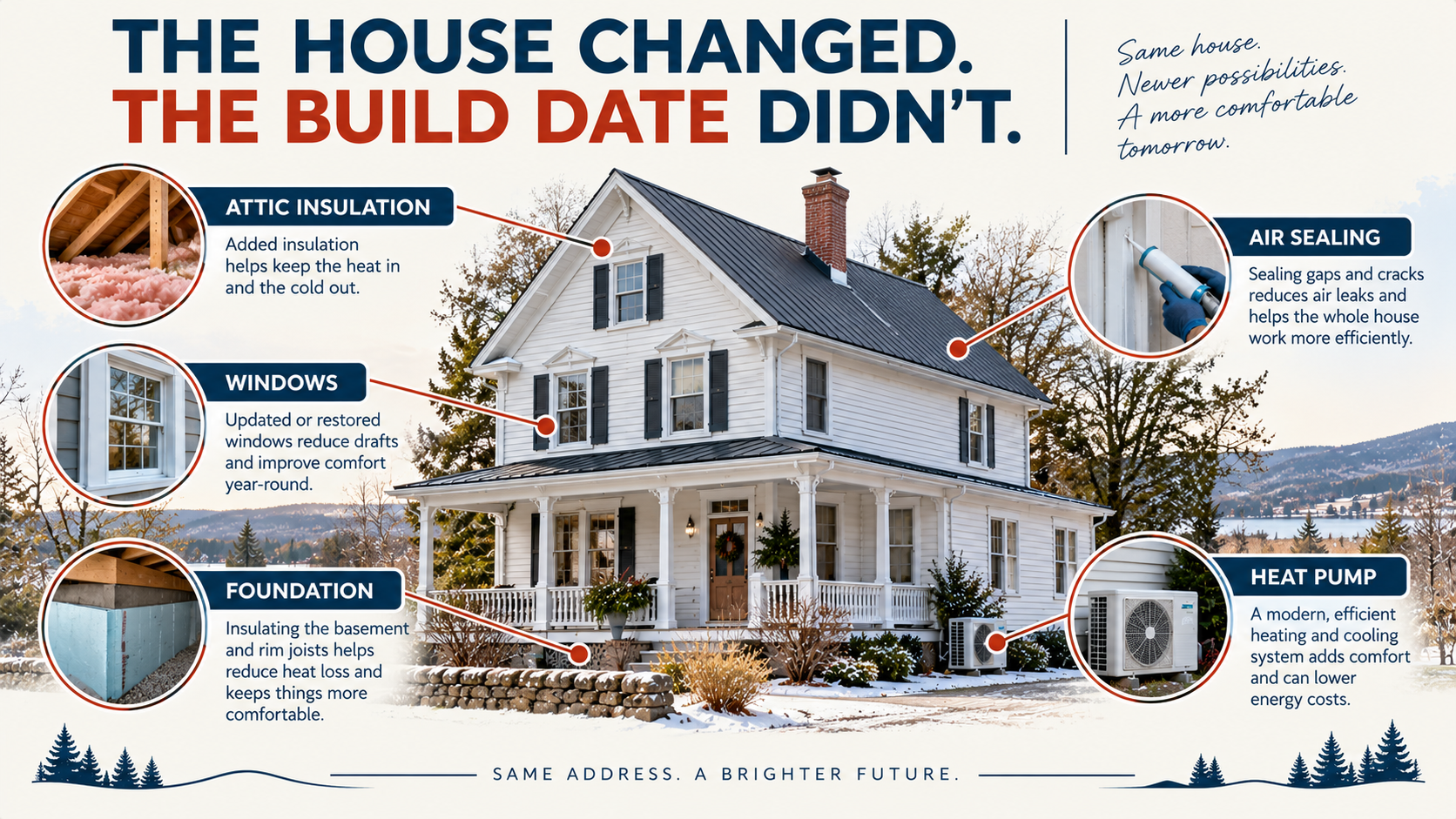
added attic insulation
insulated the basement
upgraded portions of the walls
air sealed major leakage areas
replaced or improved windows
installed weatherstripping
added a heat pump
replaced an old furnace
installed an HRV
upgraded the electrical service
insulated an addition
improved exterior doors
Is it still an 1890 house?
Of course.
But from an energy perspective, it's certainly not the same 1890 house.
NRCan specifically identifies insulation, air-leakage control, basement improvements, heating-system upgrades and energy improvements made during other renovations as opportunities to improve existing homes. Natural Resources Canada
That's why I'd rather know what has happened to the house since it was built than simply know its birthday.
Age tells you where the house started. Upgrades help tell you where it is now.
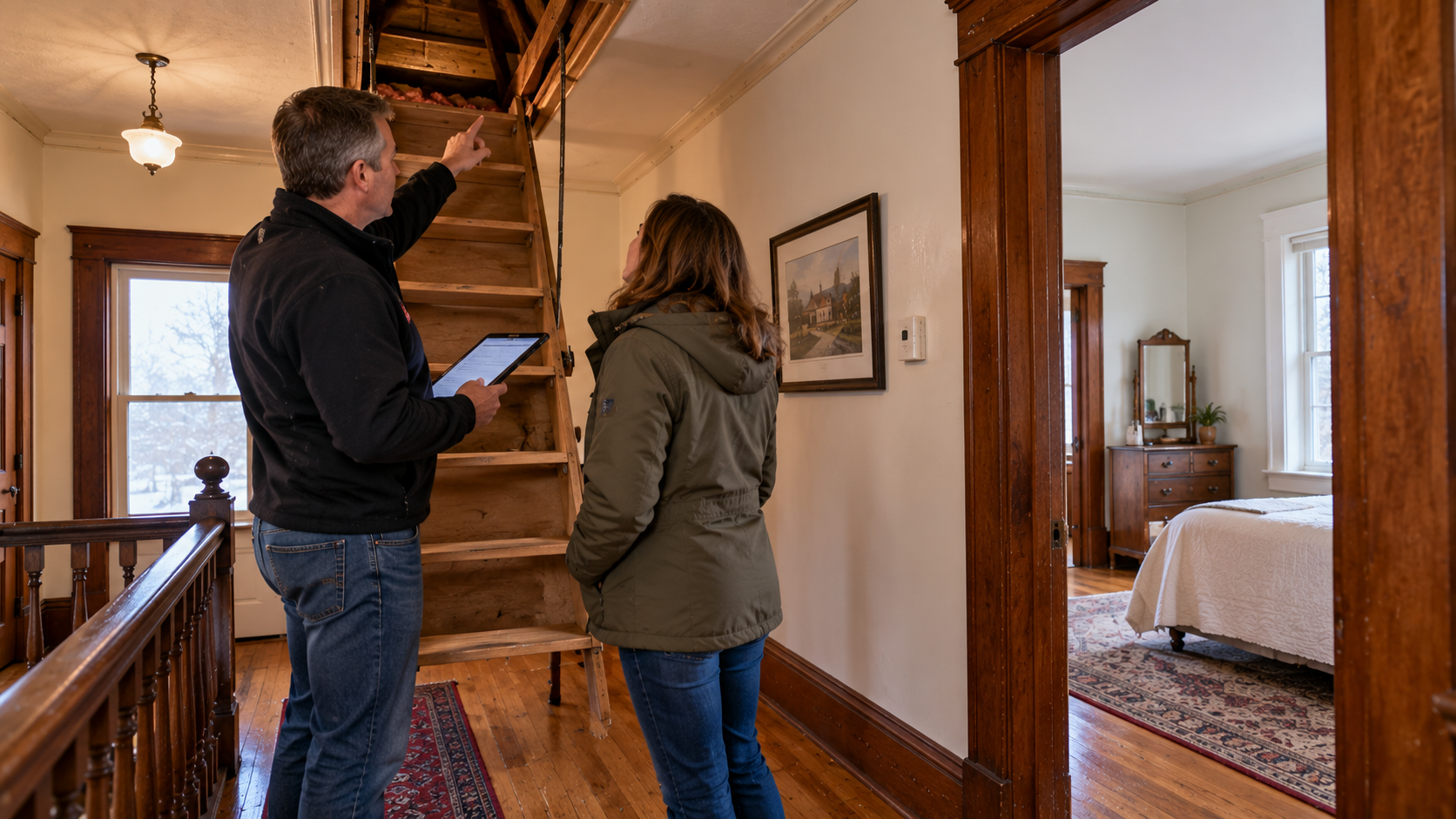
3. An Older House Can Have a Very Good Attic
The attic is often one of the easiest places to improve an existing home's energy performance.
And it's something I like to look at when access is available.
An older house might originally have had very little attic insulation.
But perhaps subsequent owners added insulation several times.
Today, you could open the attic hatch of a century home and find a substantial, consistent layer of modern insulation.
Or you might find the opposite.
A few inches of old insulation.
Bare areas.
Compressed insulation.
Insulation disturbed by renovations.
Unsealed penetrations around plumbing, wiring or chimneys.
NRCan notes that even an attic that already has insulation may still have opportunities for improvement through additional insulation, air sealing and appropriate ventilation. It also points out that penetrations through the attic can contribute to significant heat loss and moisture problems. Natural Resources Canada
So don't ask only:
“How old is the house?”
Ask:
“What's in the attic today?”
Insulation: What Do R-Values Actually Mean?
4. Air Leakage May Be the Bigger Challenge
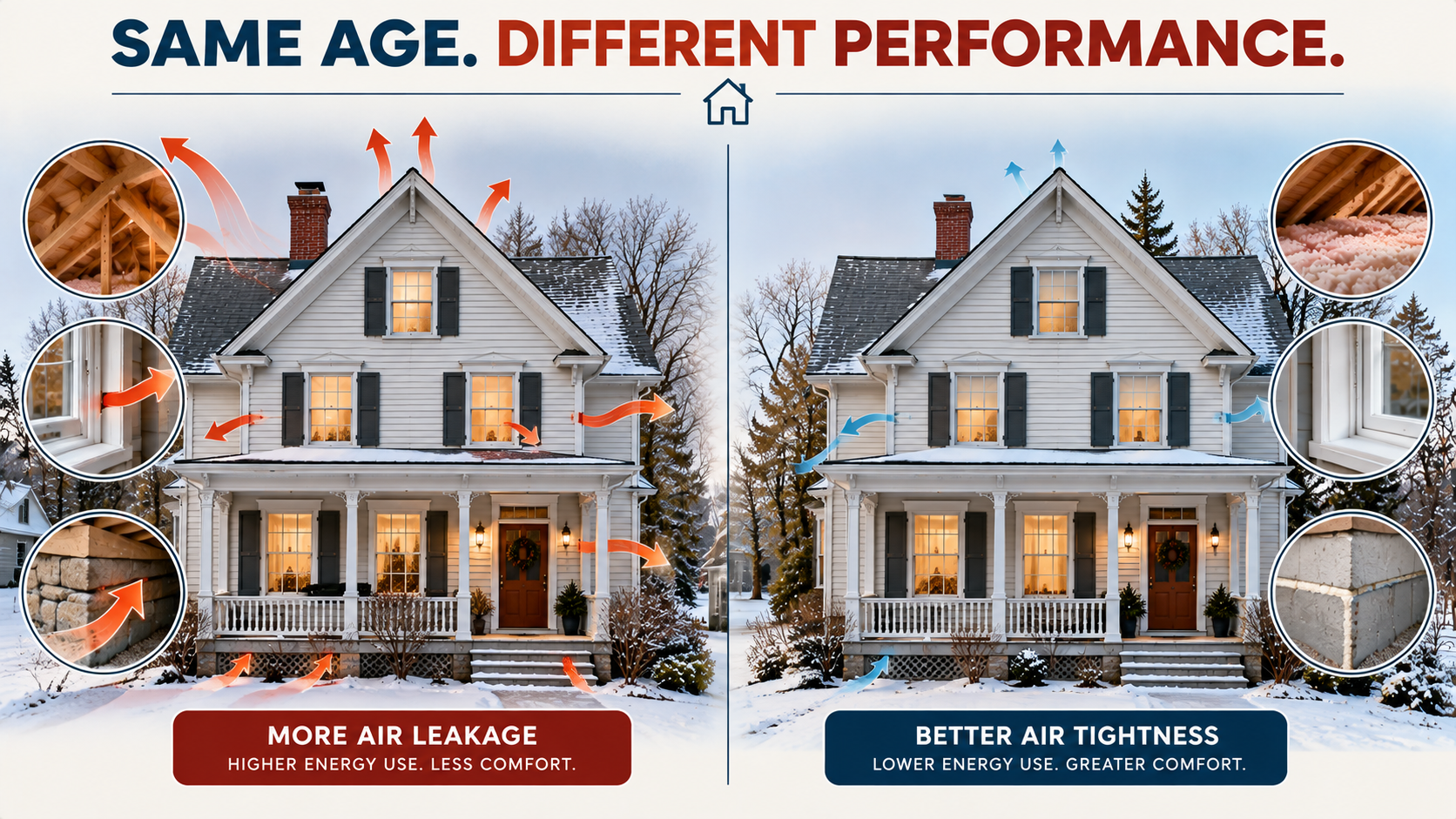
Older homes can be drafty.
But again, can be is different from must be.
Air can leak through countless areas of a house:
window and door frames
attic penetrations
chimneys
plumbing penetrations
electrical penetrations
sill and rim joists
foundation connections
additions
wall and ceiling junctions
Over decades, a house may also have accumulated holes from wiring, plumbing, renovations and mechanical work.
NRCan describes comprehensive air-leakage control as the single most important retrofit activity and recommends considering it early in an upgrade strategy. Natural Resources Canada
The good news?
Many of those leaks can be addressed.
An older home that has undergone thoughtful air sealing may perform very differently from a similar house down the road that hasn't.
And there's a way to measure it.
A blower door test performed as part of an EnerGuide home evaluation measures the home's airtightness. Natural Resources Canada
The construction date can't tell you how airtight a house is. A blower door test can.
Your House May Be Leaking Money — Understanding Air Sealing
5. Old Windows Don't Automatically Mean Bad Windows
This is where the discussion gets particularly interesting with heritage homes.
Original wood windows are often immediately blamed for energy loss.
Sometimes that's justified.
A poorly fitting single-pane window with deteriorated glazing, gaps around the sash and no storm window can certainly be uncomfortable.
But the answer isn't automatically:
Replace every old window.
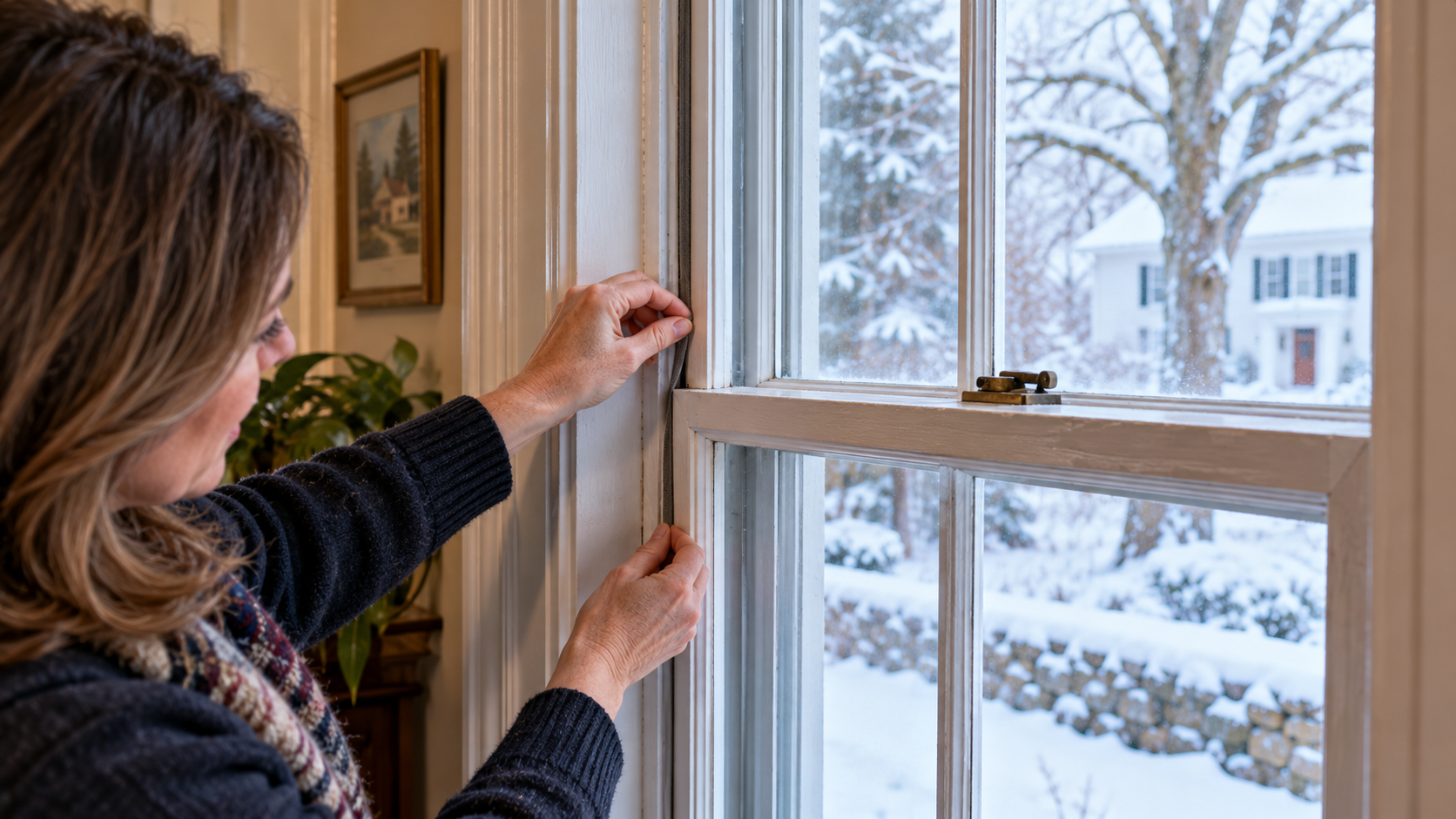
An older wood window may be repairable.
Weatherstripping can reduce leakage.
Caulking around appropriate stationary joints can help.
A well-fitted storm window can improve performance.
And preserving original windows may matter significantly to the character of a heritage property.
NRCan's guidance on older and heritage homes specifically recommends sensitivity to original materials and features and notes that retrofits may need to emphasize repair rather than replacement. Natural Resources Canada
That doesn't mean an original window performs exactly like a modern high-performance triple-pane unit.
It means the decision is more nuanced than:
Old = bad. New = good.
Look at the condition, fit, glazing, storms, weatherstripping and installation.
Then decide what you're actually dealing with.
Triple-Pane Windows: Worth the Extra Cost?
6. The Walls Can Be Harder to Understand
Attics are relatively accessible.
Walls usually aren't.
That's one reason evaluating an older home's insulation can become complicated.
A wall may have:
no insulation
original insulation
blown-in insulation added later
insulation added during interior renovations
exterior insulation added beneath newer siding
different insulation in different sections of the house
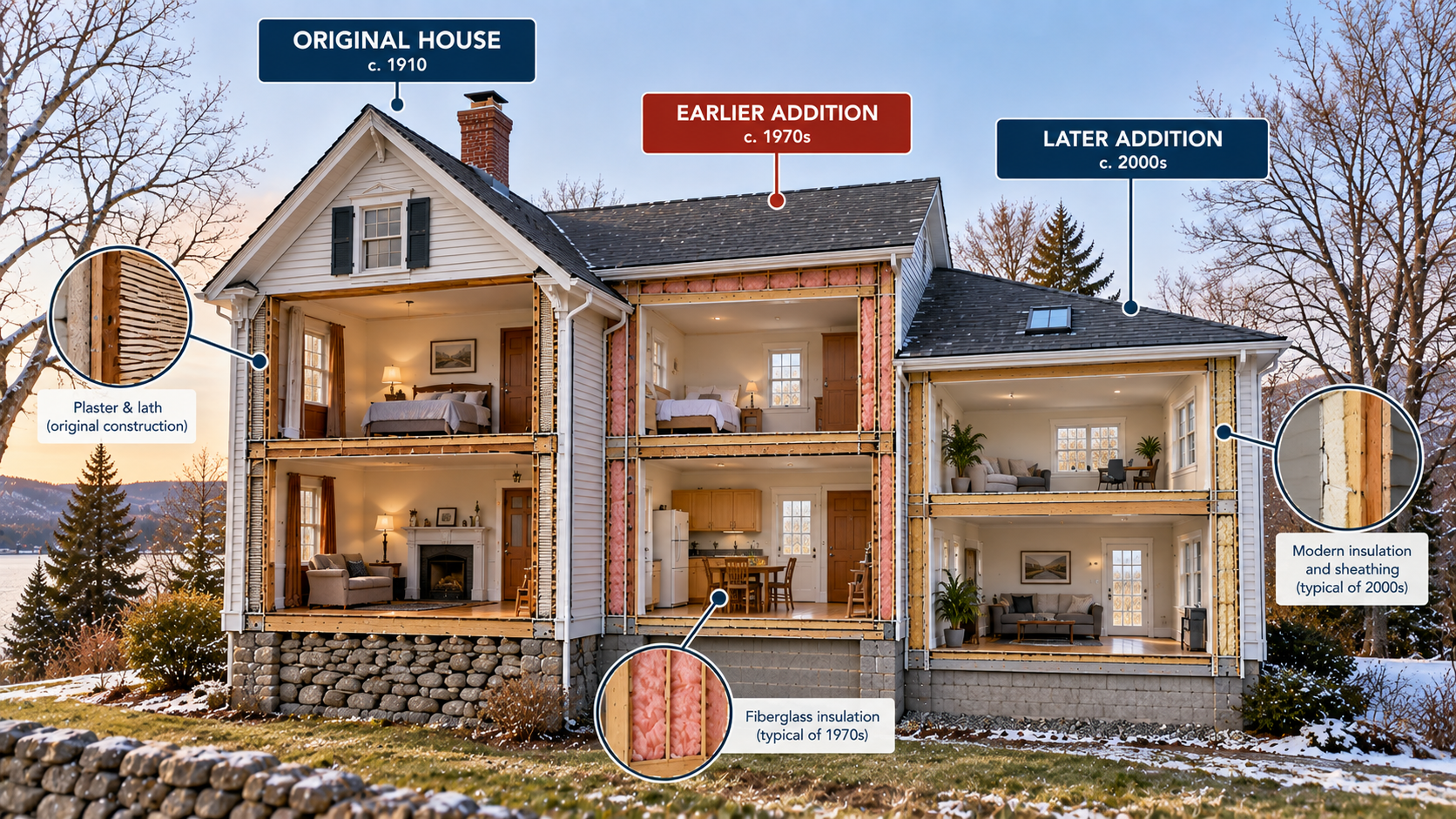
And an addition built in 1995 may have a completely different wall assembly from the original 1895 portion.
NRCan notes that walls in existing homes can be upgraded from either the interior or exterior and that insulation work may be combined with renovations such as wall repairs or re-siding. It also stresses that moisture and structural problems should be addressed before insulation is added. Natural Resources Canada
So if a listing says:
“Upgraded insulation.”
That's a useful start.
But I'd want to know:
Where?
When?
What type?
How much?
Was the whole house done—or one section?
In an older house, the answer may legitimately be different from room to room.
7. Basements Tell Part of the Story Too
Older Nova Scotia homes can have all sorts of foundations.
Stone.
Concrete.
Concrete block.
Combinations of materials from different periods.
Some basements were never intended to be finished living space.
From an energy perspective, the foundation and basement can still matter considerably because they're part of the boundary between conditioned space and the exterior or ground.
Look for evidence of:
foundation insulation
insulated rim joists
air sealing
moisture management
insulated floors above unheated areas
previous basement renovations
But this is also an area where moisture comes first.
Adding insulation to an older building without understanding how water and moisture move through the assembly can create problems rather than solve them.
NRCan advises homeowners to address moisture and structural issues before insulating existing walls and to consider how air and vapour barriers interact with older construction. Natural Resources Canada
Energy efficiency should never come at the expense of the building's durability.
8. Renovations Can Make an Old House a Patchwork
This is something buyers should understand about older homes.
You may not really be evaluating one building system.
You may be evaluating several.
Picture a farmhouse built in 1910.
The original house remains.
A kitchen addition was built in 1968.
An upstairs bathroom was renovated in 1992.
The siding was replaced—and insulation added—in 2005.
A rear addition was built in 2014.
A heat pump was installed in 2023.
Which construction era does the house belong to?
All of them.
The insulation, windows, airtightness and even foundation construction may change as you move from one section to another.
That isn't automatically a problem.
But it does mean broad statements such as:
“It's a 1910 house.”
don't tell you nearly enough about its current energy performance.
9. Heating Systems Can Change the Equation Completely
Now consider the mechanical systems.
A century home might once have been heated by coal.
Then perhaps wood.
Then oil.
Today it might have:
ductless heat pumps
an oil boiler for backup
electric baseboards in an addition
and a wood stove in the living room
That's not unusual for an older Nova Scotia home.
So when someone tells me:
“Older homes are expensive to heat,”
my next question is:
Which older home?
A poorly insulated, drafty century home with an aging heating system is one thing.
A carefully upgraded century home with improved insulation, extensive air sealing and modern cold-climate heat pumps is something else entirely.
The heating equipment and the building envelope work together.
An efficient heating system helps produce heat efficiently. A better-performing house reduces how much heat needs to be produced in the first place.
Heat Pumps: Are They Really Cheaper to Run in Nova Scotia?
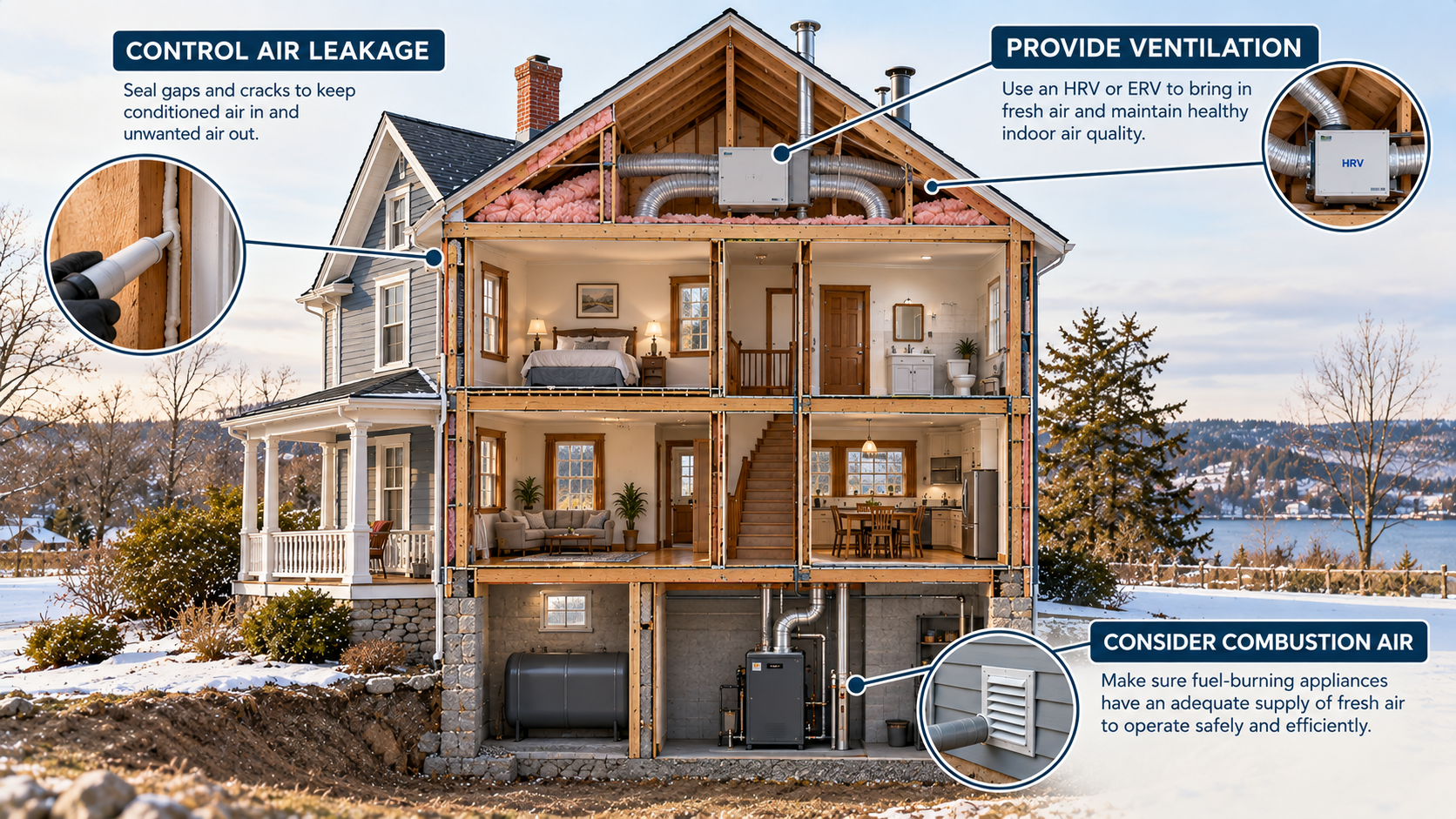
10. Making an Old House Tighter Changes How It Works
This is one of the reasons older-home retrofits need to be approached thoughtfully.
An old, drafty house gets plenty of outdoor air.
Unfortunately, it gets that air through uncontrolled cracks and gaps.
That's not a good ventilation strategy.
NRCan notes that air leakage can account for about 25% of heat loss in a typical Canadian home and says uncontrolled leakage should not be confused with proper ventilation. Natural Resources Canada
As an older house becomes tighter, though, ventilation needs deserve more attention.
Mechanical ventilation may become appropriate.
Fuel-burning appliances also need adequate combustion air and safe exhaust.
NRCan specifically cautions that furnaces, water heaters, fireplaces and wood stoves require appropriate combustion air and that air-sealing work can affect how the house operates. Natural Resources Canada
This is why a good retrofit isn't simply:
Seal every hole you can find.
It's:
Understand the building, control the air leakage and make sure ventilation and combustion systems continue to work properly.
11. Older Homes Sometimes Have Features Worth Working With
Not everything about an older house works against energy performance.
Some traditional homes were designed before mechanical cooling became common, so orientation, window placement, porches, shutters, high ceilings and natural ventilation sometimes played a larger role in comfort.
A south-facing room may receive significant winter sunlight.
Mature deciduous trees may shade windows during summer while allowing more sunlight through after the leaves fall.
A substantial masonry fireplace or chimney may provide thermal mass—although that doesn't automatically make the fireplace itself an efficient heating appliance.
None of those features makes a house “energy efficient” on its own.
But they're reminders that good building performance didn't suddenly become possible when modern equipment arrived.
Sometimes an older home's existing design gives you something useful to work with.
What Is a Passive Solar Home — and How Can It Reduce Energy Use?
12. And Sometimes Renovations Can Make Things Worse
Not every upgrade is an improvement.
That's particularly important with older buildings.
Imagine insulation being added without addressing an existing moisture problem.
Or a wall assembly being changed in a way that traps moisture.
Or windows being replaced while significant air leakage elsewhere remains untouched.
Or a powerful exhaust fan being installed in a tight house with fuel-burning equipment without considering combustion air.
NRCan specifically warns that older homes may require remedial measures before air sealing and that moisture conditions need to be understood when changing the building envelope. Natural Resources Canada
That's why I'm much more interested in a thoughtful retrofit than simply a long list of upgrades.
More isn't automatically better.
The pieces still need to work together.
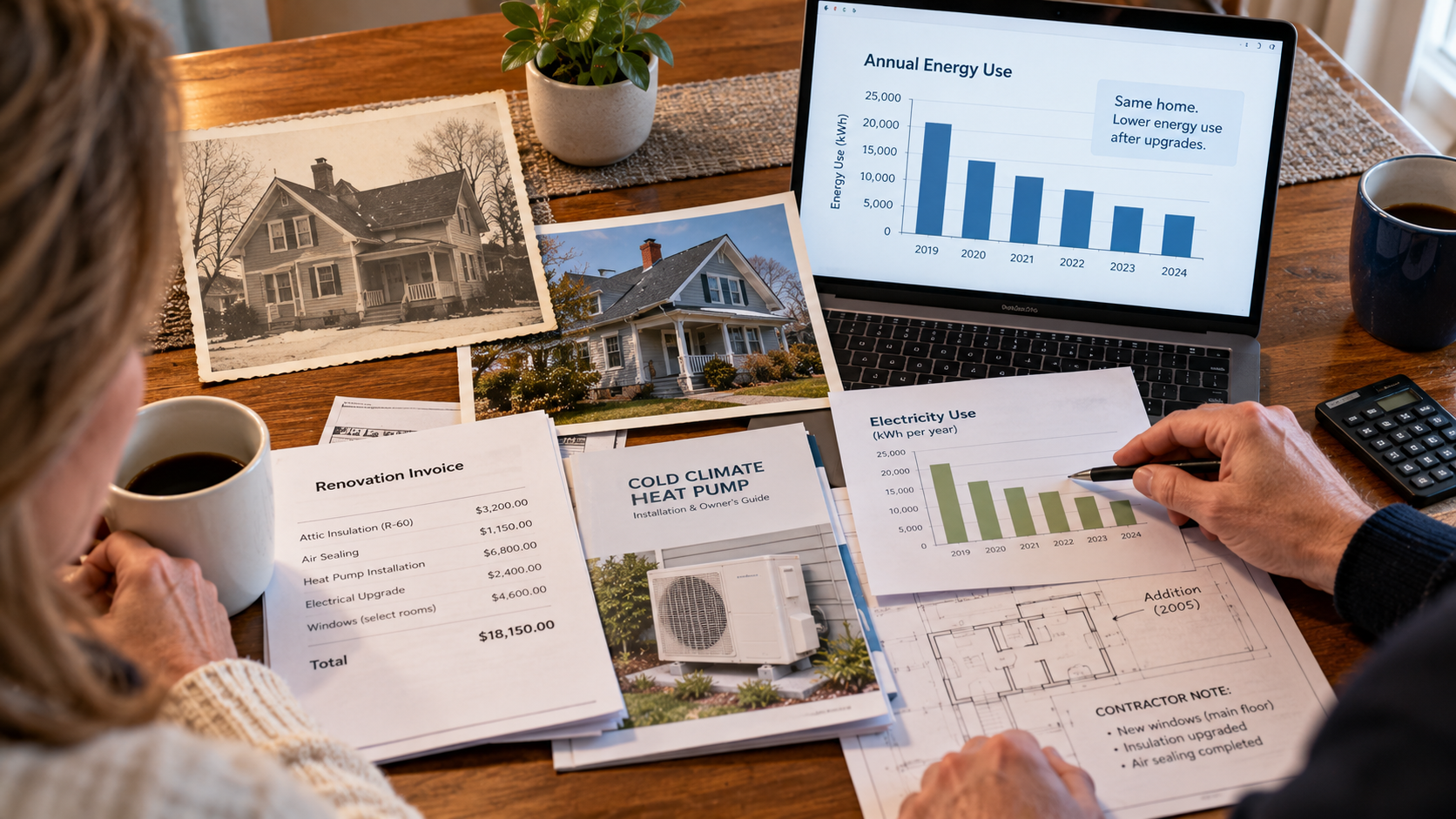
13. Historical Energy Use Can Tell You a Lot
Here's where we can move from theory to evidence.
If historical utility information is available, look at it.
For an older home, I'd be particularly interested in:
annual electricity consumption in kWh
oil consumption in litres
propane consumption
approximate wood use
what heating systems were being used
thermostat habits, if known
major renovations during the period
whether parts of the house were regularly unused
And I'd prefer consumption figures rather than relying only on dollar amounts.
Energy prices change.
The amount of energy consumed gives us another piece of information about how the house and its occupants actually used energy.
It still isn't a guarantee of what the next owner will use.
But if someone tells me:
“You can't heat an old house efficiently,”
and the house has several years of surprisingly reasonable energy consumption?
That's evidence worth considering.
How Much Energy Does a House Actually Use?
14. An EnerGuide Evaluation Can Be Especially Useful
If an older home has an EnerGuide evaluation, ask to see it.
An NRCan-registered energy advisor evaluates the house from basement to attic and collects information about:
airtightness
wall, ceiling and basement insulation
windows and exterior doors
heating and cooling equipment
water heating
ventilation
A blower door test is also used to measure airtightness. Natural Resources Canada
The resulting EnerGuide rating estimates the home's annual energy consumption in gigajoules per year (GJ/year); on the current scale, a lower number indicates better energy performance. Natural Resources Canada
That's particularly useful when discussing older houses because it moves the conversation away from assumptions about age.
Instead of:
“It's 120 years old, so it must be inefficient.”
we can start asking:
“How does this particular 120-year-old house actually perform?”
That's a much better question.
15. Should You Expect an Older Home to Perform Like a New One?
Not necessarily.
A newly constructed high-performance home has some significant advantages.
Its insulation, air barrier, windows, mechanical systems and ventilation can all be designed together from the beginning.
Retrofitting an existing building often means working around:
finished walls
original architectural details
existing foundations
limited access
old wiring and plumbing
unusual construction
previous renovations
There may also be diminishing returns.
Taking an old house from very inefficient to reasonably efficient may be practical.
Trying to make the same house perform exactly like a purpose-built, extremely high-performance new home may require far more invasive work.
And with heritage properties, preserving the architecture may be part of the objective.
NRCan specifically recognizes that older and heritage houses require special consideration and that maintaining durability, character and original features can influence how retrofit work should be approached. Natural Resources Canada
The goal doesn't always have to be turning an old house into a new house.
Sometimes it's about making a good old house perform considerably better.
16. What Should Buyers Look For in an Older Home?
If energy performance matters to you, I'd investigate the house in layers.
START AT THE TOP
Look at the attic.
How much insulation is there?
Is it reasonably consistent?
Has it been disturbed?
Are obvious penetrations air sealed?
LOOK AT THE WINDOWS
Original or replacement?
Double or triple pane?
Storm windows?
Condition of frames and seals?
Evidence of failed sealed units or water intrusion?
LOOK DOWNSTAIRS
Is the foundation insulated?
What about the rim joist?
Any evidence of moisture?
What type of foundation are you dealing with?
UNDERSTAND THE HEATING
What systems are installed?
How old are they?
Which parts of the house do they serve?
What's the backup heat?
ASK ABOUT AIR SEALING
Has an EnerGuide evaluation or blower door test ever been completed?
Were air-sealing improvements performed?
ASK ABOUT VENTILATION
Is there an HRV or ERV?
If the house has been substantially tightened, how is fresh air being managed?
REVIEW THE HISTORY
When were major renovations completed?
What was actually done?
Are invoices, permits, specifications or energy reports available?
LOOK AT CONSUMPTION
How much electricity, oil, propane or wood has the home actually been using?
Not every seller will have answers to all of these questions.
But every answer helps build a clearer picture.
Don't Judge an Old House by Its Birthday
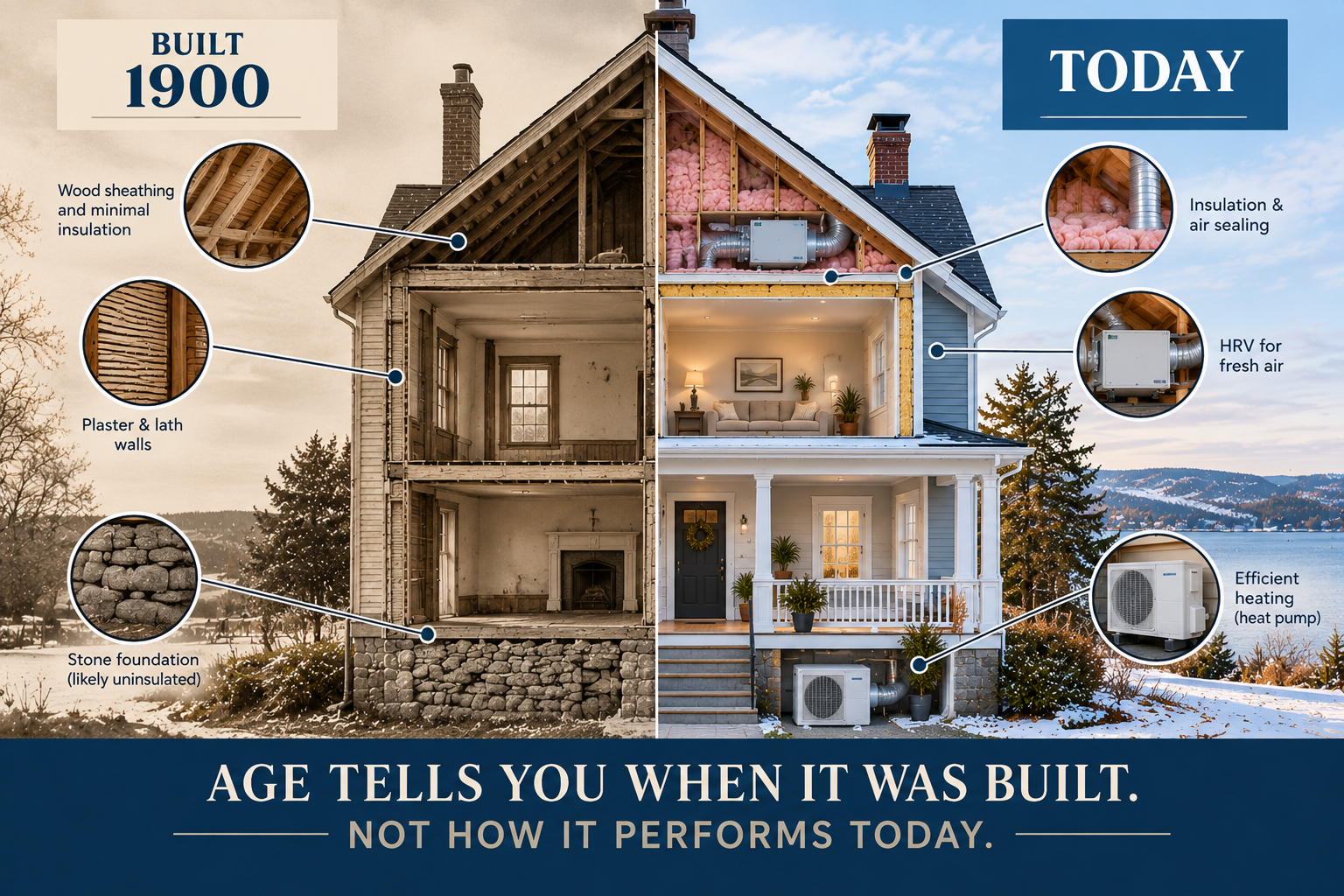
If you're comparing a home built in 1900 with one built in 2020, the newer home may very well have started life with a much more energy-efficient building envelope.
That's a reasonable expectation.
But houses don't remain frozen in time.
The 1900 house has had more than a century for things to happen to it.
Some good.
Some bad.
Some undocumented.
And potentially some very significant energy upgrades.
So I wouldn't assume an older home is efficient.
But I wouldn't assume it's inefficient either.
I'd look at:
The insulation.
The airtightness.
The windows.
The foundation.
The heating system.
The ventilation.
The renovations.
The energy history.
And, when available, the EnerGuide information.
Because when you're buying an older home, the question isn't:
“How old is it?”
You already know that.
The more useful question is:
“What has happened to this house since it was built—and how does it perform today?”
Smarter, Greener Homes
This article is part of my Smarter, Greener Homes series, where I take a practical look at energy efficiency, green building and the features that can affect how comfortable and economical a home is to operate.
Older homes are a particularly important part of that conversation here in Nova Scotia.
Their age and character are often part of what makes them appealing.
Understanding energy performance doesn't mean dismissing that history—or trying to make every old house behave exactly like new construction.
It means understanding the building that's actually in front of you.
A home's construction date is one piece of information. Its current energy performance is another.
As a Canadian Certified Green Representative (CCGR), I help buyers and sellers look beyond individual features and better understand the building envelope, mechanical systems, energy history and green-building features that can affect a home's comfort, performance and operating costs.
Thinking about buying an older or heritage home in Nova Scotia—or wondering how the energy upgrades in one you're considering fit together?
Get in touch. I'm always here to help.
Rob Schellenberger, REALTOR®
Canadian Certified Green Representative
RE/MAX Banner Real Estate
902-300-8674
robschellenberger.ca
.jpg)