.png)

For many home buyers, one of the attractions of Nova Scotia is the ability to have more space without necessarily being hours away from a community.
Drive a few minutes outside many towns in the Annapolis Valley or along the South Shore and the landscape can change quickly. Neighbourhood streets give way to larger lots, fields, woodland, long driveways and homes with considerably more privacy.
That can be exactly what you're looking for.
But buying outside a town can also mean taking responsibility for things that might otherwise be provided as municipal services.
The difference isn't simply town versus country. Two properties only a few kilometres apart can have very different water systems, wastewater systems, road access, internet options and maintenance requirements.
Understanding those differences before you buy can help you decide whether country living actually suits the way you want to live.
Rural Doesn't Necessarily Mean Remote
When buyers hear "rural property," they sometimes picture a farmhouse on 50 acres at the end of a dirt road.
That's only one version of rural Nova Scotia.
You might find a conventional three-bedroom home on an acre just outside Middleton, a waterfront property outside Chester, a house on several acres near Annapolis Royal or a home surrounded by farmland only minutes from Wolfville.
You can therefore have a rural property without being particularly remote.
That's an important distinction.
The question isn't simply how far the house is from town. It's which services stop at the property line—and which responsibilities become yours.
Your Water May Come From a Well
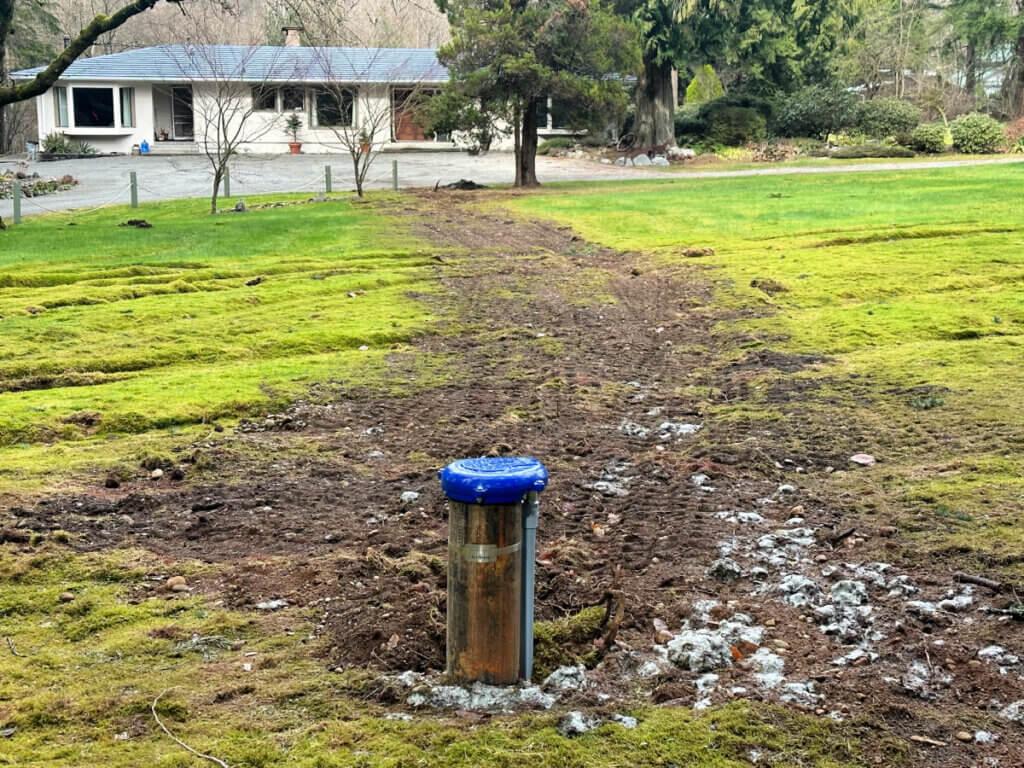
One of the most common differences outside serviced areas is the water supply.
Instead of receiving treated municipal water, a property may have its own drilled or dug well.
That means the homeowner is responsible for the water supply and its maintenance. Nova Scotia Environment also recommends testing private well water because water that looks, smells and tastes normal can still contain bacteria or other contaminants. The Province even provides a specific private-well checklist for real estate transactions. Government of Nova Scotia
As a buyer, you'll want to understand things such as:
What type of well serves the property?
Where is it located?
How much water can it provide?
What is the water quality?
Is there treatment equipment?
Are there previous water test or well records?
A private well shouldn't automatically make a property less desirable. They're common throughout Nova Scotia.
It simply means there's another important system to understand.
We'll cover this much more thoroughly in the dedicated Well & Septic Systems: What Nova Scotia Home Buyers Need to Know guide.
Wastewater May Be Your Responsibility Too
Where there's no municipal sewer, you'll commonly find an on-site septic system.
The homeowner—not a municipality—is responsible for maintaining that system and making sure it operates properly. Nova Scotia guidance specifically places responsibility for an adequate and properly functioning on-site sewage system on the landowner. Government of Nova Scotia
For a buyer, the important questions include:
Where is the septic tank?
Where is the disposal field?
What type of system is installed?
How old is it?
Has it been maintained?
Are there records?
Should it be inspected before you buy?
The location can matter too. A septic field occupies part of the property, and what you can build, plant or drive over in that area may be limited.
Again, septic systems are a normal part of owning many Nova Scotia homes. The key is understanding the system you're taking responsibility for.
The Road in Front of the House May Not Be Public
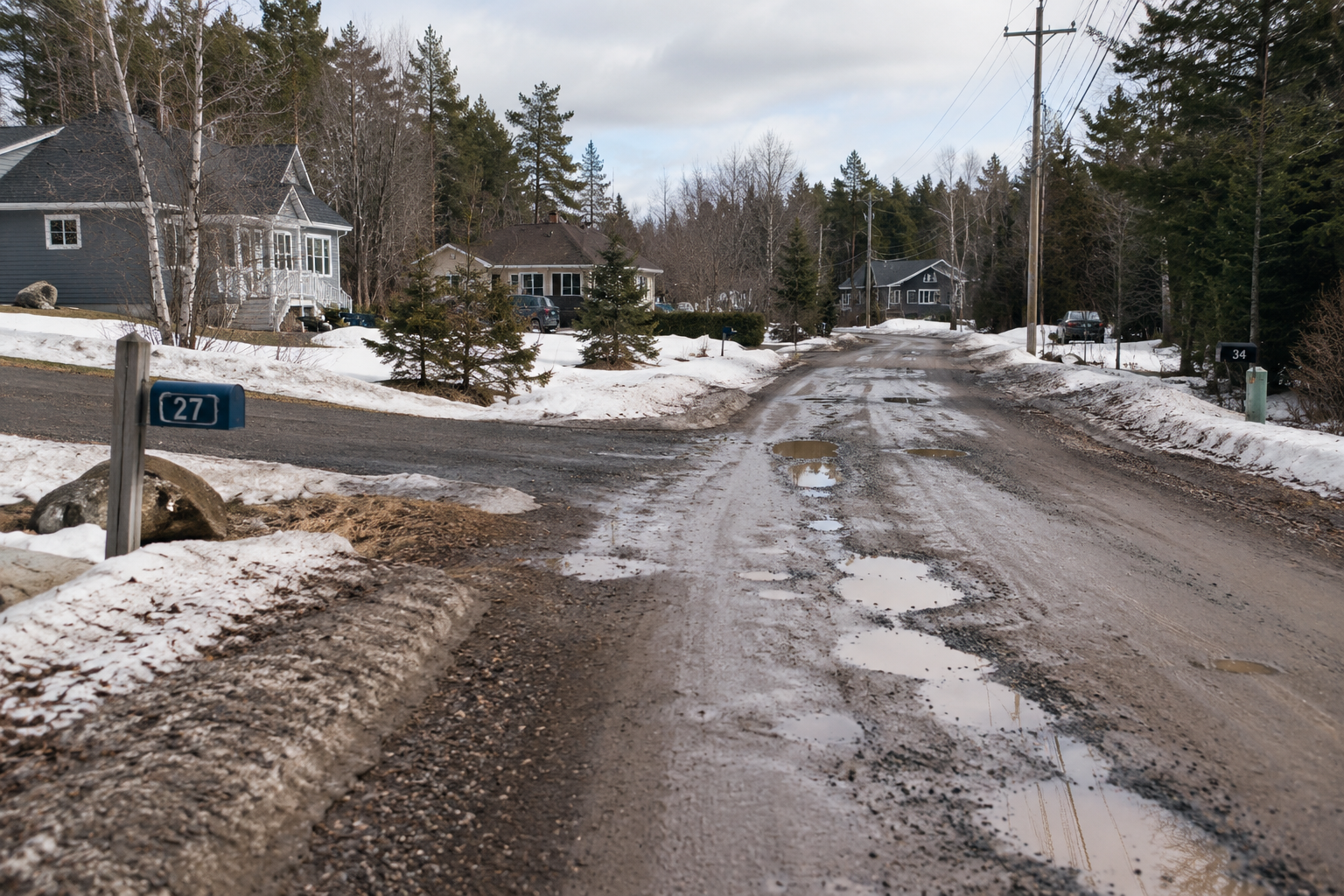
A paved road doesn't necessarily mean municipal or provincial maintenance, and a gravel road isn't necessarily private.
When you're looking at a property outside town, determine who owns and maintains the road.
If it's private, you'll want to understand your legal right to use it and how maintenance is handled.
That can include:
grading and gravel,
pothole repairs,
ditching and drainage,
snow removal,
brush cutting,
culvert work, and
sharing expenses with other property owners.
Rights-of-way and access can have legal implications as well. Nova Scotia's Private Ways legislation exists partly because access to a public street can affect services such as waste collection and utility repair. Nova Scotia News
A private road isn't necessarily a reason not to buy.
But "Who plows this road?" is a much better question to ask in July than after the first major snowfall.
Then There's Your Own Driveway
Country properties often have longer driveways.
That sounds like a minor detail until you own one.
A 150-metre driveway may need snow clearing, grading, gravel, drainage work and occasional repairs. If it's steep, shaded or exposed to drifting snow, winter maintenance can become even more important.
Look at how water moves around the driveway as well.
Poor drainage can wash gravel away, create potholes or turn sections into mud during spring thaw.
When viewing a rural property, don't treat the driveway as simply the route to the house.
It's part of the property you're buying and maintaining.
Internet Should Be Checked at the Actual Address
Internet access across Nova Scotia has improved considerably, but buyers should still verify service at the specific property.
Don't assume that because high-speed internet is available in a community, every address has identical service.
The available provider, connection type and actual service options can vary.
This becomes particularly important if you're working remotely, running a business from home, streaming heavily or relying on internet-based telephone service.
Cell service deserves the same attention.
Reception can vary because of terrain, distance from towers and even where you stand on a particular property.
If connectivity is essential, investigate it before making the location part of your lifestyle.
Power Outages May Feel Different in the Country
A power outage affects any home, but some rural properties depend on electricity for more of their essential systems.
For example, a private well typically requires an electric pump. If the power goes out, your water supply may be affected unless you have appropriate backup arrangements.
Internet equipment also requires power, and Nova Scotia's 911 guidance notes that internet-based VoIP calling will not work if either power or internet service is interrupted. Government of Nova Scotia
That's one reason generators are common at some Nova Scotia properties.
If you're considering a home with a generator, determine what type it is, what it powers and how it's connected rather than assuming the presence of a generator means the entire house operates normally during an outage.
Heating Can Be Different Too
Country homes can expose buyers to a wider variety of heating systems.
You may encounter:
heat pumps,
oil-fired boilers or furnaces,
electric baseboards,
wood stoves,
pellet stoves,
wood furnaces,
propane systems, or
combinations of several systems.
Some older homes may have multiple generations of heating equipment still in use.
The important question isn't simply "What heats the house?"
It's also:
What does it cost to operate?
What maintenance does it require?
Is the equipment insurable?
What happens during a power outage?
Is there a backup heat source?
We'll explore these questions separately in Heating a Home in Nova Scotia: Oil, Heat Pumps, Wood, Electric & More.
Garbage Collection, Deliveries and Other Services Can Change
Moving outside town can also change some less obvious parts of daily life.
Garbage and recycling collection may operate differently.
Courier companies may treat your address differently.
Food delivery may disappear entirely.
Snowplow timing may matter more.
A contractor who can reach a property in town easily may charge additional travel time to reach a more remote location.
None of these things individually should determine where you live.
But together they can affect what everyday life feels like.
Emergency Access Is Worth Thinking About
Nova Scotia uses civic addressing to identify the location of homes and other properties. Civic addresses are important not only for 911 but also for mail, utilities, municipal permitting and other services. GeoNOVA
For rural properties, make sure the civic number is clearly visible from the road. The Province specifically recommends posting it where emergency responders can see it quickly, including at night. Government of Nova Scotia
Also look at the physical access to the house.
Could an emergency vehicle reasonably get up the driveway?
Are there low branches?
Is there enough width?
Would a steep or poorly maintained driveway become difficult during winter?
These aren't questions most buyers think about while standing in a sunny yard during a June showing, but they're worth considering.
More Land Usually Means More to Maintain
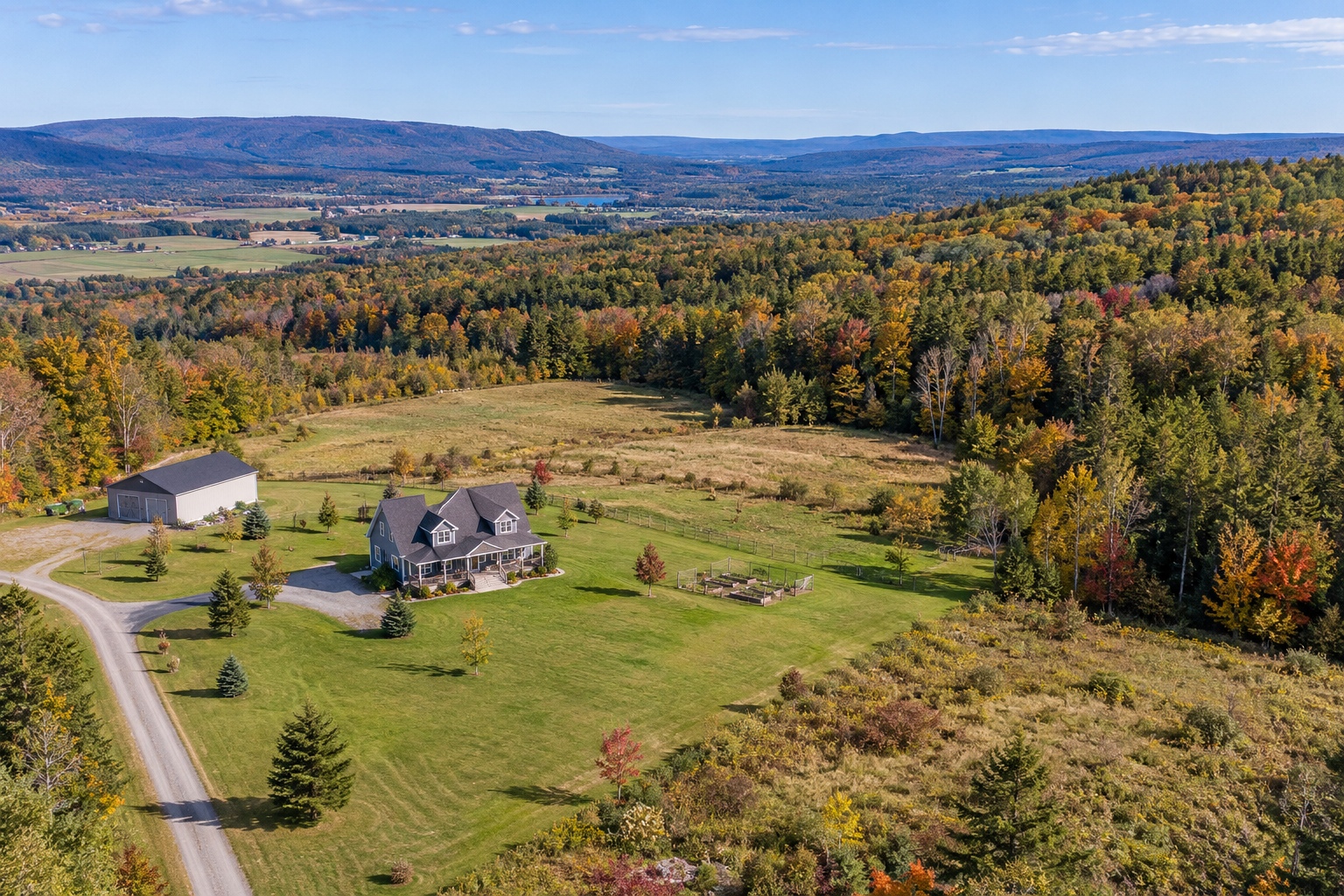
One of the attractions of moving outside town is space.
But acreage and usable land aren't necessarily the same thing.
A five-acre property could contain a large lawn, forest, wet areas, steep terrain, gardens or some combination of all of them.
Before becoming excited about the acreage number, ask yourself what you'll actually do with the land.
A large lawn means mowing.
A wooded property may involve tree maintenance.
Long boundaries can mean fences.
A large driveway needs upkeep.
Older outbuildings require maintenance even if you aren't using them.
If what you really want is privacy, you may not need ten acres to get it.
Sometimes the shape of the property, surrounding land uses and location of neighbouring homes matter more than the total acreage.
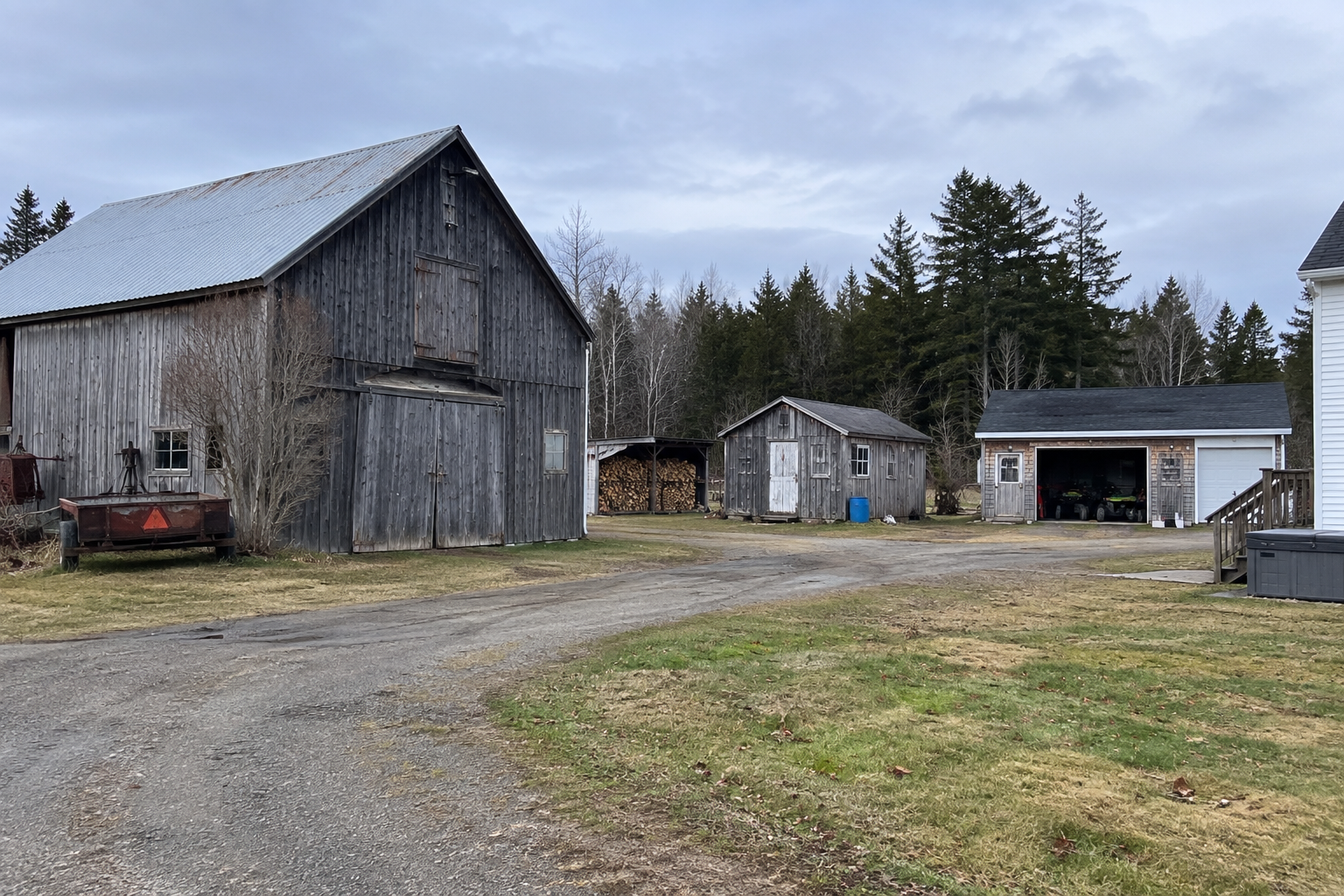
Outbuildings Deserve Their Own Inspection
Country properties often come with things you won't encounter on a conventional town lot.
Garages.
Workshops.
Barns.
Sheds.
Greenhouses.
Old farm buildings.
They're easy to view as bonuses, particularly if you've always wanted a workshop or extra storage.
But an outbuilding can also have its own foundation, roof, electrical service, structural issues and maintenance costs.
If a building matters to your decision to buy the property, don't give it a five-second glance while spending an hour inspecting the house.
Understand what you're getting.
Check What You Can Actually Do With the Property
More land doesn't automatically mean fewer rules.
If you're buying acreage because you want chickens, horses, a large workshop, a home business, another dwelling or some other specific use, investigate whether that use is permitted.
Municipal zoning and land-use rules still apply outside towns.
There may also be restrictions associated with the property itself.
This becomes particularly important when buyers start looking for hobby farms and larger acreages, which we'll cover separately in Buying a Hobby Farm or Acreage in Nova Scotia.
The rule I suggest is simple:
If your reason for buying the property depends on being able to do something specific there, investigate that before you buy—not afterward.
Privacy Can Come With Different Neighbours
One of the surprises for some buyers moving from an urban or suburban area is that having fewer residential neighbours doesn't necessarily mean having fewer neighbouring activities.
A rural property could be beside:
agricultural land,
a working farm,
woodland,
commercial activity,
an aggregate operation,
seasonal properties, or
land that could eventually be developed.
That beautiful field behind the house may not belong to the property you're buying.
Find out what surrounds the property and, where it matters, how neighbouring land is currently used.
You don't need to dislike farming to discover that agricultural activity beside your bedroom window is different from looking at a pastoral landscape in a listing photograph.
Town Services Have Value—Even When You Don't Think About Them
It's easy to compare two houses and conclude that the country property offers more for the money.
Sometimes it does.
But part of the comparison should include the services attached to each property.
A town property might include municipal water, sewer, paved road access, sidewalks and closer proximity to everyday services.
A country property may offer more land and privacy while asking the homeowner to manage a well, septic system, driveway, private road or additional buildings.
Neither arrangement is inherently better.
You're simply paying for—and taking responsibility for—different things.
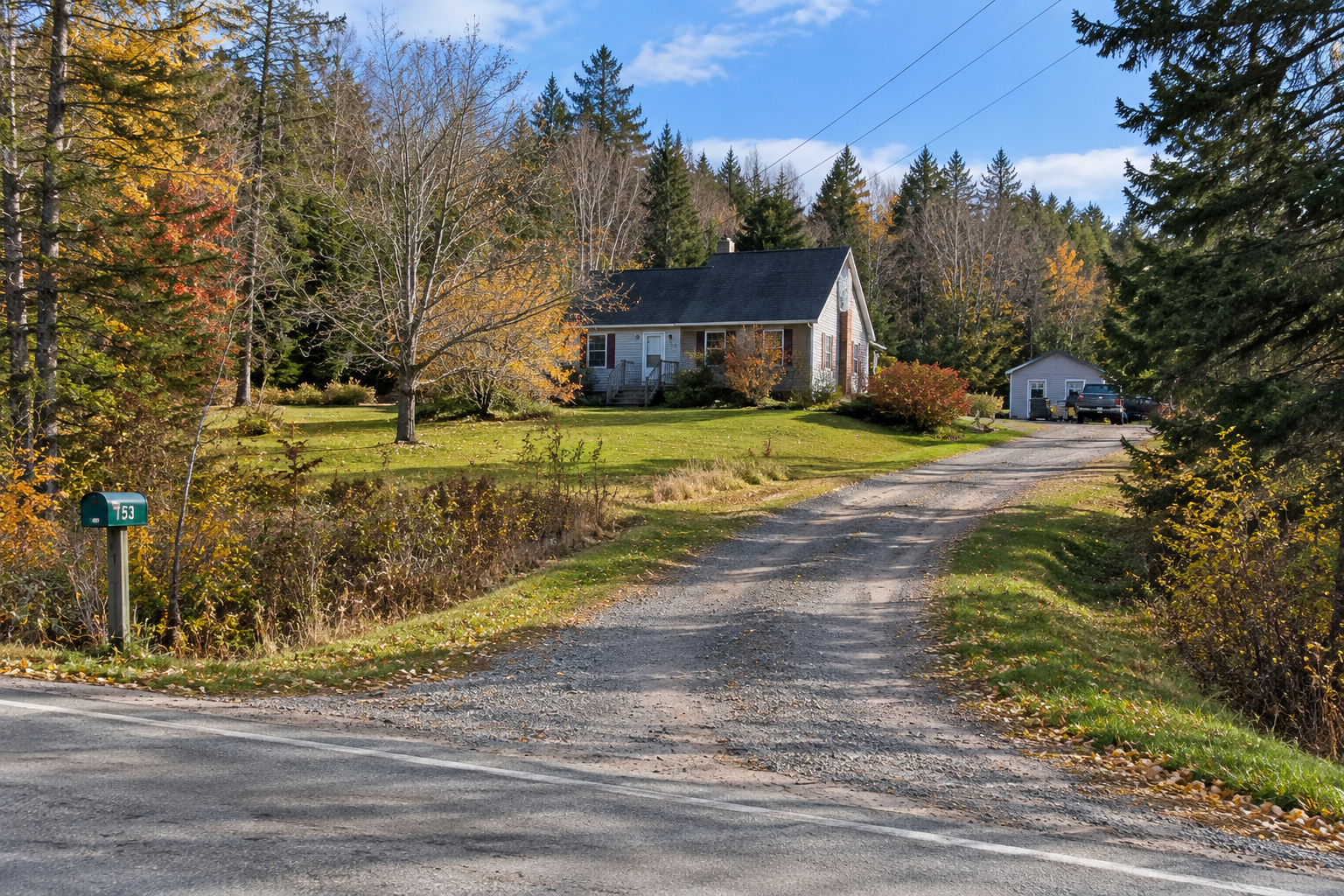
Country Living Can Be a Great Fit
This article isn't meant to make buying outside town sound complicated.
For many people, the additional responsibility is a very worthwhile trade for what they gain.
More privacy.
More space.
Room for a workshop.
A large garden.
A few acres for animals.
Woodland.
Waterfront.
Dark skies.
Or simply not having another house ten metres away.
The important part is understanding what comes with that choice.
Look Beyond the House
When you're comparing a town property with one farther into the countryside, don't stop at bedrooms, bathrooms and square footage.
Ask:
Where does the water come from?
Where does the wastewater go?
Who maintains the road?
Who clears the snow?
What internet and cell service are actually available?
How is the home heated?
What else on the property will I have to maintain?
Can I use the property the way I intend to?
Those answers give you a much clearer picture of what owning the property will actually be like.
And that's ultimately the point of the Buyer Resource Centre: not simply helping you find a house, but helping you understand what you're buying before you make the decision.
Part of the Buying a Home in Nova Scotia Buyer Resource Centre: Practical guides to help you prepare, evaluate a property and navigate the home-buying process.
.jpg)
Comments:
Post Your Comment: